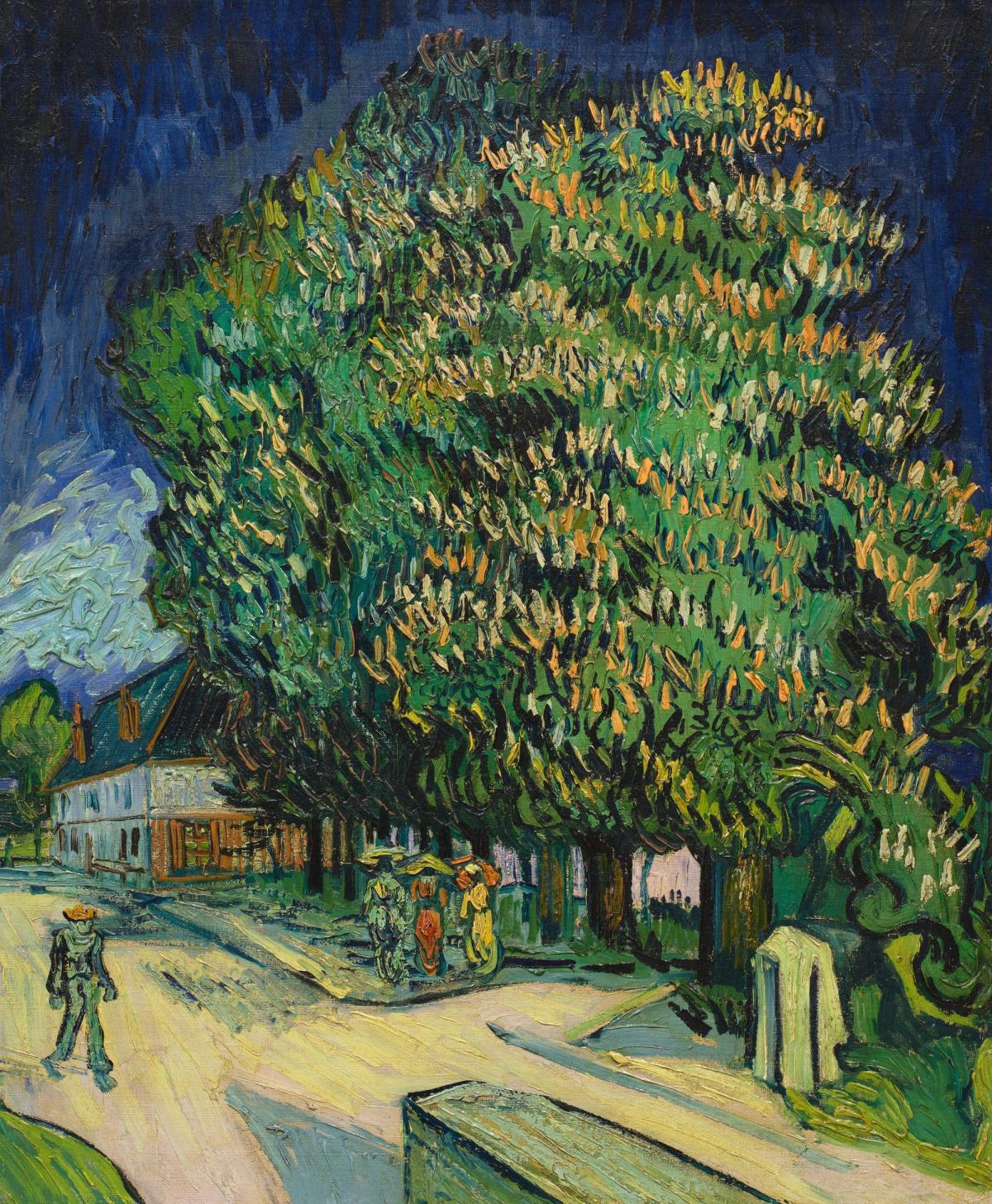
Sotheby’s is to auction Blossoming Chestnut Trees (May 1890) in New York on 18 November. The estimated hammer price is in the region of $180m, but with the buyer’s premium this adds up to $207m. This far exceeds the record price for a Van Gogh painting at auction: $117m (including fees) for Orchard with Cypresses (April 1888) at Christie’s New York in 2022.
As the Van Gogh is guaranteed by Sotheby's for an undisclosed sum, it is bound to be sold—and will likely make a new record for the artist. It is one of the only eight of his 50 Auvers landscape paintings which remain in private hands.

Blossoming Chestnut Trees is being sold by the Argentinian Blaquier-Arrieta family. It is among a group of 12 pictures they are selling, including works by Paul Cezanne, Pierre-Auguste Renoir, Camille Pissarro, Edgar Degas, Claude Monet and Paul Gauguin. Together they are expected to raise around $450m.
The Van Gogh is the highlight of the sale of the collection assembled by Nelly Arrieta de Blaquier (died 2020) and her separated husband Carlos Pedro Blaquier (died 2023). The works then passed to their children.
Blossoming Chestnut Trees was painted in Auvers-sur-Oise, the village 30km northwest of Paris where Van Gogh lived after leaving the asylum in Saint-Rémy-de-Provence. On 25 May 1890 Vincent wrote to his brother Theo, saying that he had just completed “a study of chestnut trees”.
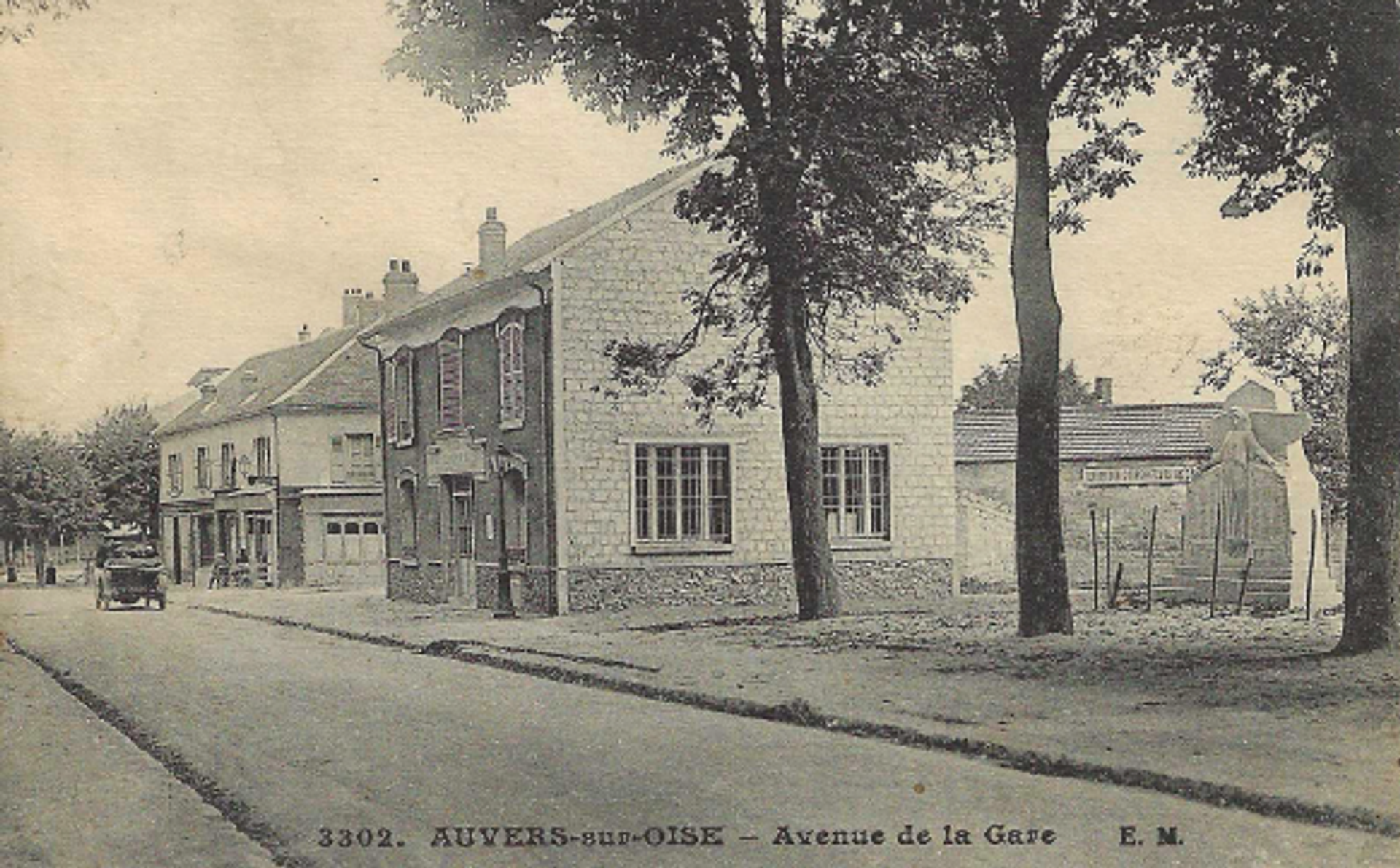
Postcard of the Avenue de la Gare, Auvers (around 1920)—the view in Van Gogh’s painting
Published by Estard, Paris; Image courtesy the author
Van Gogh’s view is similar to that in a postcard of around 1920, with the building in his painting appearing in the far left of the photograph. By around 1900, most of the horse chestnut trees had been felled to make way for the post office, the nearer building in the postcard.
In the far building depicted by Van Gogh, the brown lower exterior on the near side represents a bar. Being only two minutes’ walk from the auberge where he was staying, he is likely to have been a regular customer, particularly as it sold tobacco, which he needed frequently for his pipe. Today, more than 135 years later, the building is still a bar-tabac, now called the Le Balto (at 19 Rue du Général de Gaulle).
Blossoming Chestnut Trees is an exuberantly coloured work, with a deep blue upper sky contrasting with the blossom on the chestnut trees. Three colourful women with Japanese-style parasols have gathered beneath them. The figure on the left, wearing blue clothes and a straw hat, suggests the image of the artist himself.
Until now only very poor colour images of Blossoming Chestnut Trees were available, giving little idea of the impact of the painting. It was last exhibited in 1964, at the Solomon R. Guggenheim Museum in New York, in an exhibition on Van Gogh and Expressionism.
The painting evokes the optimism which Van Gogh must have felt after he had left the confines of the asylum, just nine days earlier. He was a free man—able to wander into a bar for a glass of wine, or even paint in the street when he wished.
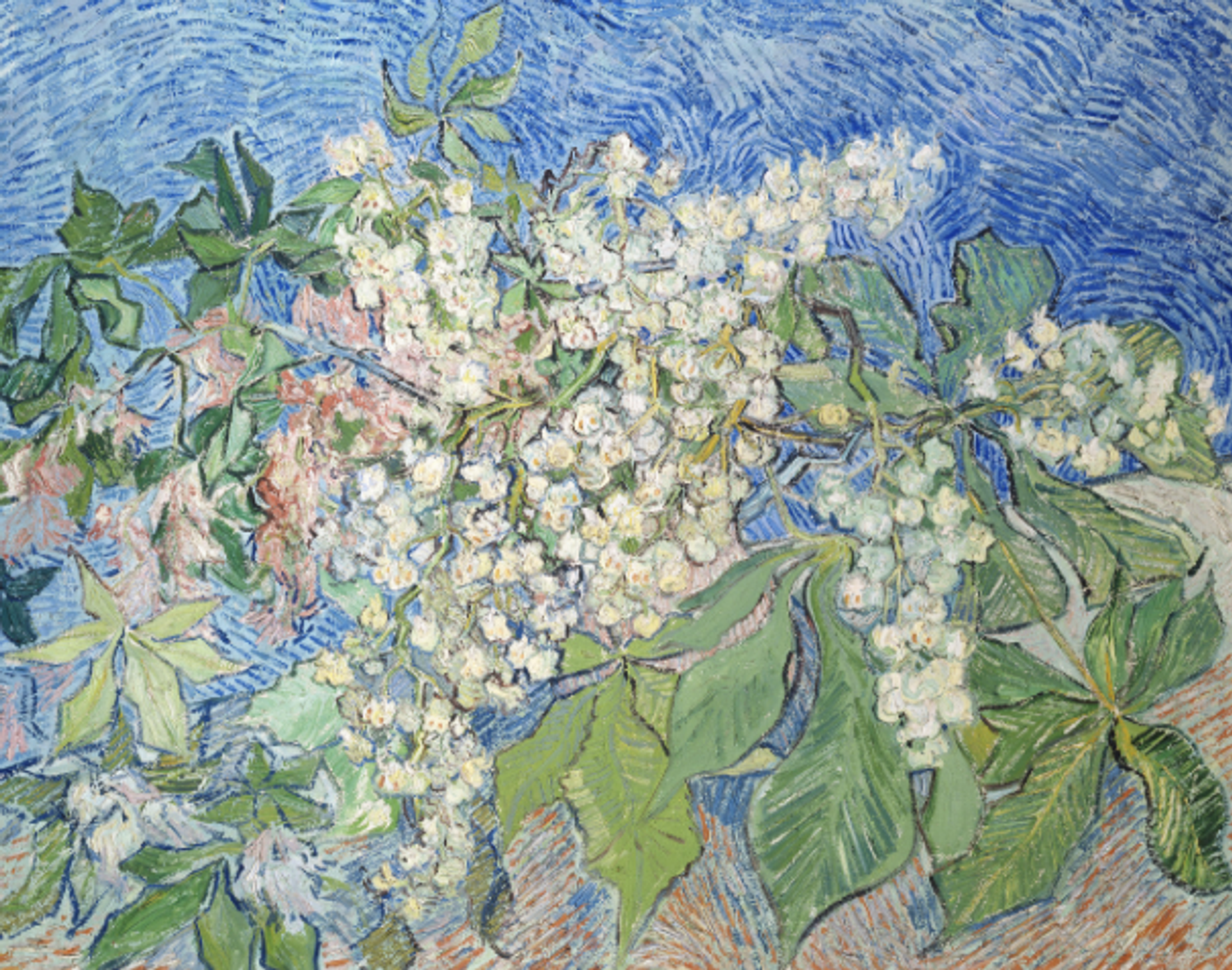
Van Gogh’s Blossoming Chestnut Branches (May 1890)
Emil Bührle Collection, on long-term loan to Kunsthaus Zurich
A few hours after Van Gogh painted Blossoming Chestnut Trees, the weather in Auvers turned wet and stormy, potentially knocking down some of the branches. This could explain why the artist gathered a few branches to paint his magnificent still life, Blossoming Chestnut Branches (May 1890).
Argentine connection
Following Vincent’s death on 29 July 1890 after he shot himself in the wheatfields of Auvers, Blossoming Chestnut Trees passed to Theo and subsequently to his widow Jo Bonger. In 1905, she sold the painting through a dealer to the fourth Prince de Wagram, an aristocratic member of the French Rothschild family.
It was purchased four years later by the Berlin-based publisher Samuel Fischer, and on his death in 1934 it passed to his daughter Brigitte. Although the family was persecuted because of their Jewish heritage, a Sotheby’s spokesperson confirmed that, based on recent research, the auction house is satisfied that the family was free at all times to dispose of the painting.
In 1936, the painting was bought by Paris-based Henriette and Marcel Kapferer. Marcel was then head of the Royal Dutch Shell oil company in France. A few years later they sold the Van Gogh, and in 1945 it went to George “Buddy” Gard de Sylva, a Hollywood songwriter and film producer, who died in 1950. It was then acquired by the New York collector Harriet Harris-Jonas.
Blossoming Chestnut Trees was finally purchased by its ultimate owners, the Buenos Aires-based Blaquier couple, in 1975. Their enormous wealth came from an Argentine sugar business.
According to the BBC, Carlos Pedro Blaquier was indicted in 2012 for being the main participant in 29 cases of unlawful detention of left-wing activists in 1976, during Argentina's military dictatorship. Security forces were said to have used trucks provided by his sugar company to round up victims, who were then interrogated and tortured. Blaquier denied wrongdoing, however, and died before his trial.
Further legal problems for the family have developed more recently. In 2023, Argentine customs officials fined the couple’s descendants over the export of paintings (including the Van Gogh) to Luxembourg. The penalty was waived in July this year, clearing the way for November's auction.
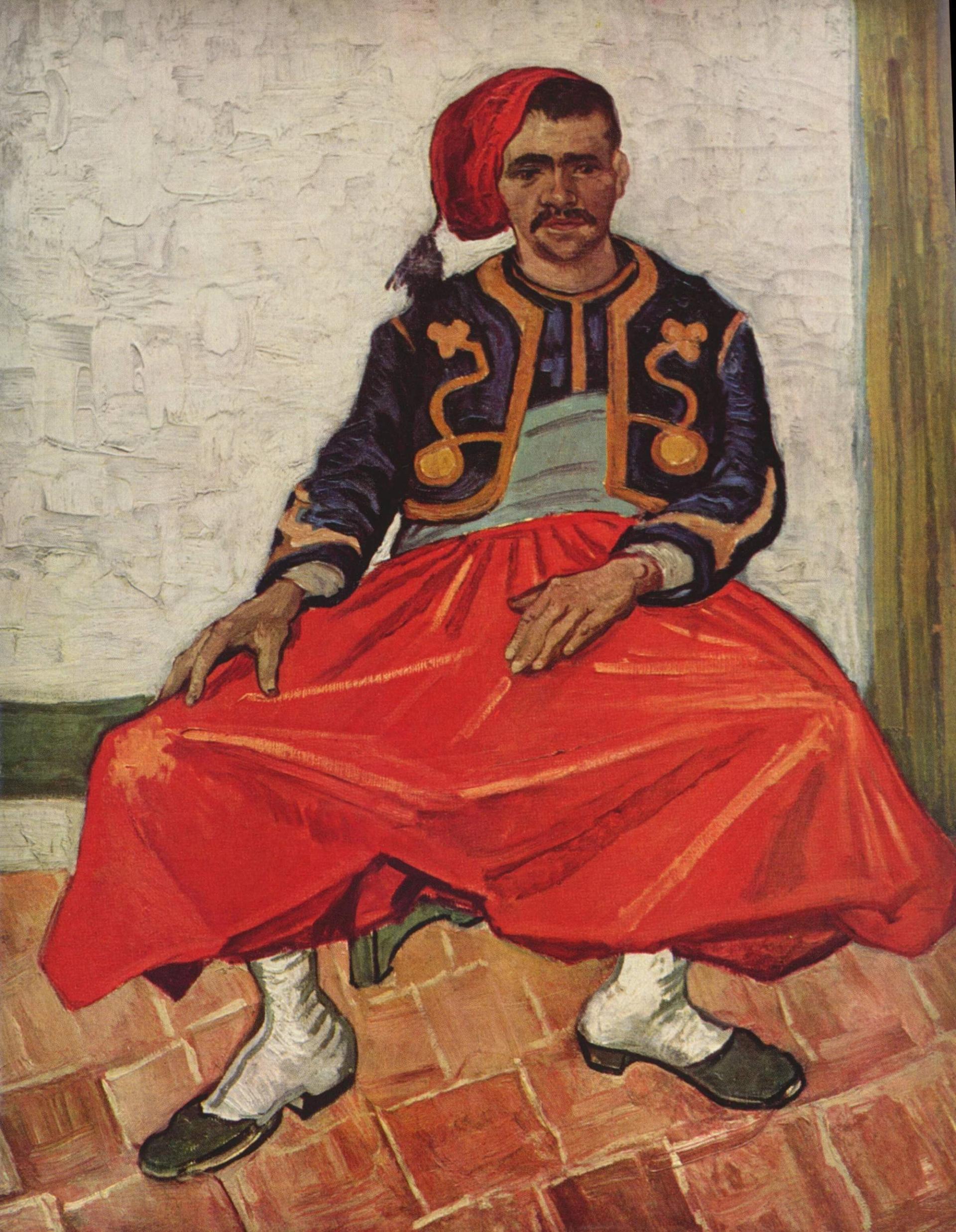
Van Gogh’s Seated Zouave (June 1888), sold by the Blaquier family in 2025
Courtesy Wikimedia
In November 2025, Christie’s privately sold another of the family’s Van Goghs, Seated Zoauve (June 1888), a portrait of a soldier. Selling for a reported $190m, this sum probably included fees, so it is slightly less than the sum which Blossoming Chestnut Trees is likely to achieve. Seated Zoauve possibly went to a buyer in Qatar.
Blossoming Chestnut Trees will now be exhibited in Taipei (5-6 October), Hong Kong (13-15 October) and New York (7-17 November), before the auction on 18 November. The two stops in East Asia are an indication of the growing importance of Asian buyers in the Van Gogh market.