

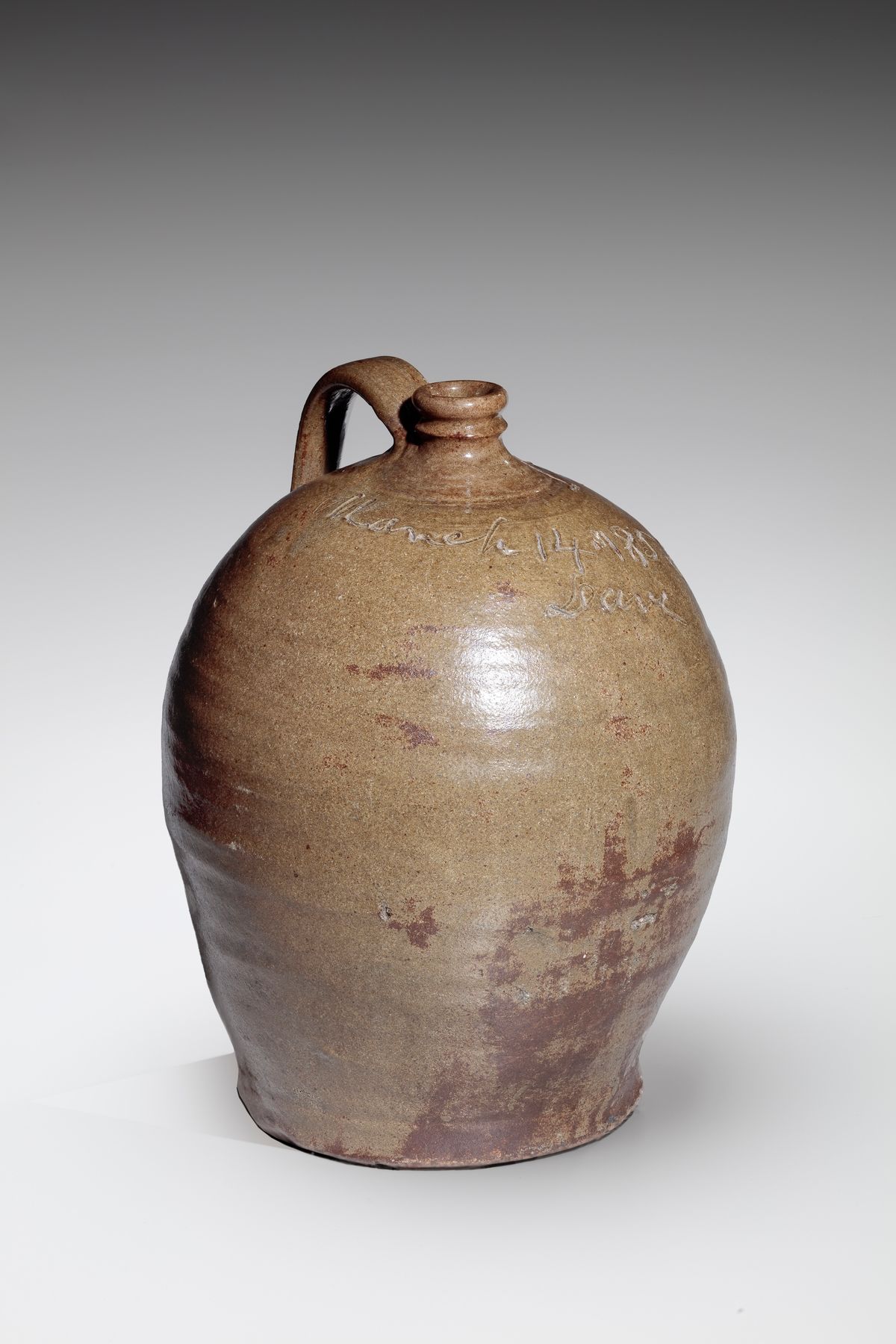
This past summer, the Newark Museum of Art in New Jersey initiated a dialogue with the family of David Drake (around 1801-74), the enslaved potter from South Carolina, regarding a large brown ceramic jug in its collection, dated 1852. Just a few months later—lightning speed in museum time—The Art Newspaper has learned that the institution has reached an agreement with Drake’s heirs to restore ownership of the work and purchase it back for its permanent collection.

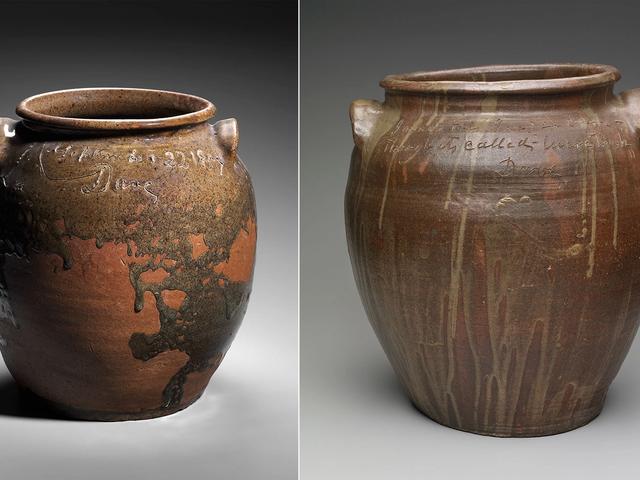
The arrangement comes just over a year after the Museum of Fine Arts, Boston reached an historic agreement with Drake’s family to return two major stoneware vessels, one of which the museum purchased back. Momentum built from there and return agreements were reached with institutions including the Telfair Museums in Savannah and the Georgia Museum of Art in Athens, Georgia, the Virginia Museum of Fine Arts, and others.
“What happened this July was really special,” says George Fatheree, an adviser to the Drake family. A letter the Newark Museum sent to the artist’s descendants and shared with The Art Newspaper states: “We acquired a jug by your ancestor in 2022 to help us more powerfully teach the history of enslavement and enslaved labour, as part of the 2023 reimagining and reinstallation of our American art galleries, Seeing America: 18th and 19th Century.” Noting the MFA Boston partnership, the museum extended the opportunity to meet and “identify ways we might collaborate”.
According to Lisa Funderburke, the Newark Museum’s director and chief executive, it was the museum’s senior director of registration and collections management, Amber Germano, who first approached her over the summer and asked if she would be willing to sign a letter.
“It’s not uncommon for curators to visit my office with a stack of papers of things that are either for consideration or ongoing engagement on articles of repatriation,” Funderburke says. “Always my first question is: ‘Can you articulate to me what we’re doing here and what the impulse behind that is?’”
According to Yaba Baker, one of Drake’s fourth great-grandsons, Funderburke credited her staff with the initial action. “Lisa understood immediately what needed to be done,” Baker says. “One thing my family all agreed on: Dave is such a powerful figure in art history and Black history that to take the pots out of public view would be a disservice.”
Things moved quickly after that, with additional family meetings and Funderburke’s conversations with board members and other leaders at the museum. “I felt like this would be a strong north star for our board about where we are and where we want to be, and position ourselves as a museum into the future,” the director says.
After the museum commissioned several appraisals of the ceramic vessel, a value of around $135,000 was decided on. Numerous Drake pots have sold for five- and six-figure prices; the current record at auction for one of his works is the $1.65m paid for his 25-Gallon Poem Jar (1858), achieved at Crocker Farm Auctions in Maryland in 2021.
“Our approach is this should not be a zero-sum game,” Fatheree says, describing the outcome in Newark as a “win-win”.
Baker concurs, stressing the enduring lessons of Drake’s legacy. “He was a slave. He was considered three fifths of a person by the US constitution,” Baker says, adding that anti-literacy laws in South Carolina at the time forbade teaching enslaved people to write.
“For our family, it’s telling the story of someone who was considered by a lot of people to be nothing, but he conducted himself with such excellence,” Baker says, before quoting a famous inscription Drake wrote on another of his vessels that begins, “I wonder where is all my relation”, and concludes: “Friendship to all.”