

The negative effects of social media have been front and centre in the news lately, with the impact on children being of central concern. Some countries—including Australia, France, Indonesia and the UK—have opted to ban young people from social media platforms to protect their mental health, while states in the US have sued the parent companies Meta (Facebook and Instagram) and ByteDance (TikTok) for the harm they have caused to children. It is an opportune moment, then, for the new exhibition Compulsory Continuous Connectedness: Rest in a Networked World at Focal Point Gallery in Southend-on-Sea, England (until 9 January 2027), which explores how being constantly online is affecting society and what we can do to find some peace.
The curators, Caroline Sinders and Romy Gad el Rab, are both artists and researchers with professional experience of how technology plays out in the real world. Gad el Rab is a psychiatrist who works in the NHS’s National Centre for Gaming Disorders while Sinders is human rights technologist.
“I get to see the extreme cases, the 1% where continuous connectedness can have a devastating impact on people's lives and their families,” Gad el Rab says. “What is interesting to me is the many different issues people feel now when it comes to technology, moving away from not only a feeling of addiction or compulsion, to reliance or even paranoia for some.”
Sinders is the executive director and co-founder of Convocation Research + Design, a civil society organisation that advocates for privacy and security as human rights. “My lab, Convocation, investigates how technology is built and how different types of technology facilitate violence through research mechanisms like digital forensics”, she says. The organisation also works with people building internet privacy tools, helping with security and design, as well as conducting research on issues related to technological concerns.
Gad el Rab and Sinders have been collaborating since 2019 and recently completed a residency at Delfina Foundation titled Science_technology_society. There they explored the intersection of social media, technology and mental health, and how design can have an impact on digital addiction in social media. During the residency they met Inês Costa, a curator at Focal Point Gallery, which led to the current show. “We started all chatting about [social media, technology and mental health]: what kinds of mitigations and solutions existed, what can art and design do in this particular area, and the power of art and public programming to draw attention to these issues for local communities,” Gad el Rab and Sinders tell The Art Newspaper.
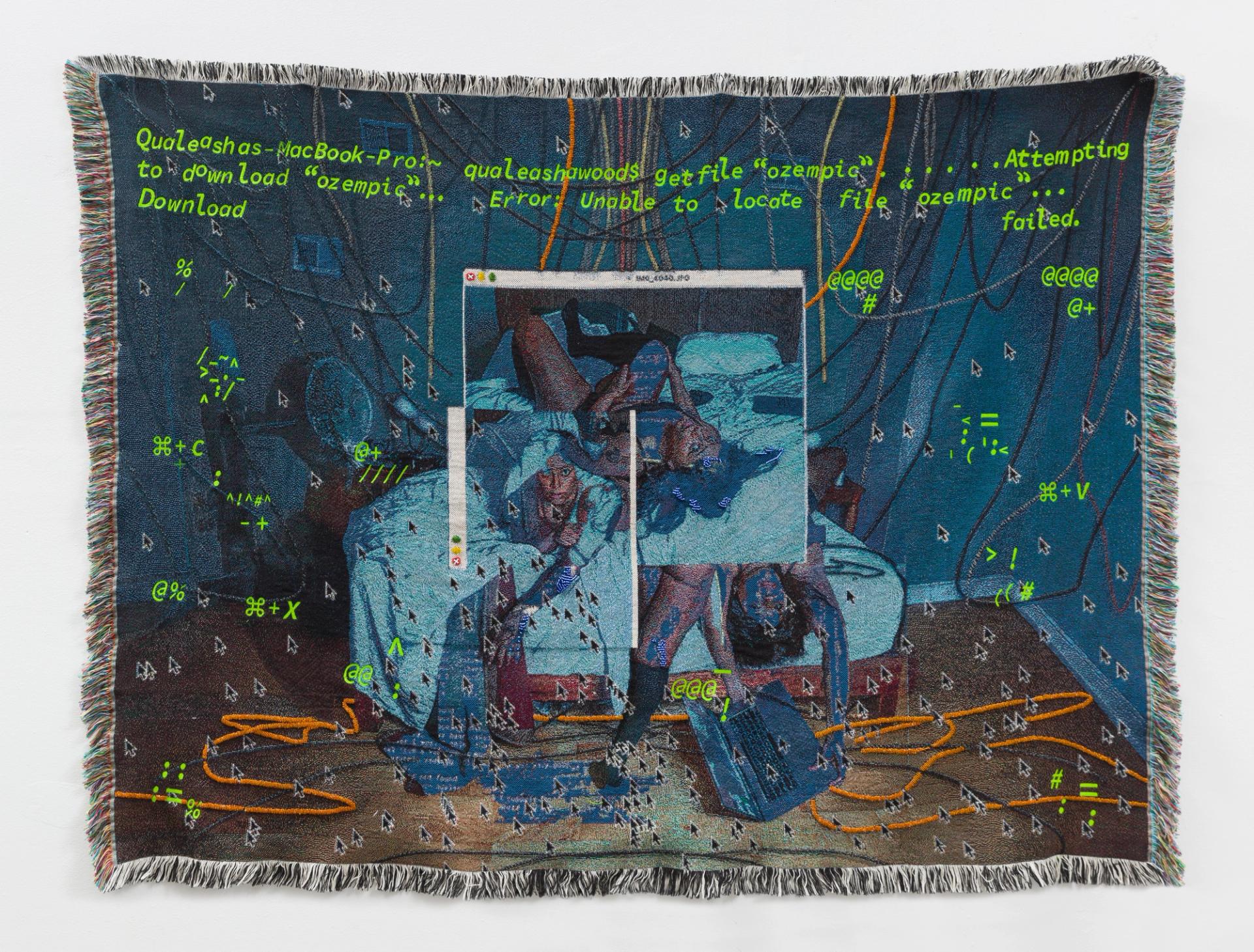
Qualeasha Wood's a flaw in my code (2025) Courtesy of the artist and Pippy Houldsworth Gallery, London
Switching off with art
The title of the show “compulsory continuous connectedness” comes from the media scholar Ludmilla Lupinacci, who coined the term to “describe our contemporary state of being online—addressing the impossibility of logging off and the paradoxical feelings of overwhelm and isolation created by tools designed to connect us”, a press statement says. The exhibition is split into two parts: one gallery explores the concerns of social media more explicitly, while the other looks at the ways of disconnecting from the digital.
The works on show are not only screen-based, as one might expect, but have been chosen specifically to represent a broad range of media, from photography, screenprinting, sculpture, installation and textile art. For example, Qualeasha Wood’s tapestries, a flaw in my code and influencer (both 2025), use social-media imagery to question how Black femme identities are constructed, performed and consumed online. The artist uses selfies, emojis and digital interfaces to show the power of social media to both create visibility and community as well expose Black women to surveillance, stereotyping and exploitation. Rebecca Moccia’s Ministry of Loneliness (2022-24) explores the contradiction of being constantly connected to digital platforms like social media and yet still feeling lonely.
Salvatore Vitale's Death by GPS (2022–26) is a series that explores our overly trusting attitude towards technology and belief that it is all highly automated—the title references the surprising number of people who have blindly driven to their deaths because of incorrect instructions from their navigational systems.
The project highlights how many other automations in the digital world, such as social media algorithms, in fact still depend heavily on human input. For the project the artist worked with freelancers in the Gauteng region of South Africa—where many work in the IT gig economy providing this unseen human labour—recruiting them through online platforms to produce the videos, photographs and installations in the series.
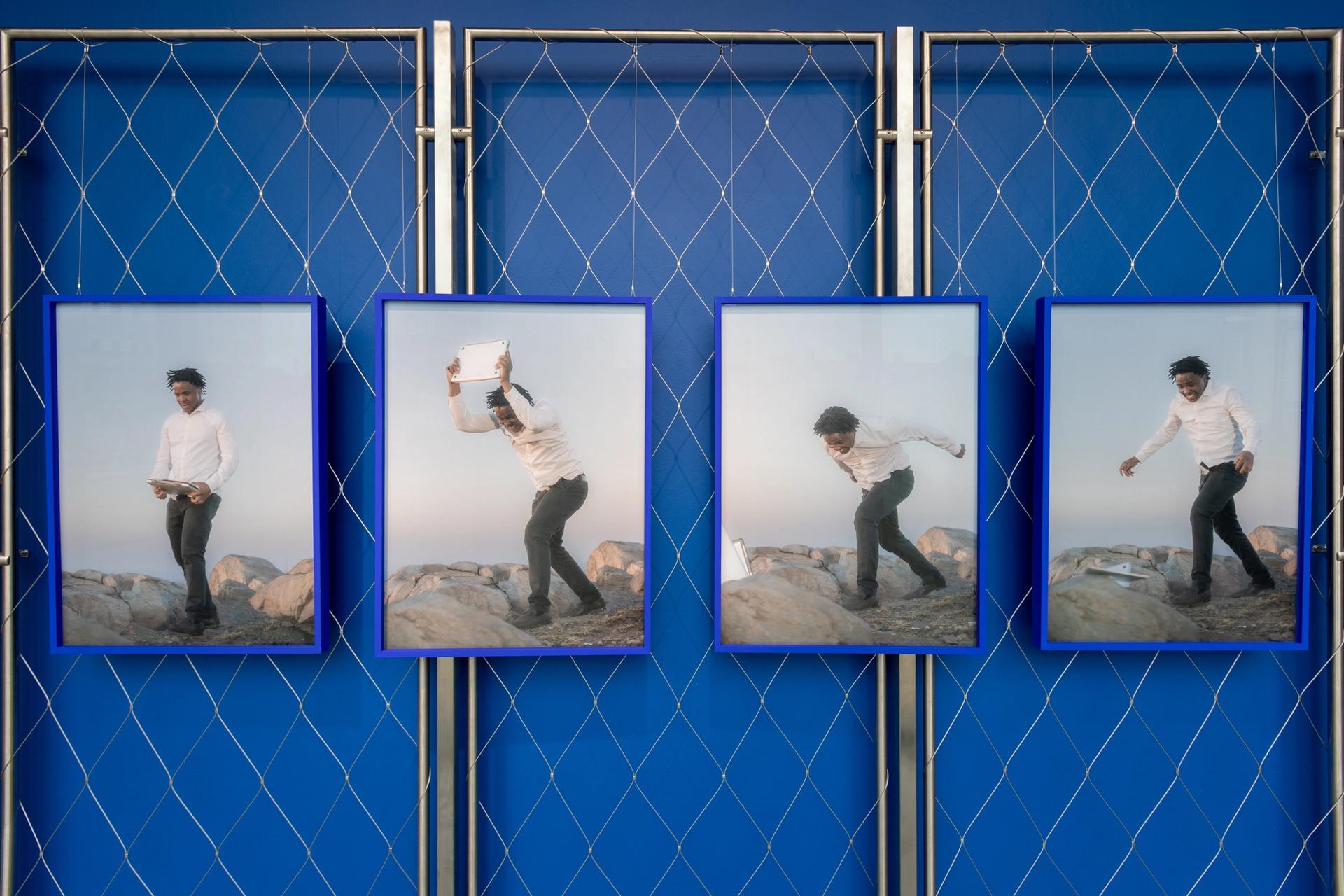
Installation view of Salvatore Vitale's untitled (2023) from the series Death by GPS (2022-26) © Salvatore Vitale; photo: © Anna Lukala
In the video work Haters Will Say I’m Real (2024) by the Canadian-British artist Nina Davies, performers move with their smartphones in their hands, imitating the process of filming and editing social media content, the technology resembling an inextricable extension of their bodies. The work brings up questions around our attachment to technology, who controls our images once they enter digital spaces and the increasingly blurred boundary between physical and digital identities.
The second gallery is like “a counter narrative to gallery one”, the curators say, and visitors are encouraged to remain phone-free while experiencing it. Helen Cammock’s work They Call It Idlewild (2018), which extends into the entrance, reflects on the idea of doing nothing as opposed to being in a state of “compulsory continuous connectedness”.
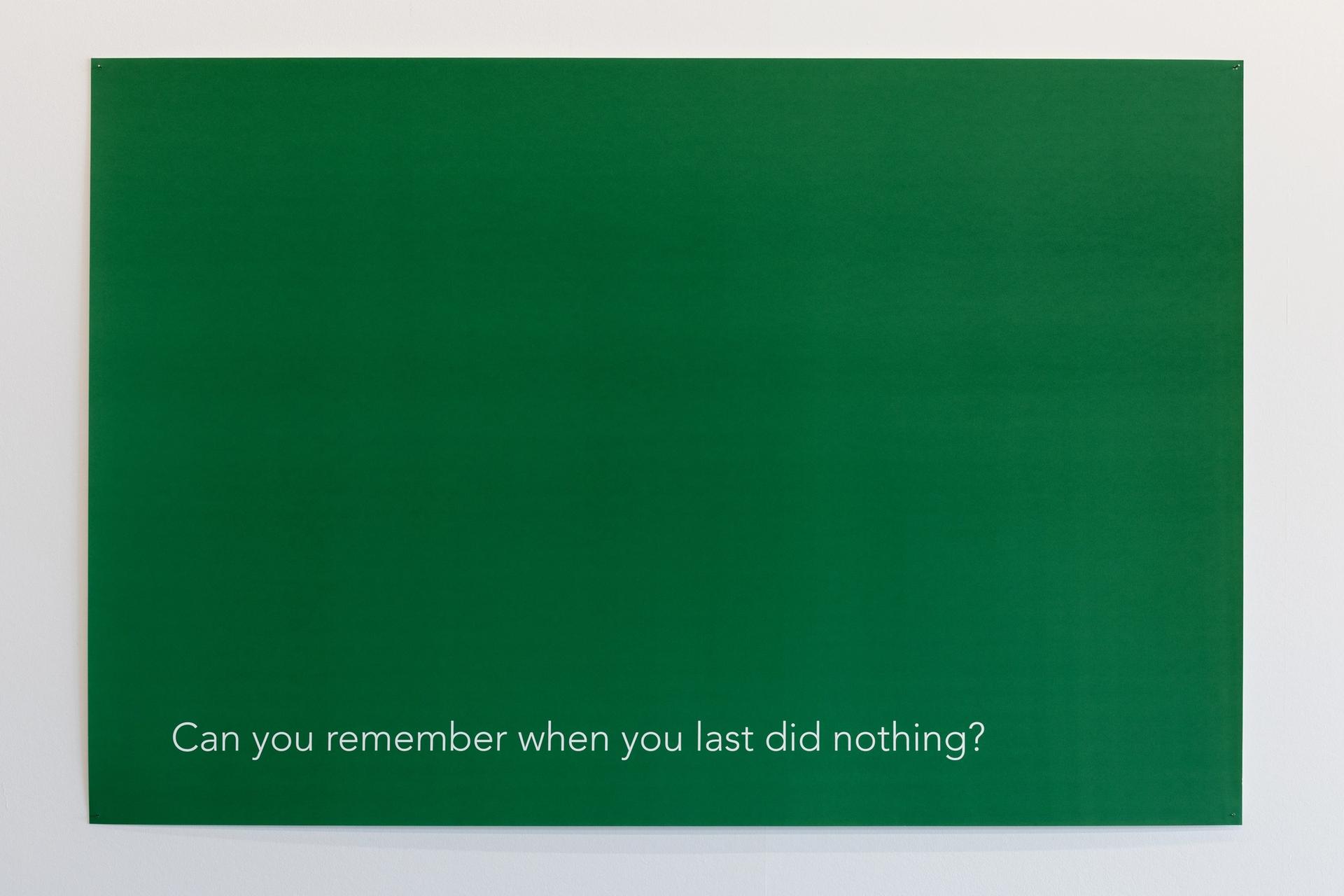
Helen Cammock's Billboard I from They Call It Idlewild (2020) Courtesy of the artist and Kate MacGarry; photo © Anna Lukala
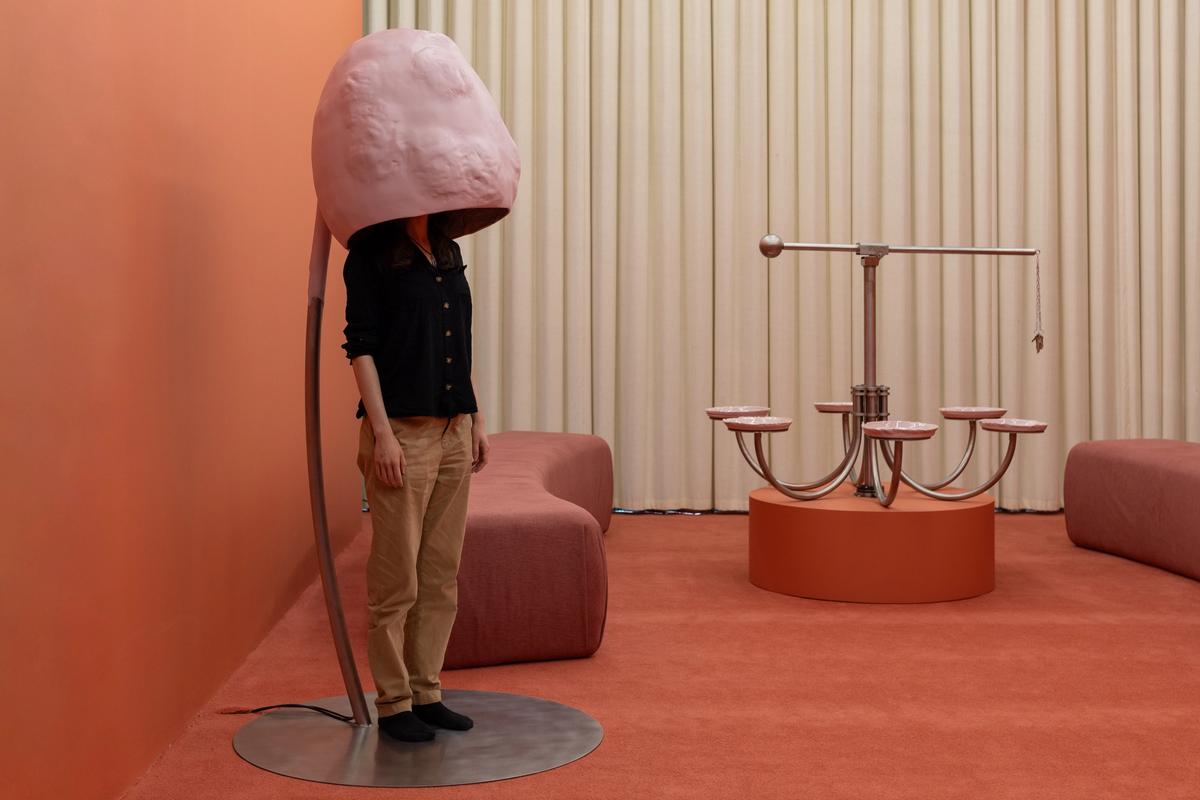
Meanwhile, a new commission by Gad el Rab and Sinders offers relief from the vicissitudes of social media and digital technologies. Titled Default Mode, the interactive installation invites visitors to switch off and to “sit with the discomfort that networked media is designed to prevent”, they say.
The installation is made up of a carpeted, low-lit room with soft communal seating around which there are wall prompts drawing on neuro-scientific research. In the room are two audio pods that play sound works that are intended to provoke an Autonomous Sensory Meridian Response (ASMR), a sensory experience that some people have in reaction to certain mundane sounds and sights.
“The visitor is invited to spend time in the space, not just to look at the artworks, but to really try to spend time daydreaming, thinking, and having a fantasy,” Gad el Rab and Sinders say. “There is this notion of ‘soft fascination’ which is at the core of Attention Restoration Theory (developed by the environmental psychologists Rachel Kaplan and Stephen Kaplan in 1989): a gentle form of effortless attention that lets the brain rest and recover.”
There is also a kinetic sculpture inspired by the curators’ research into historic experiments undertaken by artists, inventors and thinkers in order to create a dream-state and different modes of thinking. Made in collaboration with the local artist Mike McShane and the ceramicist Hayley Summers, the sculpture drops keys onto ceramic plates at set intervals. “This sound interrupts the visitor’s meditative state, drawing listeners back into the shared space and away from sleep... to access the hypnagogic creative state at the edge of consciousness,” a statement says.
Gad el Rab and Sinders are keen to see how people will react to their installation and hope that it, as well as the show, will travel to other venues given the widespread relevance of its subject matter. For them, banning children from social media is not a straightforward solution—not only do many young users find ways around the bans but the new rules also slow down conversations around the harms of social media and stop the social media parent companies from taking responsibility. “An age restrictive phone ban doesn’t address the harmful content that is still on social media, or the addictive features,” they say.