

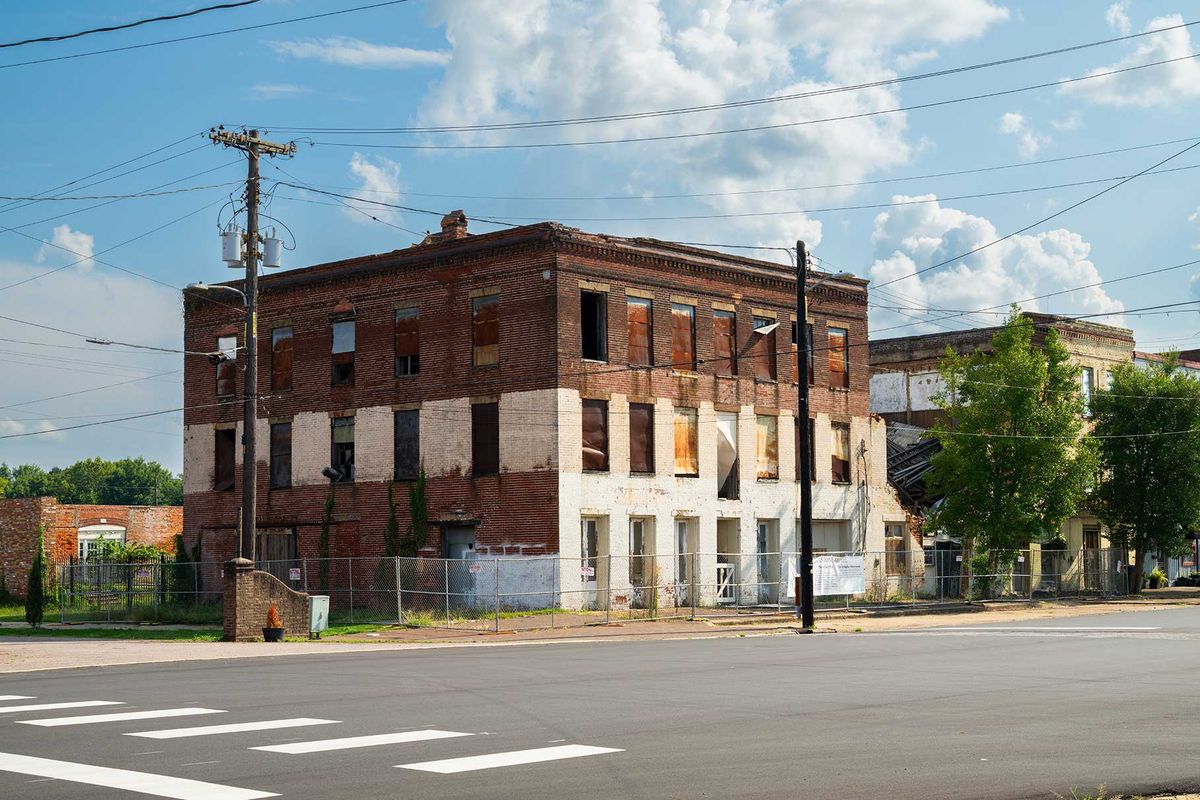
The Edistone Hotel has stood in downtown Selma, Alabama, since 1855 witnessing the tides of history, from slavery to the Civil War to the Reconstruction era to the Civil Rights Movement. In the late 20th century, it was closed and neglected amid the loss of many of the city’s industries and the decline of its population. The three-storey brick building with its boarded-up windows seemed to await the inevitable wrecking ball, until this past autumn when its acquisition by the Conservation Fund was announced.
The hotel is now part of the non-profit’s Legacy Places Initiative, concentrated on sites of African American heritage at risk of disappearing because of development or demolition. The Conservation Fund specialises in land acquisition and conservation, acting as a bridge of ownership that protects vulnerable sites until they can be stewarded by community partners. It previously purchased the final home of the writer Zora Neale Hurston in Florida (after it came on the open market) as well as the Mifflin House in Pennsylvania—a stop on the Underground Railroad—when it was under threat of being torn down.
“The Conservation Fund is not the long-term owner of the space,” Phillip Howard, the director of the Legacy Places Initiative, tells The Art Newspaper. “We’re hoping while we are the owners to help stabilise the building, then the eventual long-term stewards will make a lot of those decisions about the next steps, the design and what the space will ultimately become. It’s almost like a triage, where we’re trying to assess the patient—in this case, the historical building—and see what can be done to immediately stop deterioration and the negative impacts on the space.”
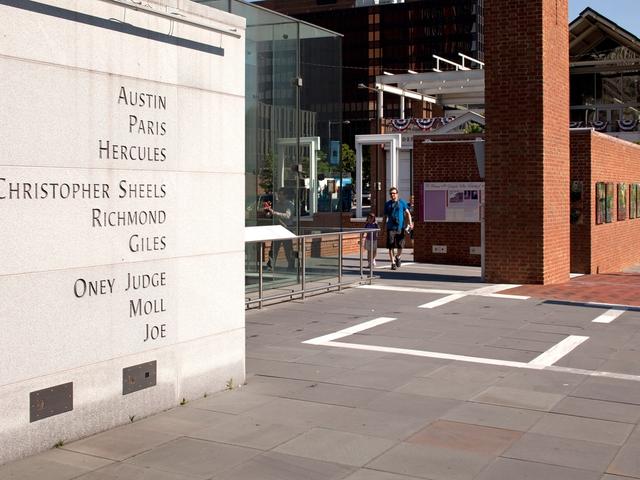
Black American heritage is disproportionately at risk and under-represented in preservation. A 2020 report from the National Trust for Historic Preservation’s African American Cultural Heritage Action Fund found significant under-representation of historically African American neighbourhoods across the US, whether as historic districts or on listings like the National Register of Historic Places. Actions following the Trump administration’s March 2025 executive order against material that presents “American and Western values as inherently harmful and oppressive” have furthered this erasure in public history, such as the removal of panels on slavery at the President’s House Site in Philadelphia. (A judge has since ordered these to be restored.)
“There’s a sense of urgency in this work,” Howard says. “If you come to places like Alabama and Mississippi, or even Atlanta or Chicago, you’re going to find African American heritage sites in distress and in peril. We’re really in a race against time to save these spaces. Not only are we losing the places, we’re losing the people who were there, who can tell the stories, who were actually on the bridge during Bloody Sunday and part of the Freedom Rides. Honouring those people is hugely important.”
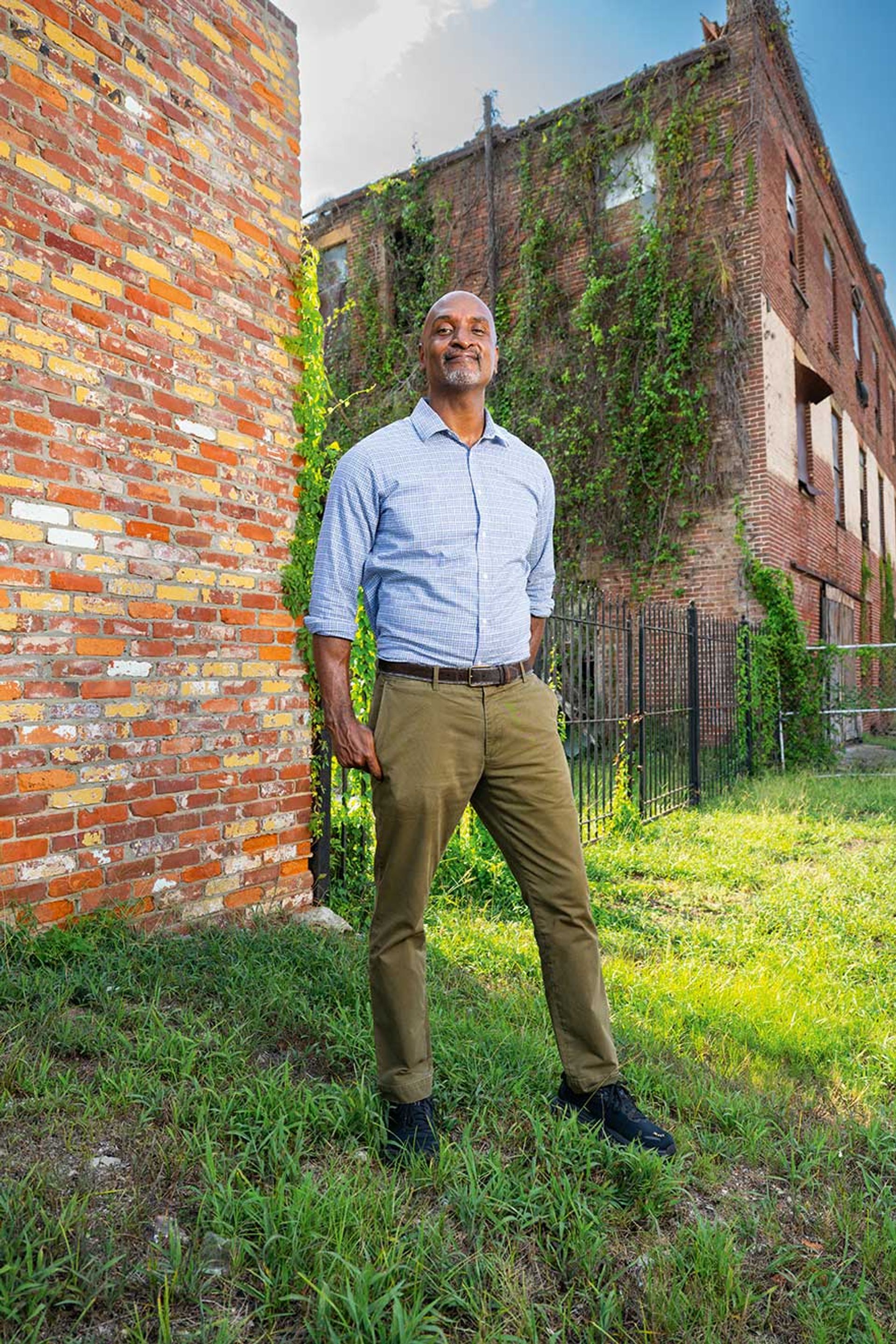
Phillip Howard, the director of the Legacy Places Initiative at the Conservation Fund, which has acquired the building © Jay Brittain
A safe haven for Civil Rights activists
The Edistone Hotel, located on Water Avenue along the Alabama River, is just blocks away from the Edmund Pettus Bridge—a galvanising site in the push for the Voting Rights Act of 1965, which would prohibit racial discrimination at the polls. Participants in one of the historic marches from Selma to Montgomery were attacked at the bridge by law enforcement on 7 March 1965; the event became known as Bloody Sunday. The Conservation Fund also recently acquired the Ben Moore Hotel in Montgomery, the destination city of the 54-mile march. Like the Edistone, the Ben Moore was a safe haven for both Black travellers in the segregated American South and for Civil Rights activists.
Sarah Aghedo, the executive director of the Selma Redevelopment Authority (an advocate for saving the Edistone), calls the hotel “a rare full-circle historic site” in that it “covers the whole sweep of the century between the Civil War and the Civil Rights Movement”. The building was constructed on land used for slave auctions. Following the Civil War, it was home to an office of the Freedmen’s Bureau, a federal agency established by congress to support formerly enslaved people with food, shelter, clothing and other services. By the 1870s, the hotel was offering equal accommodations to all patrons, no matter their race. It operated under different names into the 20th century, housing demonstrators when the city became a hub for the Civil Rights Movement.
In 2022, the Edistone was included on the annual Places in Peril list compiled by the Alabama Historical Commission and the Alabama Trust for Historic Preservation. Its listing notes that while the building held businesses into the 1990s, its last occupant (a barbershop) left “when the roof began to leak perilously”.
One of the Conservation Fund’s early preservation steps this year was removing debris left by a 2023 tornado. In the months ahead, there will be more debris removal, and work on stabilisation and documentation building on a 2022 grant from the National Trust. The Conservation Fund is partnering closely with the City of Selma and the Boston-based architects Model of Architecture Serving Society (Mass) to reimagine the Edistone’s future.
The firm has a focus on projects promoting justice and human dignity and was previously involved in Selma’s Foot Soldiers Park—established with help from the youngest of the 1965 marchers, Jo Ann Bland, who died in February at the age of 72. Community listening sessions for the Edistone informed Mass’s renderings that envision the building as a gathering place that could have resources like a grocery store and co-working space alongside storytelling around its history.
“A lot of these sites that we’re looking to restore and revitalise were engines for the community,” says Jha D Amazi, a principal at Mass. “If we are going to bring them back and revitalise them in a way that preserves that history, it has to be for a productive reason. It does not make sense for these buildings and spaces to sit in the community as mere artefacts when they could be living assets that are contributing to the advancement of the communities that we’re ultimately looking to honour and support by way of acknowledging these histories.”
Amazi emphasises that making these investments in a neighbourhood “can be catalytic”, supporting further development that has potential to revive the area. Restoring the Edistone Hotel is just one step in returning vibrancy to downtown Selma at the same time as recognising its history, uplifting the people who live there now in the process. As Amazi says: “It says to the Selma community: ‘You matter. Your stories matter. Your contributions matter.’”