

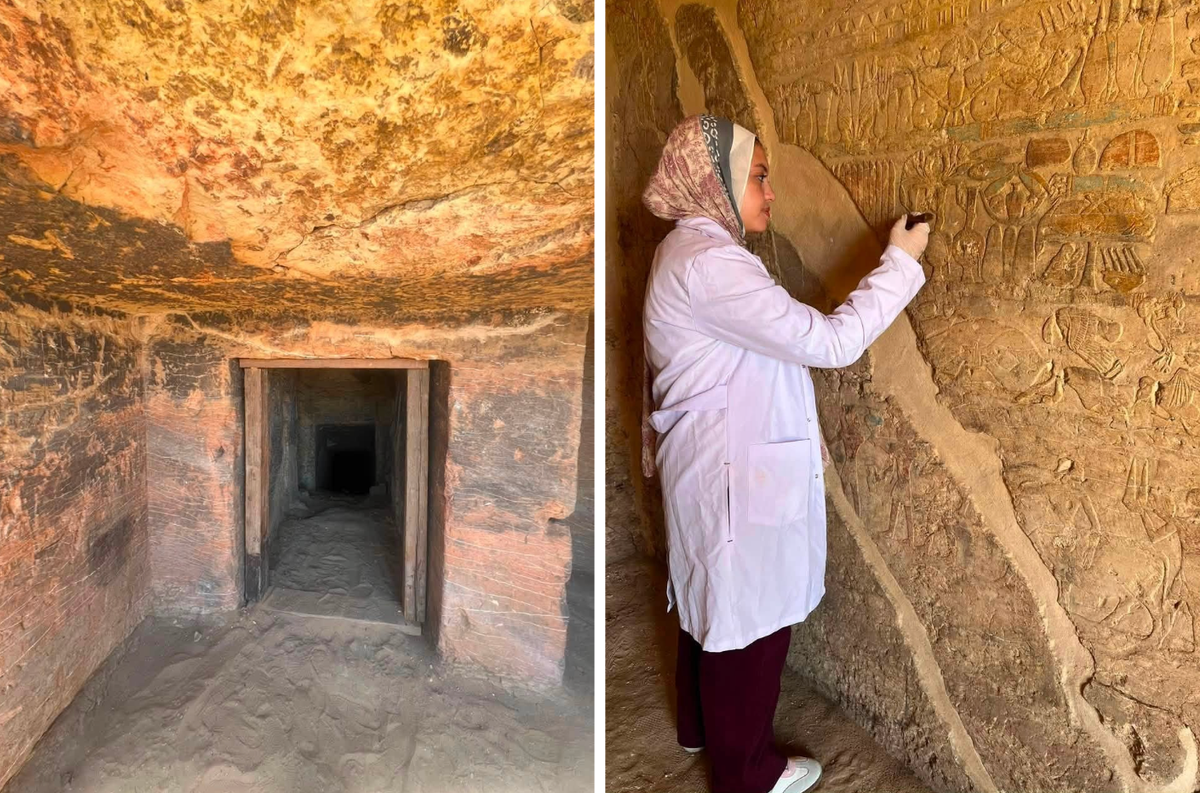
The discovery of three Ancient Egyptian tombs of officials from the New Kingdom period (around 1550BC–1070BC) at the Bubasteion Necropolis in Saqqara, Egypt, have added new insight into the archaeologically rich site. According to Mohamed Abdel-Badie, the head of the Egyptian Archaeological Department, an inscription in one of the tombs cites the return of a military commander from northern Syria, revealing important information about New Kingdom era connections to the Near East.
“The inscription is particularly significant,” he said in a statement, “because it not only confirms the tomb’s New Kingdom date but also provides fresh evidence of Egypt’s military and diplomatic connections with the Near East during the period”.
Another of the tombs belonged to a man named Mentuhotep, who is believed to have been a senior military and administration official. Carvings on the northern walls show hunting scenes and offerings and one large image shows Mentuhotep sat beside his mother, Iahhotep, suggesting the family were of high social rank.
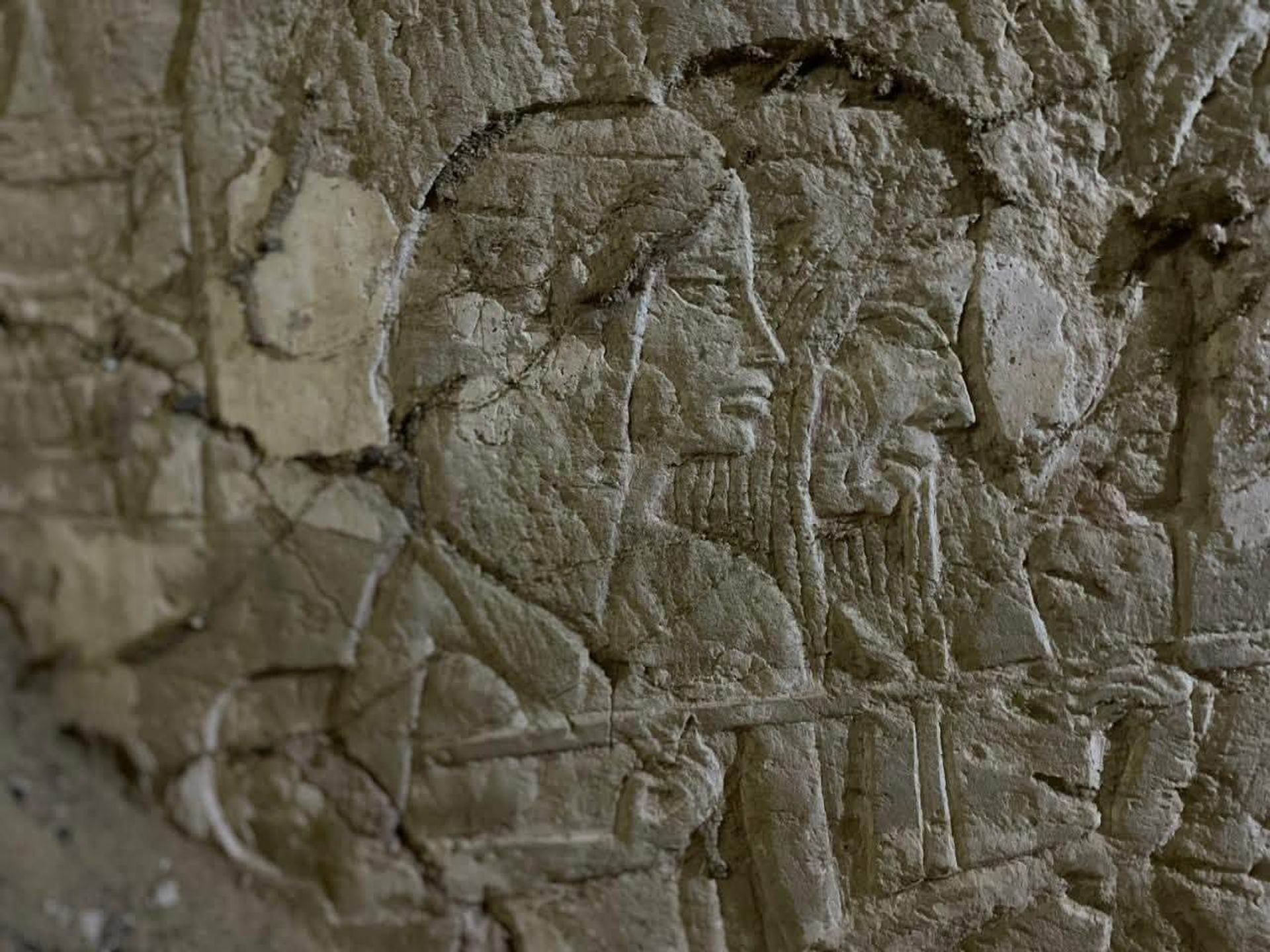
Inscriptions inside one of the tombs Courtesy of the Egyptian Ministry of Tourism and Antiquities
The third tomb belonged to a merchant called Pareemwaya, also known as Samut, and inscriptions also name several family members including his wife, mother and four sons. Family records this detailed are offer a “glimpse into the domestic and social life of one of the prominent figures in the modern era”, a statement says.
Some 19 miles south of Cairo, the Saqqara area served as the necropolis for the ancient Egyptian capital of Memphis and was inscribed as a Unesco World Heritage Site in 1979. It comprises ancient mausoleum crypts of Egyptian royalty and the Pyramid of Djoser—the oldest complete stone building complex known in history, built during the Third Dynasty (around 2686BC–2613BC). The site also contains private funereal monuments of high officials added during the Pharaonic period and was used for non-royal burials and ceremonies through the Ptolemaic (305–30BC) and Roman times.
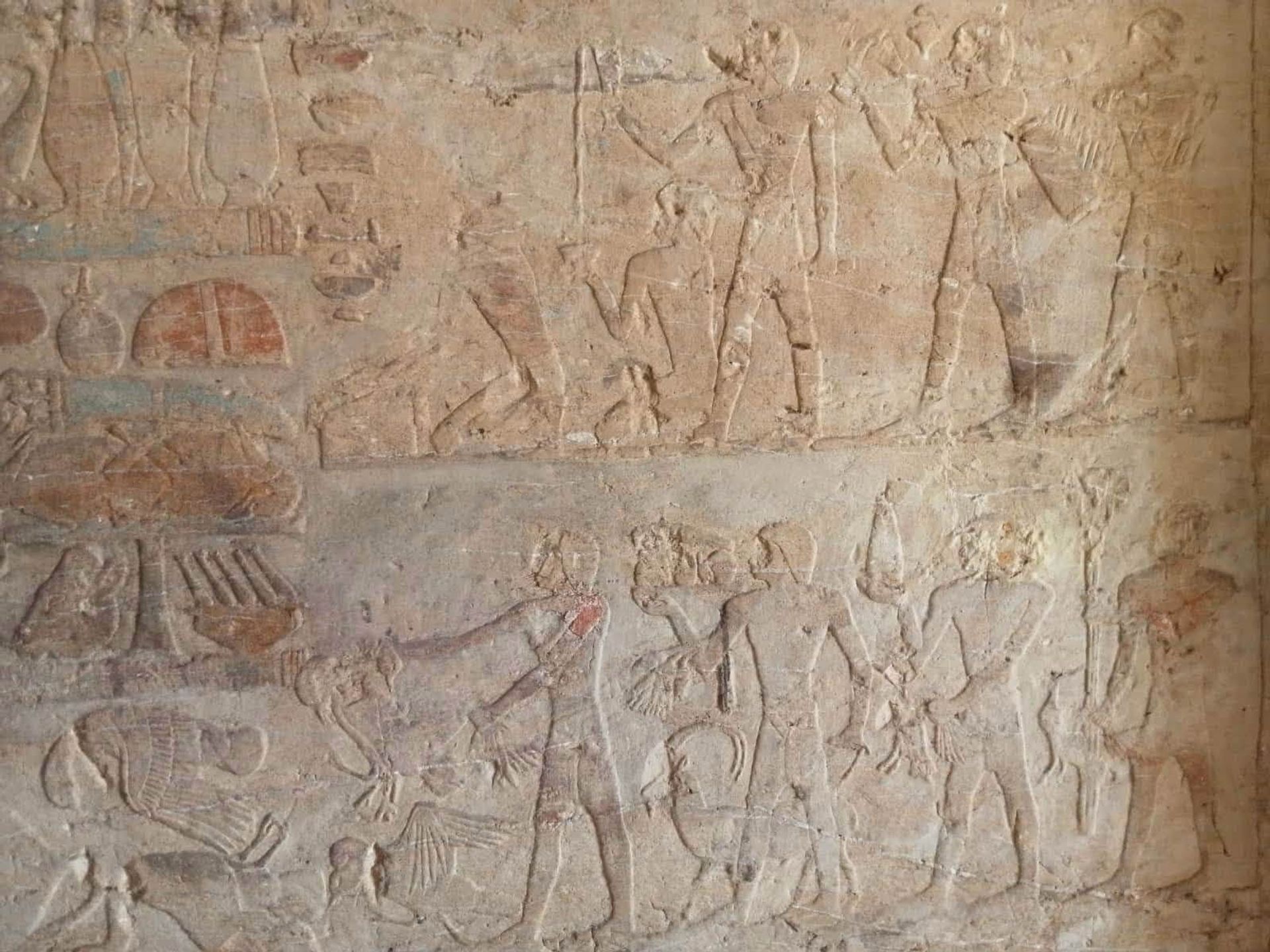
Some of the carvings show hunting scenes and offerings Courtesy of the Egyptian Ministry of Tourism and Antiquities
Hisham Alithi, the secretary general of Egypt's Supreme Archaeological Council, said in a statement that the importance of this discovery is not limited to finding new tombs, but extends to “reviving the biography of their owners and restoring pages of their history that have been buried under the sands for thousands of years”.
The Egyptologist Steve Harvey tells The Art Newspaper that the new discoveries—which he says appear to date from the birth of the New Kingdom—“compare in importance and artistic quality to those of French archaeologist Alain Zivie”, who discovered tombs of extremely important individuals such as the wet nurse of King Tutankhamun, and the Vizier Aper-el decades ago. “Very few officials’ tombs are yet known at Saqqara from the first half of Dynasty 18 [around (1550BC–1292BC],” he says, ”so the new discovery may well indicate that this elusive area has finally been located”.
While the Egyptologist Aidan Dodson from England's University of Bristol agrees that the new discovery “expands the range of types of individuals known to have been interred in the cliff of the Bubasteion, which we now see range from a vizier (prime minister), down to more modest, yet still significant individuals,” he is circumspect of Badie’s assertion that the tomb of the military commander provides any “fresh evidence”.
The New Kingdom’s 18th Dynasty saw Egypt expand its power beyond the Nile Valley into Syria-Palestine, Dodson tells The Art Newspaper, where various local rulers were forced to give their allegiance to the Egyptian state. “The new discovery at Saqqara adds to our stock of private accounts of Egyptian campaigning in the Levant, but assessment of its significance will have to await proper publication, including its precise date, to establish how it fits into our broader picture of Egyptian imperialism," he says.