

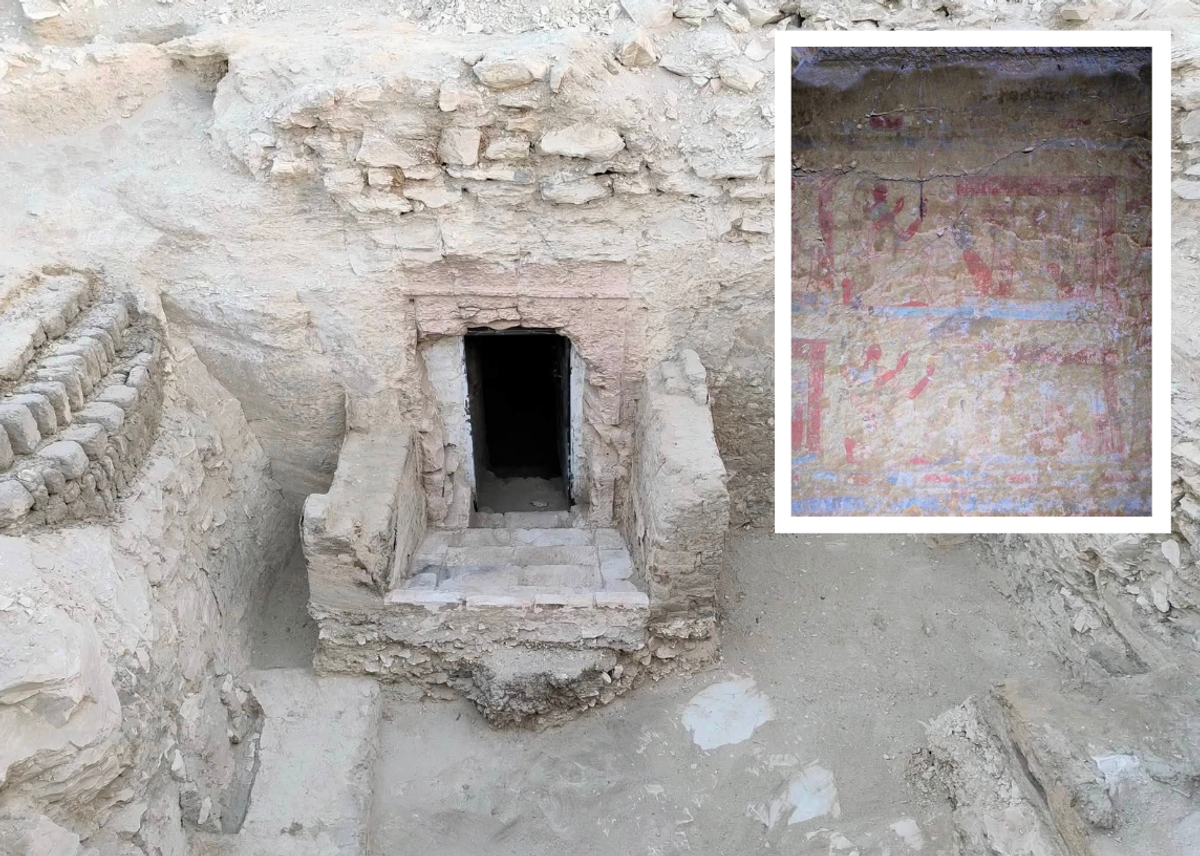
A grave has been discovered on the west bank of Luxor, Egypt, that researchers hope will reveal more about the lives of the people who lived in the ancient city of Thebes. The tomb is around 3,000 years old, dating back to the Ramesside period, a major era in Ancient Egyptian history that encompasses the 19th and 20th Dynasties of the New Kingdom, spanning from roughly 1292BC to 1077BC.
The Dutch archaeological mission working in Luxor, headed by Karina van den Hoeven of Leiden University, uncovered the grave and its accompanying brightly coloured murals, during its current excavation season at the site in the Sheikh Abd el-Qurna area.
Hisham Alithi, the secretary general of Egypt's Supreme Archaeological Council, said in a statement that the site is located east of a cemetery where the team has had a field project since 2018. He also noted that the grave inscriptions revealed that it belonged to a person called “Paser”. Given the location of the grave he is likely to be a priest or high-ranking official.
The accompanying colourful murals show Paser worshipping in front of a number of divinities inside shrines and depicts him with his wife in front of a table of offerings to the gods. His wife holds a sistrum—an ancient percussion instrument—“which implies that she may have the title of temple chantress or singer”, the Egyptologist Steve Harvey tells The Art Newspaper.
Such scenes, Harvey says, are “not unique, but these are important examples of Ramesside period tomb painting that we can compare with others in western Thebes.”
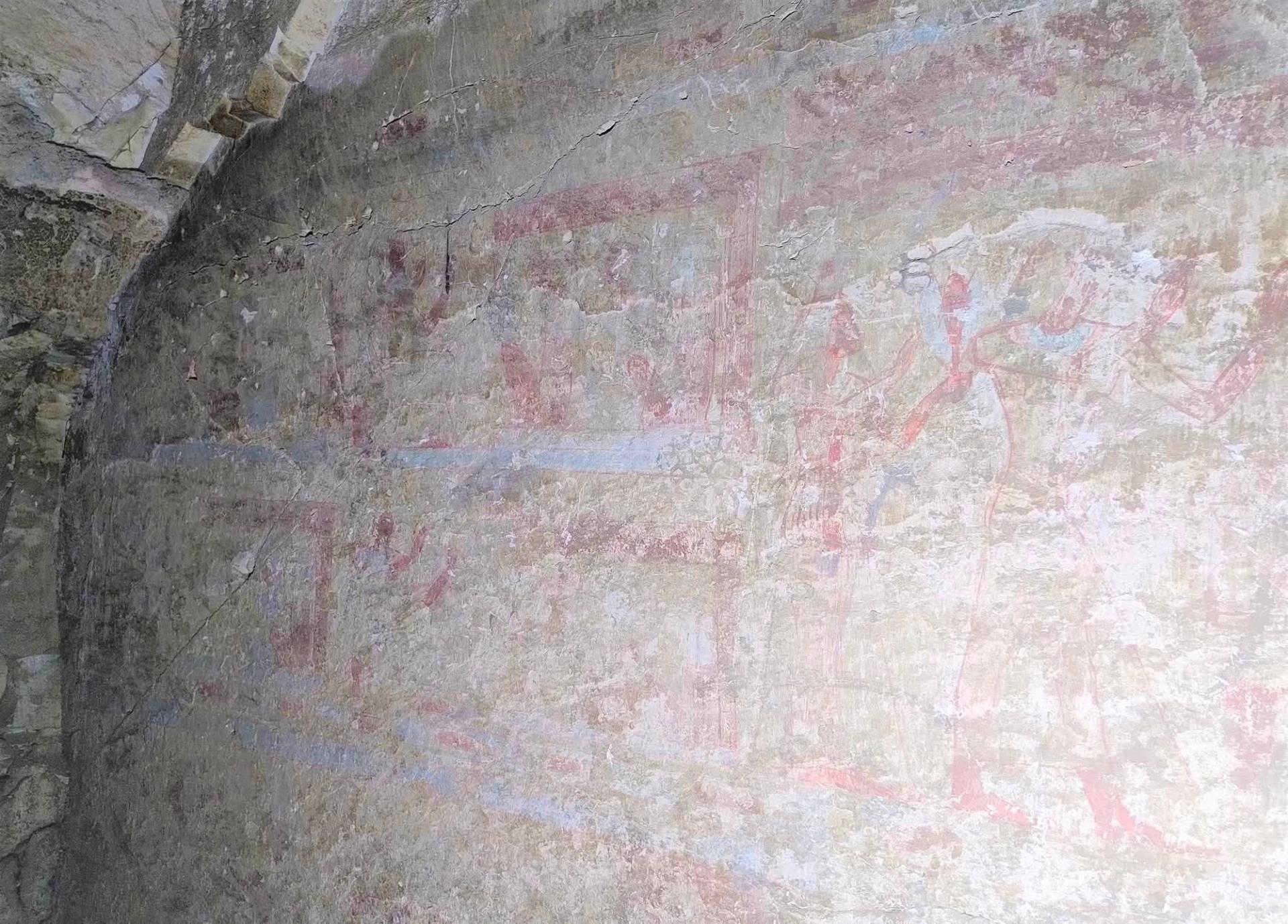
“No doubt further conservation and cleaning will reveal more details in these scenes that are key to ongoing research,” says the Egyptologist Steve Harvey Courtesy of the Egyptian Ministry of Tourism and Antiquities
According to Alithi, the team will continue to document the cemetery, with the aim of identifying the people buried there and “reconstructing their character”. The mission will begin maintenance and restoration of the murals this autumn, Van den Hoeven said in a statement.
Mohamed Abdel-Badie, the head of the Egyptian Archaeological Department, said in a press release that the architectural planning of the cemetery “is in line with the usual style of individual tombs in Thebes during the modern state era, consisting of an outdoor courtyard, a cabin carved in rock in the shape of the letter T, as well as chambers for burial under the earth’s surface”.
He noted that the courtyard of the cemetery boasts several well-preserved architectural elements lined with mud-bricks buffered by a funeral plaque (stela), along with a staircase with ramps on both sides that leads to the cemetery entrance.
“No doubt further conservation and cleaning will reveal more details in these scenes that are key to ongoing research,” Harvey tells The Art Newspaper. Paser, he notes, is a fairly common name among the Theban nobility of the time, “so it will be important to establish the rank and status of this individual, and his relation to owners of other tombs nearby”, he adds.
Ancient Thebes, classified by Unesco as a World Heritage site in 1979, was the religious capital of Egypt for long periods during the Middle and New Kingdom eras. The site comprises areas on both the eastern bank of the Nile, where the temples of Karnak and Luxor stand and where the city was situated; and the western bank, where a large necropolis of private and royal cemeteries lies (including the funerary temple of Queen Hatshepsut).