

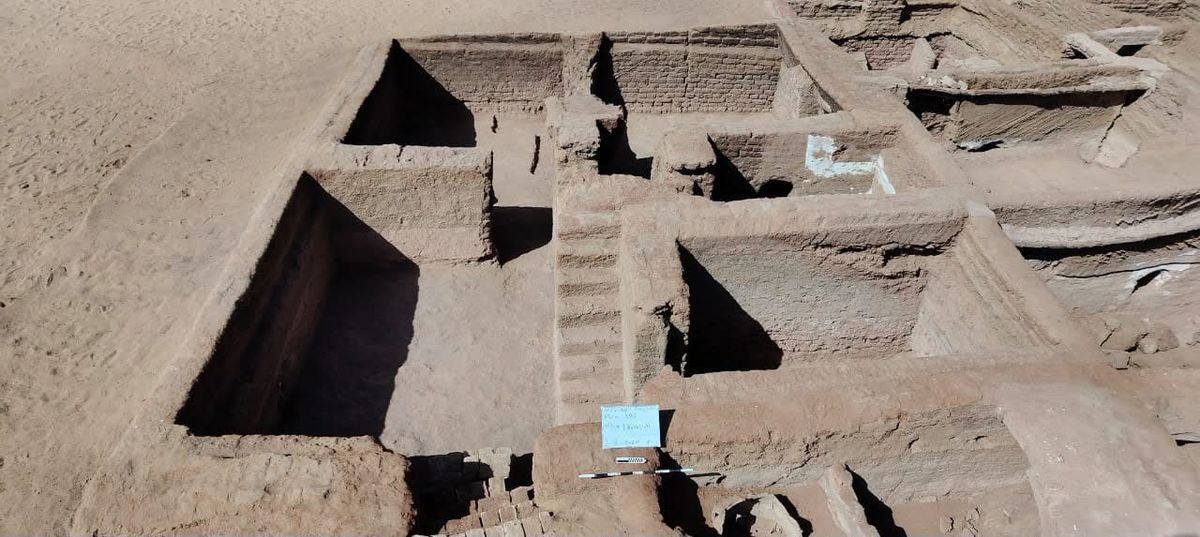
Egyptian archaeologists working at Dakhleh Oasis, 565km south-west of Cairo, have excavated a mud-brick settlement, revealing hundreds of inscribed pot sherds, bronze and gold coins, and religious and domestic buildings. These findings will help experts to reconstruct daily life at the oasis during Egypt’s Byzantine era, which lasted from roughly AD284 to AD641, and highlight the desert region’s rich cultural heritage.
“The excavations are important because many settlement sites are under threat from agricultural expansion, it is well preserved and is yielding significant finds,” the archaeologist Colin Hope of Monash University, Australia—an expert on Dakhleh Oasis who was not involved in the excavations—tells The Art Newspaper. “Like other locations in Dakhleh, it is revealing the wealth of the agricultural communities, their interconnections locally and nationwide. There would have been many such communities throughout Dakhleh of smaller size.”
The many finds from the site, known as 'Ain al-Sebil, were announced in a statement by Egypt’s Ministry of Tourism and Antiquities, following more than a decade of excavation by Egyptian archaeologists. Some of the team’s most significant discoveries are around 200 pieces of ostraca—broken pot sherds that people used as handy writing surfaces—bearing Greek and Coptic inscriptions. These texts include sales and purchases, letters, names, religious activities and information about the villagers’ daily lives.
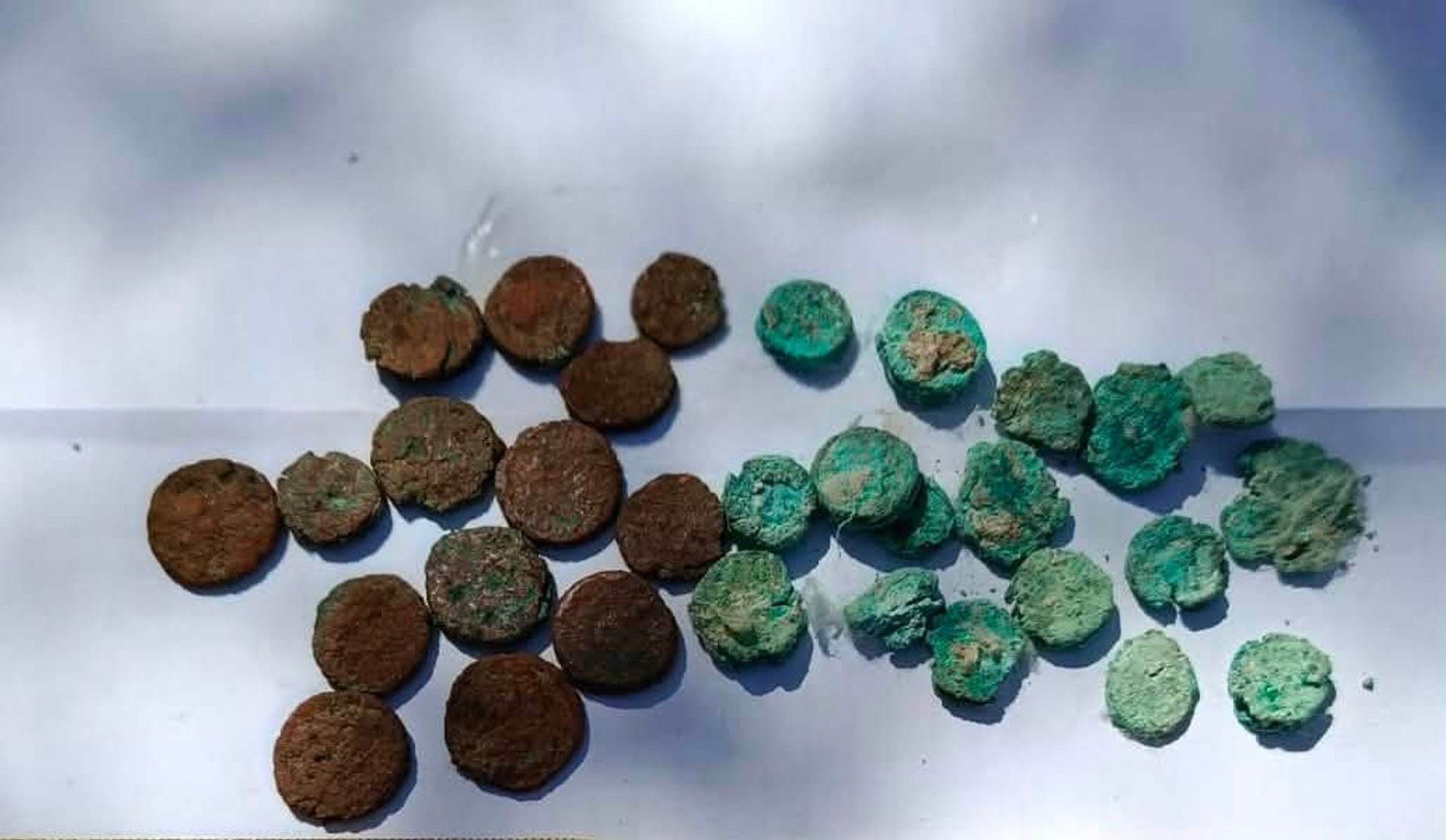
“The discovery of the gold coins is significant as they are rare in Dakhleh, and raises questions of ownership, status and for what purpose they were being used.” Photo: Ministry of Tourism and Antiquities
Other important finds include bronze coins decorated with the faces of Byzantine emperors, Latin texts and Christian symbols, and gold coins from the reign of the Roman emperor Constantius II, who ruled from AD337 to AD361.
“The discovery of the gold coins is significant as they are rare in Dakhleh, and raises questions of ownership, status and for what purpose they were being used,” Hope says. “The settlement was clearly agricultural, so how did an occupant acquire the coins? Were they being used in local transactions?”
'Ain al-Sebil appears to have had an organised village plan, with a fourth-century basilica at its centre, a thick-walled fortress, watch towers and houses with vaulted ceilings and large halls. One of these houses belonged to an individual named Tabibos and may have served as a house church during the early fourth century, before the basilica was built. The team also found tools for grinding grain, pottery, ovens, kitchen areas, vessels for oils and perfumes, and lamps.
“The first to third centuries saw activity on an unprecedented scale in Dakhleh, while in the fourth century the amount of activity may have declined but there were still many sites then and in the following centuries, when the occupants were largely Christian,” Hope says. “The church is important as it clearly is fourth century and there are not too many so well preserved of that date—though Dakhleh preserves quite a few, some much larger and decorated.”
As well as being known for its extensive cultural heritage, Dakhleh Oasis has been on Unesco’s tentative World Heritage list for natural heritage since 2003, as part of Egypt’s nomination of its “Southern and Smaller Oases, the Western Desert”.