

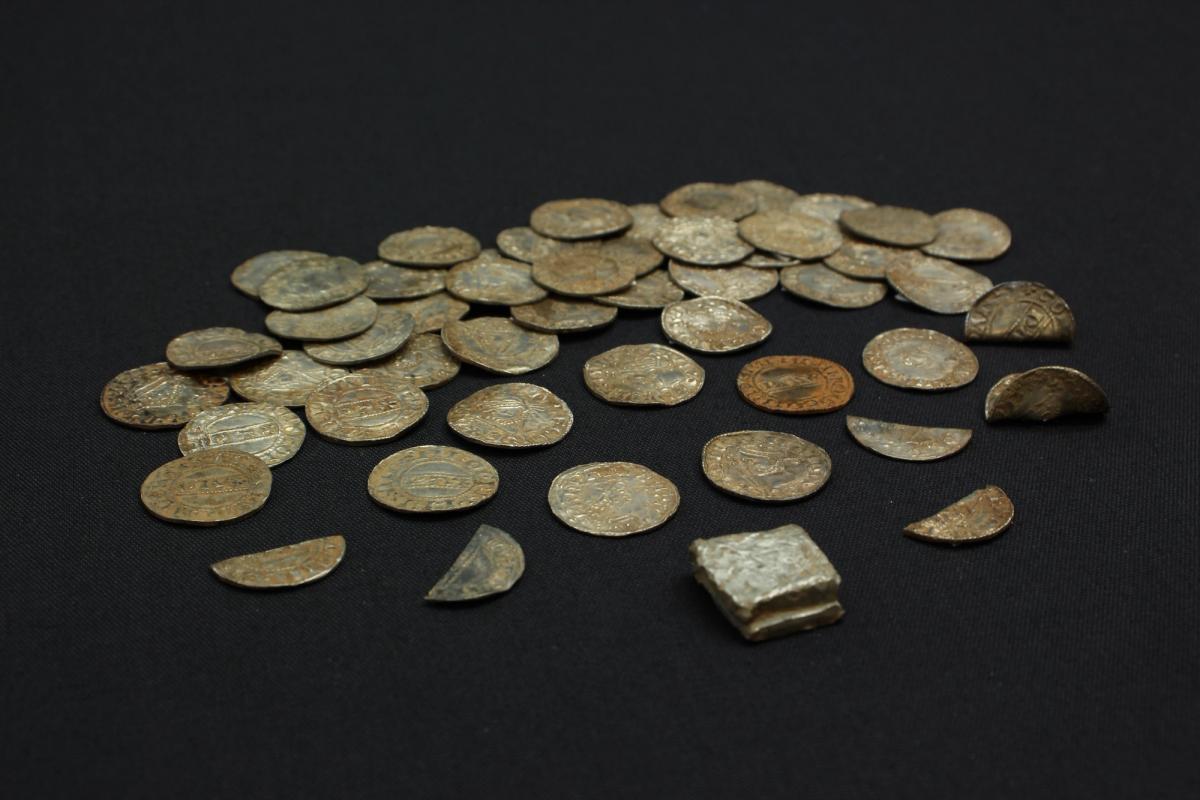
A hoard of 179 silver pennies, likely buried on the eve of the Battle of Hastings in 1066, and a rare Roman vehicle fitting were among a record number of objects discovered in 2024 by the UK’s army of metal detectorists.
The British Museum (BM) announced today (20 January) that 79,616 archaeological discoveries had been uncovered by members of the public in 2024 while 1,540 of the finds were considered "treasure" (as defined by the UK's Treasure Act 1996). “These record-breaking figures are due in large part to metal detectorists, who account for 94% of recorded finds,” a BM statement says. More than 7,000 items were discovered in Norfolk, in the east of England, alone while North Yorkshire recorded the highest numbers of treasure finds (109).
All of the discoveries are registered under the Portable Antiquities Scheme (PAS), a project that aims to record archaeological objects found by members of the public in England and Wales. Managed by the British Museum in partnership with Amgueddfa Cymru-National Museum Wales, PAS makes discoveries publicly available on an online database.
The hoard of 179 pennies may have been deposited late in Harold II’s reign and could have been buried around the time of the Norwegian invasion of England in September 1066 by King Harald Hardrada, museum officials say. A complete copper-alloy Roman vehicle fitting that was likely attached to the body of a carriage or wagon or to the yoke of an animals, which was recently declared treasure, was found in Essex by a dectorist and dates to AD43–200.
Nicholas Cullinan, the director of the British Museum, says: “The British Museum is proud of its role in managing the Portable Antiquities Scheme and the treasure process. Together, they are vital tools for preserving and recording Britain’s past, ensuring that remarkable discoveries made by the public are protected, studied and made accessible to everyone.”