

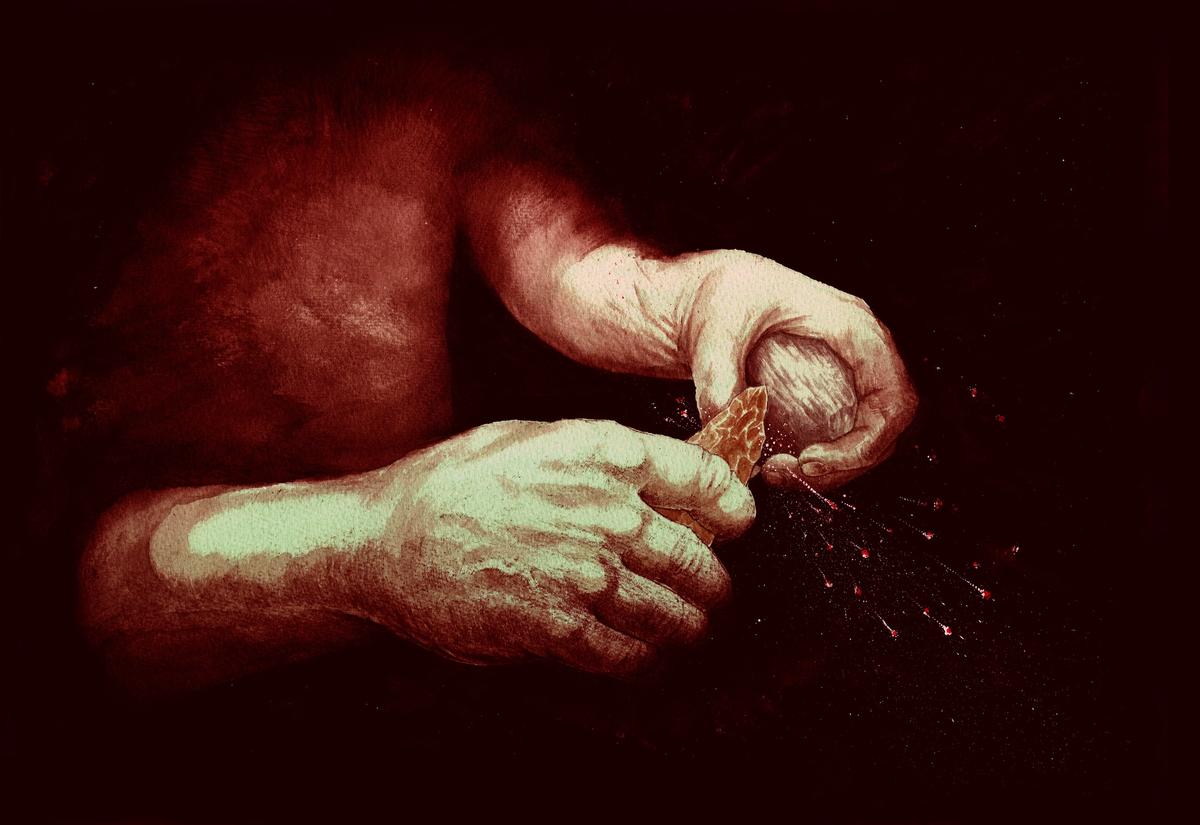
A team of UK researchers led by the British Museum say they have uncovered evidence that humans made fire around 400,000 years ago, pointing to fire-making tools and materials found in a field in Suffolk in eastern England.
“The discovery at the Palaeolithic site in Barnham evidences the creation and control of fire, which carries huge implications for human development and evolution. Until now, the oldest known evidence of fire making was from 50,000 years ago, found in northern France,” a British Museum statement says.
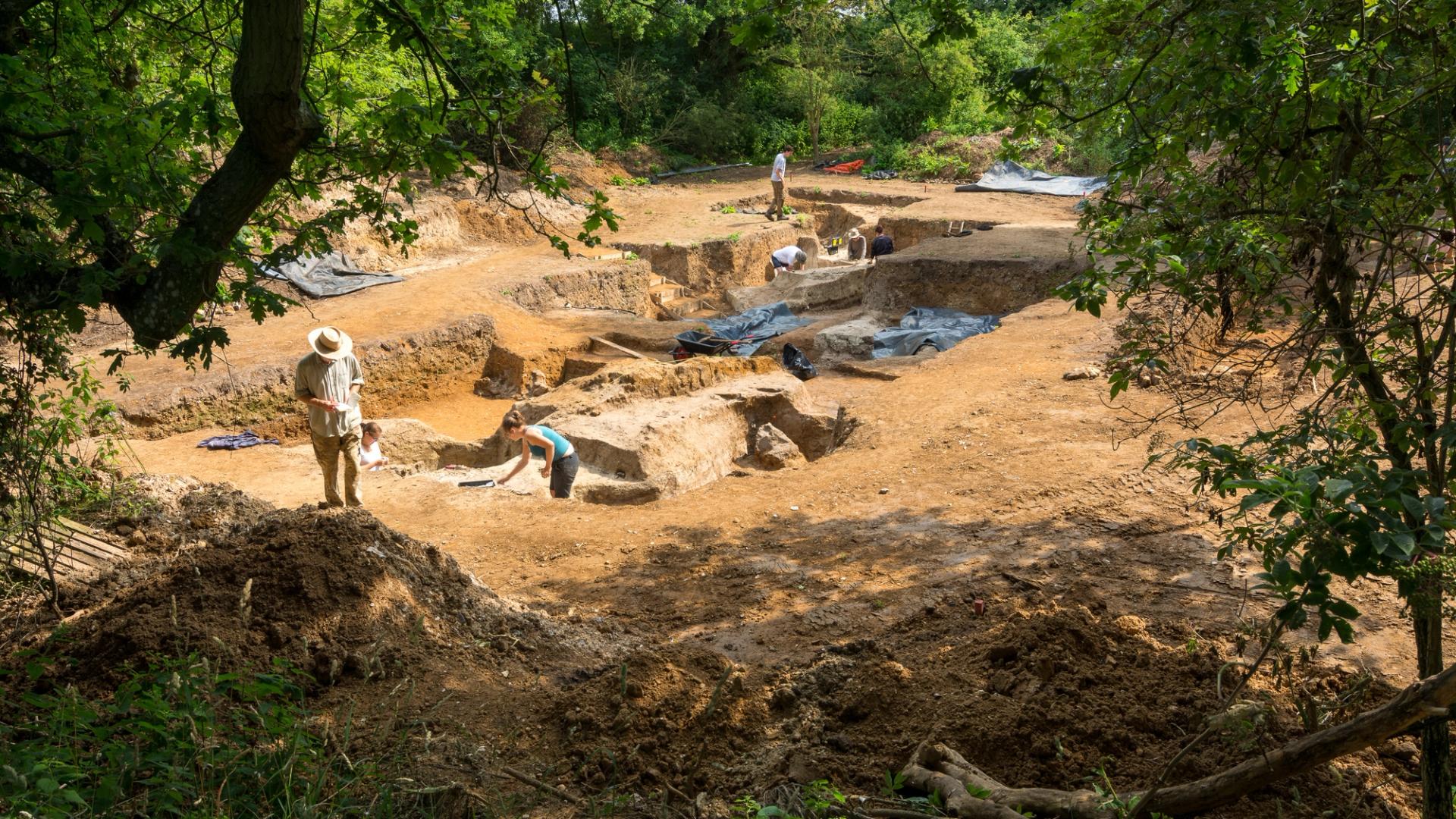
The excavation of 400,000-year-old pond sediments at Barnham, Suffolk Courtesy Pathways to Ancient Britain Project; Photo: Jordan Mansfield
The research team discovered a patch of heated clay, heat-shattered flint hand axes and two small pieces of iron pyrite at the Suffolk site, which were probably used by Neanderthal groups. The heated clay was not caused by a wildfire, say the team which carried out geochemical tests demonstrating that fires were repeatedly made at a particular location.
Iron pyrite, a naturally occurring mineral, can be used to strike flint, creating sparks to ignite tinder. “It’s incredible that some of the oldest groups of Neanderthals had the knowledge of the properties of flint, pyrite and tinder at such an early date,” says Nick Ashton, the curator of Palaeolithic Collections at the British Museum, in a statement.
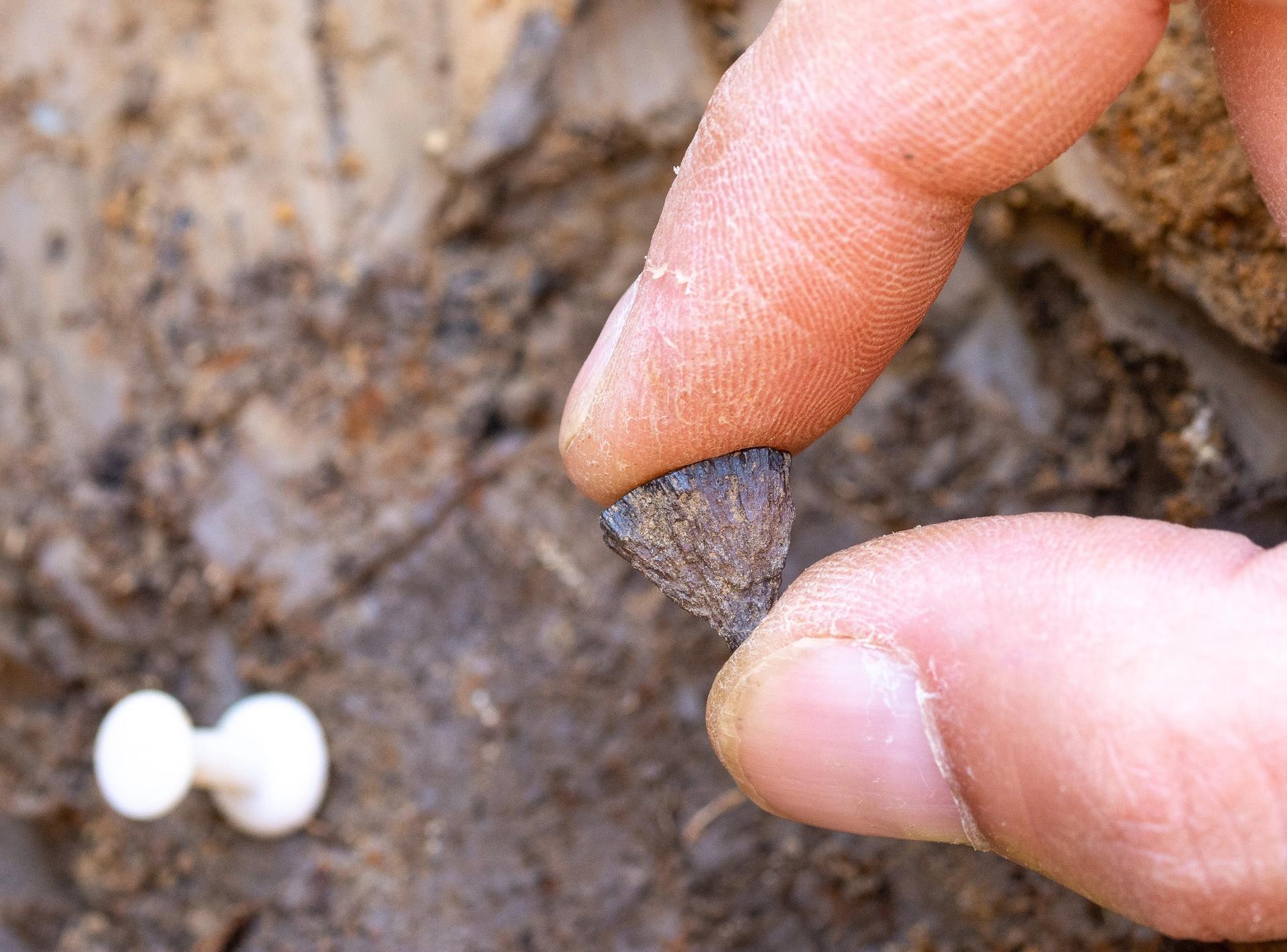
The first fragment of iron pyrite discovered in 2017 at Barnham, Suffolk. Courtesy Pathways to Ancient Britain Project; Photo: Jordan Mansfield
At a briefing held at the British Museum, Rob Davis, the curator for the project titled 'Pathways to Ancient Britain' at the British Museum, added that making fire “made humans more adaptable and able to start occupying Northern territories.”
Creating fire also enabled humans to cook food, fuelling brain growth, he said as boiling removes bacteria and parasites from meat, for instance. “Fire also became a hub for social interaction, providing an opportunity to maintain bonds.” Meetings around the man-made blazes would have helped build social relationships and language skills.
The project research team comprised experts from the Natural History Museum, London; Queen Mary University of London; University College London; the University of Liverpool; and Leiden University. The project findings are outlined in the latest edition of the Nature scientific journal.