

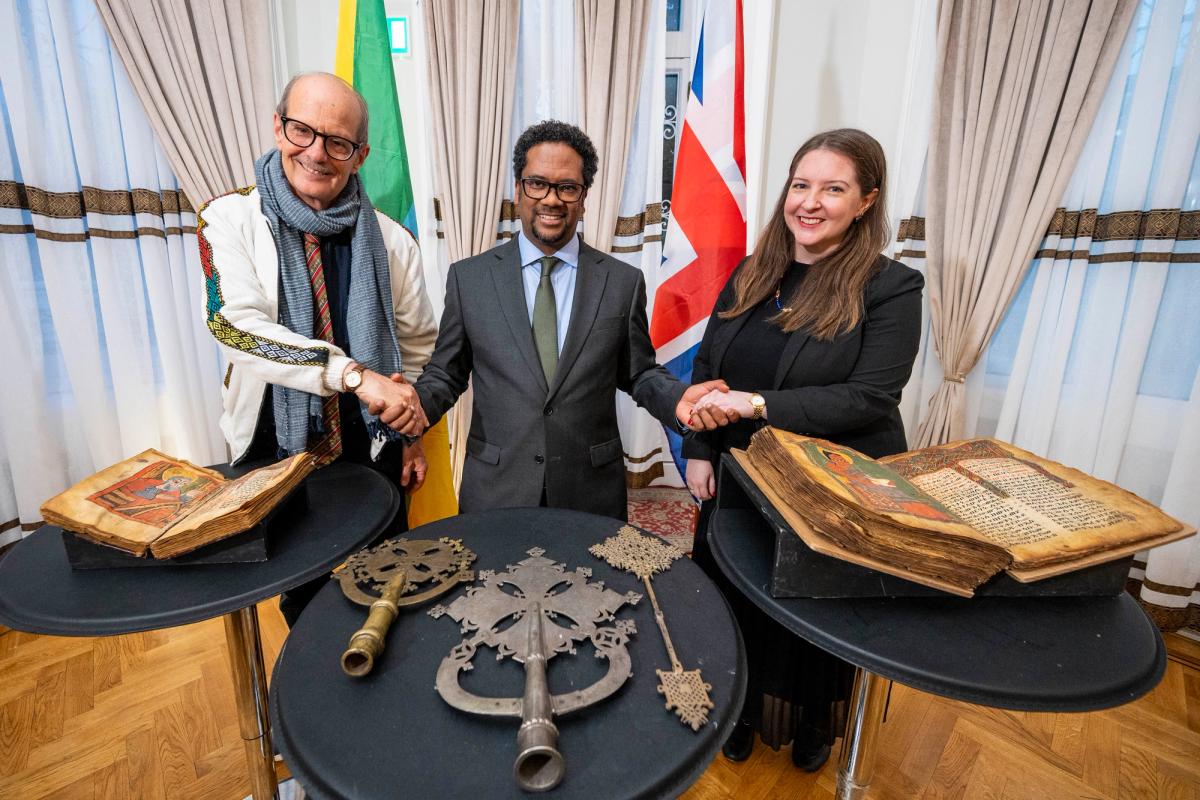
Five historic Christian artefacts were restituted to the Ethiopian Heritage Authority in a ceremony at the country’s London embassy on Wednesday (18 November). The process was part of a wider initiative by the American collector Robert McCarthy and the Toledo Museum of Art in Ohio that is expected to see many more objects returned to Ethiopia.
McCarthy, an American financier who used to live in London and now resides in East Asia, has long been a serious collector of European medieval art. He broadened his collection in the 1990s to include Ethiopian art, at a time when there was less concern about provenance. In 2023-24 he lent objects to the exhibition Ethiopia at the Crossroads, which was presented in venues in Baltimore, Salem in Massachusetts and Toledo. It was at Toledo that he began discussions with Sophie Ong, assistant director of strategic initiatives, about the future of his collection.
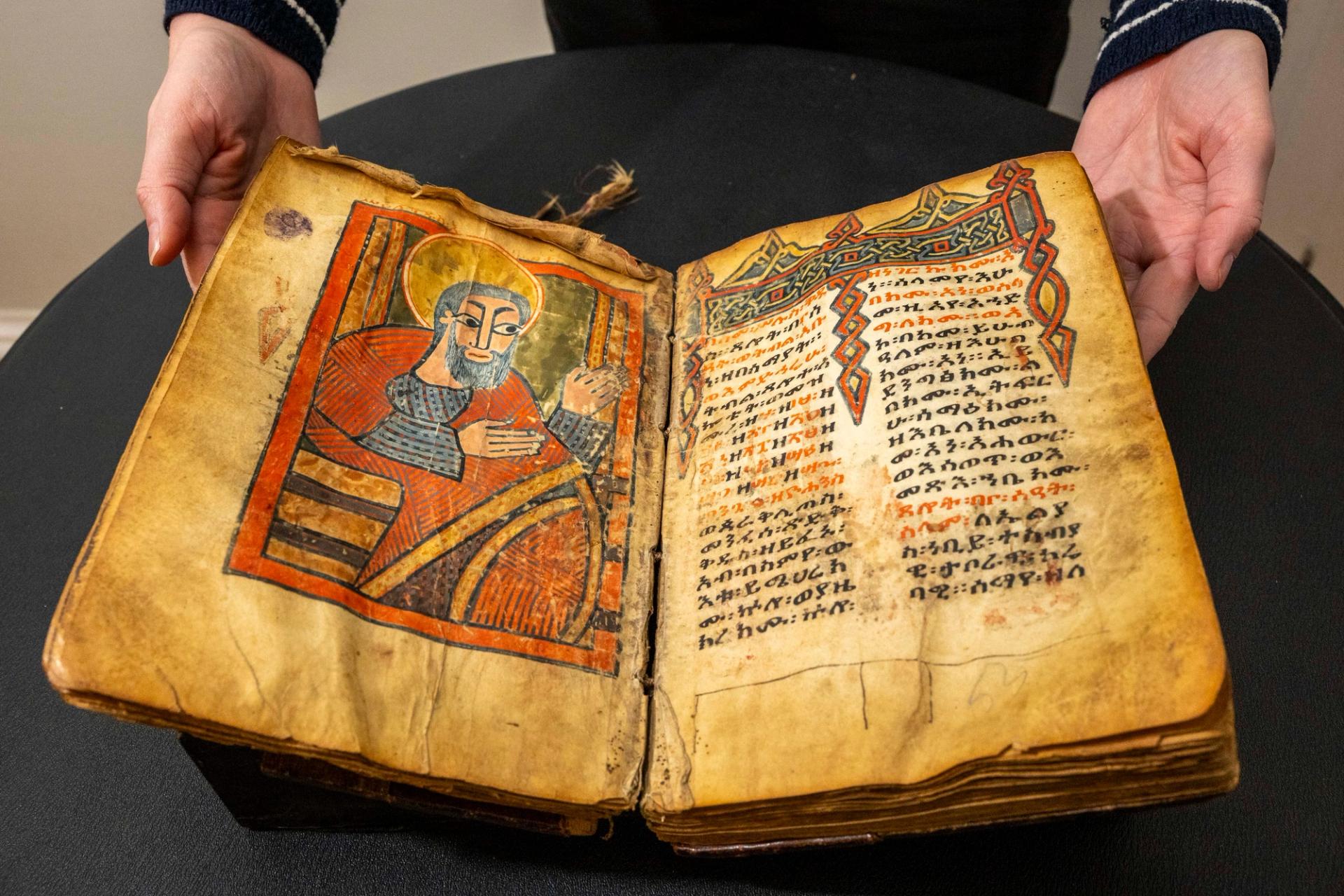
Book of Revelation with Horologium (1400)
Ethiopian Heritage Authority, Addis Ababa. Photo: Stephen Chung for Toledo Museum of Art and Embassy of Ethiopia.
This eventually led to the new, complex arrangement. Toledo will acquire McCarthy’s 375 Ethiopian objects, one of the largest such private collections. Two thirds will be donated and the remainder bought. Some of this material will be exhibited when the museum’s galleries reopen in autumn 2027 after a major reinstallation of its permanent collection.
The museum then intends to return much of the collection to Ethiopia, in tranches over the next 20 years. Any items deemed to have left Ethiopia illegally or inappropriately will be restituted. Details have not been released, but it is assumed that this will include looted material seized by British troops at the 1869 battle of Maqdala and which later came onto the international art market.
Objects judged to have been exported properly will remain at the Toledo museum. Stewardship of items with an indeterminate status will be decided jointly by the Toledo museum and Ethiopian officials. It is thought that ultimately half of McCarthy’s 375 items may be returned.
The unusual tripartite arrangement between McCarthy, the Toledo museum and the Ethiopia authorities could prove to be a template for dealing with restitution claims by other African countries. At the handover, Alula Pankhurst, speaking on behalf of the Ethiopian Heritage Authority, described it as “a new model of partnership”.
Five historic artefacts
This week’s restitution of five objects to the government’s Ethiopian Heritage Authority is slightly different, in that they have been directly returned by McCarthy. The Toledo museum was unwilling to accession them because of records suggesting that they had left Ethiopia after the 1970 Unesco convention.
The items are two 15th-century illuminated manuscripts and three processional crosses. All are believed to have been improperly removed from Ethiopian churches.
The earliest of the two manuscripts is a Book of Revelation with a Horologium (daily cycle of prayers). It includes seven full-page illuminations, dating from around 1400. The volume was recorded in the late 20th century as being in the Saqqā Madḫānē Ālam Church in Šawā Province.
The other manuscript is a large mid-15th century Gospels, which includes full-page images of the Four Evangelists. The scholar Diana Spencer noted in a 1974 article that she saw it at the church of Emmaus Giyor near Wafa Yasus.
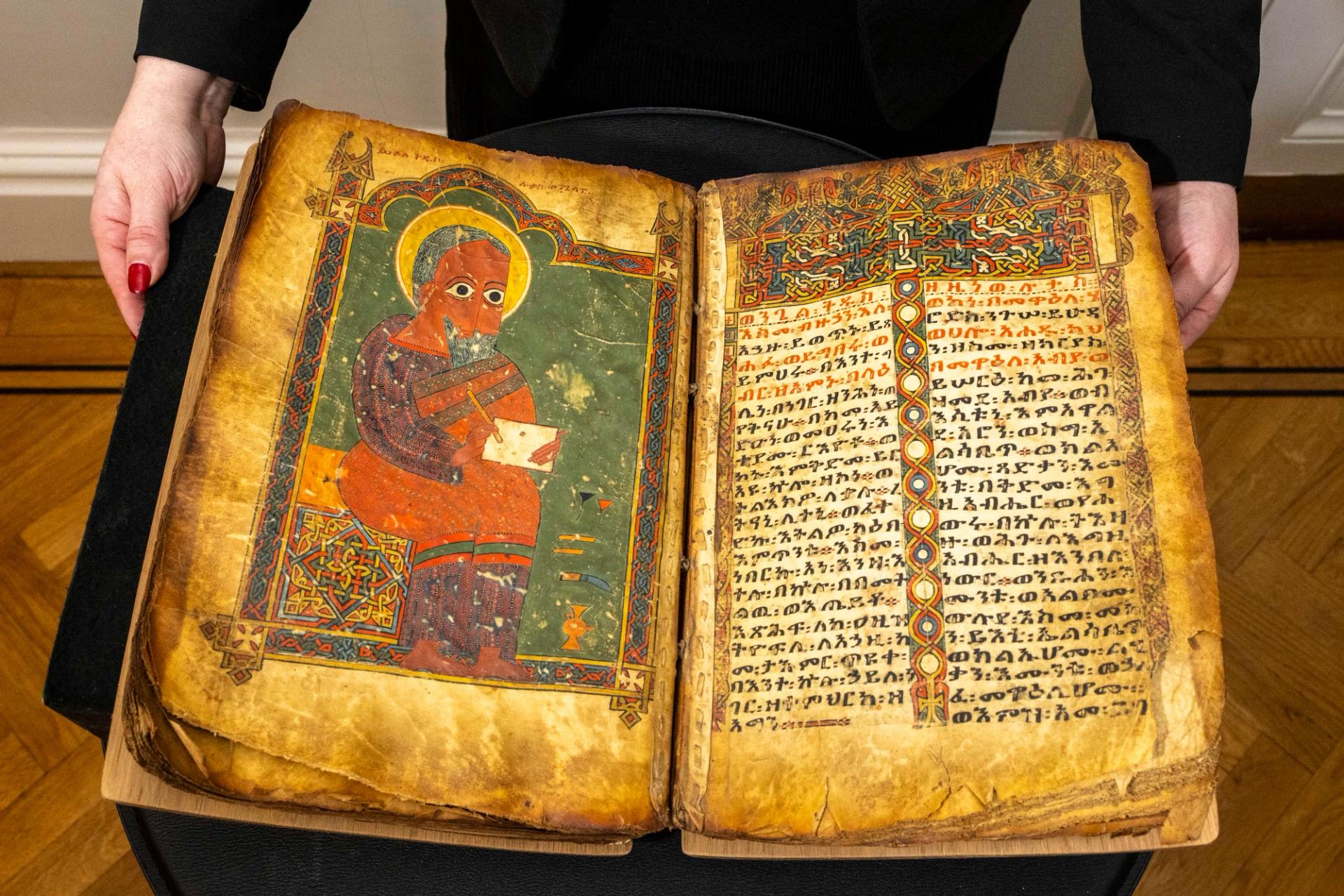
Gospels Book (mid-15th century)
Ethiopian Heritage Authority, Addis Ababa. Photo: Stephen Chung for Toledo Museum of Art and Embassy of Ethiopia
The three brass processional crosses being returned date variously from the late-18th to early-20th centuries. Each has incised inscriptions which may make it possible to determine which church they came from.
The five returned objects are now being sent from London to the National Museum of Ethiopia in Addis Ababa, where a new display of restituted material is scheduled to open in December. Most of the rest of the display will be material which had been looted at Maqdala.
However, the forthcoming Addis Ababa display may feed into a debate over whether religious items that can be identified with a particular location should be retained in the National Museum or returned to the Ethiopian Orthodox Tewahedo Church.