


The National Gallery in London says in a new report that a new public body founded to advise the UK national museum on its future policy and direction has given it “a mandate to be brave”.
The new initiative, titled NG Citizens, was announced in July last year. The museum aims to transform its governance model by launching a citizens’ assembly made up of members of public from across the UK.
The accompanying report outlines the recommendations and shared vision developed by 55 participants who took part in five sessions between November 2025 and March 2026.
The new assembly recommended that the museum should “embrace and grow commercial opportunities” and also use technology to support personalised itineraries, especially for “under-represented” groups, among other objectives.
Other key recommendations for the museum include being more informative about its wider history, representation and context behind the art. The collection also urgently needs to be a true reflection of the UK, said the assembly members.
The overarching question put to the assembly members was: “What do you want from the UK’s National Gallery? How can it bring people and paintings together in authentic and meaningful ways, now and in the future?” A series of eight principles, defined as the “core values that guide how the gallery can move towards the vision”, were discussed at the sessions.
Core challenges on the agenda included: “How can the National Gallery balance its role as a free public gallery whilst being commercially minded? What is the social value of art? How can art galleries explain and support this? Can art ever be open to everyone?” Other issues discussed include “how to bring in new, diverse and loyal audiences.”
Over the next four years, a series of smaller panels, made up of assembly members, will work directly with the gallery to oversee the implementation of these ideas. “NG Citizens will now continue into its second phase: the Citizens’ Panel. The panel will consist of three separate cohorts between 2026 and 2030,” says the report.
Some issues were not up for discussion at the sessions says the report, such as ideas that would result in significant changes to existing buildings; ideas that involve buying or selling paintings; and ideas that might compromise the gallery’s role as an arm’s length body of the UK government.
The report concludes: “The National Gallery was the first of its kind to do this on this scale, in the world. We can accept it was never going to be perfect; it would present challenges, but we hope observers can learn from our experience… To have a group of people that we can work with over future years, who will maintain a critical and supportive perspective, presents opportunities far beyond the usual focus group approach.”
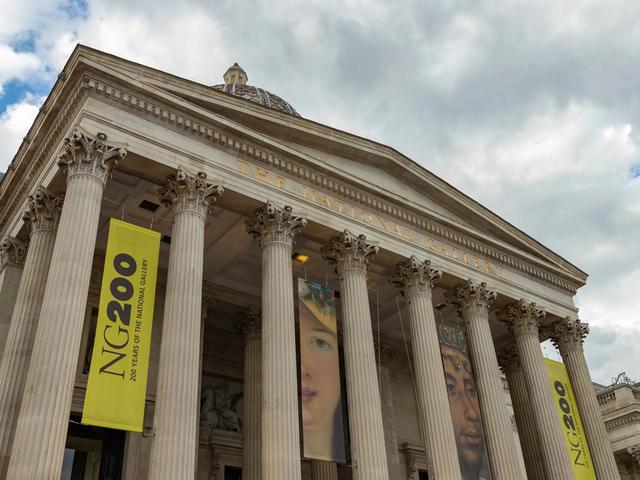
Maurice Davies, a UK culture consultant at Cultural Associates Oxford, says the report is “quite remarkable” but questions whether the National Gallery will be “bold and brave enough” to take forward the assembly’s recommendations.
He tells The Art Newspaper: “The panel have concluded that the gallery needs to be far more than it currently is; a collection of European paintings based in the centre of London. They say the collection ‘urgently’ needs to be far more diverse and to represent the diversity of the UK so it needs to change its collecting policy significantly.
And they say the gallery should share ‘paintings and resources’ throughout the UK which suggests the gallery might want to reconsider its current hugely expensive project to extend its building in central London in favour of using resources to work with museums and galleries in a wide range of locations.”
Last September, the National Gallery received pledges of £150m each (from Michael Moritz’s Crankstart foundation and the Julia Rausing Trust) for its planned major new extension scheduled for completion in the early 2030s.