


An art-filled 17th-century church in the Andes mountains will soon begin five years of conservation work. The project will strengthen the building and preserve its collection of 330 historical objects—including eight paintings by the artist Bernardo Bitti (1548-1610), an Italian Jesuit priest who introduced Mannerism to the Viceroyalty of Peru in the 16th century.
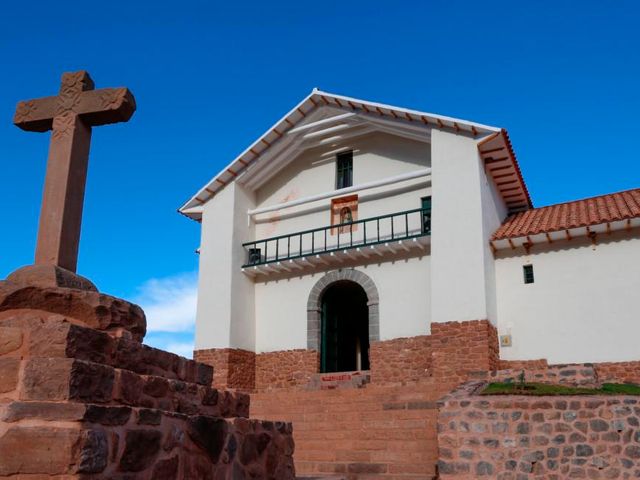
The Getty Conservation Institute (GCI) will work with the Peruvian Ministry of Culture to conserve the Church of Santo Tomás de Aquino, also known as the Church of Rondocan—named for the town in the Cusco region where it was built. The project will include seismic stabilisation using local materials; located 3,400m above sea level, the 340-sq.-m church is in an area prone to earthquakes.
“We provide all the advanced conservation techniques available, and we handle the structural design of the project,” Claudia Cancino, a principal project specialist at the GCI, tells The Art Newspaper. The Peruvian government will finance the work, which will cost $5m and start in 2027. Like other churches in the Andean highlands, Rondocan has adobe walls (1.2m thick), buttresses and a wooden truss roof.
“The project is not only about the temple and its walls. It’s about the cultural and spiritual heritage of the church,” says César Ccorimanya Mayta, the parish priest at Rondocan for the past 17 years.

The Church of Rondocan and its surrounding landscape Photo: Luigi Barazzetti © 2026 J. Paul Getty Trust
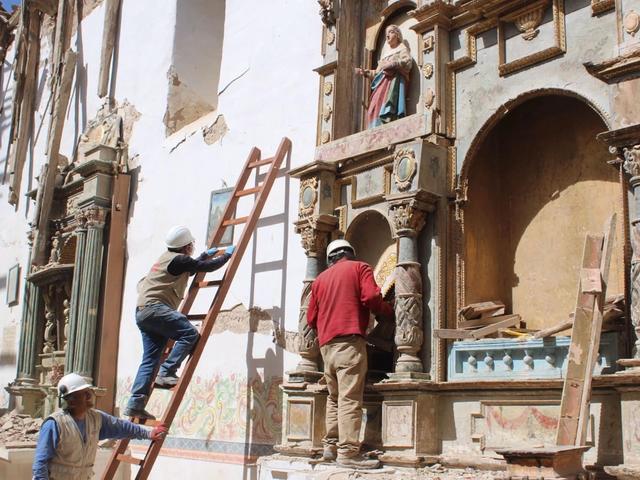
Involving the community as caretakers of the temple is part of the conservation process. Cancino and her team completed a similar project at the Church of Santiago Apóstol in the nearby town of Kuñotambo in 2019. As part of that initiative, they showed locals how best to take care of the building—including deceptively simple tasks, like cleaning the floors.
“You have to understand how to sweep the church and with what, because if you stir up too much dust it sticks to the murals,” Cancino says. “All this training was done with the community of Kuñotambo. We even have a manual in Quechua,” the local Indigenous language.
Through the work in Kuñotambo, the GCI became familiar with the Church of Rondocan. “The community asked for our support so that they could request the Archdiocese of Cusco and the Ministry of Culture to work on their church,” Cancino says.

Technical examination and assessment of a painting from the series Principales Misterios de la Vida y Muerte de Cristo Nuestro Salvador y la Virgen Santísima, attributed to Bernardo Bitti © 2024 J. Paul Getty Trust
“This church is much more than a historic building. It is part of the community’s memory, identity and everyday life,” Fernando López Sánchez, Peru’s vice minister of cultural heritage, said in a statement.
As part of the conservation project, a Bitti painting will travel to Los Angeles for scientific analysis and conservation on the Getty campus.
Bitti arrived in Peru in 1575, creating paintings for churches in Lima and Cusco. When the Jesuits were expelled from the Americas by the Spanish Crown in 1767, their works were sold. It is believed that the parish priest at Rondocan at that time bought Bitti’s paintings in Cusco and had them transferred to the church. The discovery, less than two decades ago, of the only complete series of eight Bitti canvases has sparked renewed interest in the study of his work.
In addition to the paintings, the church’s collection includes sculptures from the viceroyalty era, manuscripts and silver liturgical objects. “The art collection in this small town in the middle of nowhere is breathtaking,” Cancino says.