

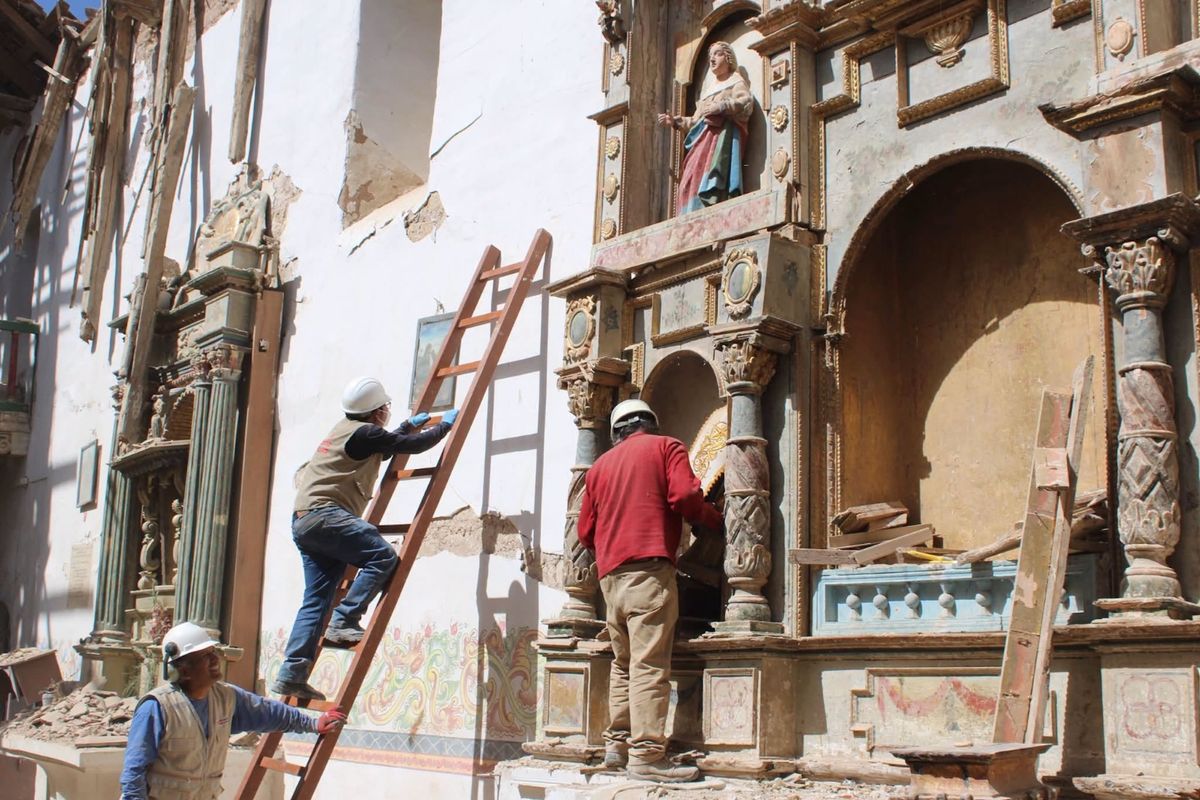
A pilgrimage site in the Junín region of Peru suffered severe damage from a 5.1-magnitude earthquake that brought down homes and religious structures in the province of Chupaca on 18 July. Located in the town of Chongos Bajo, situated 3,270m above sea level, the roof and part of the façade of the colonial-era Iglesia Apóstol Santiago collapsed, as did the carved stone cross known as Our Lord of the Cani Cruz in the adjacent plaza.
Built in the 16th century under the authority of Spanish viceroy Francisco de Toledo, the church had been declared a cultural heritage site by the Peruvian ministry of culture. The temple, which can seat around 300 people, holds religious significance for the local community and beyond.
“It is one of the oldest churches in the region. The local economy revolves around the parish and Cani Cruz,” the parish priest Ricardo Ocharán tells The Art Newspaper. “Even the local government recognises the importance of this place in economic, tourist and spiritual terms. Pilgrims come from all over Peru.” Father Ocharán has launched a fundraising campaign through the Archdiocese of Huancayo, to which the church belongs, to help restore Iglesia Apóstol Santiago.
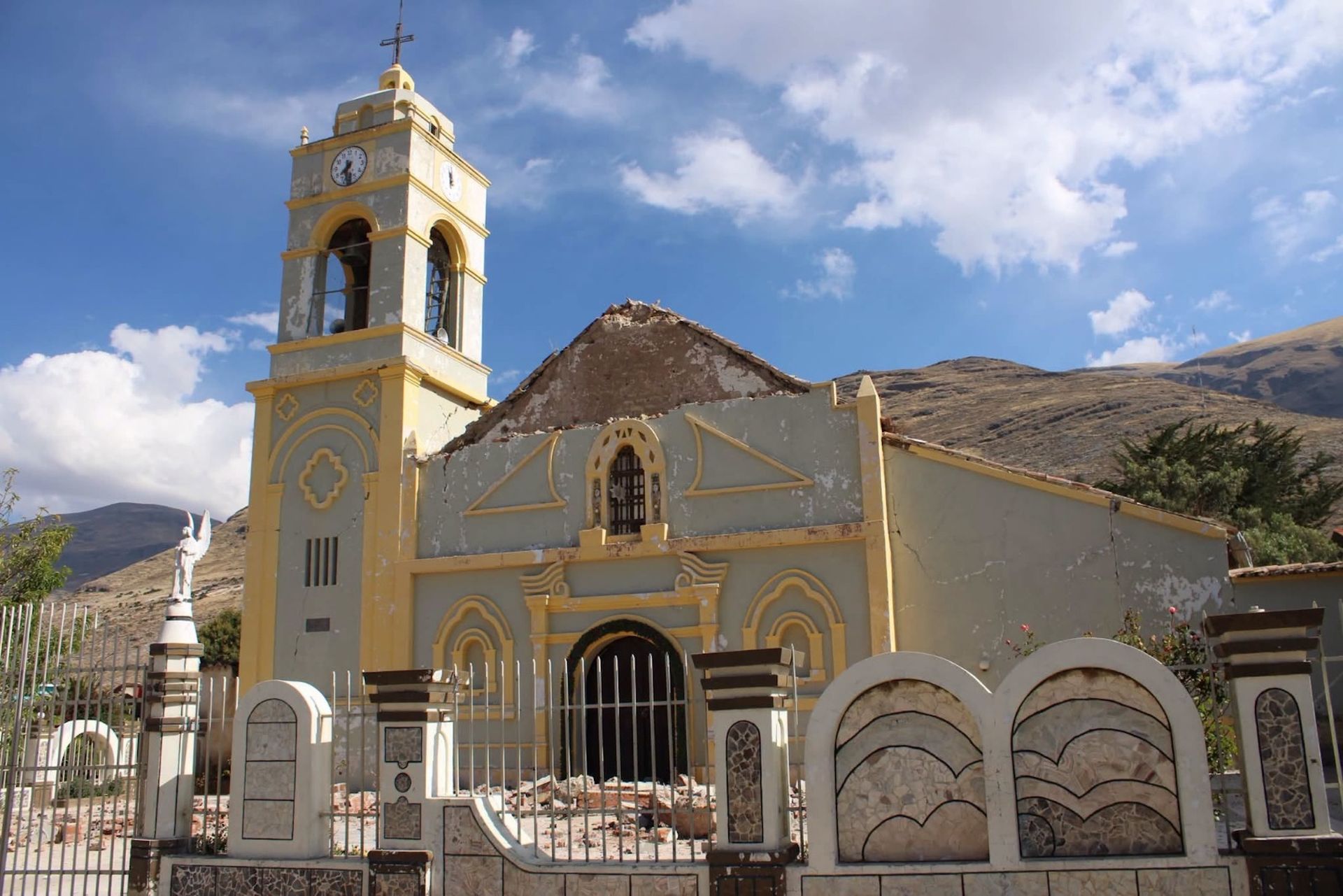
The partially collapsed façade of the Iglesia Apóstol Santiago in Chongos Bajo, Peru following a 5.1-magnitude earthquake on 18 July Courtesy Ministerio de Cultura del Perú
The parish, as is tradition in the area, was built of adobe. The roof had a wooden structure with tiles on top. “We were in the process of starting to replace the roof, which was about 50 years old,” Father Ocharán says. The earthquake caused most of the roof to collapse. What remains is unusable. The church’s 30m-tall belltower, also damaged, is at risk of collapse; it is made of brick and cement, having replaced the original adobe tower after it collapsed in a previous earthquake.
The church’s altars, made of stone and wood, had antique images, some of which broke. “Experts say they can be restored,” Father Ocharán says. Some niches in the altarpieces will need to be rebuilt, he adds.
The earthquake caused the 1.5m-tall Cani Cruz to fall, breaking one of its arms. One of the walls of the colonial-era Capilla del Copón chapel, located less than 1km away, also collapsed, crushing one of its altars. The challenge now lies in raising the funds for the restoration. Father Ocharán estimates that replacing the roof of Iglesia Apóstol Santiago will cost more than $400,000.
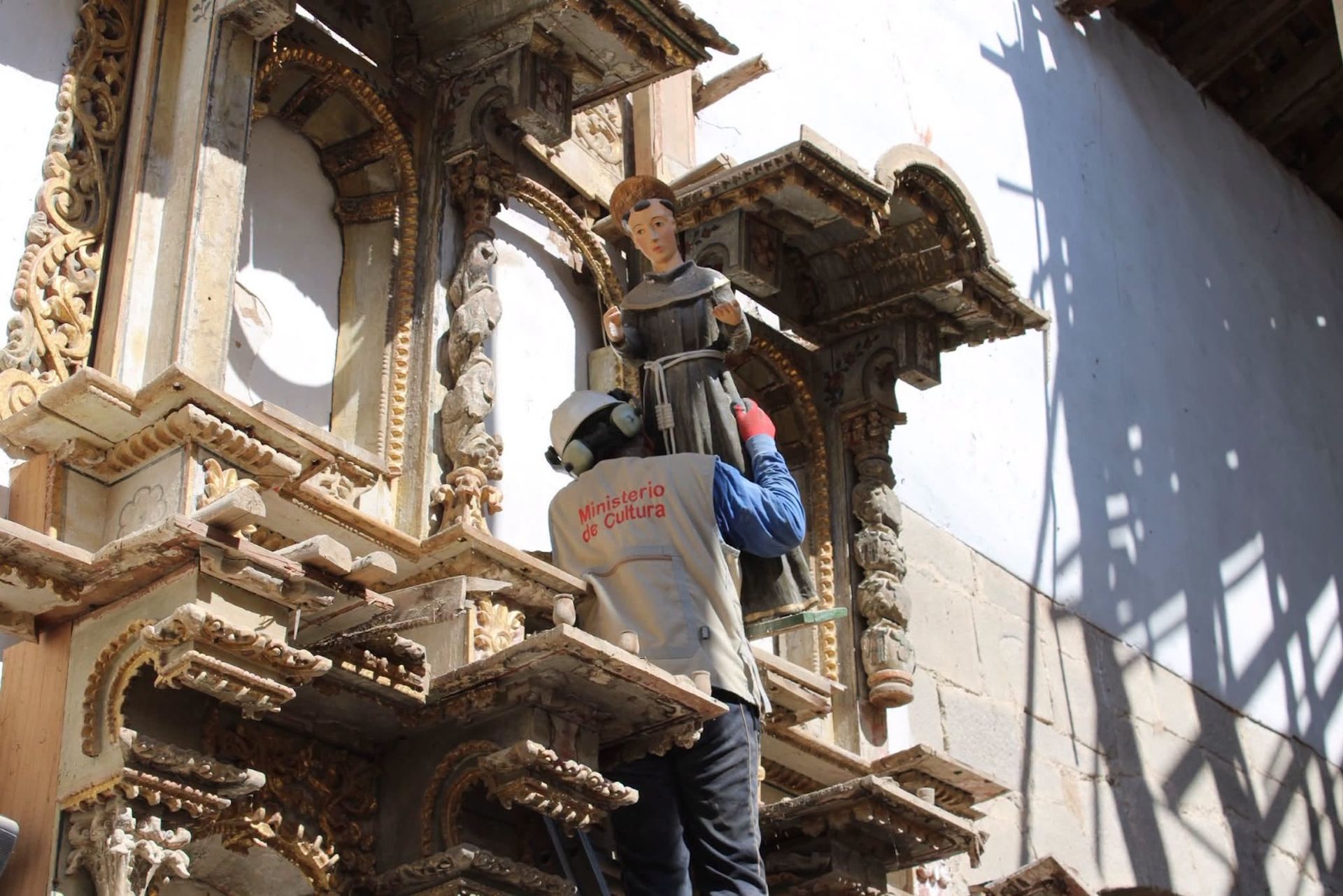
A worker from the ministry of culture works to safeguard artworks and architectural features of the Iglesia Apóstol Santiago in Chongos Bajo, Peru Courtesy Ministerio de Cultura del Perú
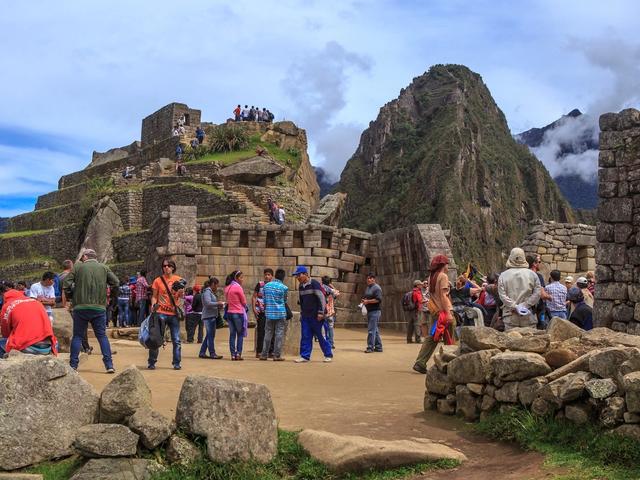
“Neither the archdiocese, which owns the church, nor the Ministry of Culture, which oversees heritage sites, has the resources to maintain this type of property, since funds are allocated to more important tourist destinations like Machu Picchu,” Father Ocharán says, adding that the restoration process could take two years.
That process could run into delays as there is uncertainty about whether the administration of president-elect Keiko Fujimori, who will take office on July 28, will prioritise the church’s restoration. For now, workers from the Ministry of Culture, along with volunteers and students from local universities, are removing debris and storing the religious images in a safe place.
“We are also assessing the structure. We need to cover some altars to prevent the sun’s ultraviolet rays from damaging their pigments,” Javier Rojas León, the head of the ministry of culture in Junín, tells The Art Newspaper. “The Minister of Culture [Fátima Altabás] has shown great concern, which is why she is sending technicians from Lima, as we lack specialists here. The first rains begin in August, so we are focusing on emergency work. We will have to work later to develop a project outlining the cost of restoring all the artistic and cultural assets, including the church itself, which is a national cultural heritage site.”
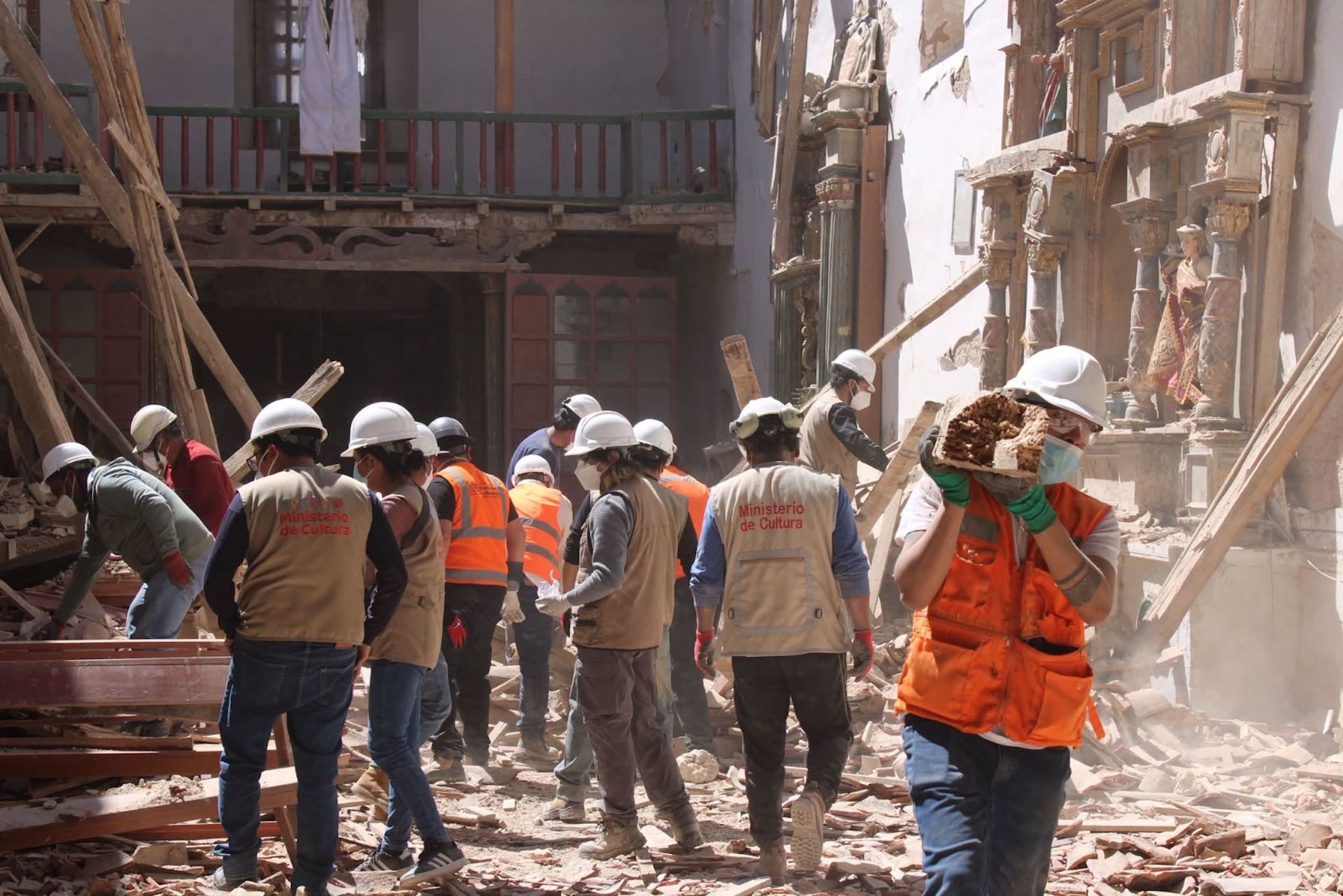
Volunteers and workers from the ministry of culture work to safeguard artworks and architectural features of the Iglesia Apóstol Santiago in Chongos Bajo, Peru Courtesy Ministerio de Cultura del Perú
The community of Chongos Bajo has around 5,000 inhabitants and is dealing with many other losses in addition to Iglesia Apóstol Santiago. The earthquake devastated the nearby town of Pumpunya, killing five people.
“What’s left is being demolished because it’s uninhabitable. It’s a terrifying situation. Many people are sleeping in the streets,” Father Ocharán says of that community. Aftershocks also continue to pose risks to relief efforts.
As a gesture of mourning, the parish of Iglesia Apóstol Santiago cancelled the feast of its patron saint, which had been scheduled to take place on 25 July.