After Paul Gauguin arrived in Arles in October 1888 to stay with his friend Van Gogh, the two artists would go out to paint together and then socialise and discuss art in the evenings over a glass of wine. Their very different personalities, however, soon led to tensions. Living together in the confines of the Yellow House and sharing a small room as a studio, they began to row. As winter approached, and the weather made it impossible to work outside, the situation only worsened.
In mid-December, in an attempt to clear the air, Gauguin suggested that they should make a trip to Montpellier, 70 km west of Arles. Their goal was to visit the Musée Fabre, renowned for its fine collection of paintings.
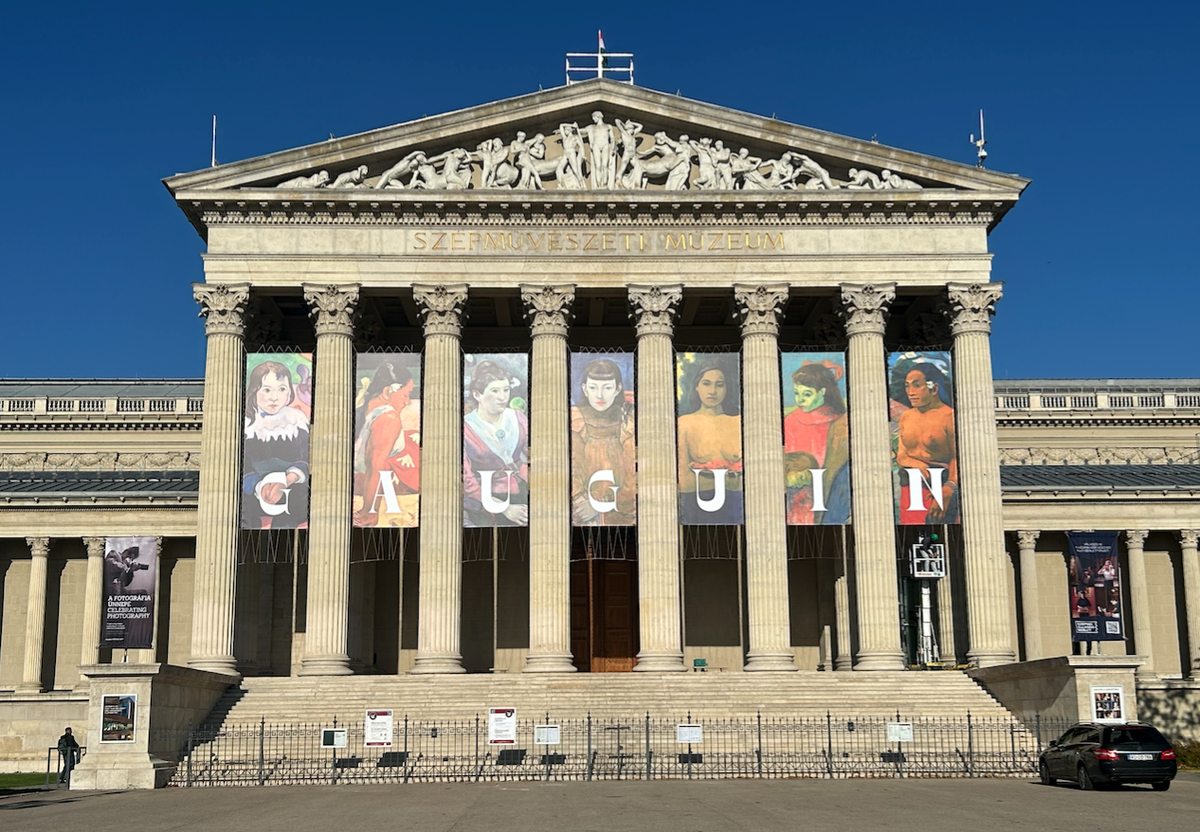
The artistic result of this trip forms a central part of a major exhibition on Gauguin which opened this week at Budapest’s Museum of Fine Arts. Bonjour Monsieur Gauguin: The Circles of Post-Impressionists and Symbolists (until 28 February 2027) provides a wide-ranging exploration of the art of Gauguin and his associates. The show’s title comes from a key painting by the artist inspired by the Montpellier visit, Bonjour Monsieur Gauguin (late 1889).
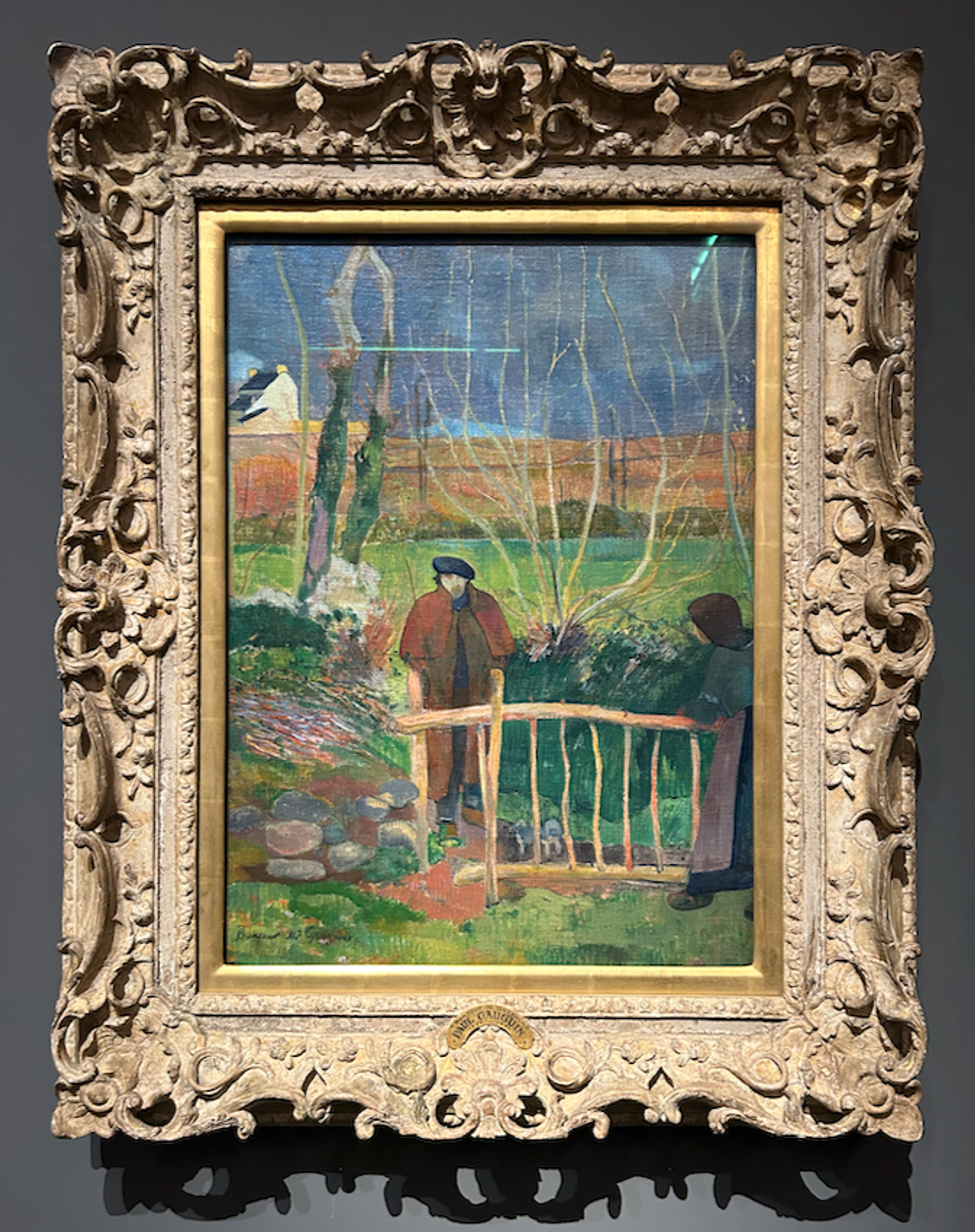
Paul Gauguin’s Bonjour Monsieur Gauguin (late 1889)
Hammer Museum, Los Angeles (photograph The Art Newspaper)
Van Gogh and Gauguin travelled from Arles to Montpellier by train, which took around four hours. Although it has long been assumed that they made a day trip on either 16 or 17 December 1888, it is arguably more likely that they spent the night there and stayed for both days. The Musée Fabre had over 800 paintings on display, so they would surely have wanted time to savour the works. Many of the finest pictures were French, given by Alfred Bruyas, a local collector and patron of Gustave Courbet.
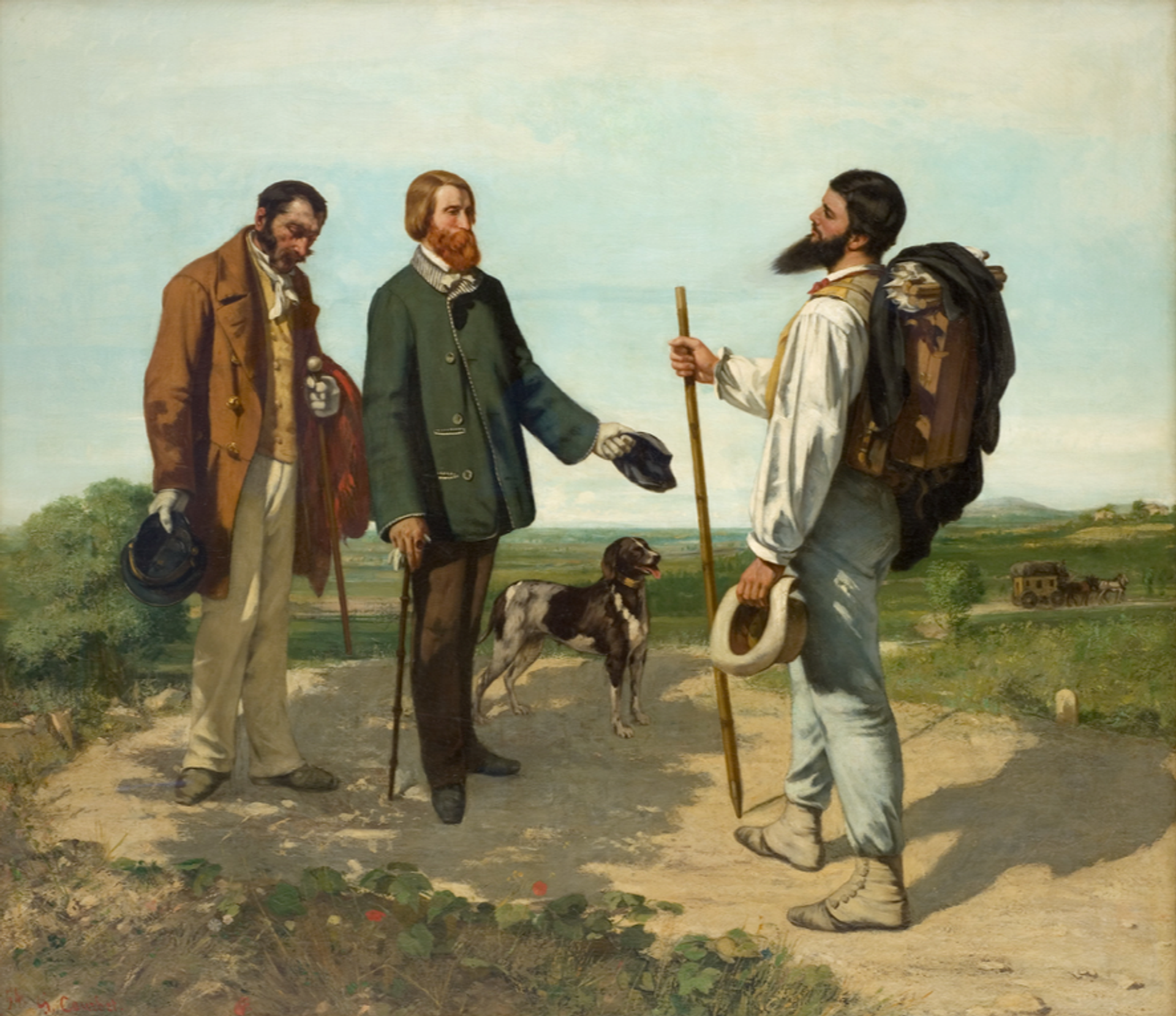
Gustave Courbet’s Bonjour Monsieur Courbet (1854)
Musée Fabre, Montpellier
For Gauguin, the highlight of the museum was Courbet’s Bonjour Monsieur Courbet (1854). This landscape composition includes the figure of Courbet himself, laden with his equipment and holding a walking pole. He is greeting Bruyas, who is accompanied by a bowing servant.
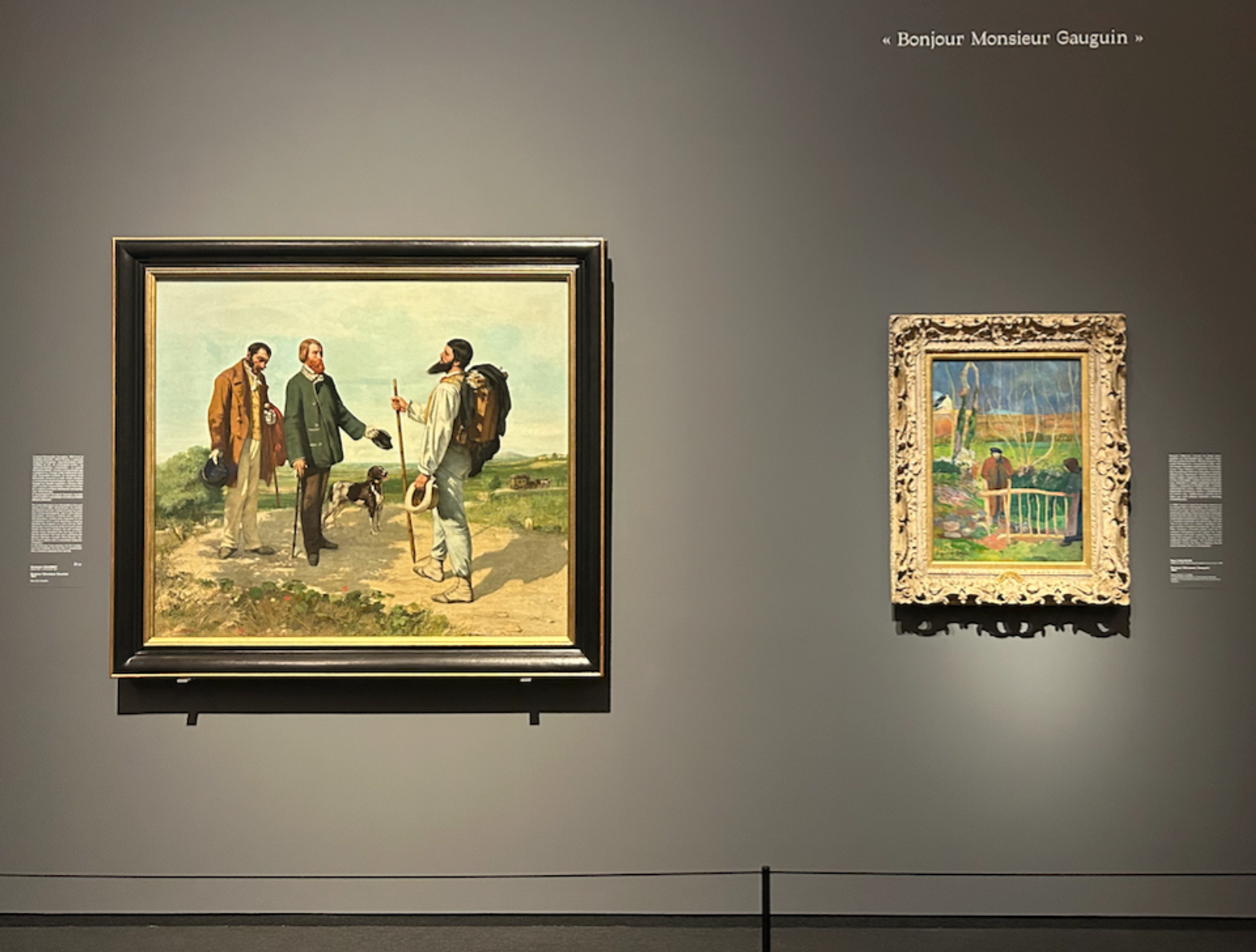
Gustave Courbet’s Bonjour Monsieur Courbet and Gauguin’s Bonjour Monsieur Gauguin in the Budapest exhibition
The Art Newspaper
Gauguin, who was impressed with the Courbet, painted a work in response, a year later, in the Brittany fishing village of Le Pouldu. The main figure in this work is Gauguin himself, facing a Breton woman on the other side of a gate.
Superficially, the Gauguin painting bears little resemblance to the Courbet. Stylistically, Courbet’s smoothly painted picture contrasts with Gauguin’s rough brushwork. The compositions appear to have little in common, other than showing an artist encountering other people—and being greeted with a “good day” (and, incidentally, both scenes also include a dog).
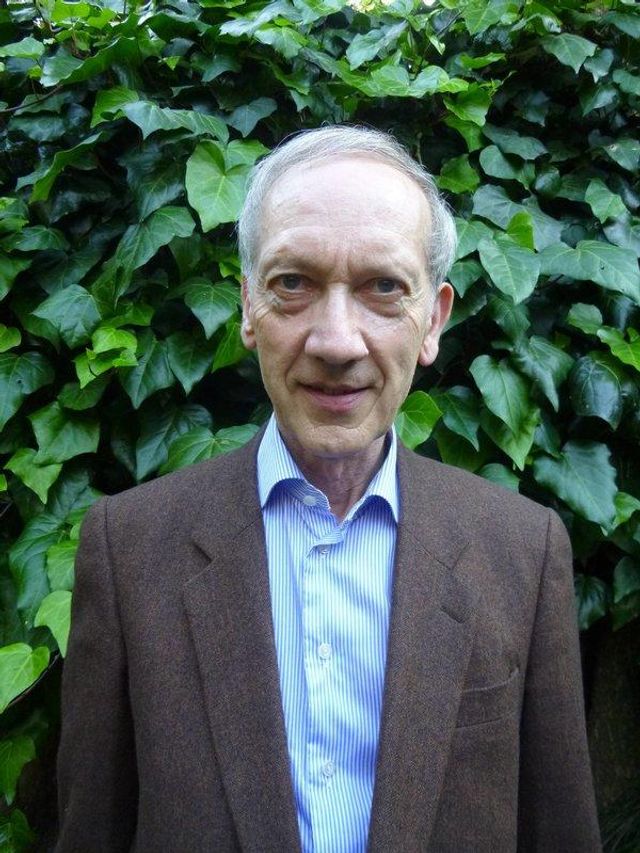
The moods seem very different. Courbet appears thrilled to greet his patron and friend. Gauguin’s encounter with the Breton woman, however, is fleeting, as they happen to pass each other at a gate. The Budapest exhibition’s lead curator, Judit Geskó, sees the Gauguin picture as representing “the artist as a solitary wanderer”.
But despite the differences, Gauguin’s decision to entitle his work as he did shows that he was directly acknowledging the source of his inspiration, the Courbet. Gauguin’s title is actually inscribed on the painting, in the lower-left corner.
Gauguin made two versions of his composition: the one on loan to Budapest from the Hammer Museum in Los Angeles and the other (which was unavailable for borrowing) at the National Gallery in Prague. The Hammer picture, which was the original, was created to display on the dining room door in the small inn where he was staying in Le Pouldu.
As for Van Gogh, the Dutchman was particularly struck in the Musée Fabre by the portraits by Courbet. These included a self-portrait, The Man with the Pipe (around 1849), which may well have inspired Van Gogh one month later to paint his Self-Portrait with Bandaged Ear and Pipe (January 1889).
Bruyas was depicted by a range of artists and these portraits were also much admired by Van Gogh in the Montpellier museum. Vincent described Bruyas’ appearance to his brother Theo as “a gentleman with a beard, red hair, who looks damnably like you or me”.
Electric discussions
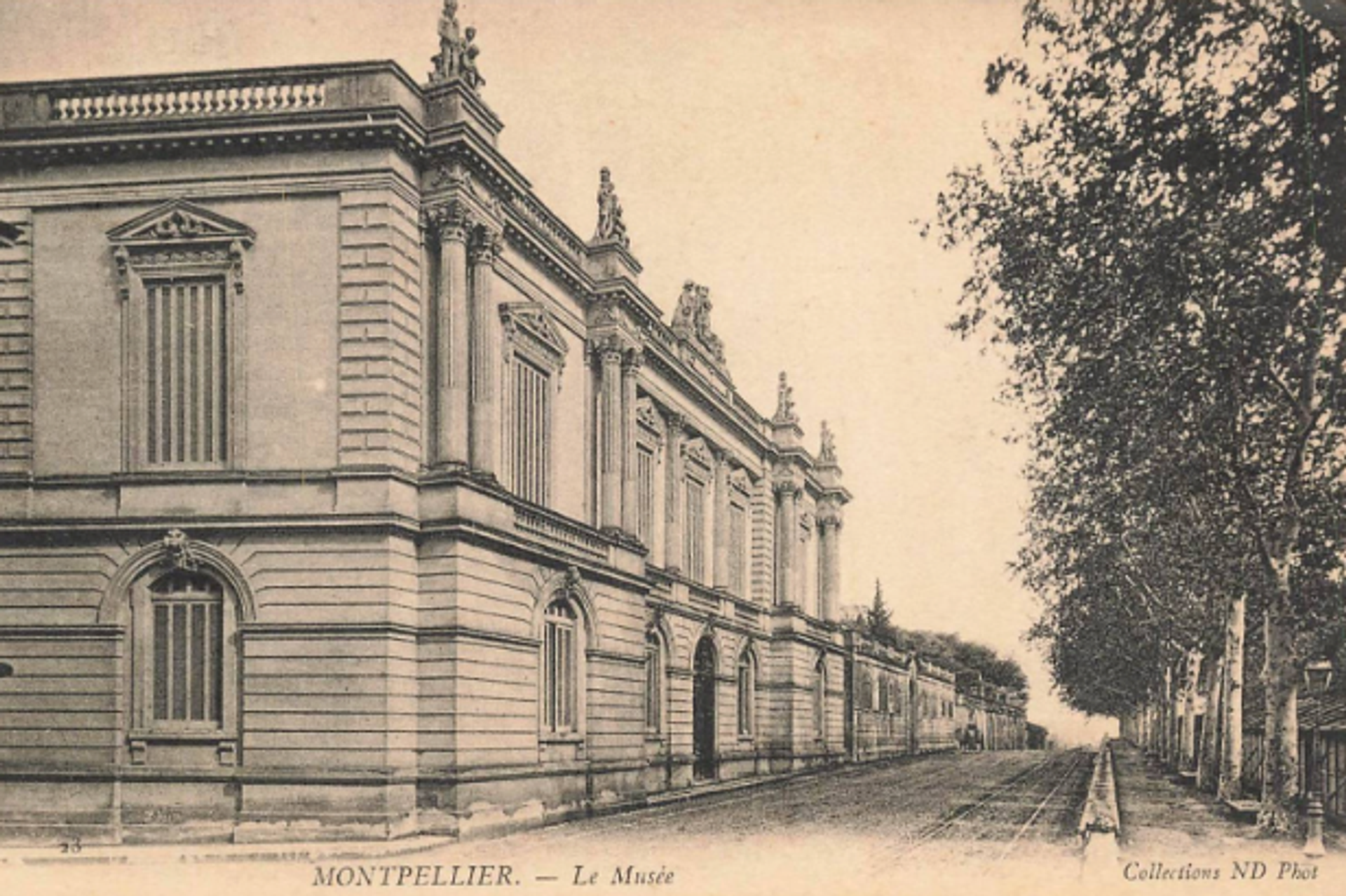
Postcard of Musée Fabre, Montpellier (1905)
Collections ND
Both Gauguin and Van Gogh were great admirers of Courbet, who was very well represented in the Musée Fabre. Although they agreed about Courbet, their tastes for other artists were often rather different. Vincent wrote to Theo that their artistic discussions in Montpellier had been “excessively electric”. He explained: “We sometimes emerge from it with tired minds, like an electric battery after it’s run down.”
Despite these animated discussions, the inspirational visit seemed a success. Vincent reported back to Theo the day after their return that in the museum they had been “right in the midst of magic”. He added: “Gauguin said to me this morning, when I asked him how he felt: ‘that he could feel his old self coming back’, which gave me great pleasure.”
Sadly, the reconciliation did not last long: just four days later Van Gogh severely mutilated his ear. Although the trigger was probably news he had just received that Theo had become engaged (which Vincent feared would threaten his brother’s support), tensions with Gauguin were also a contributing factor.
Van Gogh in the Gauguin show
Budapest’s Gauguin exhibition is ambitious, with 80 works by the French master and 70 by other artists. Although financial valuations for exhibitions are rarely revealed, The Art Newspaper can report that its total insurance value is €1.5bn.
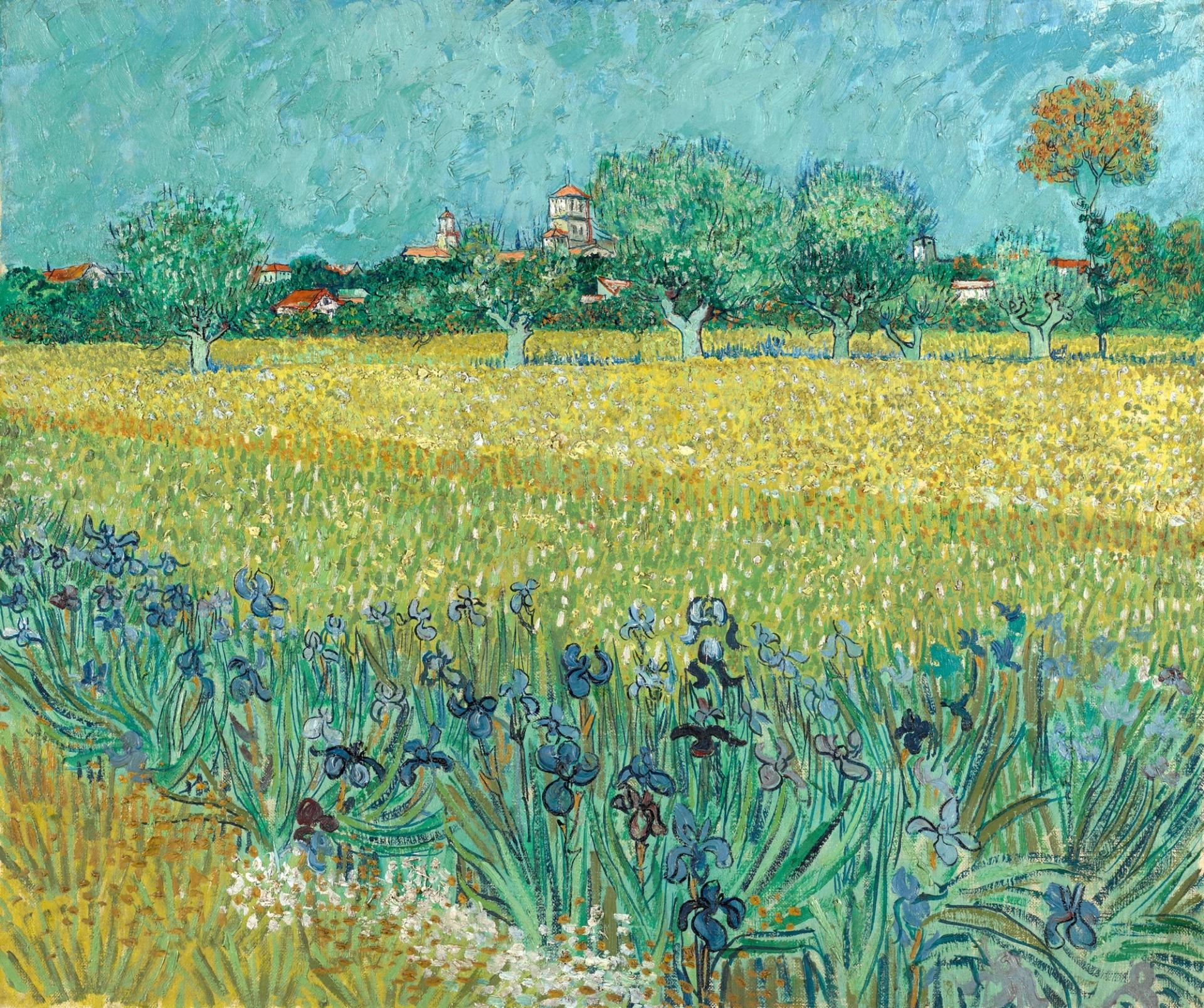
Van Gogh’s Field with Irises near Arles (May 1888)
Van Gogh Museum, Amsterdam (Vincent van Gogh Foundation)
The show includes three works by Van Gogh: the landscape painting Field with Irises near Arles (May 1888, Van Gogh Museum, Amsterdam) and two rarely-displayed drawings from the collection of the Budapest museum, The Parsonage Garden at Nuenen in Winter (March 1884) and Haystacks (July 1888).
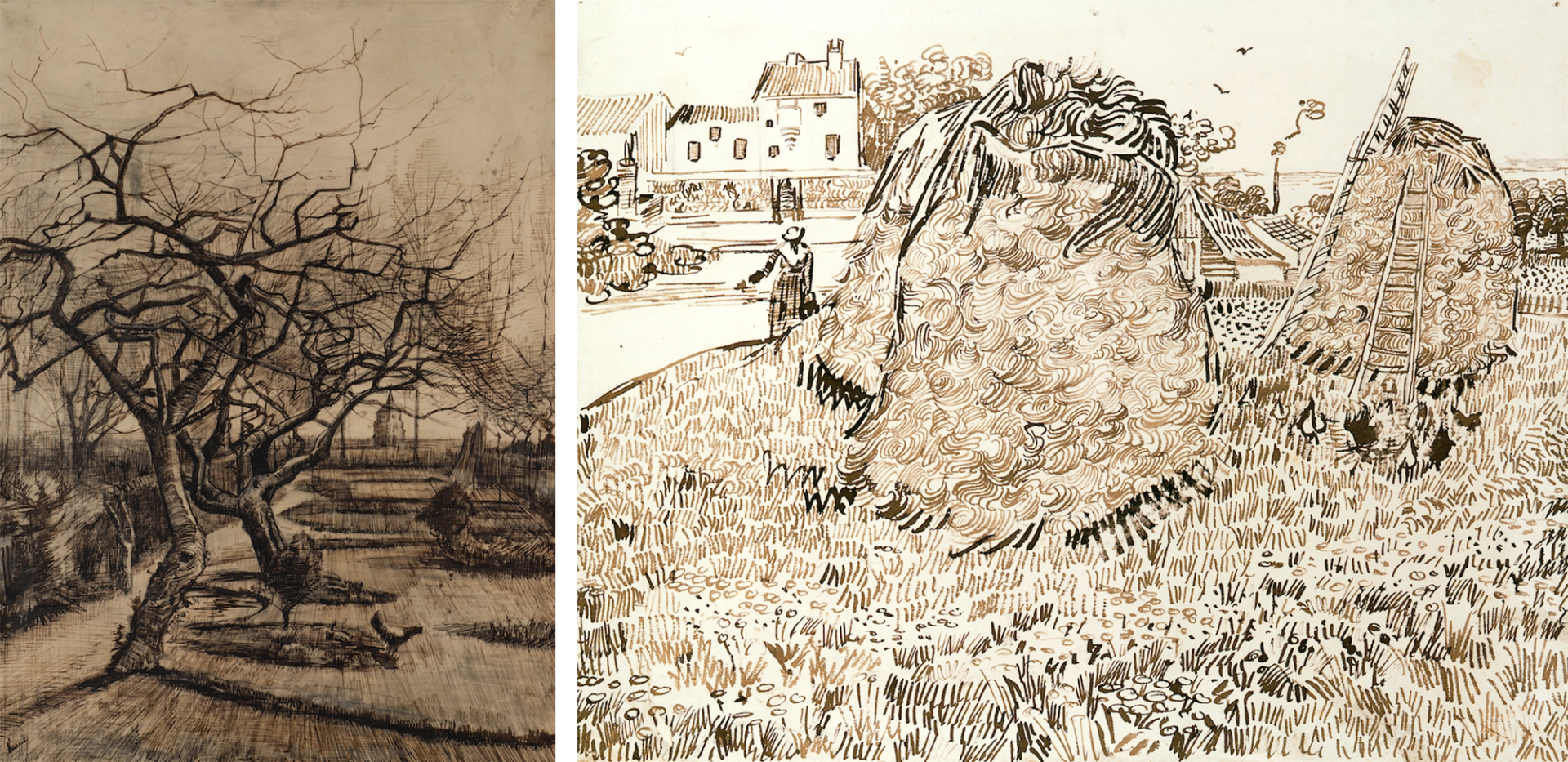
Van Gogh’s The Parsonage Garden at Nuenen in Winter (March 1884) and Haystacks (July 1888)
Museum of Fine Arts, Budapest
The Budapest exhibition has two Gauguin paintings dating from his stay with Van Gogh in Arles: the landscape Les Alyscamps (October 1888, Musée d’Orsay, Paris) and the portrait Madame Roulin (November-December 1888, Saint Louis Art Museum). Both of these subjects were also tackled by Van Gogh.
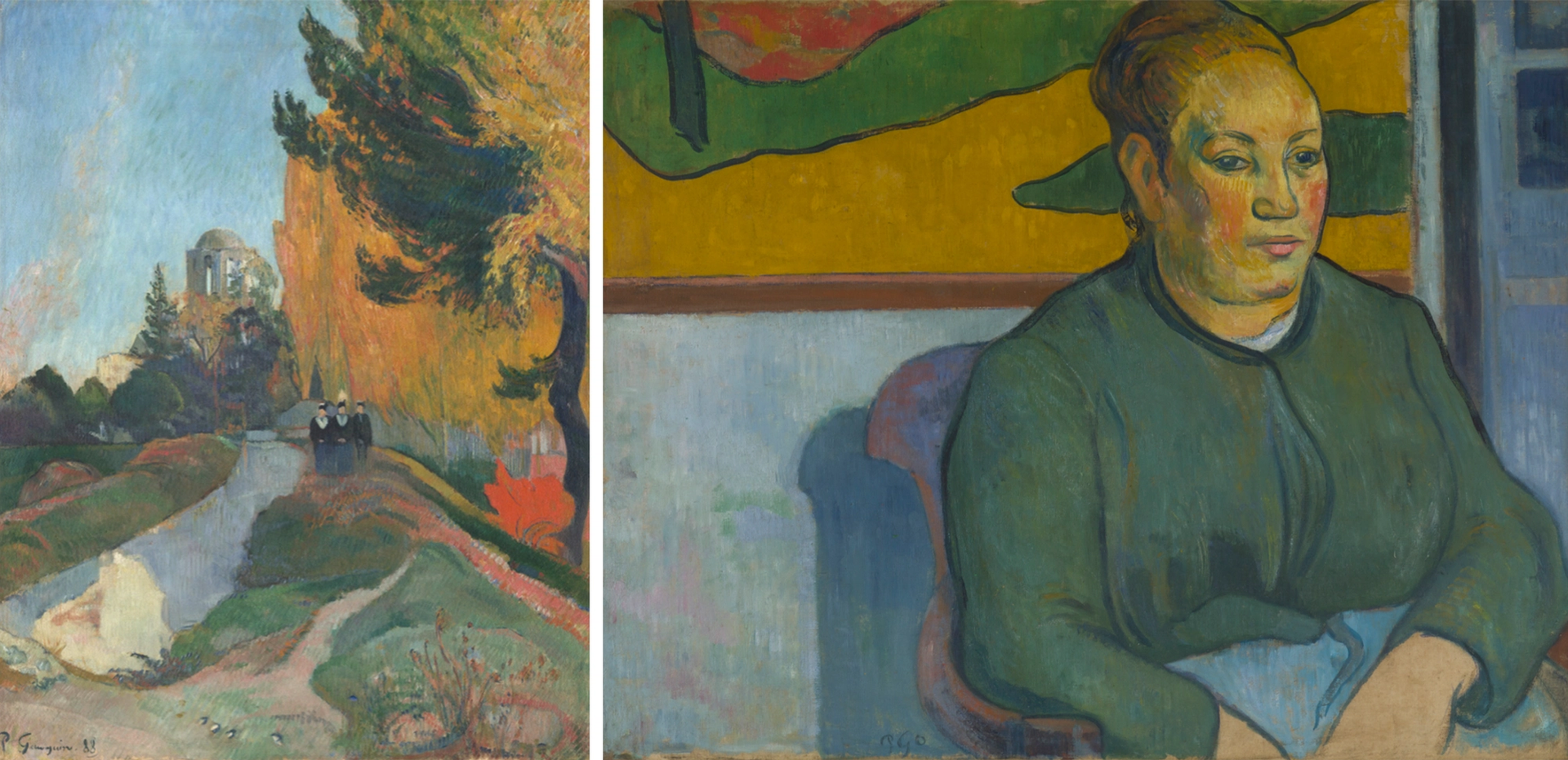
Gauguin’s Les Alyscamps (October 1888) and Madame Roulin (November-December 1888)
Musée d’Orsay, Paris and Saint Louis Art Museum
Among the other Gauguin highlights in the show is Sunflowers on an Armchair (1901, Bührle Collection, on loan to the Kunsthaus Zurich). This is one of four still-life paintings inspired by Van Gogh’s favourite motif—sunflowers. Gauguin painted these in the Marquesas Islands (north of Tahiti), with flowers grown from seeds he was sent by a friend from Paris.
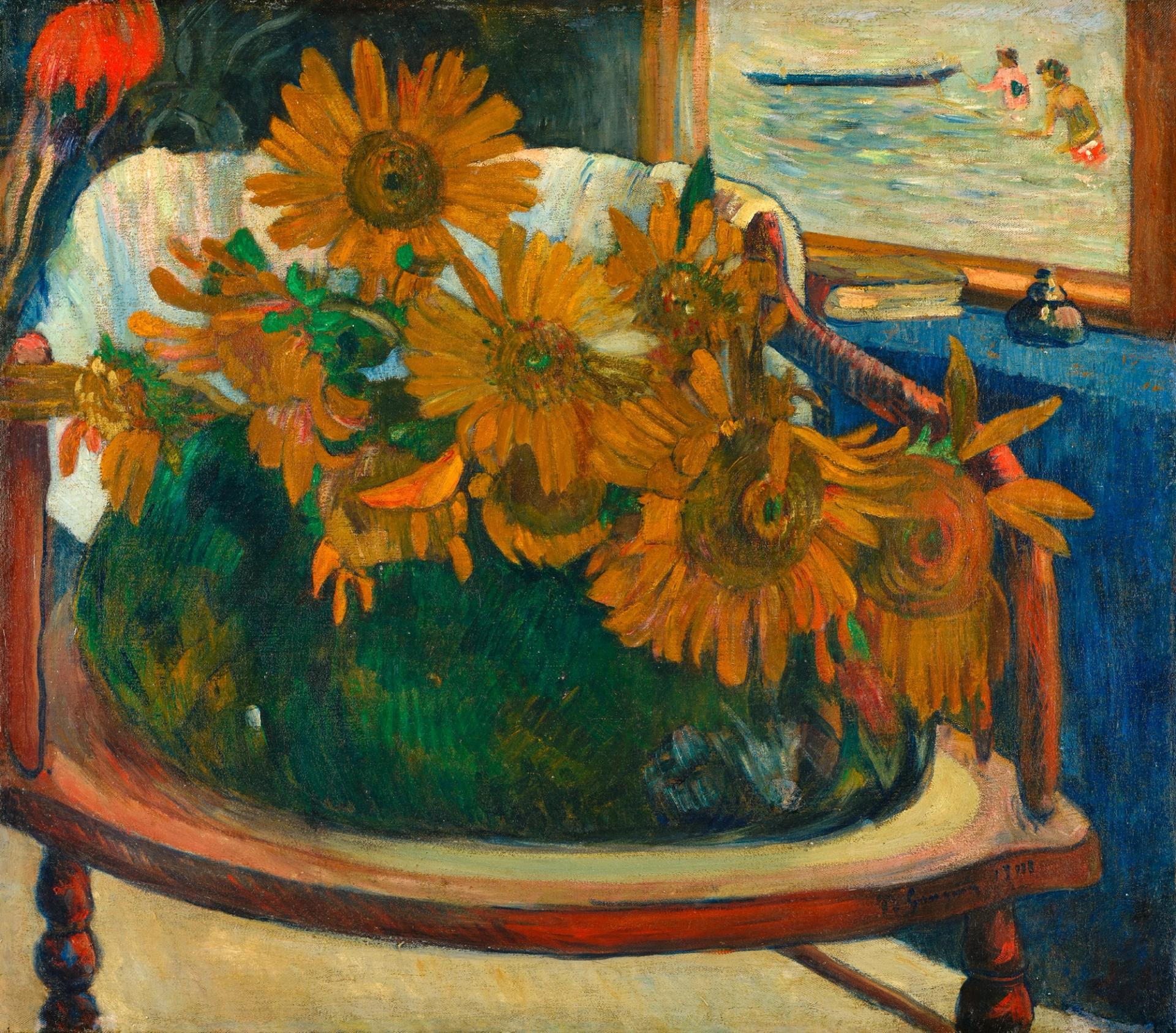
Gauguin’s Sunflowers on an Armchair (1901)
Bührle Collection, on loan to the Kunsthaus Zurich
The museum estimates that the Gauguin exhibition could see up to 350,000 visitors, a huge number for a medium-sized European capital. However, even this won’t match Geskó's Van Gogh show in 2006, which attracted 486,000 people to the museum to see the Dutch painter's works.