The pioneering collector Gustave Fayet bought no fewer than 16 Van Gogh paintings in 1901-09, of which ten are going on show today (9 October) at the Fondation Louis Vuitton in Paris. Bernard Arnault, head of luxury group LVMH, describes Fayet as “one of the best kept secrets in the history of Modern art”.
Gustave Fayet: Collector - Artist Designer (until 8 March 2027) is the first exhibition to delve into the Frenchman’s astonishing story. The show is enormous, with more than 600 works by Fayet and other artists, including more than 250 works, spread over four floors of the Frank Gehry-designed building in the Bois de Boulogne.
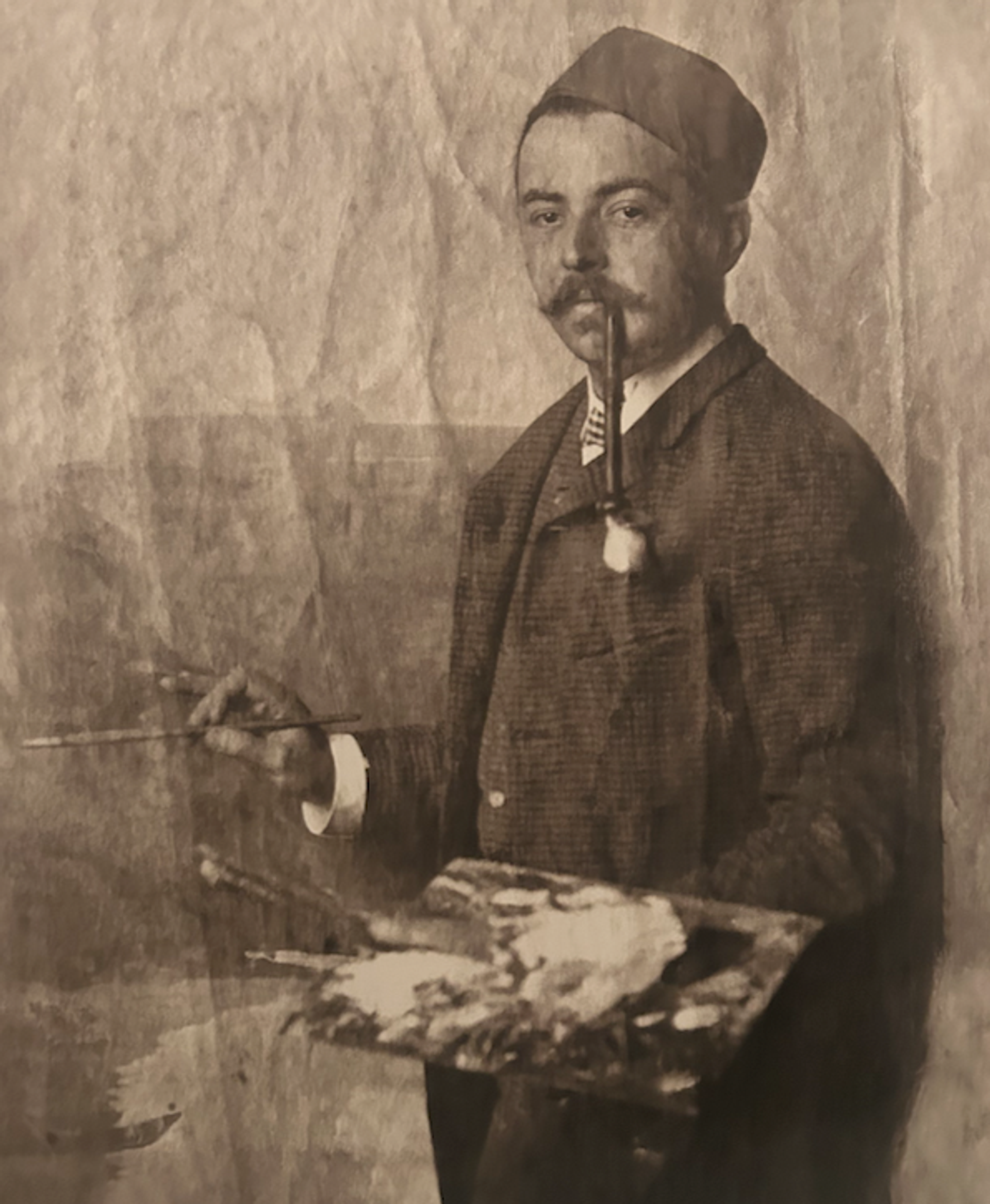
Gustave Fayet as an artist (around 1897)
Archives familiales Gustave Fayet
Fayet was not only a buyer of Modern art (most notably of Van Gogh, Paul Gauguin and Odilon Redon), but also a professional winemaker, painter, ceramicist, book illustrator, entrepreneur, museum curator and designer of carpets, fabrics and wallpaper. For Fayet, collecting and creating went hand-in-hand. His own work is extensively displayed on the top floor of the Paris exhibition.
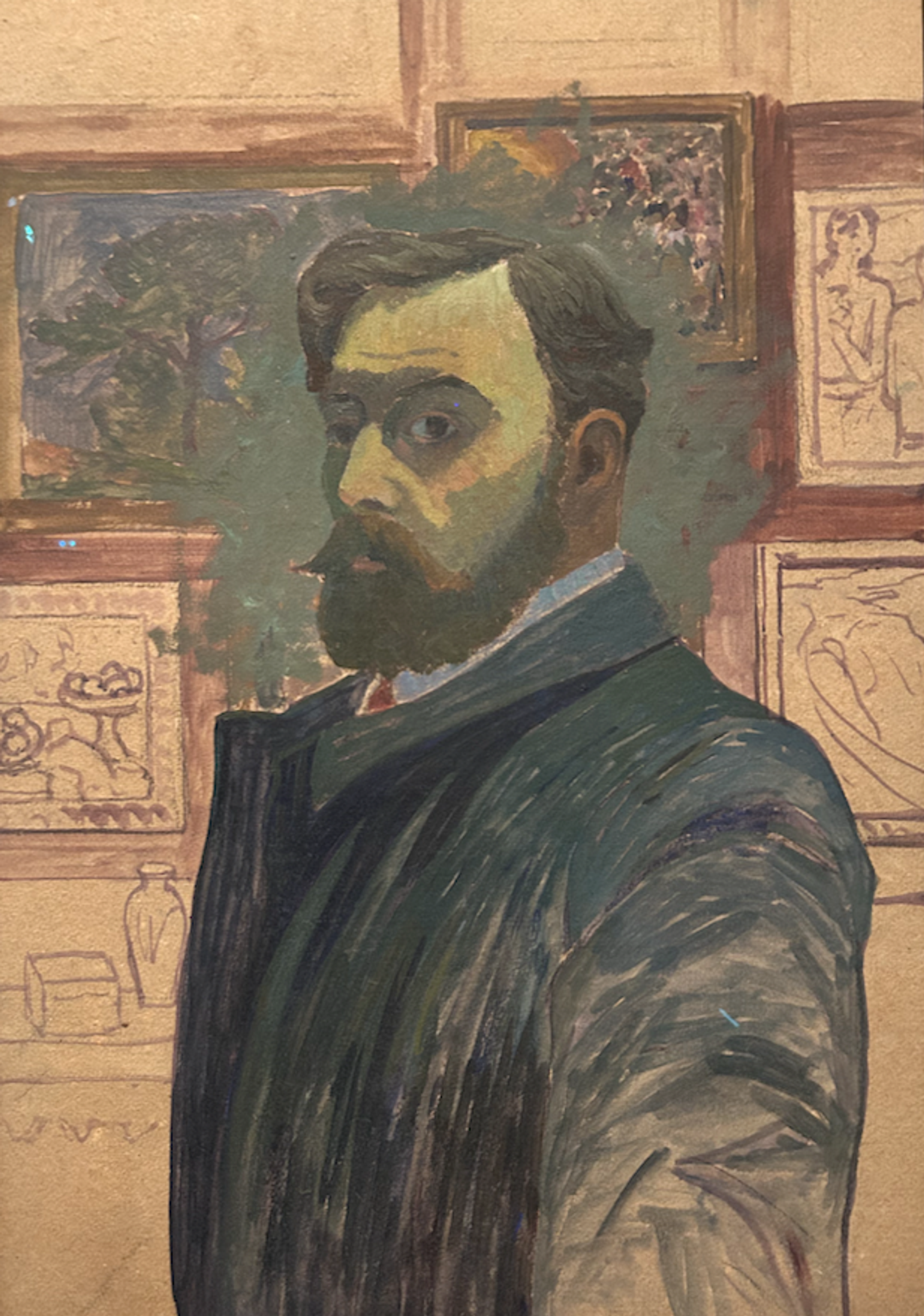
Fayet’s Self-portrait (1901). The unfinished painting depicted hanging behind and above his head (only partially visible) is the first Van Gogh he bought: Arena in Arles (November-December 1888, now at the State Hermitage Museum, St Petersburg)
Private collection
Fayet's Van Goghs
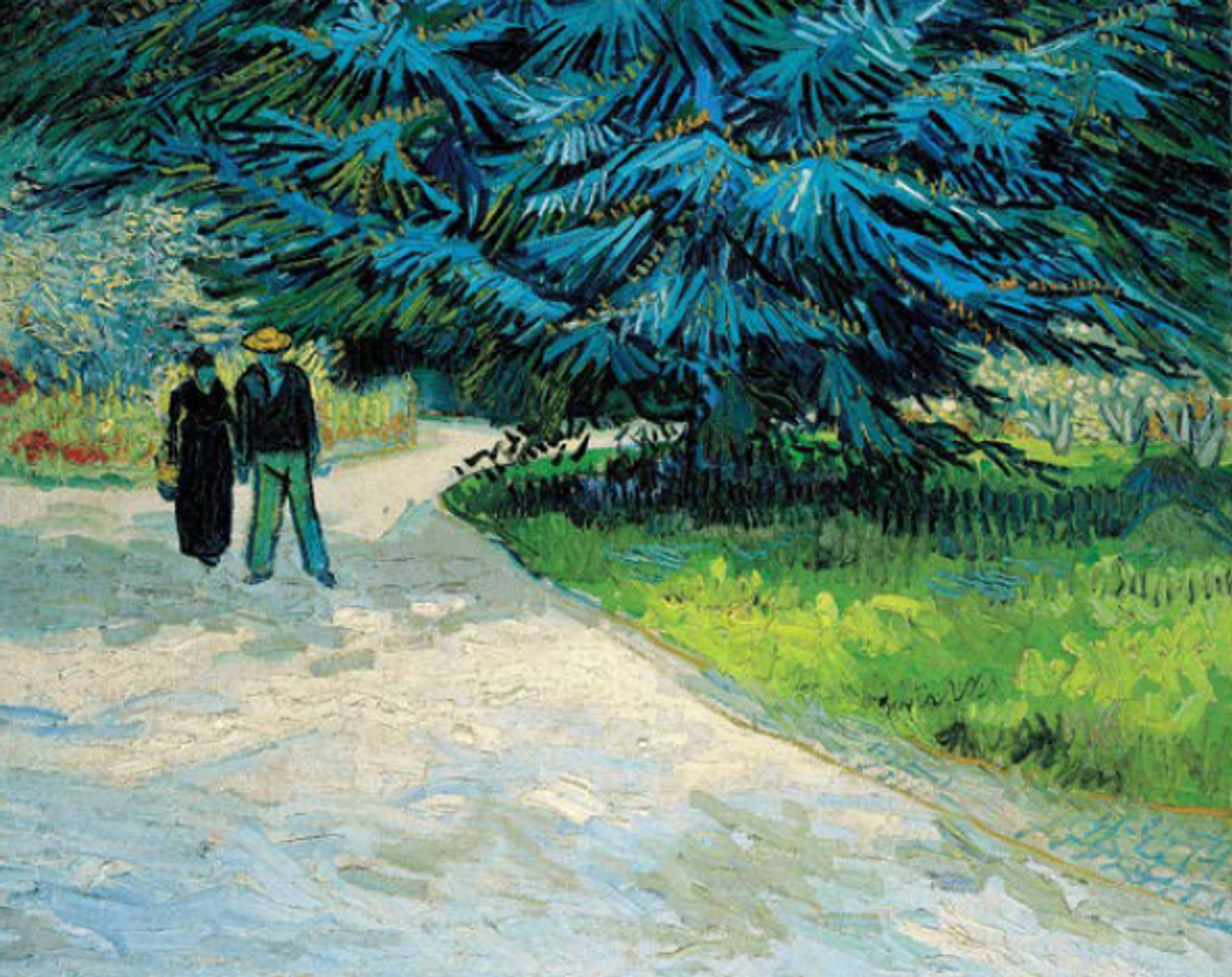
Van Gogh’s Public Garden in Arles (The Poet’s Garden) (October 1888): bought by Fayet in 1901 and kept until his death
Private collection (photograph © Peter Schälchli)
Public Garden in Arles (The Poet’s Garden) (October 1888) was among the first Van Goghs that Fayet bought. It depicts the verdant square just outside the Yellow House, which Van Gogh rented and later shared for ten weeks with his colleague Gauguin. This garden scene was painted just two weeks before Gauguin’s arrival, to hang in the spare bedroom.
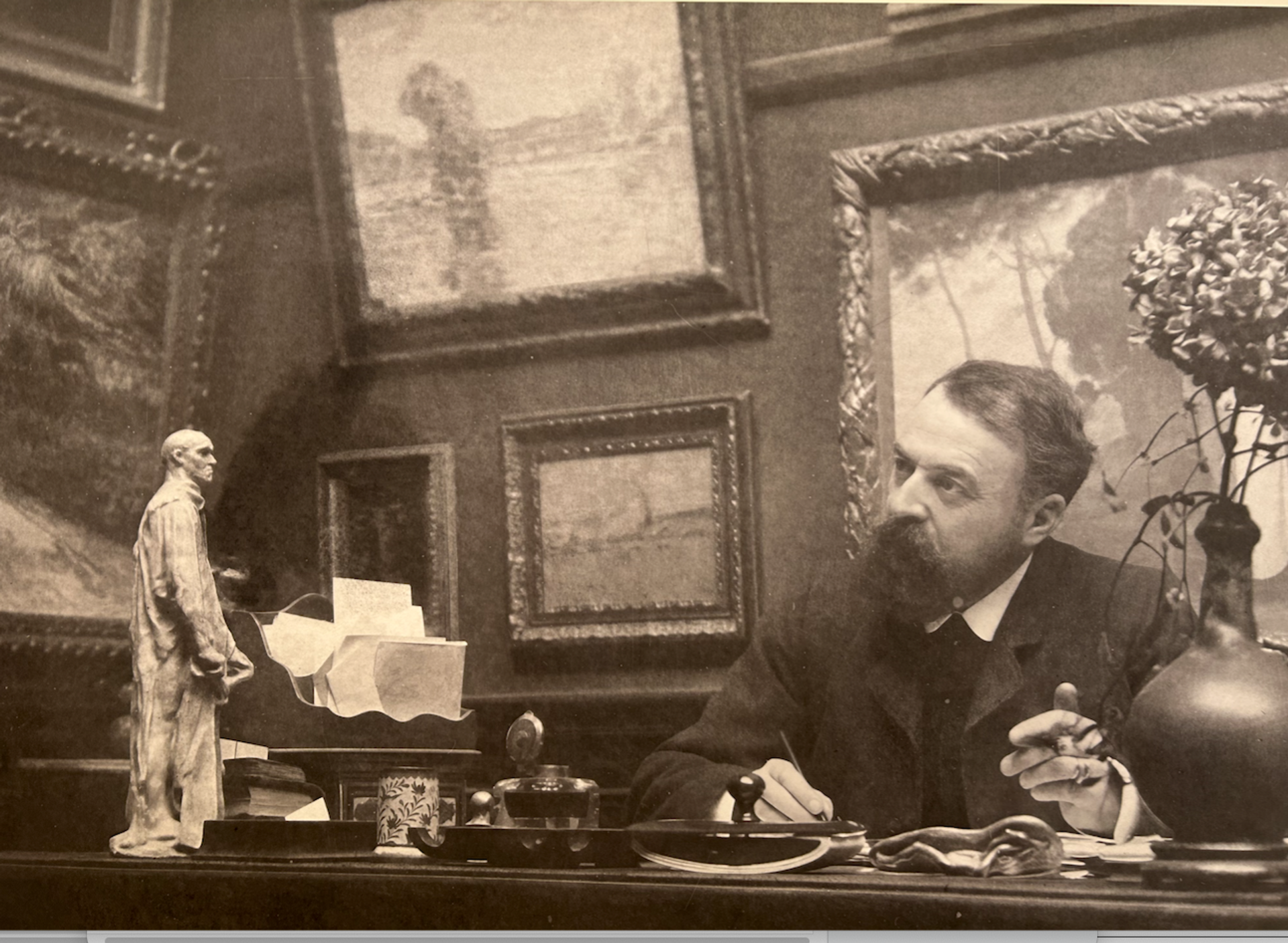
Fayet at his desk in his house in Béziers (around 1903), with part of Public Garden in Arles visible on the left
Archives familiales Gustave Fayet
Fayet had paid 2,000 francs for Public Garden in Arles when he purchased it in 1901. In 1924, just months before his death, it was valued at 200,000 francs.
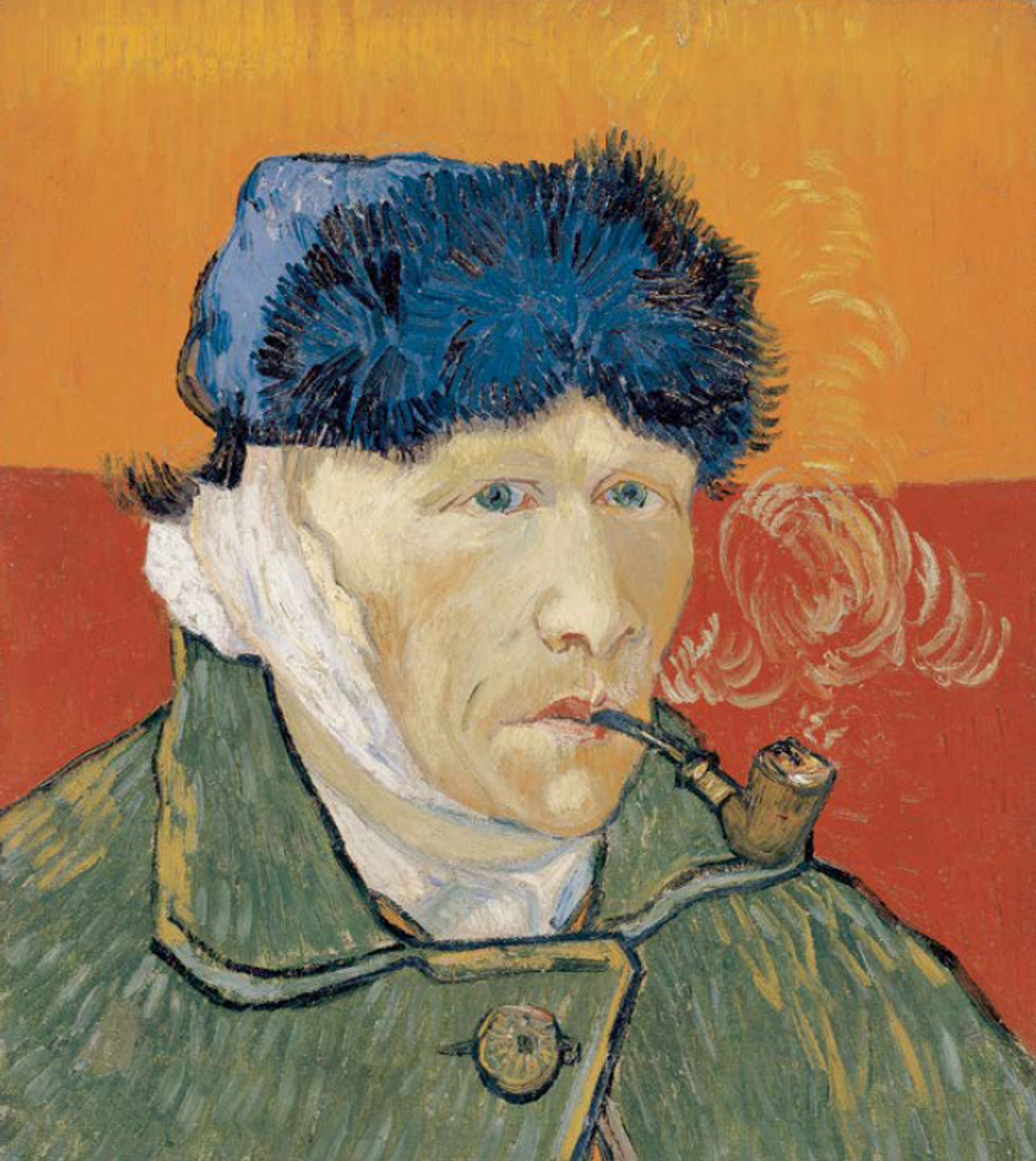
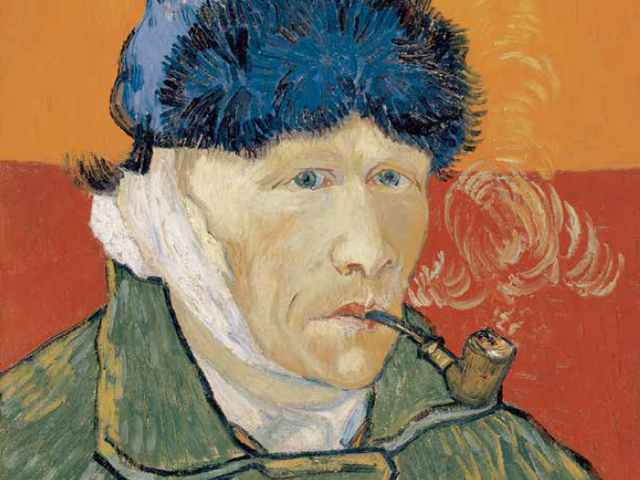
Van Gogh’s Self-portrait with Bandaged Ear and Pipe (January 1889): bought by Fayet in 1902 and kept until his death
Private collection (photograph ©Peter Schälchli)
Self-portrait with Bandaged Ear and Pipe (January 1889) is the most important work in the Fondation Louis Vuitton exhibition. It was painted just two weeks after the artist had mutilated his ear, following a row with Gauguin.
The work had originally been owned by the artist Emile Schuffenecker, who wrote to Fayet immediately after the sale: ”My poor l’homme à la pipe [man with the pipe] will be in good company at your home and in the hands of a man who who will love it, which consoles me a little.”
The self-portrait immediately became one of Fayet’s favourite paintings; he always hung it in his bedroom in his successive residences. Although the Fondation Louis Vuitton labels it as on loan from an unnamed private collection, it now belongs to the heirs of the Greek shipping tycoon Stavros Niarchos.
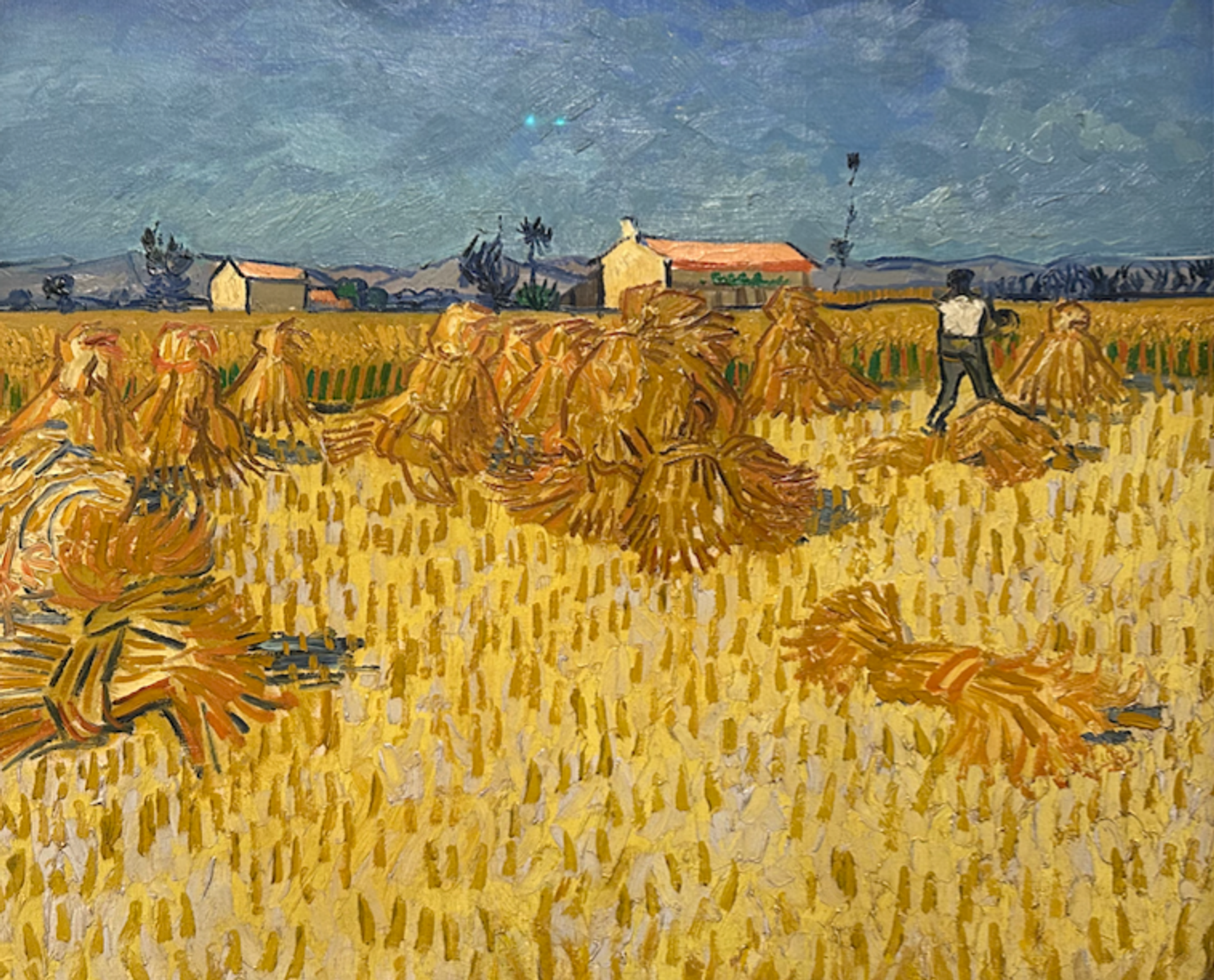
Van Gogh’s Harvest in Provence (June 1888): bought by Fayet in 1903 and returned to the dealer who sold it in 1904
Israel Museum, Jerusalem (gift of Yad Hanadiv)
Harvest in Provence (June 1888) shows golden wheat being gathered under a powerful sky, with a farmer on the right, sickle in hand. Fayet loved Van Gogh’s harvest scenes, also owning Wheatfields with Reaper and Sun (September 1889) and Wheatfields with Reaper, Auvers (July 1890).
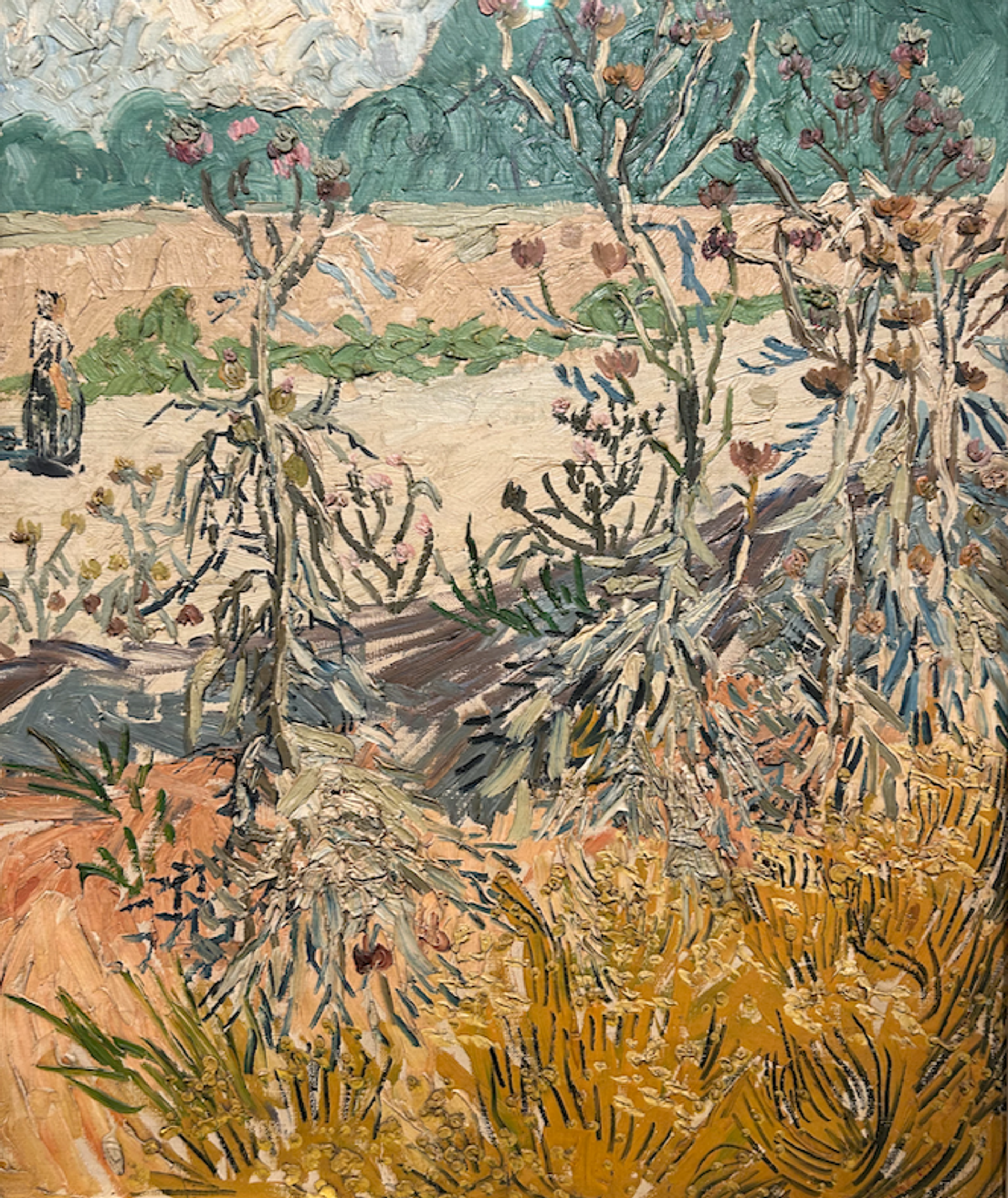
Van Gogh’s The Thistles (August 1888): bought by Fayet in 1903 and kept until at least 1909
Private collection
The Thistles (August 1888) was described by Van Gogh as depicting weeds growing on “waste ground”, with “dust from the road”. It must have been inspired by the artist’s walks into the countryside around Arles. A curious composition, with the towering foreground thistles, it may well have been influenced by Japanese prints, which he greatly admired.
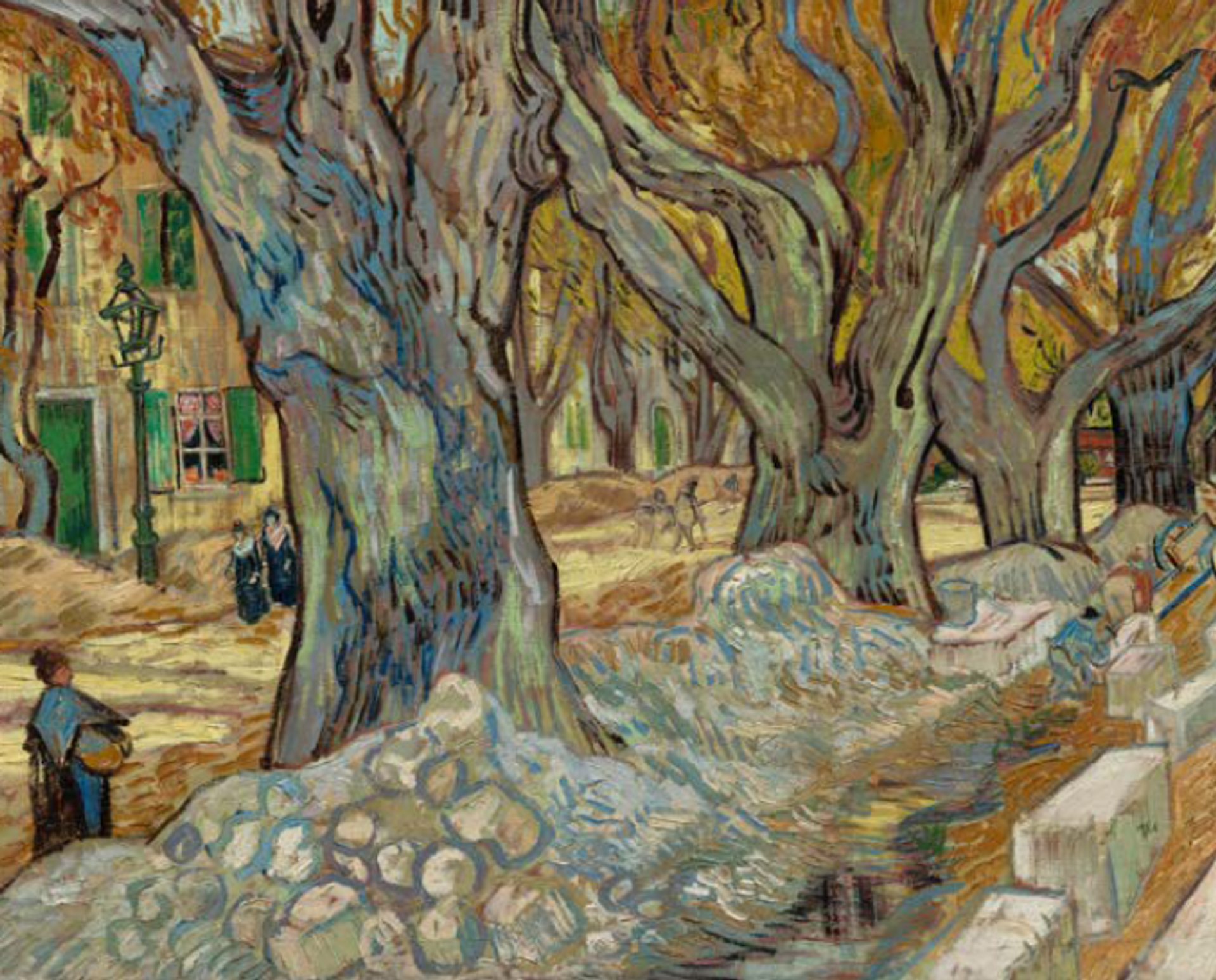
Van Gogh’s The Large Plane Trees (Road Menders at Saint-Rémy) (December 1889): bought by Fayet in 1904 and kept until his death
Cleveland Museum of Art
The Large Plane Trees (Road Menders at Saint-Rémy) (December 1889) shows a stretch of the boulevard which surrounds the town, a kilometre away from the asylum where Van Gogh spent a year. This was one of Fayet’s most cherished paintings and, on moving to Paris in 1905, he hung it in his dining room.

Van Gogh’s Flowering Shrubs: The Hospital Garden at Saint-Rémy (May-June 1889): bought by Fayet in 1907 and sold by him that later that year
Colección Pérez Simón, Mexico (photograph © Arturo Piera)
Flowering Shrubs: The Hospital Garden at Saint-Rémy (May-June 1889) was bought by Fayet on a visit to Amsterdam to meet Jo Bonger, Vincent’s sister-in-law. This was in January 1907, but Fayet soon decided not to keep the work, selling it at auction four months later. Painted at the asylum, it is almost an abstract work.
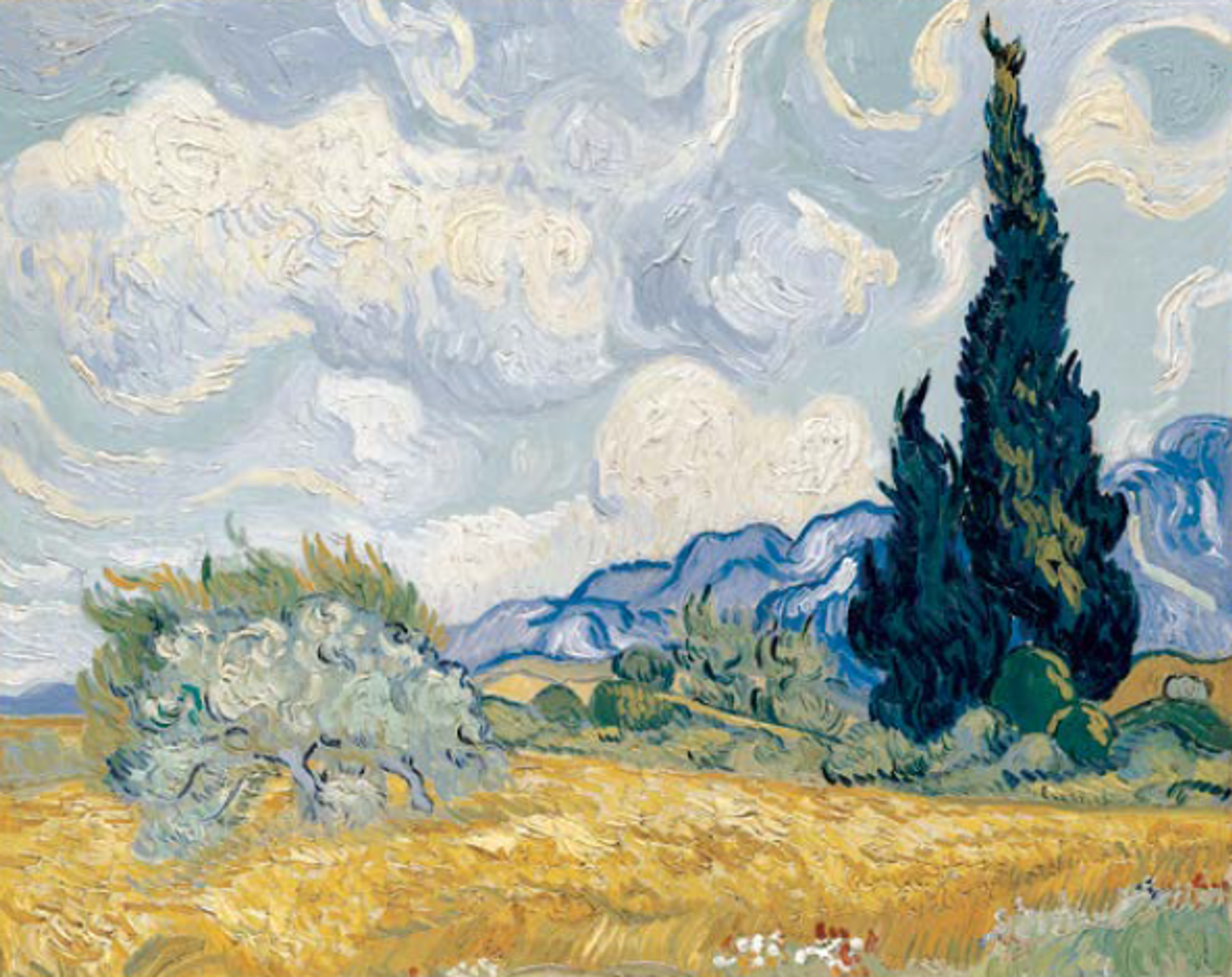
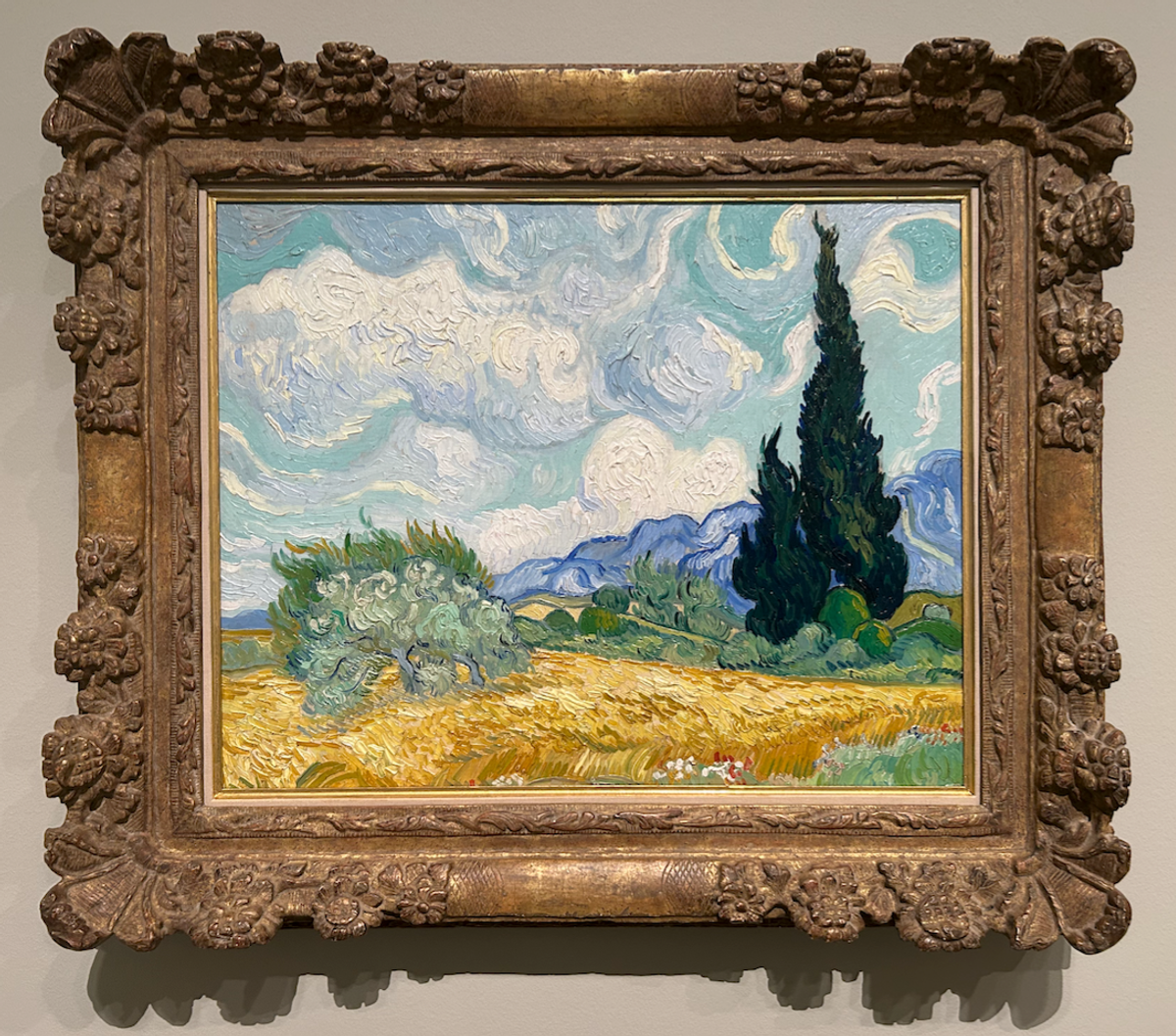
Van Gogh’s The Cypress and the Flowering Tree (September 1889): bought by Fayet in 1908 and kept until his death
Private collection (photograph ©Peter Schälchli)
The Cypress and the Flowering Tree (September 1889) is a slightly smaller version of a magnificent Provençal landscape painted in June 1889 while Van Gogh was at the asylum. This replica was done as a gift for his mother Anna and sister Wil.
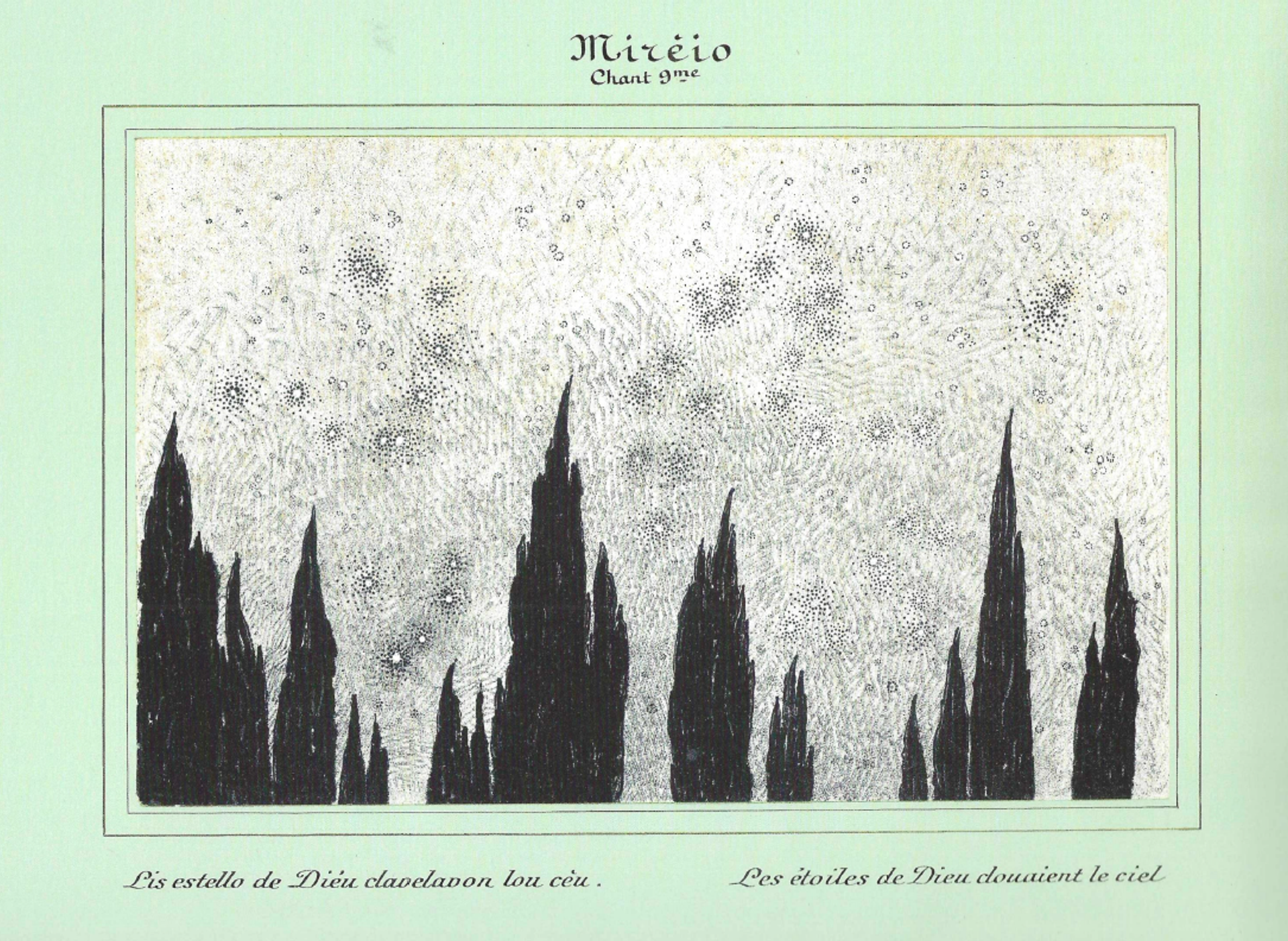
Inspired by Van Gogh’s cypresses and starry nights: Fayet’s drawing God's stars adorned the sky (1922), an illustration for the poem Mirèio by Frédéric Mistral
Private collection
In July 1922, Fayet travelled through Provence to draw a series of 72 illustrations for Frédéric Mistral’s poem Mirèio (1859). For the phrase “God's stars adorned the sky”, he was inspired by The Cypress and the Flowering Tree. On another Mirèio illustration of a Mediterranean seascape, he wrote the words “Avec Vincent dans la pensée” (With Vincent in mind).
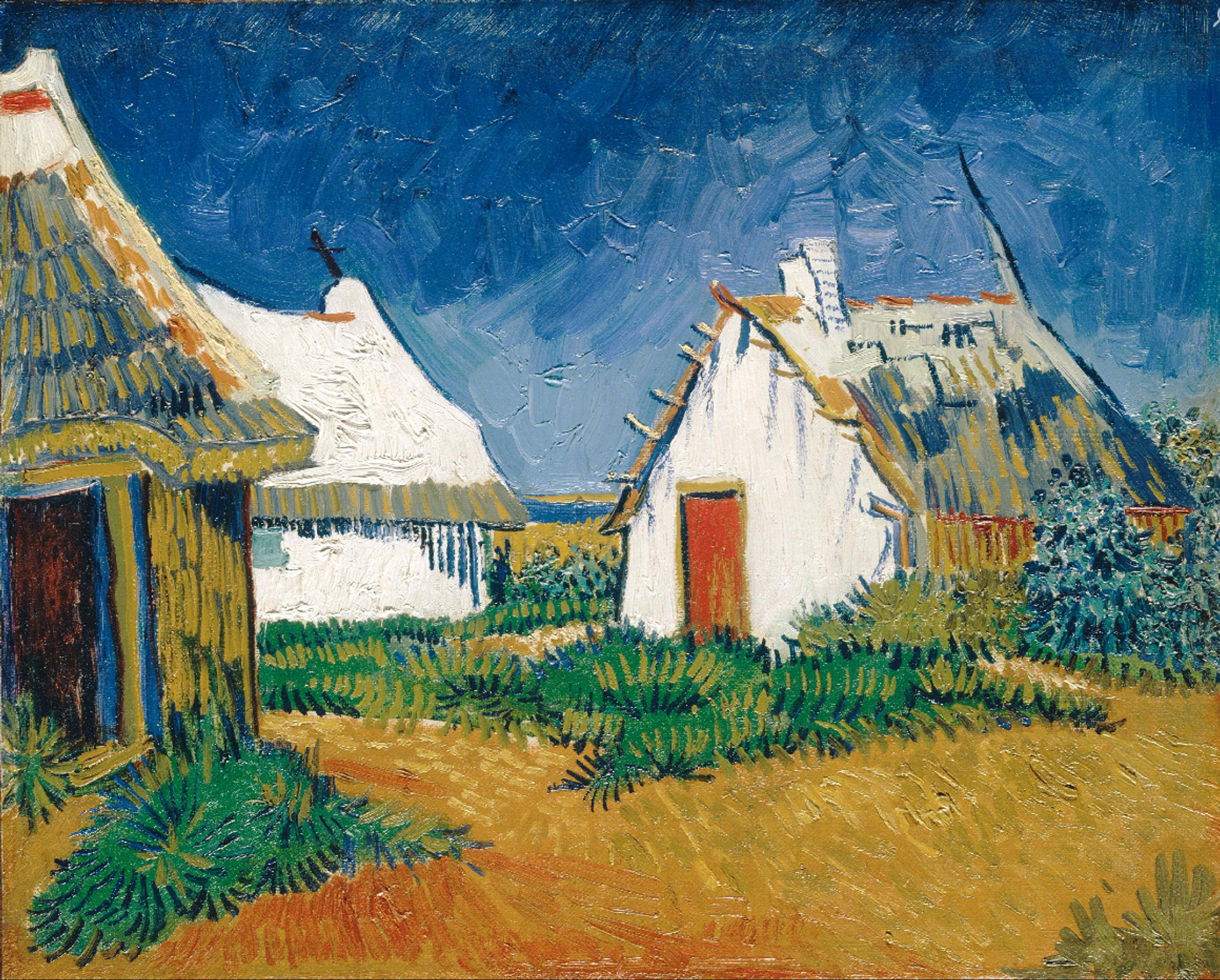
Van Gogh’s White Fisherman’s Huts at Saintes-Maries (June 1888): bought by Fayet in 1909 and kept by him until his death
Kunsthaus Zurich
White Fisherman’s Huts at Saintes-Maries (June 1888) was painted by Van Gogh during a week-long visit to the coastal village of Saintes-Maries-de-la-Mer, the only time that he saw the Mediterranean. With intense colouration, the artist described it as “the white huts under the blue sky among the greenery”. Fayet once visited Saintes-Maries, following in Van Gogh’s footsteps.
Reflections
It is particularly striking that Fayet’s Van Gogh collection features works exclusively from the artist’s Provence and Auvers periods (1888-90), when he accomplished his greatest work. By 1909, when Fayet bought his last Van Gogh, he was one of the four largest private collectors of his work.
Fayet was encouraged to buy Van Gogh’s work by a friend, Maurice Fabre, a fellow winemaker and collector. The Fondation Louis Vuitton exhibition also includes two Van Gogh paintings once owned by Fabre and admired by Fayet: Factories at Clichy (summer 1887) and Encampment of Gypsies with Caravans (August 1888).
In 1905, when Fayet moved to Paris from his home town of Béziers (near the Mediterranean coast), he assembled all of his Van Goghs in his “salon Van Gogh”. Later, from 1912, he moved to the Château d’Igny, 60km south of Paris, where he converted a barn into his studio. No photographs of the room are known, but some of his Van Goghs are just visible in an adjacent room, reflected in a mirror.
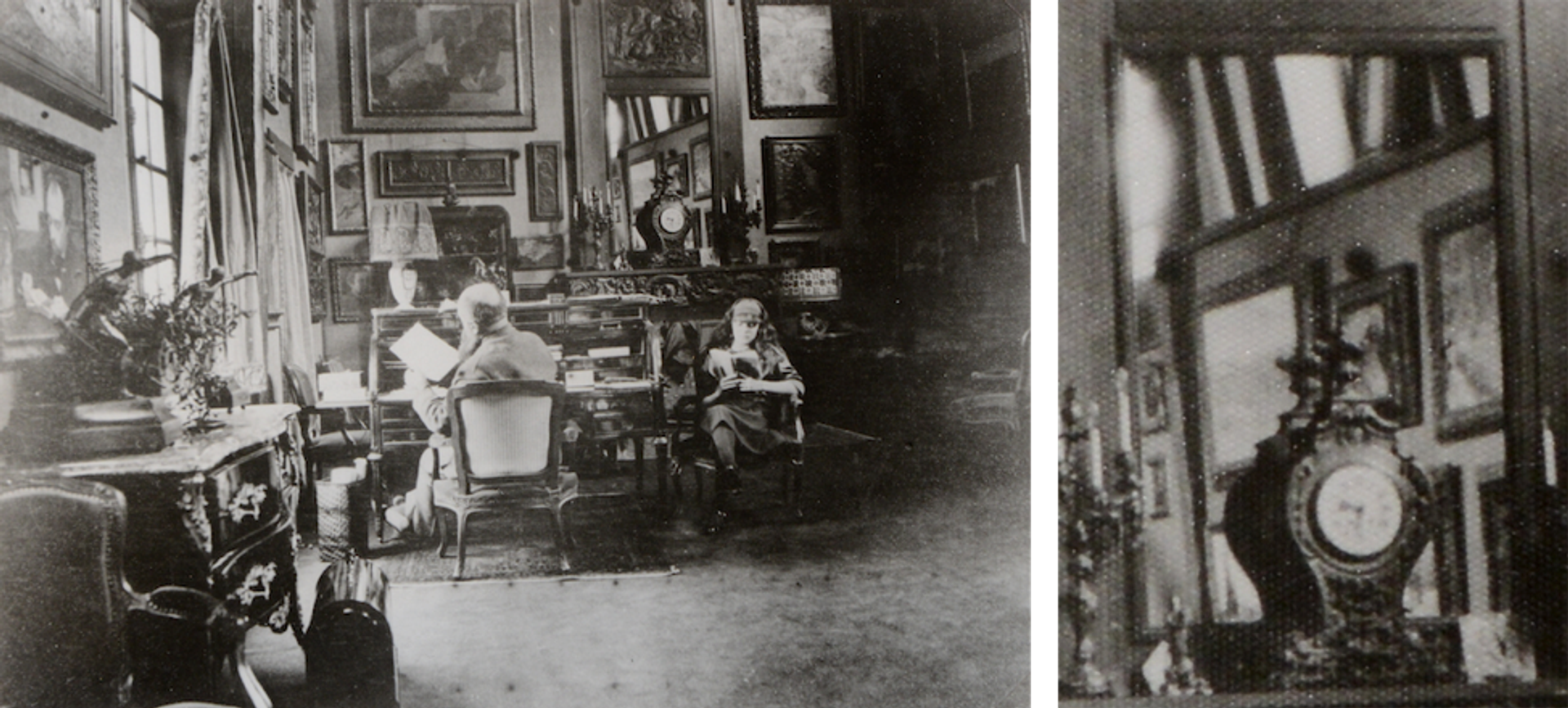
Fayet and his daughter Yseult in the studio in the Château d’Igny and an enlargement of the mirror (1915). Three of the paintings now in the Fondation Louis Vuitton exhibition can just be made out: The Cypress and the Flowering Tree, The Large Plane Trees (Road Menders at Saint-Rémy) and Public Garden in Arles (The Poet's Garden)
Archives familiales Gustave Fayet
During Fayet’s lifetime, the only substantive account of his collection was published in the journal L’Amour de l’Art (April 1925), five months before his death. Its author, artist Jean-Gabriel Goulinat, describes a visit to Igny where he observed his host: “He climbs the few steps of an interior staircase to the studio, a sanctuary filled with paintings by Gauguin and Van Gogh. Those by Van Gogh greet us first. There are eight, representing poor Vincent’s talent at its peak.”
Although Fayet was a great admirer of Van Gogh, he built up an even more important collection of Gauguin’s work. He bought no fewer than 101 of his works, including 54 paintings and 30 sculptures and ceramics. The Fondation Louis Vuitton exhibition displays 78 Gauguins: 21 paintings, plus sculptures, ceramics, drawings and prints, making it almost a mini Gauguin retrospective. The paintings include Washerwoman (November 1888), from Gauguin's time with Van Gogh in Arles.
Other Van Gogh news
Amsterdam’s Van Gogh Museum and the Dutch Ministry of Education, Culture and Science have reached an agreement over financing the renovation of the museum's buildings. In August 2026, museum director Emilie Gordenker had warned that, unless the government funds essential building renovation work, “the museum will have to close, because we will not be able to guarantee the safety of the collection, visitors and staff”.
Last year, the museum received €8.5m from the government to care for its buildings, but Gordenker said that this would need to be increased to €11m a year. No details have been released on the sum that will actually be provided under the new agreement.
Renovation work is now due to start in autumn 2028, for probable completion in 2031. This will mainly be behind the scenes and the museum will remain partially open, with the permanent collection accessible to visitors.