

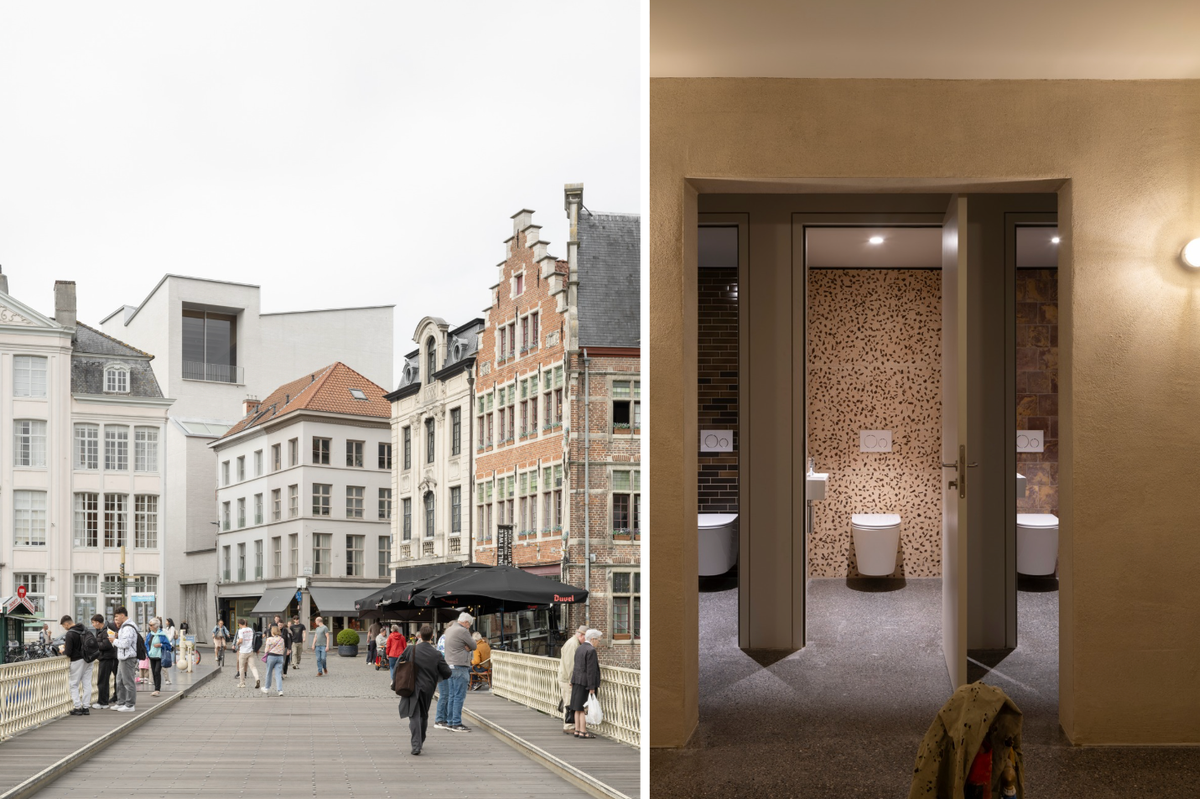
Visitors to the Design Museum Gent can now experience ten different ways of looking at a loo. The panelling in one toilet is made of seaweed, the walls in another are made from recycled household plastics, and yet another has floor tiles made of volcanic ash.
Design Museum Gent reopened on 3 October, following a €20m, four-year expansion and renovation, which includes a new five-level wing called DING (Design in Gent), that adds around 2,000 sq. m of flexible space for lectures, workshops and exhibitions.
The renovation gave the museum’s director, Katrien Laporte, and the project team an opportunity to rethink how the public can engage with design. They decided to use it as a showcase of creative and sustainable design ideas that might help transform contemporary life. For the ten toilets, Laporte gave designers broad latitude to come up with individual designs using sustainable and unique materials.
“We really want to open up this word ‘design’,” says Bieke Vermeire, the museum’s project and programme co-ordinator. “We also want to talk about how we live together, because how we live together is design. We as a museum don’t want to tell people how to do it. We want to open up the conversation.”
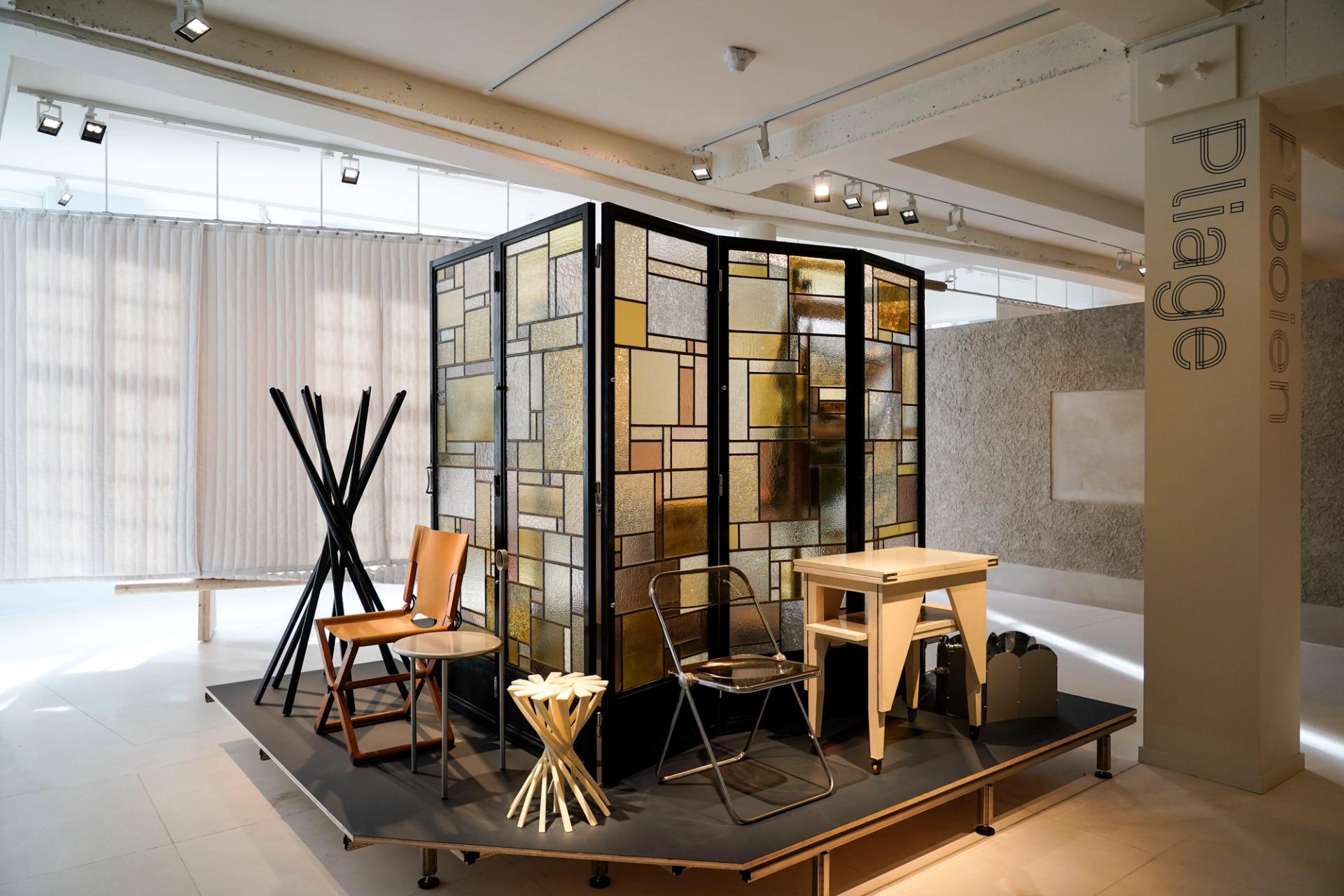
The museum's collection exhibition Models from the Past for the Future Courtesy of Design Museum Gent
A museum of models
The idea has its roots in the museum’s founding in 1903 as a “museum of models”, which displayed examples of top craftsmanship for the artisans of the era, explains Evelien Bracke, the curator of the new collection presentation. Updating that concept for the 21st century, she says, means continuing to present fresh design concepts that respond to contemporary social and cultural concerns.
“We want to be more inspirational than didactic,” Bracke says. “We want to think about the collection as a set of inspirational tools for the future, for designers and also for a broader audience.”
The Ghent museum was previously housed in several buildings in the historic city centre—a 16th-century inn called the Leten House, an 18th-century mansion, Hotel de Coninck, and a contemporary wing built in 1992. In between these buildings was a large vacant lot on Drabstraat, which the city of Ghent, the museum’s owner, made available around a decade ago. The London studio Carmody Groarke, working with the Antwerp architecture firm RE-ST and the Gent-based ATAMA, transformed it into an enclosed atrium that serves as the museum’s main entrance and central foyer.
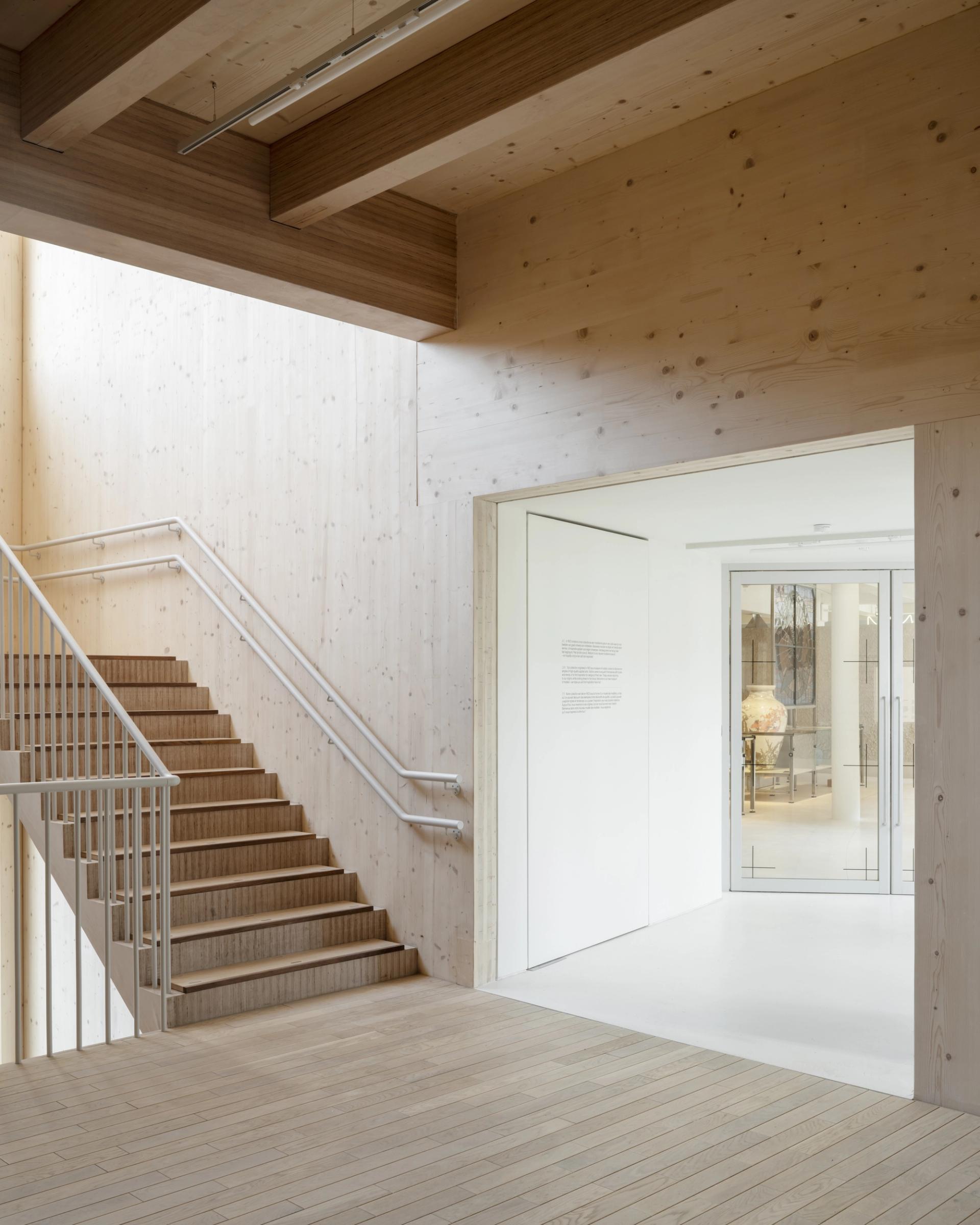
The first floor entrance in Design Museum Gent's new wing ©Johan_Dehlin
DING wing
The new DING wing links the galleries and provides access to flexible rooms for lectures and workshops. The top two floors of the new wing have panoramic views of the ancient Flemish city. Alongside the innovative lavatories, the museum features a large number of new elements that focus on reused materials. The façade is constructed from more than 82,000 locally produced Gent Waste Bricks made from lime-cured municipal waste, while a shaded indoor area whose climate is similar to that of the edge of a woodland was created by the Brussels-based Bureau Bas Smets.
Two temporary exhibitions, which run until 11 April 2027, explore the connection between design and society. Public Matter(s): Design and Democracy explores how political systems are designed; and CO-LAB is a collaborative laboratory where experimental design projects are created through public participation. A third, admission-free exhibition, Connect (until 10 January 2027), invites people of all ages to experiment with design.