

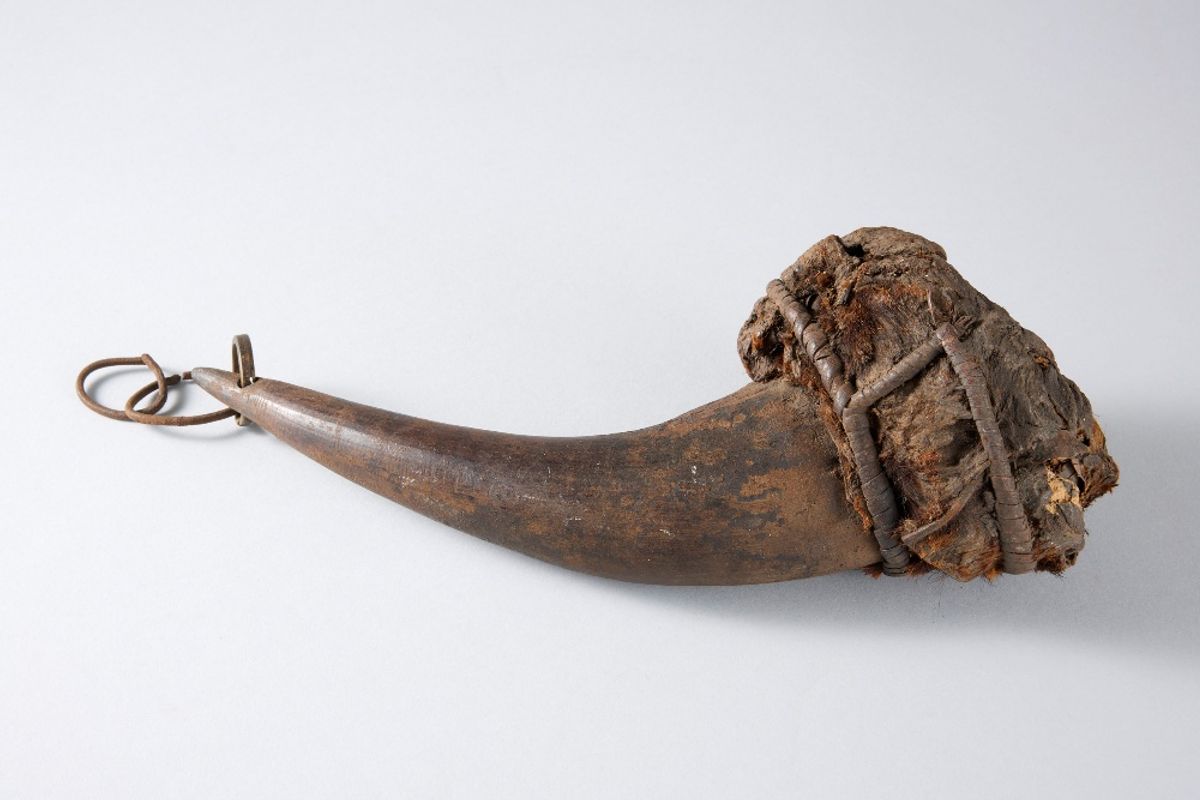
A group of museums in Switzerland have been awarded SFr100,000 (£91,000) to examine the provenance of more than 6,300 objects from Cameroon currently held in their collections. The Swiss Federal Office of Culture said in a press release on 29 September that the initiative will investigate how the items were acquired, their chains of ownership and their significance in Cameroon today. It brings together museums across Switzerland, in Basel, Bern, Burgdorf, Geneva, Lausanne, Neuchâtel, Winterthur and Zurich, including the Museum der Kulturen Basel, the Musée d’ethnographie de Genève and the Bernisches Historisches Museum.
Cameroonian holdings have attracted growing attention in recent years. Isabella Bozsa, a provenance researcher at the Museum der Kulturen Basel points to work already under way in Germany, where several projects have examined material from Cameroon in ethnographic museums. She says this has expanded knowledge of what is held in Europe and raised interest within Cameroon. A 2024 visit by a Cameroonian delegation to several Swiss museums, she adds, “highlighted the urgency of conducting research into these collections”.
The scale of the holdings also reflects Switzerland’s historical entanglements with European colonialism. The country had no colonies of its own, but Swiss organisations, companies and individuals were involved in colonial systems. Bozsa says missionaries from the Basel Mission, active in Cameroon while it was under German colonial rule, played an important role in building Swiss museum collections. Other objects, she says, arrived through research expeditions during the French and British mandate periods, while some were bought on the art and “ethnographica” markets.
Swiss museums hold objects from more than 320 ethnic and cultural communities in Cameroon, according to Legrand Tchatchouang, a prince of the chiefdom of Bangoua (in the country's Western Region) and a civil-society representative on Cameroon’s inter-ministerial committee for the repatriation of cultural property. He welcomed the new project but cautioned that Cameroonian perspectives must shape how the collections are studied. “A Eurocentric project—based solely on European or academic viewpoints—risks creating new problems in Cameroon,” he says.
According to Tchatchouang, the Bangoua community is represented by more than 300 objects in Swiss museums. Among them are objects linked to traditional medicine collected by the Swiss doctor Josette Debarge, who worked in his village. He adds that one of these is now on display at the Musée d’ethnographie de Genève.
Tchatchouang also points to how the meaning and relevance of some objects may have changed over time. “There are objects, such as the fetishes once used to resist colonisation, that no longer serve a purpose in contemporary Cameroonian society,” he says. “What is the value of studying such objects? The colonial era is over. What is needed is to decolonise certain practices, and dialogue is the best way to achieve this.”
He is not alone in calling for dialogue: the Swiss provenance project is also built around collaboration. Bozsa says this matters because the collections themselves are connected: “There are historical links between the collections in the various museums, as well as regional overlaps.” She refers to the Benin Initiative Switzerland as a model for cooperation between Swiss museums and their partners in the countries that objects originated.
“Collaboration with Cameroonian partners is to take place in Swiss museums, but also in Cameroon,” Bozsa adds. Cameroonian partners are expected to help involve communities connected to the collections and bring different approaches and forms of knowledge into the work.