

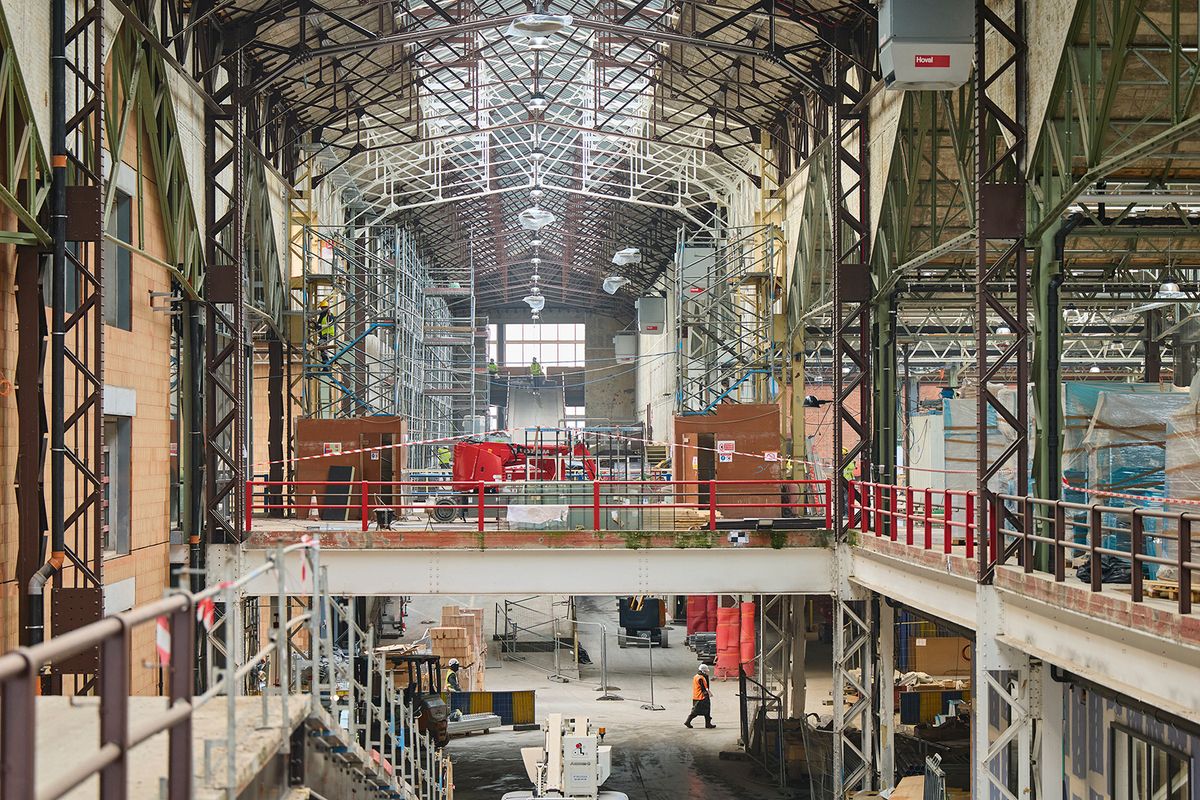
With its own bakery and playground, Kanal is no ordinary museum. But the first major Modern and contemporary art museum in Brussels, located in a converted Citroën garage, has also faced much controversy over the years of planning and building. It is now set to open on 28 November with 40,000 sq. m of art, architecture and public space.
Ever since a Socialist government announced its ambition to build this museum in 2013, the €230m project has faced criticism, in part because of its partnership with the Centre Pompidou. Kanal plans to borrow art from the Paris museum for the first five years at a cost of €2m a year.
Just under a year ago, as Brussels’s government coalition talks stumbled, the opening looked doubtful. Kanal’s managing director, Yves Goldstein, announced in May that he would step down next spring. But last month this date was brought forward: according to an agreement with the Brussels minister-president Boris Dilliès, Goldstein will now depart on 30 November, immediately following the opening weekend. The Art Newspaper understands that interviews for the role will take place this month.
“The parties acknowledge a difference of opinion regarding the future of Kanal,” says a statement from the Brussels-Capital Region, the executive body overseeing 19 municipalities including the capital.
Kanal's future funding is far from secure. The Brussels regional government, which this year reportedly loaned an extra €60m to the Kanal Foundation for the construction project, tells The Art Newspaper that the museum will need private donors after 2028.

Kasia Redzisz, Kanal’s artistic director, says half of the new museum’s 40,000 sq. m will be open to the public free of charge
© Bart Dewaele
None of this dims the enthusiasm of the artistic director, Kasia Redzisz, who sees the museum as a vital community resource in one of Belgium’s least affluent districts.
“Brussels is one of the most diverse cities in the world,” she says. “This museum has an obligation to speak as much to locality as to contribute to global debate.”
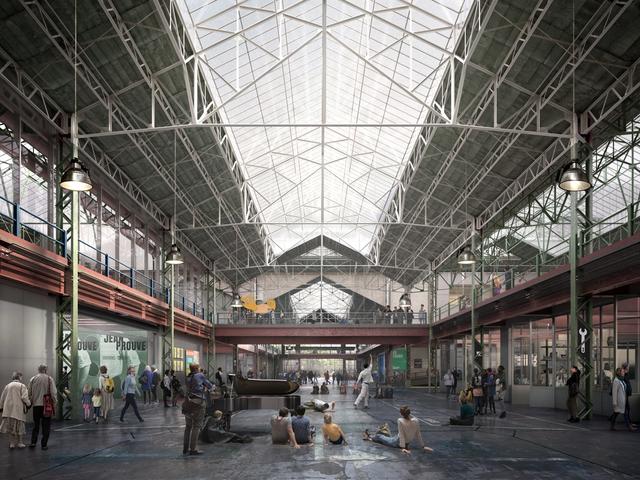
Art in the public spaces
While it will display more than 300 works from the Centre Pompidou, Kanal will allocate more than 20,000 sq. m to public space. “We cannot make our exhibitions accessible free of charge, unfortunately, but we will make sure that there is some art to enjoy in the public spaces,” Redzisz says. “From day one, everybody is welcome in the public spaces,” which, she says, account for half of the museum space.
There will be a children’s playground designed by the Turner Prize-winning collective Assemble, areas for meetings, water fountains and spaces for young people to do homework through a partnership with l’Université des Familles.
The art and architecture complex will host exhibitions, special commissions and live performances across five floors and eight event spaces, with resources including a library, workshop, rooftop bar and bakery. The opening of another building devoted to architecture has had to be postponed, after a rooftop fire in July.

The Koekelberg viaduct near Sainctelettesquare, around 1958, showing the Citroen garage that will house Kanal Postcard by Colorprint, Brussels © Kanal Architecture Collections
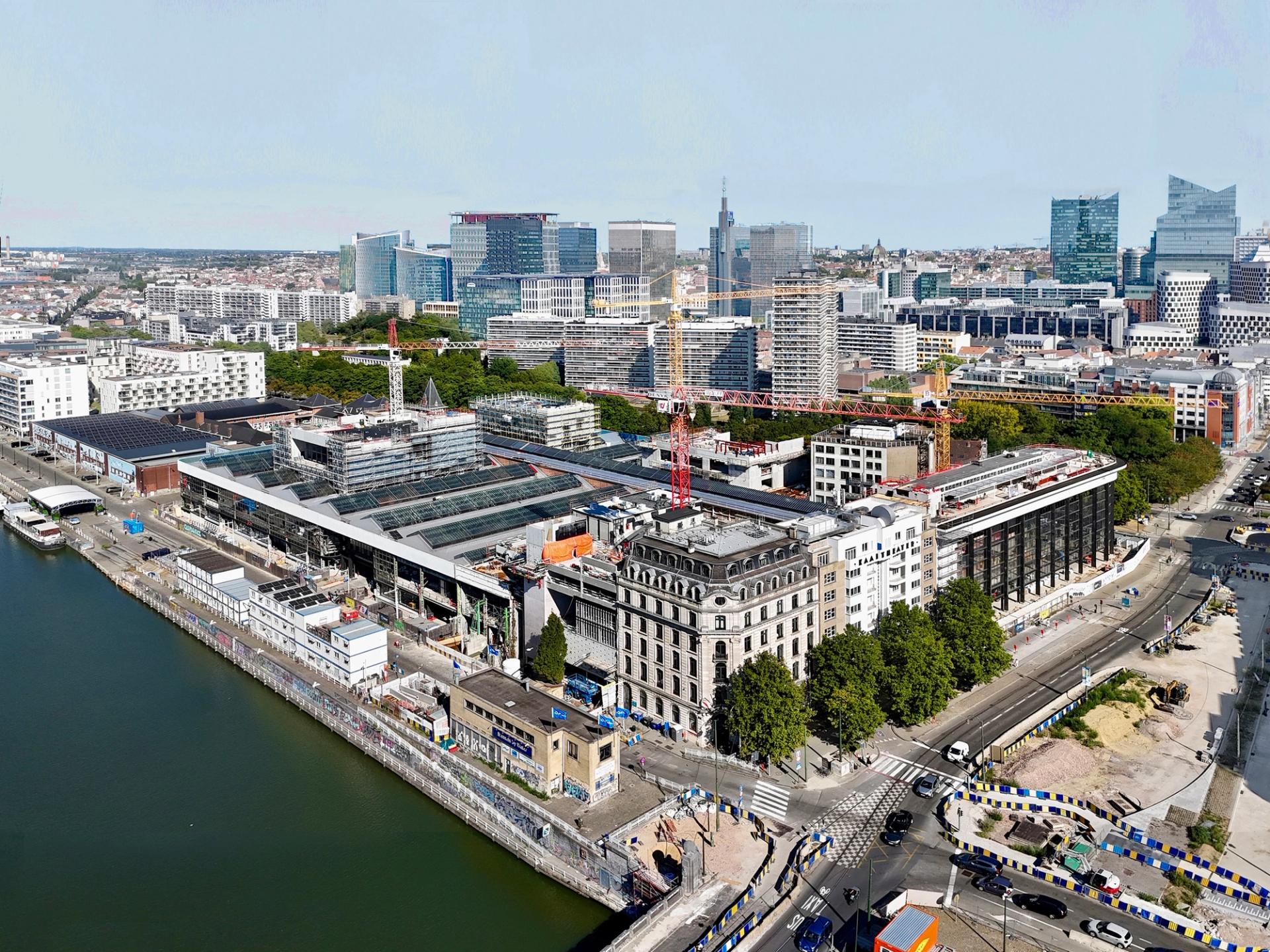
A drone image of Kanal today, which can be seen centre right Image credit/ Atelier Kanal
Funding drop
Around 15% of the works will be from Kanal’s own collection or loaned from institutions in Belgium, and they will include Belgium-based artists such as Ann Veronica Janssens, Gabriel Kuri, Lucy McKenzie and the photographer Sammy Baloji. In an underground gallery, the Belgian multimedia artist Joëlle Tuerlinckx will create a commission inspired by the process of building itself.
While the Brussels government, led by the liberal politician Boris Dilliès, is supporting the opening, its message is clear: Kanal is set to receive €28m in public funding for its operating costs in 2026, but this is projected to drop to an annual €10m by 2029.
“Kanal should be Brussels’s flagship museum for modern art, in the view of the new Brussels prime minister,” a spokesman for the regional government, Christophe Degreef, wrote in an email. “After the opening, the next major hurdle will be changing the museum’s funding model. From 2028, Kanal is expected to work increasingly with private investors and, in time, become financially self-sustaining.”
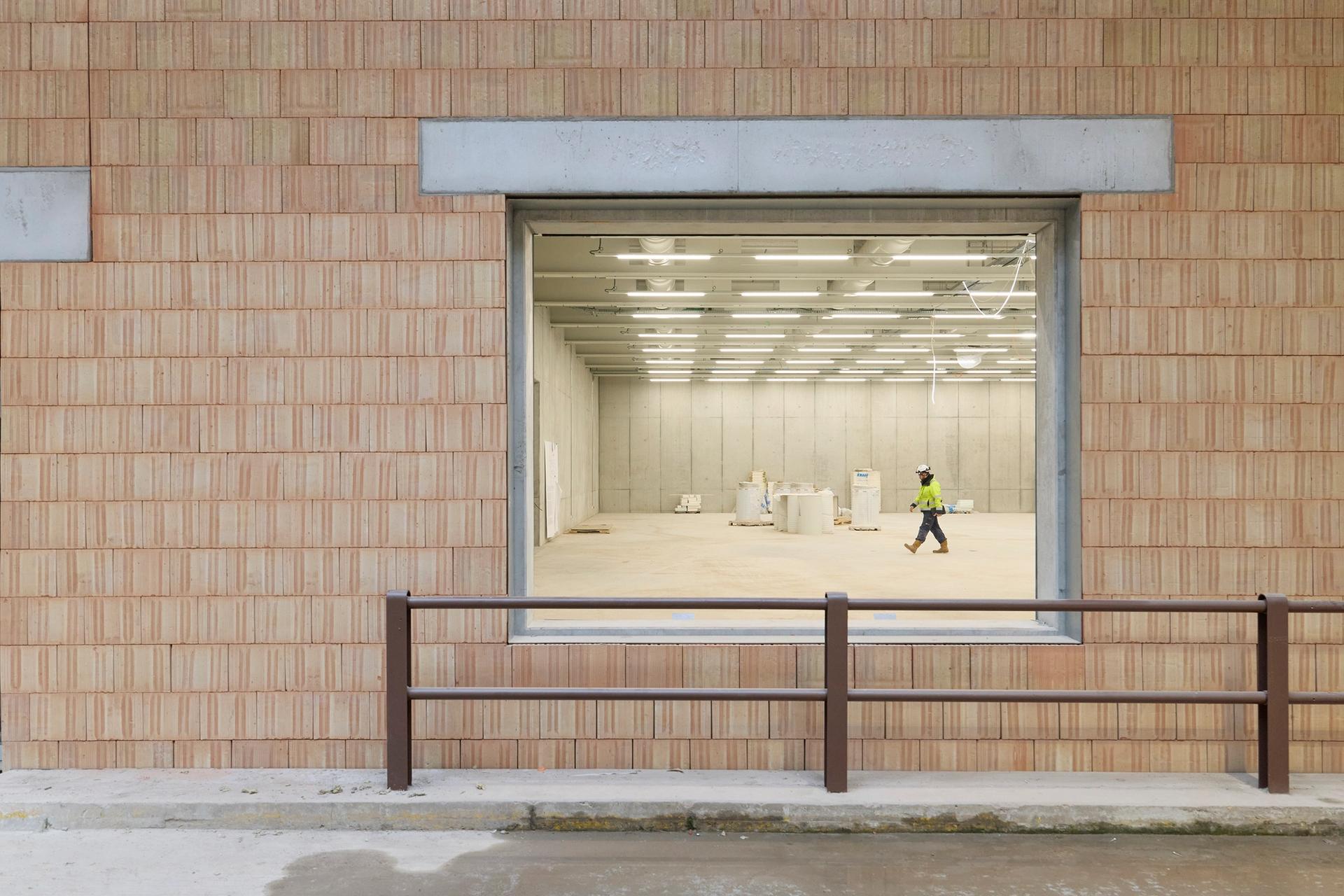
Kanal under construction, January 2026 © David Levene
‘Top-down political project’
According to critics like Benjamin Dalle, a member of the Brussels regional assembly and a former media minister, this was always a top-down political project that should have started with local artists and communities. “Since the start, my opinion was that the governance, the funding, the partnerships and the whole concept were poorly conceived,” he says. “If you want to see the Pompidou, you can go to Paris—it’s only an hour-and-a-half by Eurostar.”
He believes Brussels cannot afford the high cost of the museum, and wonders why it does not have partnerships with Bozar Centre for Fine Arts in Brussels, or the contemporary art museums SMAK in Ghent or the Museum of Contemporary Art in Antwerp.
While many artists and curators hope Kanal will benefit the artistic community, others have concerns. The Fédération des arts plastiques says it should immediately end the relationship with the Centre Pompidou. “Several questions continue to be raised within the sector: the place given to Belgian artists in the programming, the policy for acquiring works, support for local and emerging artists, and the museum’s accessibility for Brussels residents,” it said in a statement.
Redzisz hopes that the opening will assuage such doubts, with a predicted 550,000 visitors a year by 2030. While Brussels has a thriving art scene, she says there is a gap. “In terms of mission, education, heritage, legacy, there’s a classical role that museums can play,” she says. “Kanal takes this responsibility very seriously.”