

World Monuments Fund (WMF) released key insights from a study on Wednesday (30 September) revealing that insufficient public funding continues to surpass climate hazards as the primary threat to heritage sites around the world. The research was conducted as part of the non-profit organisation’s nomination process for its 2027 World Monuments Watch list, which will be announced in February. WMF has been publishing the list since 1996 to address funding gaps in cultural preservation. This year, the number of nominations has almost doubled since the previous cycle.
Of 372 nominations for the 2027 Watch list, 65% of nominators cited funding shortages and economic development as a primary challenge, up from 55% in 2024. Bénédicte de Montlaur, the director of WMF, says funding is no longer flowing from public coffers, as governments worldwide face pressures from inflation, war, climate-related disasters and competing public needs.
“We are seeing governments, particularly in Europe and the US (which have been some of the most supportive of heritage preservation), reducing or stopping national and international funding for public resources,” De Montlaur tells The Art Newspaper. “In that environment, culture and heritage are often among the first to face cuts.”
De Montlaur adds that reducing support for heritage weakens the long-term resilience of cultural sites. “These places are not simply historic monuments,” she says. “They are public spaces, places of worship, economic assets and anchors of identity, community life and local economies."
While public investment remains essential, De Montlaur believes that countries must broaden their sources of funding through partnerships with individuals, foundations and corporations, and that a “more creative model” for heritage fundraising should be implemented at the international level.

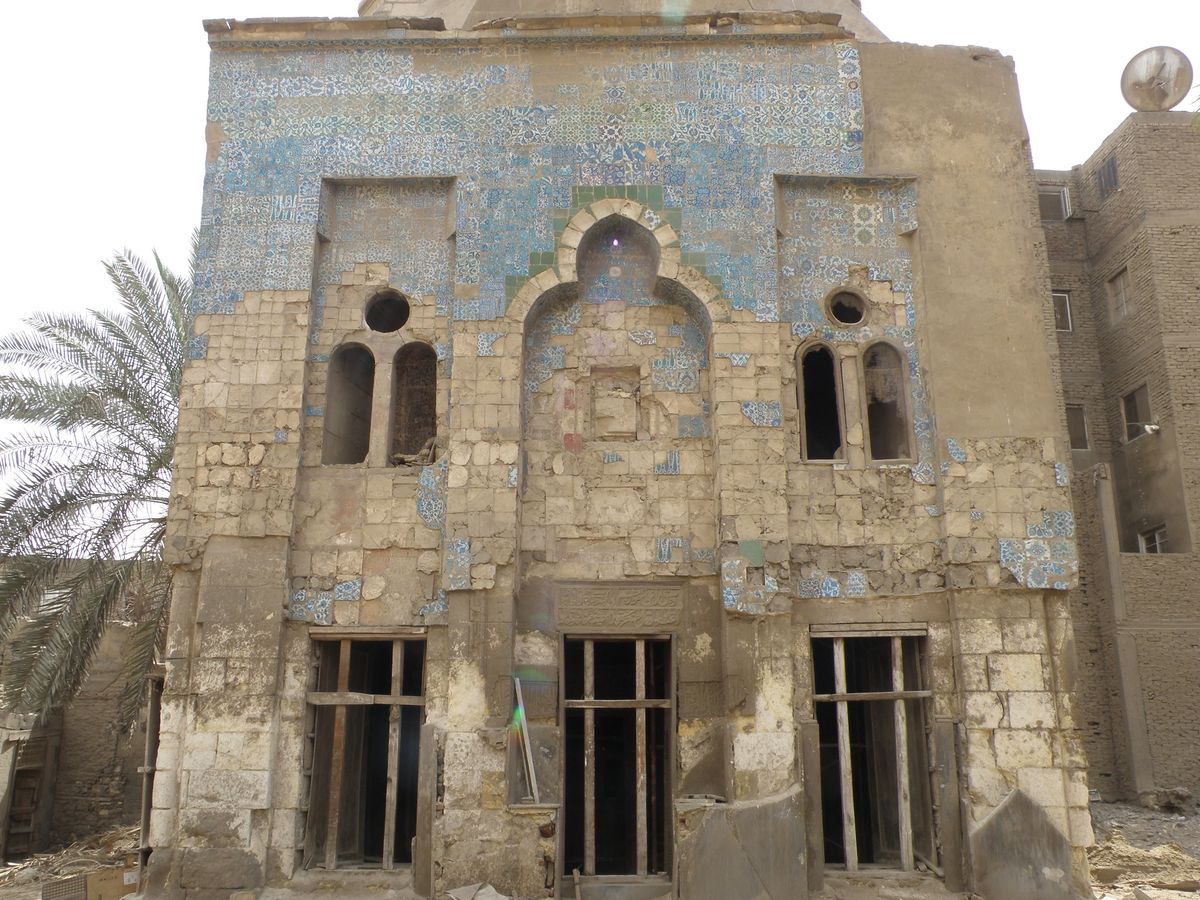
Docmenting mauseoleum tiles at Takiyyat Ibrahim al-Gulshani Courtesy World Monuments Fund
“We can’t rely exclusively on funding from the US and Europe,” De Montlaur says. “The most promising models bring the public sector together with governments and local communities, and highlight how heritage intersects with economic development, climate change, tourism management and other important societal issues beyond the cultural field.”
The study emphasises that heritage is deeply connected to economic resilience, and that cuts to its funding may offer short-term savings but create much greater socioeconomic costs over time. More than 60% of nominators for the WMF Watch list identified opportunities to leverage heritage to support local economies through sustainable tourism, urban revitalisation and the creation of jobs and specialised skills.
Around 30% of nominators cited extreme weather events like flooding, storms, drought and wildfires as a main challenge. This issue remains most severe in Sub-Saharan Africa, where sites like the Unesco-listed Osun Osogbo Sacred Grove in Nigeria—thought to have been established more than four centuries ago as the abode of the Yoruba deity Oshun—have suffered severe damage due to windstorms. Conflict and peacebuilding also remain a top concern for regions like the Middle East and Africa.

Around 35% of all nominators identified a need for technical expertise, underscoring the importance of reviving traditional crafts and training the next generation in conservation. Such efforts have been carried out at sites like Takiyyat Ibrahim al-Gulshani in Cairo, an early 16th-century Sufi complex where WMF is collaborating with the Egyptian Ministry of Tourism and Antiquities to give trainees—including university students—hands-on experience in conservation. Nominators also cited a need for furthering knowledge and education, as well as community stewardship and engagement.
“At a time of rapid global change, culturally significant places matter more than ever. They carry local memory, bring people together, support economic development and help communities navigate change,” De Montlaur says. “Protecting heritage is not simply about preserving the past. It is about giving communities the resources and resilience they need to build their future.”