

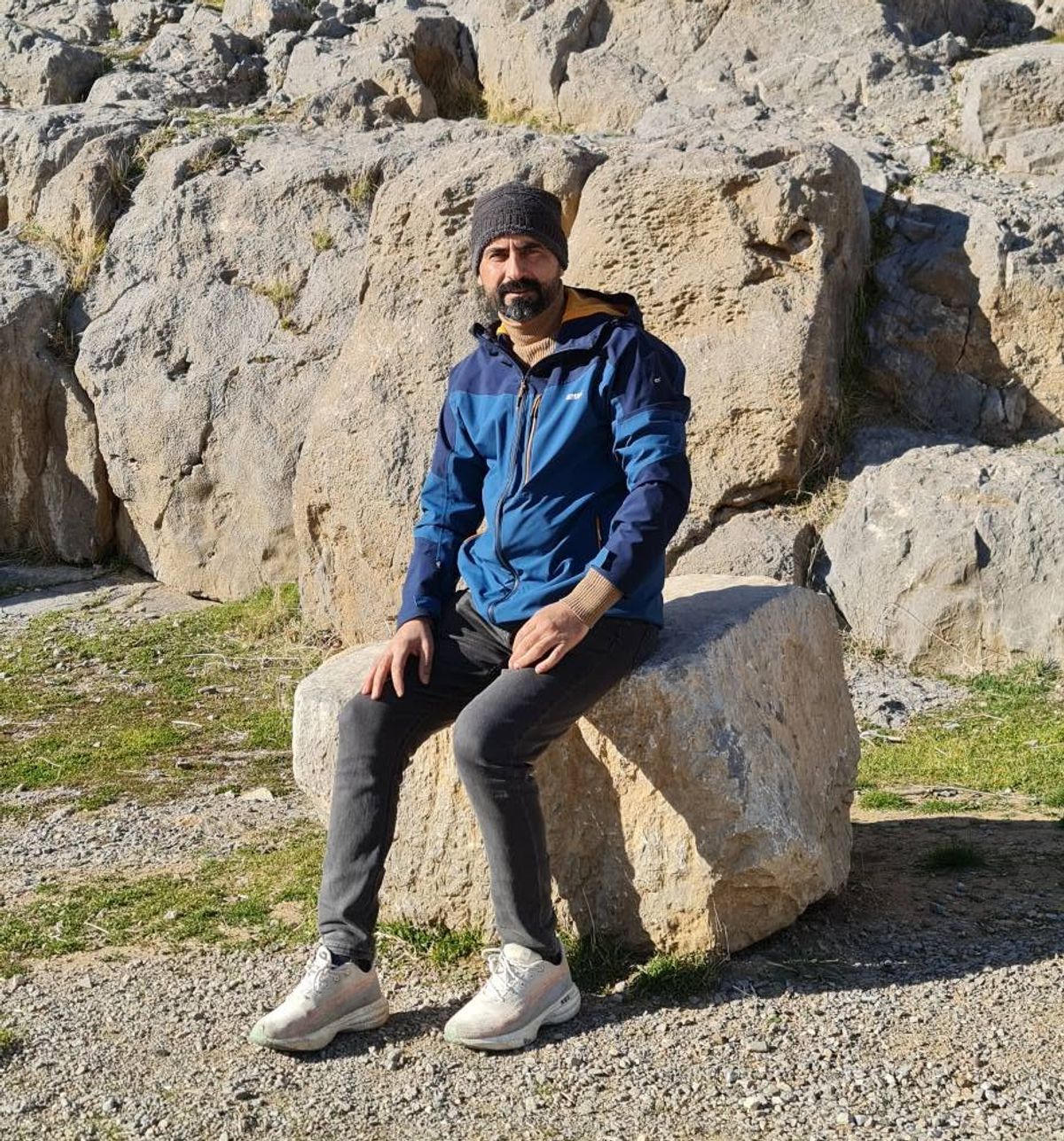
Two prominent Iraqi archaeologists have been arrested this month in what many fear is retribution for public comments they have made about corruption at the State Board of Antiquities and Heritage (SBAH), the government agency that oversees the country’s archaeological sector.
On 17 September the archaeologist Ali Tabar was arrested on charges of extortion. Tabar, who worked until recently at the SBAH, is one of the country’s leading drone surveyors, responsible for aerially documenting sites before and after excavations—a role that provides him with substantial insight into changes to the country’s archaeological landscape.
He also conducts surveys for foreign teams of archaeologists who excavate in Iraq. In the past they have included a team from the Sapienza University of Rome and another from the University of Bern, for whom he surveyed the Sumerian site of Zabalam.
The SBAH claimed that he illegally took money from these international teams, working without the SBAH’s knowledge and extorting the funds from them. A Facebook post published on SBAH’s page after Tabar’s arrest said the board “confirms its support for such deterrent measures that prevent any practices that harm the country's reputation, and ensure the protection and security of the work of foreign teams working in archaeological sites and provide a safe and stable scientific environment for them”.
Campaign against alleged corruption
Tabar denied the SBAH’s accusations at his hearing. And many fear the real reason is his campaign against alleged corruption at the SBAH, specifically in relation to its controversial investment law.
“He is innocent and has committed no offence other than wanting to defend archaeological sites,” one archaeologist tells The Art Newspaper, speaking on the condition of anonymity.
Davide Nadali, who led the excavation of the Sumerian city of Nigin for Sapienza University of Rome, likewise disputes the SBAH’s allegations.
“The SBAH was aware of the work he did for us,” Nadali tells The Art Newspaper. “We paid him for the services he provided to us, and we never received additional emails asking for money from him.”
Iraq’s investment law specifies the level of protection given to particular archaeological sites in Iraq. The SBAH commissions exploratory surveys for sites to gauge their significance and then determine whether they can be developed for real estate. Sites are put into three categories—areas that are so crucial that they will always remain protected; those on which work is ongoing and should be safeguarded from commercial development; and those that have notable but not overwhelming levels of historical significance—and the investment law enables sites to move between these categories to allow for economic development.
The law is widely considered to be a vehicle for corruption. Critics say that the exploratory surveys are accomplished in a matter of weeks rather than the years that proper examinations need and that they have resulted in the demolition of major historical sites.
Tabar had conducted one such exploratory survey of Samarra, which was the capital of the Abbasid Empire in the ninth century. The results showed a large number of Christian churches and monasteries that have been recently found among the mosques and palaces of the caliphate. But earlier this year he saw that the area had been bulldozed, despite the significance of the findings that still lay in the ground.
He brought the matter to the state’s Integrity Commission, public prosecution service and the police, The Art Newspaper understands. When the matter was not taken up, he turned to social media.
“Consider the discovery of churches and an entire ancient city—dating back millennia—that tell the stories of successive civilisations, generations that worshipped and connected, and souls that once dwelt there before passing on,” Tabar wrote in a Facebook post on 19 April. “Yet, instead of revealing these treasures to the world and preserving them for posterity, they are swiftly demolished and erased in shameful silence—and before the Iraqi people, to whom this heritage belongs, even learn of their existence, and before the world, which reveres such monuments, can ever lay eyes on them.”
The post is one of a number in which Tabar addresses the Iraqi prime minister, government authorities and other experts in the field to look into Iraq’s investment law and corruption at the SBAH. In September, he put together a protest in Baghdad.
“Hundreds of archaeological sites are at risk of being destroyed due to investment-driven excavations,” Tabar said in an 11 September Facebook post. “That is why we organised this protest, the campaign, and the appeals, so that they would reach the relevant regulatory authorities.”
Tabar also posted a detailed video showing his drone survey of Samarra and the areas of archaeological significance it identified. He then posted drone documentation of a second site, Old Basra, which is another alleged victim of the investment law. His case remains in court.
A second arrest
Meanwhile, this week, the prominent Mosul University professor Amir Al-Jumaili was arrested on charges The Art Newspaper has been unable to confirm. The Art Newspaper understands that Al-Jumaili had similarly taken issue with the investment law.
According to Iraqi media reports he has spoken out about SBAH recently seizing lands in Nineveh, the vastly historically significant capital of the Neo-Assyrian Empire, that he and other archaeologists believed should have remained protected.
It is unclear whether Al-Jumaili has been released or is awaiting a trial.
Both cases have drawn unusual public ire. The social media pages of both Tabar and of the SBAH, where Tabar’s arrest was announced, are filled with expressions of support for the archaeologist.
“Professor Ali is known for his integrity, high morals, and dedication to his work, and the accusations levelled against him do not reflect the true nature of this person,” writes one commenter.
People have also taken to social media in support of Al-Jumaili. “He is honourable in an era of disgrace,” says one user.
The Art Newspaper reached out to the archaeological team at the University of Bern but did not hear back with comment. The Art Newspaper also contacted the SBAH for comment but did not receive a reply.