

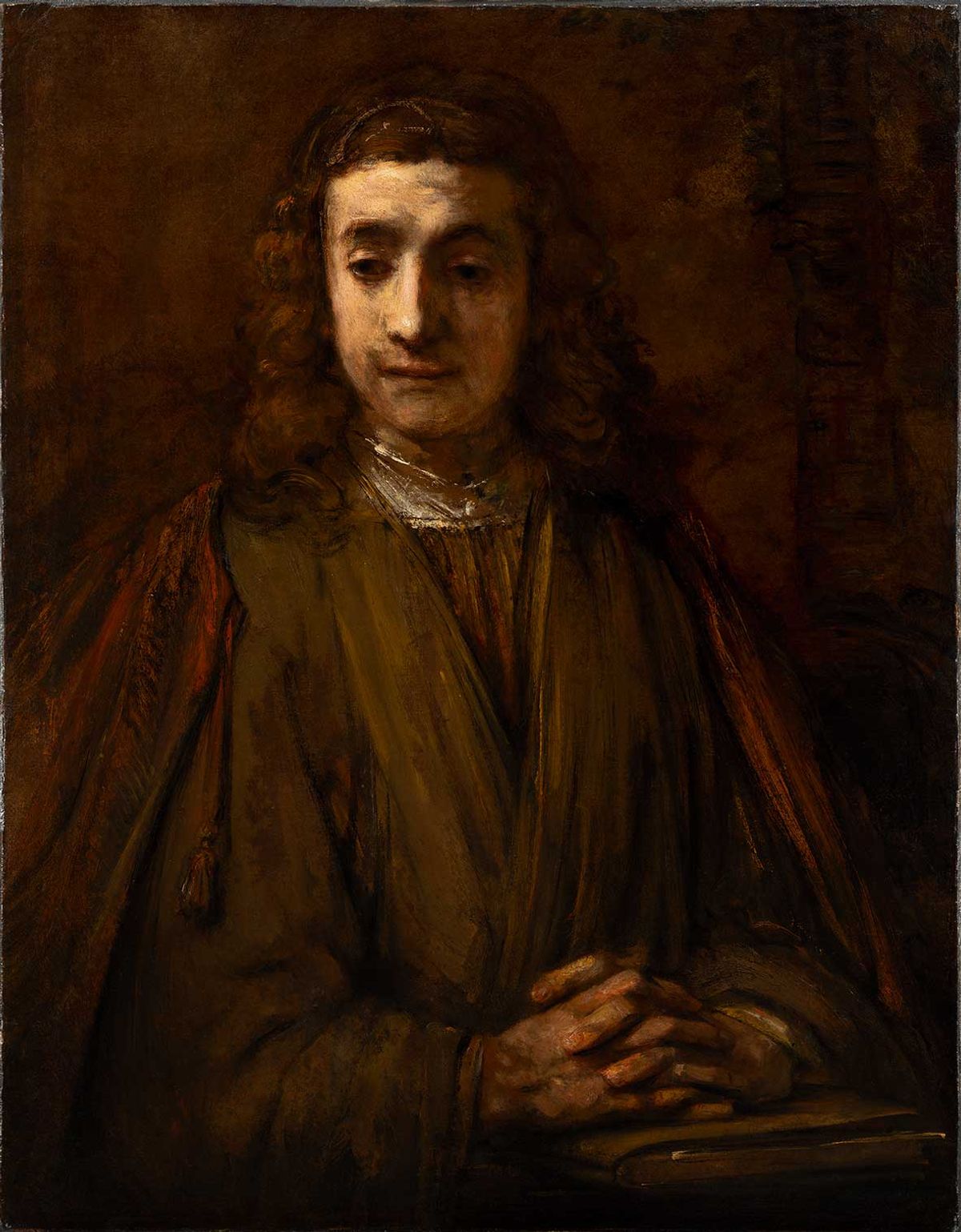
The buyer of a major Rembrandt painting has been identified. Thomas Kaplan, the New York-based owner of the Leiden Collection, has bought Saint John on Patmos. It sold for £6.75m ($9m) at Sotheby’s in London last December. Astonishingly, this makes it the 18th painting by Rembrandt to be acquired by Kaplan’s collection in the past two decades.
The news may come as a surprise, since just two months later Kaplan sold a Rembrandt: a drawing of a lion, which went for nearly $18m at Sotheby’s in New York in February. Why would the world’s greatest Rembrandt collector relinquish one of the artist’s finest works on paper?
Kaplan agrees this may appear “paradoxical”, but says his intention was to convert Young Lion Resting (around 1638-42) into “a life-saving fund for big cat conservation”. The proceeds created an endowment for the charitable Panthera organisation—a cause close to the hearts of Kaplan and his wife, Daphne Recanati Kaplan.

As for the purchase of Saint John on Patmos (around 1661), Kaplan says it is “about preserving, and indeed returning to the public domain, a breathtaking late masterwork that has been hidden from sight for over a century”, enriching “the core narrative of our collection”.
This oil painting, from late in Rembrandt’s career, has a chequered past. Last exhibited in 1923, it was until recently known only from a poor black-and-white photograph. In 1904 the picture had been with an American dealer who attributed it to Carel Fabritius and sold it for just $160. It was then sold in 1913 to the German art historian and Metropolitan Museum of Art curator Wilhelm Valentiner, who recognised it as a Rembrandt and bought it for his personal collection for $525. Valentiner believed the sitter was the artist’s son Titus, because of facial similarities with two known portraits.
In 1923, or soon after, the Rembrandt was bought by Fritz Thyssen, heir to the German steel company. Thyssen’s relations with the Nazis were complicated. From the late 1920s he was a highly influential supporter of Adolf Hitler, but by the late 1930s he had turned into a critic. In 1941, while attempting to flee Vichy France, he was arrested and later sent to the Sachsenhausen and Dachau concentration camps. After the war he was fined by the Allies for his early Nazi support and he then emigrated to Argentina in 1950.
The Rembrandt was among works seized by the Nazis in 1940, but it was restituted to Thyssen in 1950 and sent to Buenos Aires just before his death in January 1951. The painting was eventually inherited by his grandson, Federico Zichy Thyssen, a colourful character who bred Arabian horses. He died in 2014 and the Rembrandt then passed to a family charitable foundation.
Shortly before the Sotheby’s sale it was realised that the picture is not a portrait of Titus, but a depiction of Saint John at Patmos. Cleaning and conservation revealed the presence of a palm tree (symbolising the Greek island of Patmos) and an eagle (the emblem of Saint John) in the background, features which are barely visible in reproductions. The painting depicts the young evangelist resting his hands on a leather-bound manuscript containing letters that he used in writing his apocalyptic vision for the New Testament Book of Revelation.
Public unveiling planned
Although not considered by the now-defunct Rembrandt Research Project because it was previously unavailable for study, Arthur Wheelock, the 17th-century Dutch specialist who advises Kaplan, says that the Sotheby’s attribution has now been fully accepted by all specialists.
Wheelock believes that Rembrandt used his son as a model, although it is not a portrait. “Rembrandt’s decision to ask Titus to model for Saint John suggests that he felt an underlying connection between his own affection for his son and the evangelist’s place in the Christian story,” he says.
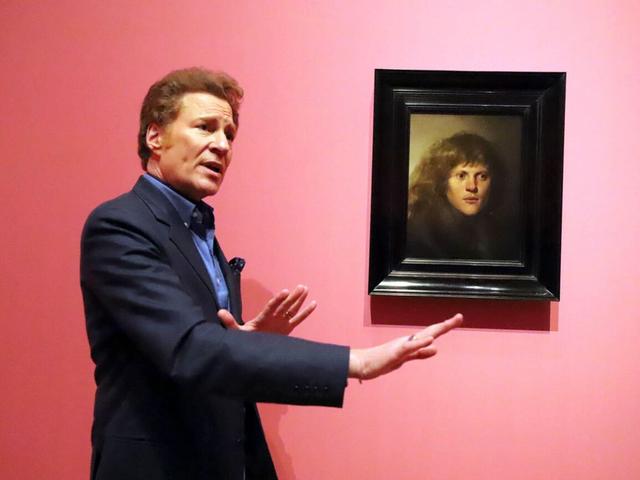
The Leiden Collection will shortly announce a European exhibition of part of its collection, for autumn 2027. This will include Saint John on Patmos, representing its first public showing (other than the very brief display at Sotheby’s last year).
The fact that Kaplan has bought 18 Rembrandt paintings raises the question of his impact on the market. Sellers of any reasonable Rembrandt will know that Kaplan is likely to be interested—and might end up either buying their work or, if it is auctioned, bidding unsuccessfully and then pushing up the price.
Asked if this impacts prices, Kaplan says, “perhaps, in specific moments”. But he adds that masterworks by Rembrandt are driven by their extreme scarcity. As Kaplan puts it: “When a painting as intensely personal as Saint John on Patmos emerges after 100 years in private hands, the enthusiasm is already built into the sheer rarity of the moment.”