

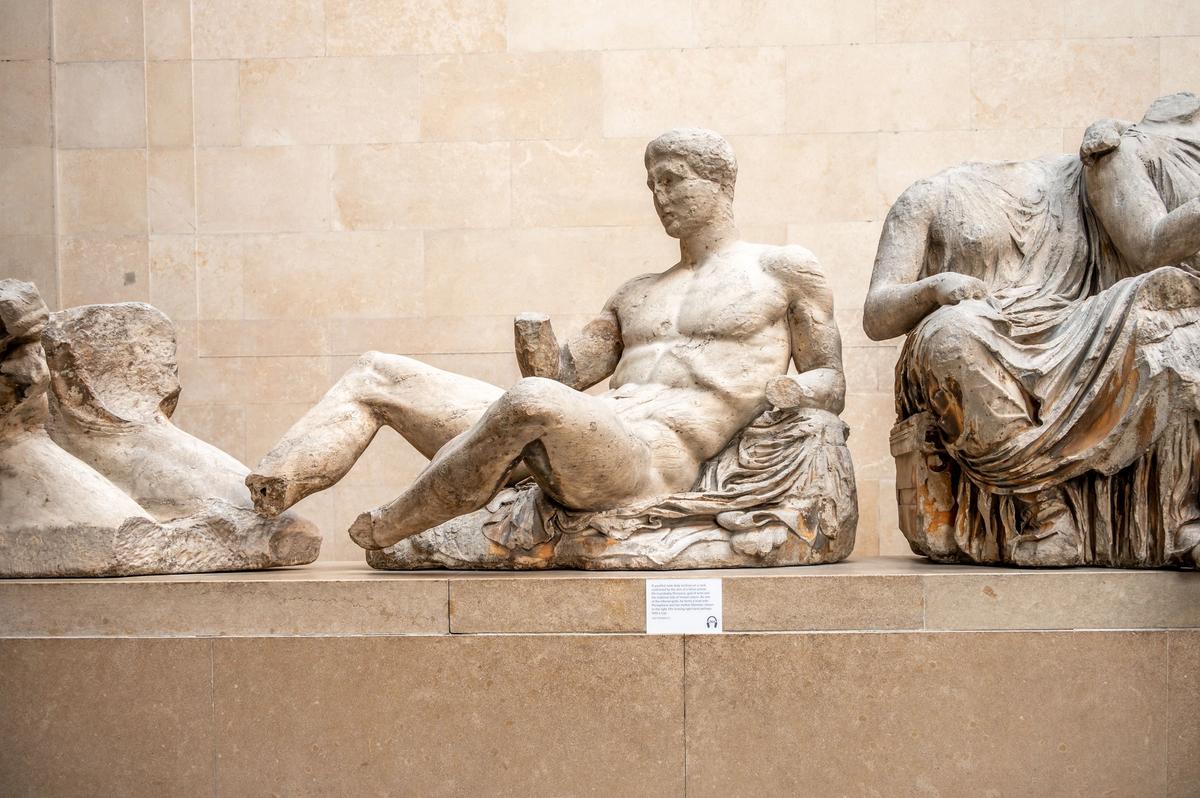
The Greek prime minister, Kyriakos Mitsotakis, is piling further pressure on the British Museum to return the Parthenon Marbles to Greece, rejecting the suggestion that the deal that brought the Bayeux Tapestry to the UK might pave the way for loaning the disputed ancient sculptures.
The British Museum’s director Nicholas Cullinan recently told The Financial Times that the Anglo-French deal linked to the Bayeux Tapestry could be a template for a loan agreement over the Marbles. The display of the Bayeux Tapestry, an embroidery depicting the 1066 Norman invasion and the Battle of Hastings, has opened in the museum’s Sainsbury Exhibitions Gallery (until 11 July 2027).
But Mitsotakis dismisses this proposal, writing in The Guardian: “Nobody would seriously contemplate cutting what survives of the tapestry in two and displaying half in London and half in Bayeux, and claiming this was an adequate way to understand it. Yet that is exactly what happened to the Parthenon sculptures. A single masterpiece was divided, and its surviving parts are now principally split between London and Athens.”
“The surviving sculptures should be viewed together, at the same time, within sight of the monument for which they were created”, he argues, referencing the purpose-built Acropolis Museum in Athens, which now displays plaster copies of the marbles in London.
Crucially, Mitsotakis says that “Greece cannot accept any arrangement that would require it to recognise the British Museum’s ownership of the sculptures or a scheme that would mean we ‘borrow’ parts of our own monument”. The British Museum says it is prevented from returning the marbles by the British Museum Act 1963.
In the op-ed, the Greek leader also calls on the UK's prime minister Andy Burnham to “find the political will” to restitute the controversial ancient sculptures. Burnham, who became prime minister in July, recently told The Financial Times: “Ultimately [returning the Marbles is] an issue for the British Museum, isn’t it?” He added: “Legally that’s where that issue rests, but I’m all in favour of using British cultural diplomacy. That’s something that I’m hugely in favour of.”
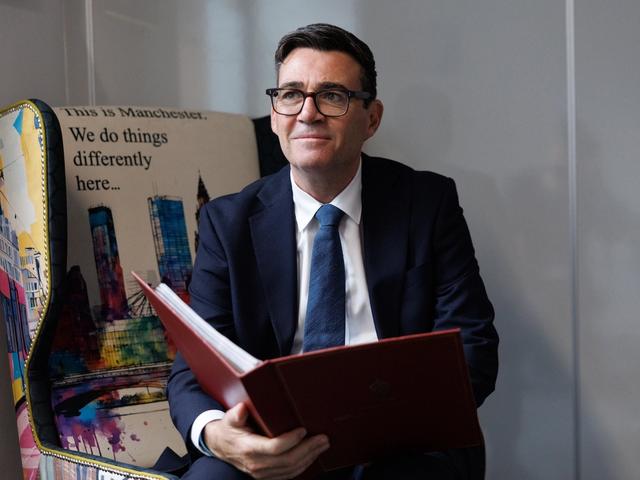
Labour leader Burnham previously stated that he supports returning the Parthenon Marbles to Greece, a position possibly signalling a more open approach to restitution under his premiership.
The marbles have been housed in the British Museum since 1817, arriving there after being removed from the Parthenon temple on the Acropolis in Athens by the Scottish nobleman Lord Elgin, then ambassador to the Ottoman court. In 2022, George Osborne, the chair of the British Museum, said in a radio interview that there is a “deal to be done” over sharing the Parthenon Marbles with Greece, which has long claimed ownership of the antiquities. Talks, however, appear to have stalled, according to The Telegraph.
“The Parthenon sculptures [were] chiselled away and illegally removed from Athens to be taken to Britain more than two centuries ago by Lord Elgin,” adds Mitsotakis. The position of the British Museum trustees disputes that the museum's Parthenon Marbles were stolen, stating: “This isn't true. Lord Elgin, the British diplomat who transported the sculptures to England, acted with the full knowledge and permission of the legal authorities of the day in both Athens and London.”