

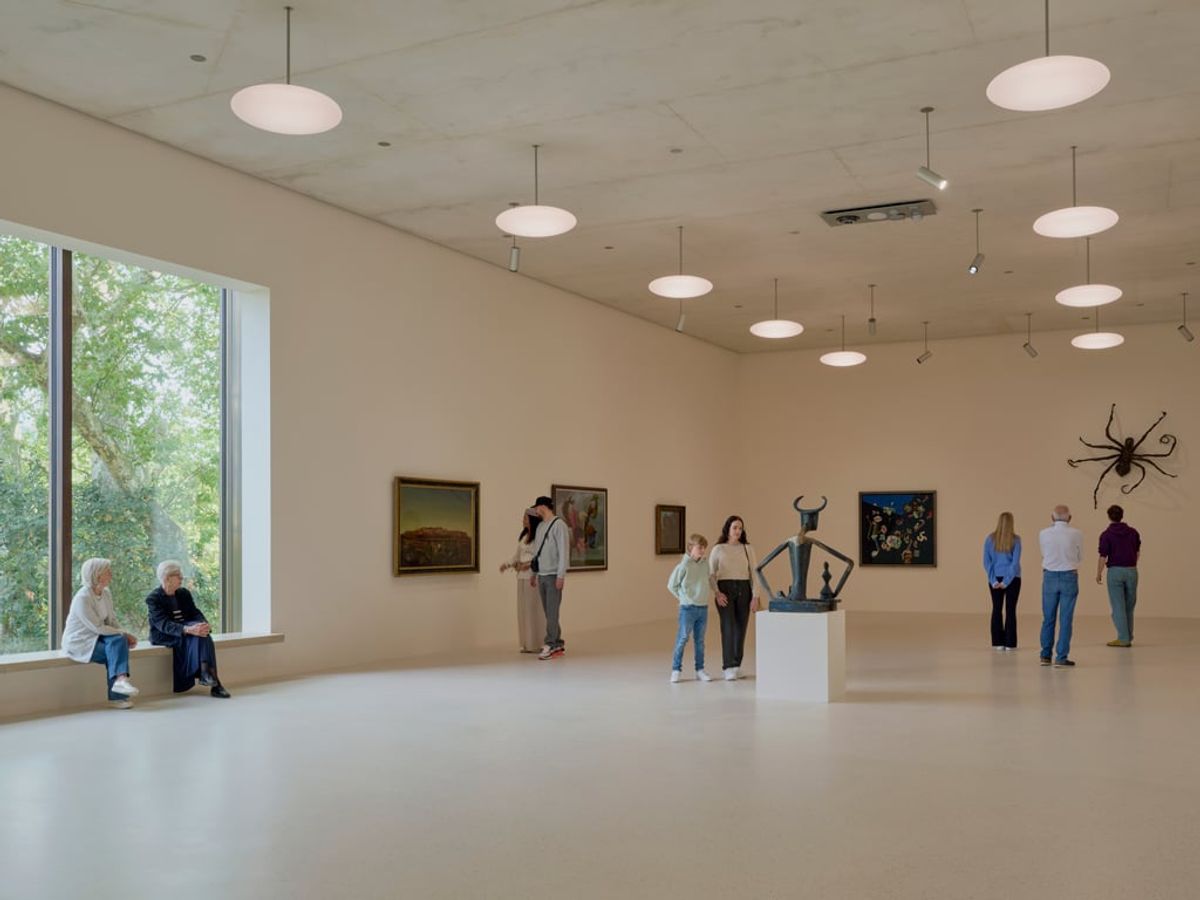
The Fondation Beyeler in Basel, Switzerland, is opening a suite of new buildings this weekend. Known for its collection of Modern art—including Claude Monet, Piet Mondrian, Pablo Picasso and more—the museum has spent around SFr 120m (around £109.7m) expanding its internal space with three new structures designed by the Swiss architect Peter Zumthor, as well as extending and regenerating its grounds.
The principal new gallery building, called the Wyss building after the Swiss entrepreneur and billionaire Hansjörg Wyss, who covered most of its cost, will increase the exhibition space of the Fondation Beyeler by 1,500 sq. m. This is in addition to the 3,800 sq. m offered by the long, low building by Renzo Piano, which opened in 1997. The freestanding Ammann Pavilion—named after its supporters, the Swiss art dealers Thomas and Doris Ammann—offers an intimate space for recitals and performances, as well as a spot for daytime visitors to hang out in its cherry- and pear-wood interior. The third building is the Erlen Torhaus, an addition to the original 18th-century villa on the property to create new office space.
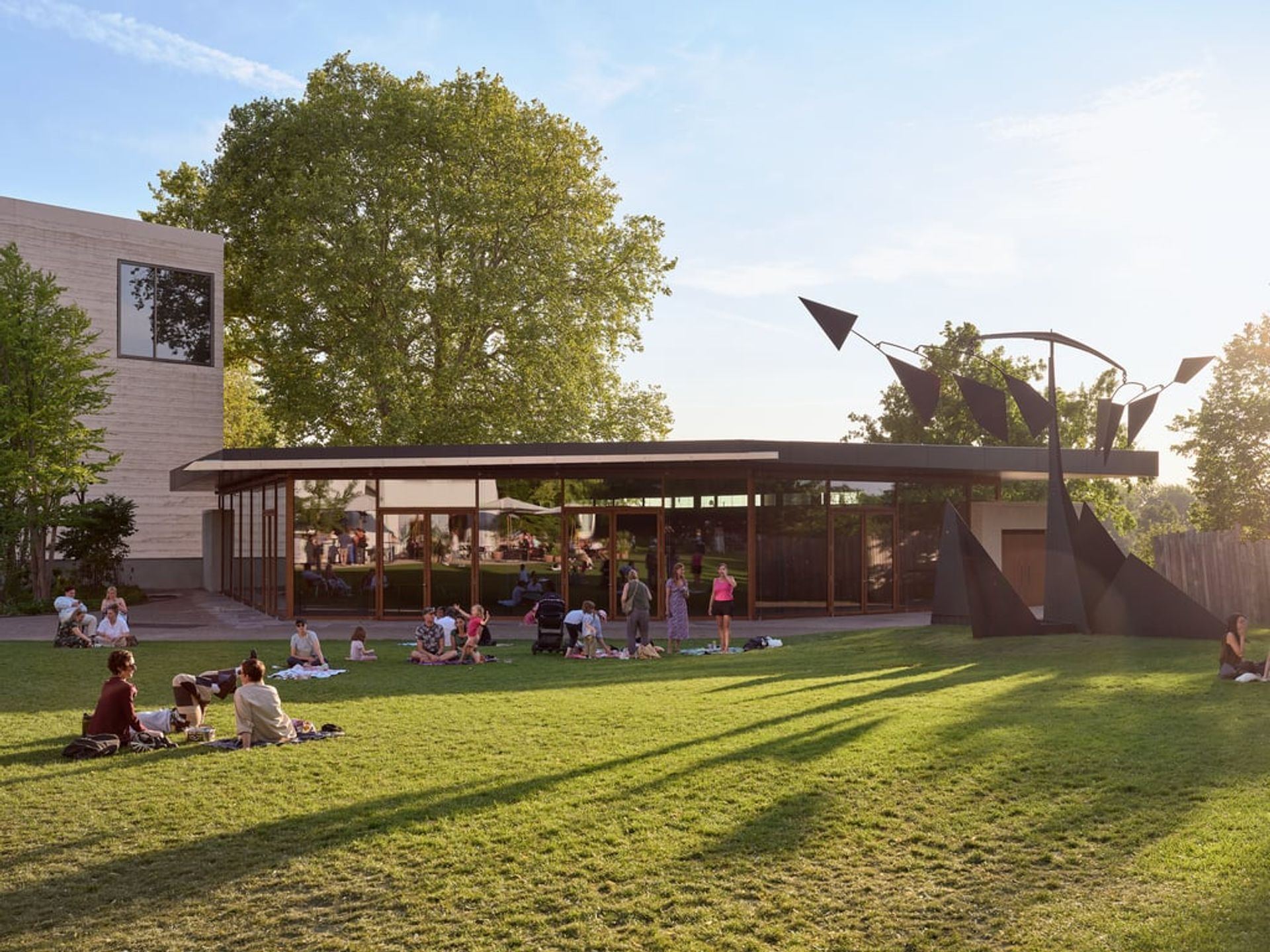
The Ammann Pavilion offers an intimate space for recitals and performances
Photo: Mark Niedermann
The foundation’s surrounding parkland has also doubled to nearly 20,000 sq. m and includes newly installed works by Rachel Whiteread, Pierre Huyghe and a towering Maman spider (1999) by Louise Bourgeois. The new landscaping was supported by Christoph and Sibylla Müller.
A new exhibition, Constellations (until 5 September 2027), shows 150 Modern and contemporary works from the Beyeler collection and other collections with close affiliation to the museum (such as the Daros Collection), to create a journey from the original Renzo Piano spaces to the new ones, with some artists appearing in both locations. The conditions of display vary between the buidlings: from the linear, top-lit galleries of Piano’s building, to the side-lit open spaces of Zumthor’s new Wyss building that flow upwards in a spiral through its three storeys. Zumthor’s large picture windows frame a landscape that includes the Jura Mountains and the fringes of the Black Forest.
“The original brief for this extension was for one major building,” Zumthor says, explaining his choice to create a separate gallery, pavilion and the Erlen Torhaus. “I like museums that only serve art.” Consequently, there is no reception area in the Wyss building: visitors simply walk straight into the display, which currently offers a mix of works by Monet, Wolfgang Tillmans and Roni Horn on its ground floor.
Zumthor also chose to make the exterior walls of the Wyss building from rammed concrete containing crushed limestone from the nearby Jura Mountains, which creates a pale pinkish-yellow finish. The building's Y-shaped plan was guided by a desire to keep the park’s centuries-old trees.
Rather than hosting a big party or fancy dinner, Fondation Beyeler has planned a stealthy inauguration period from 26 September to 14 January 2027, during which visitor numbers to paying exhibitions will be significantly limited and opening days reduced from seven to five per week. “We want to learn from the visitors themselves, to optimise all our processes,” Sam Keller, the museum's director since 2008, says.