

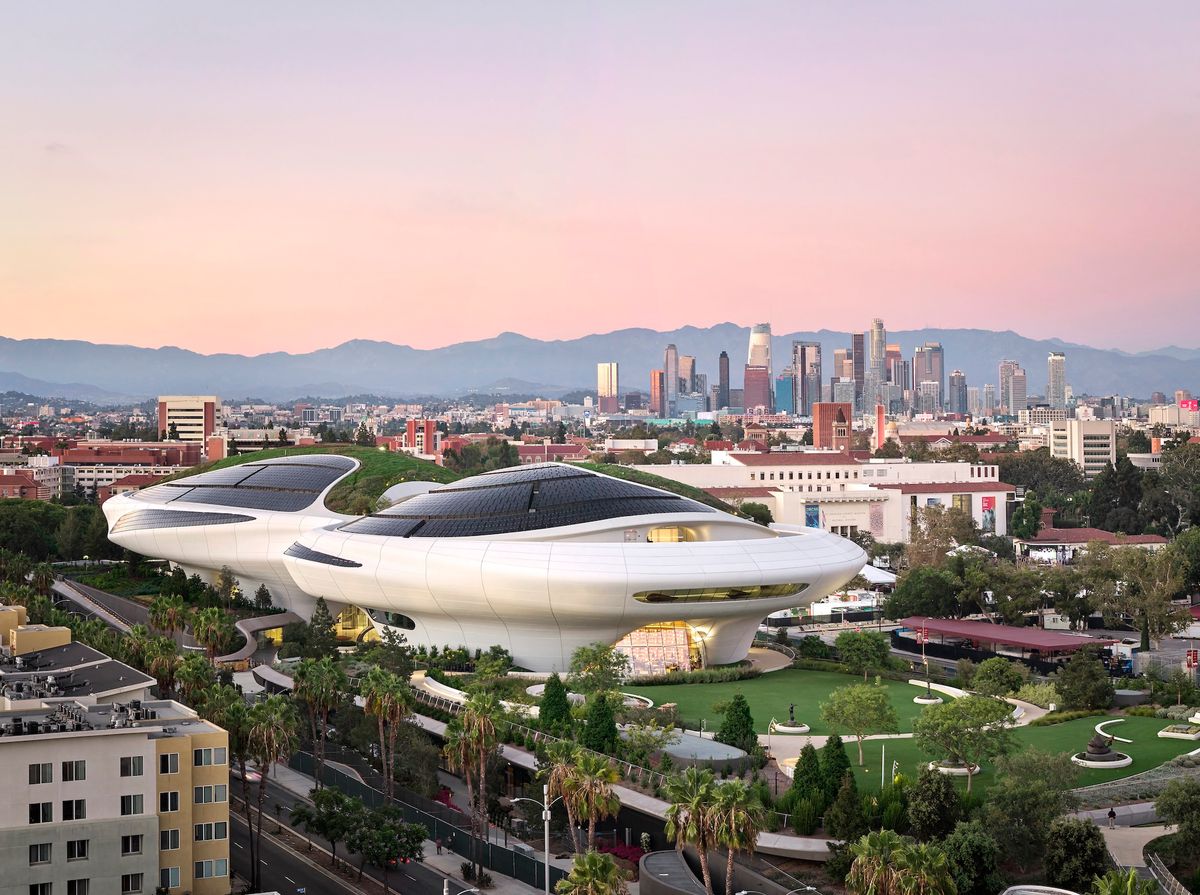
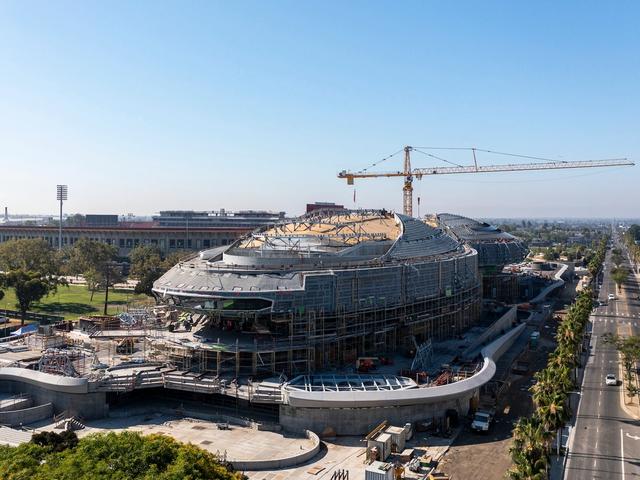
Eight years after its 2018 groundbreaking ceremony, the $1bn Lucas Museum of Narrative Art is scheduled to finally open its doors in Los Angeles’s
Exposition Park on 22 September. Founded by the Star Wars director George Lucas and his wife, Mellody Hobson (a former Starbucks chair and current chief executive of Ariel Investments), the long-delayed museum was originally set to open in 2021 and pushed back twice.
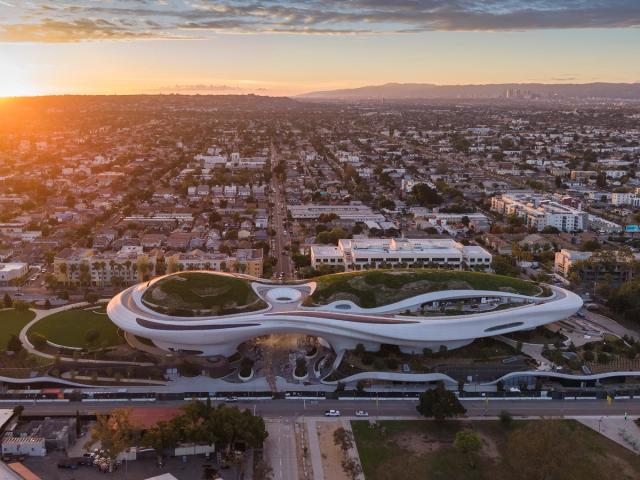
The museum features a curving, science fiction-style building designed by Ma Yansong of Mad Architects. Its 100,000 sq. ft of exhibition space is surrounded by lush green gardens and winding paths designed by Mia Lehrer of Studio-MLA. The building, which looks much like a spaceship from a Lucas movie, includes numerous stylised elements such as three curved elevators in glass tubes.
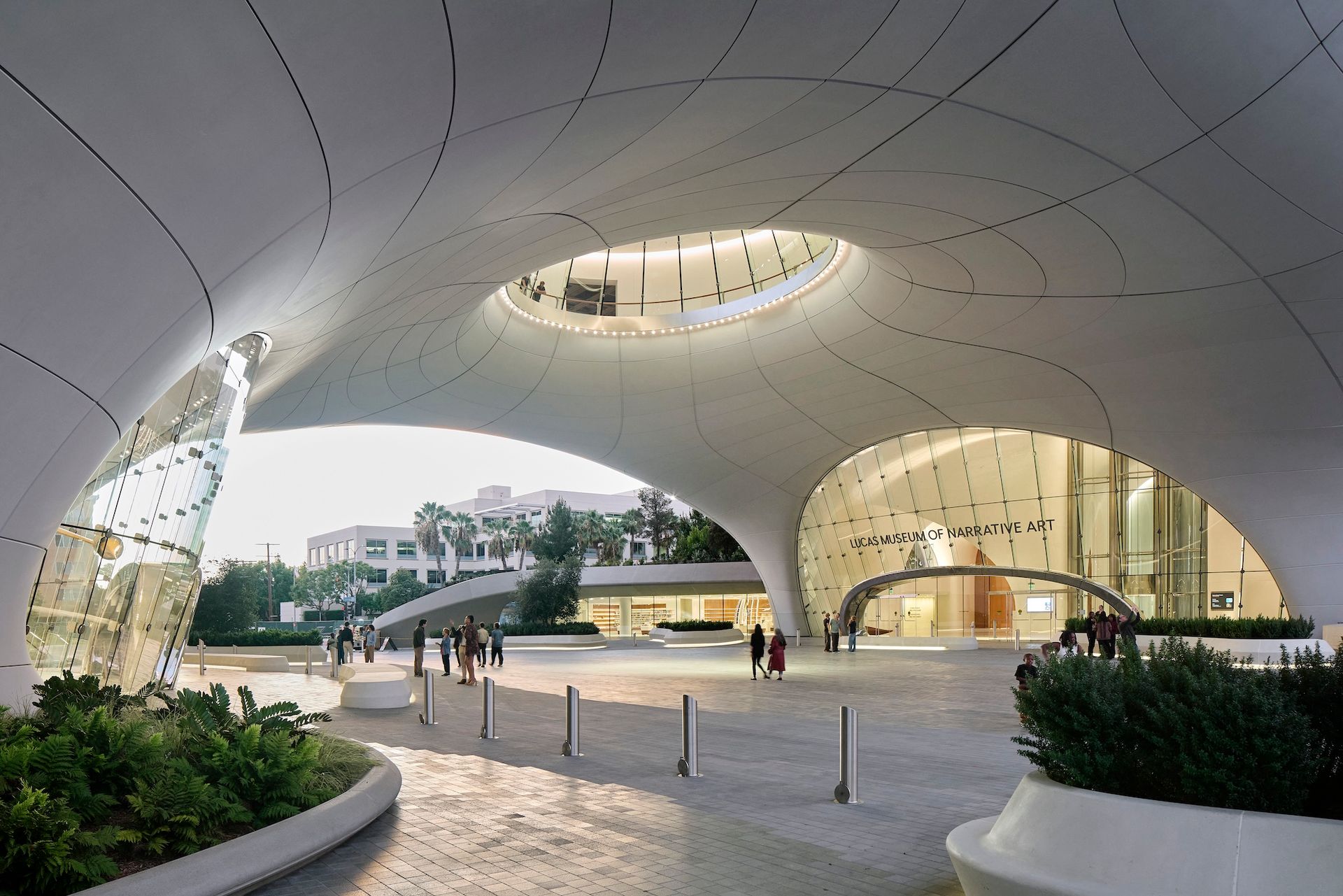
Lucas Plaza, the main entrance to the Lucas Museum of Narrative Art in Los Angeles Courtesy Lucas Museum of Narrative Art. Photo by Hufton+Crow
“In Los Angeles, you need a canopy, you need shading, you need the architecture to protect people from the sun,” Ma tells The Art Newspaper. “So this building is like a big tree. It’s elevated. It’s floating. And it casts a shadow for people underneath. We created a big plaza with shading, but with an oculus that allows people to observe the sky, so there can be this conversation between humans and the universe.”
From comics to Kahlo
The museum’s inaugural exhibitions feature more than 1,200 objects from Lucas and Hobson’s 40,000-piece private collection in 35 galleries, with a focus on illustration. The 82-year-old Lucas began collecting comics while still in college, and his museum will show 20th-century comic strips by illustrators like Robert Crumb alongside major works of art by the likes of Frida Kahlo, Norman Rockwell and Maxfield Parrish. Lucas has been adamant that this is not a Star Wars museum, but some pieces from the films—like General Grievous’s wheel bike from Revenge of the Sith—will be on display. (Lucas was not available for comment.) At the Lucas Museum, there is an emphasis on storytelling; the museum’s founders have classified its collection under a category they call “narrative art”.
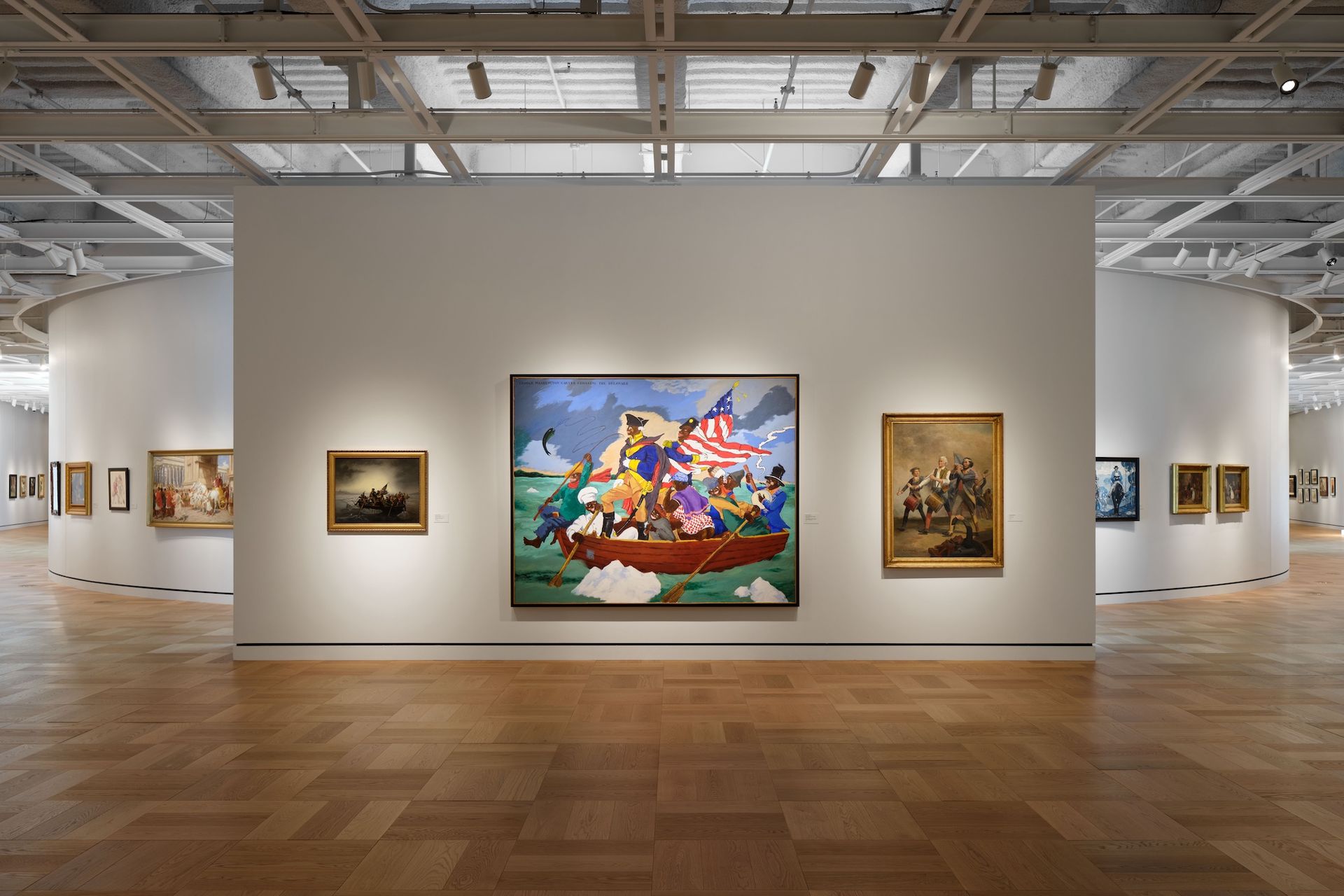
One of the galleries at the Lucas Museum of Narrative Art in Los Angeles Courtesy Lucas Museum of Narrative Art. Photo by Paul Salveson
“Narrative art is rooted in storytelling; it is art that translates words into images,” says Ryan Linkof, who joined the museum as its first curator in 2018 and is now its senior curator and head of film programmes. “While all art has a story, not all art is about stories.”
“From the beginning, George and Mellody have had a clear vision for the mission of the museum: to platform and celebrate illustrators and artists whose work traditional institutions have often overlooked or excluded,” says Tracey Bates, the museum’s chief executive. “The Lucas Museum is dedicated to creating a home for these unsung heroes of narrative art.”
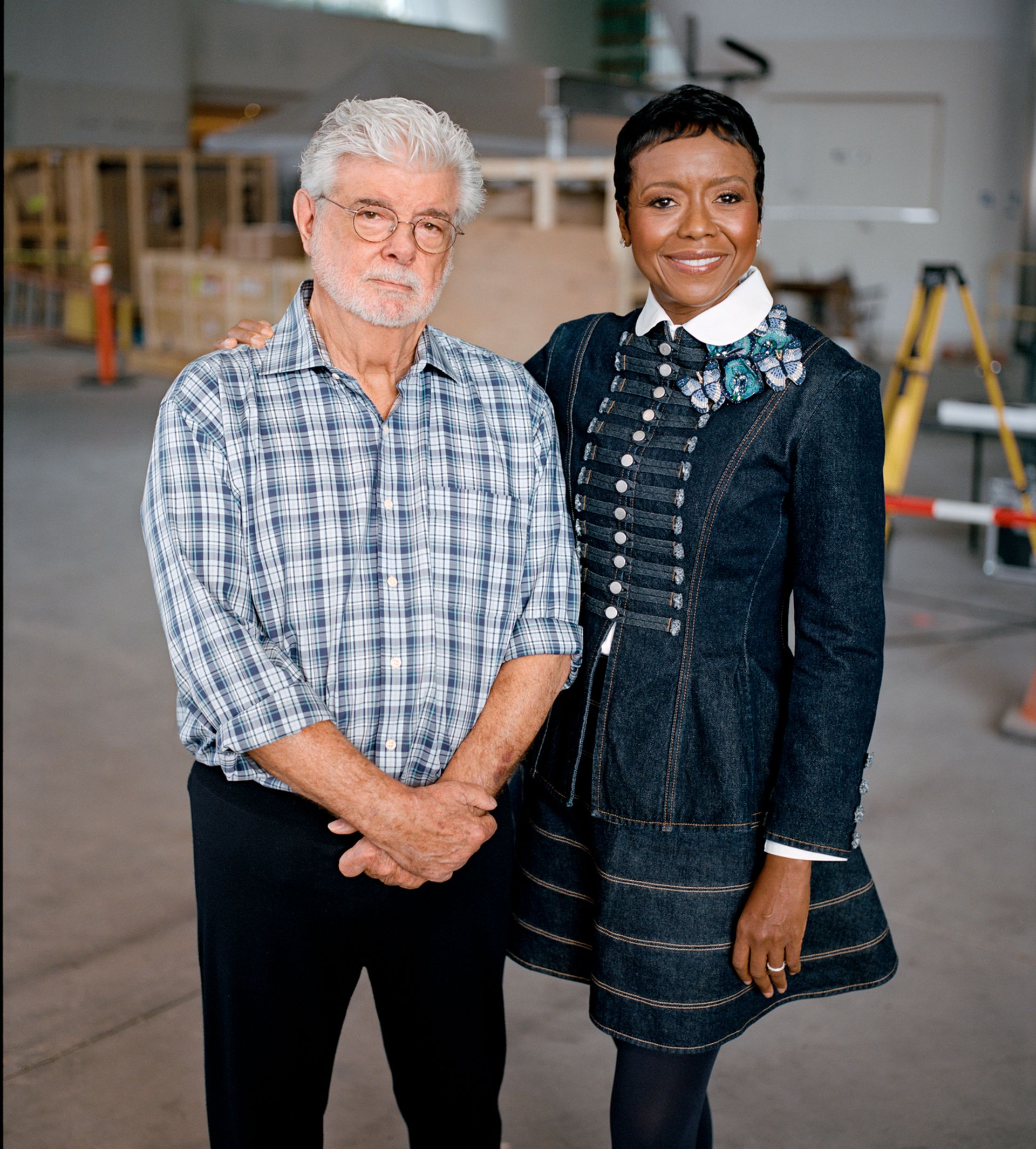
The museum’s exhibitions feature works from the private collection of George Lucas and Mellody Hobson; Hobson is keen to make the institution accessible for people of all backgrounds Photo: Deanna and Ed Templeton
The museum, funded entirely by Lucas and Hobson, presents itself with a democratic bent. Lucas is dedicated to the idea that there is no high or low art. “The museum is one of a kind,” Bates says, “because it brings together forms of storytelling that are rarely shown side by side.”
Hobson, raised by a single mother who struggled with financial instability, wants the museum to be accessible to people of all backgrounds. As she told Vogue in May, she wants the gift shop to sell one item for 25 cents: a pencil that reads “First Draft”, “Second Draft” and “Third Draft” as it is sharpened.
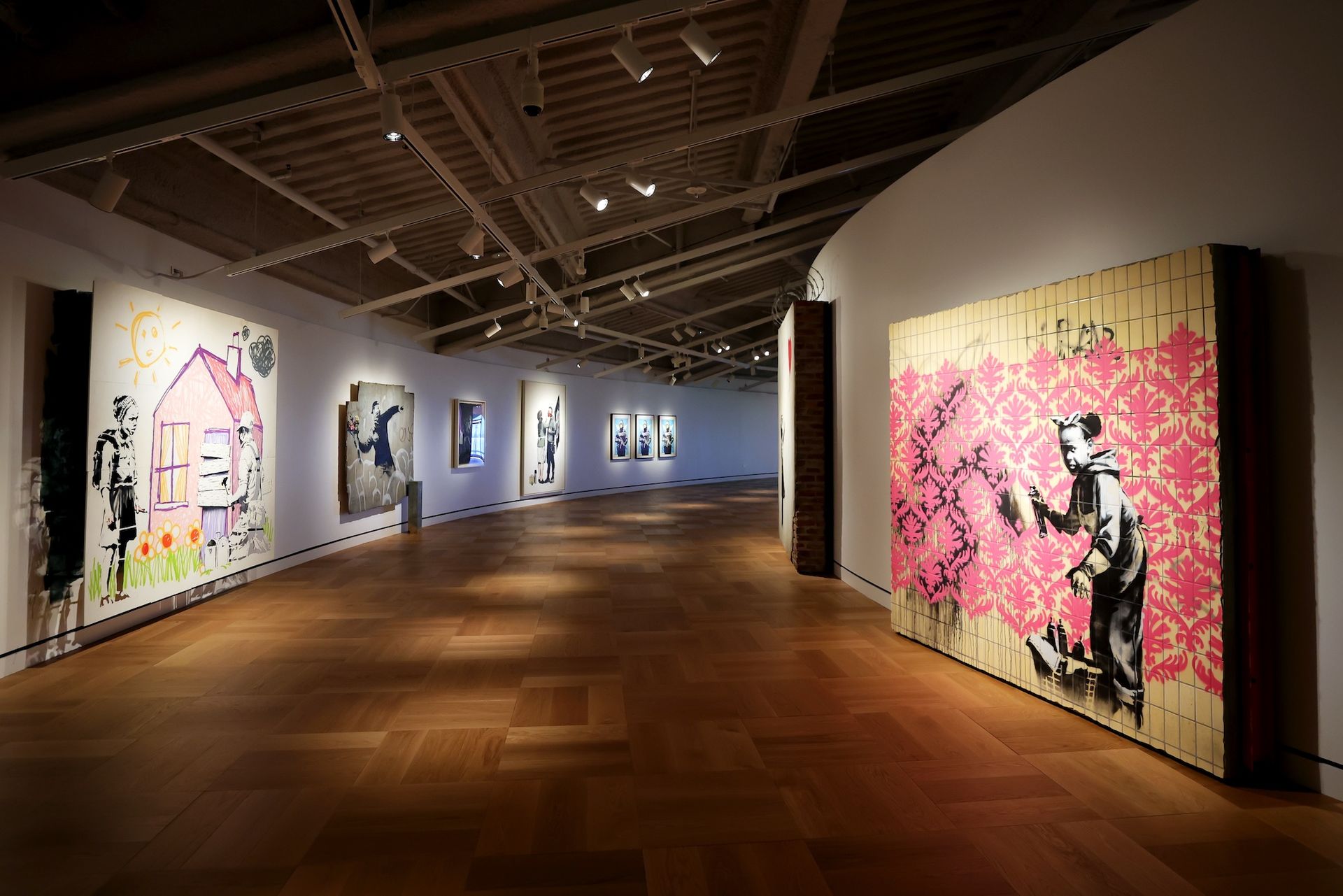
A gallery of works by Banksy at the Lucas Museum of Narrative Art Photo by Stefanie Keenan/Getty Images for Lucas Museum of Narrative Art
Furthermore, tickets to the museum are free for children 17 and younger (there are more than 100 schools within a ten-mile radius of its location in South Los Angeles), as well as for the roughly 65,000 residents of postcode 90037, who can register for an annual pass. Admission to its on-site library is free for all visitors. General museum admission costs $25 for adults and $21 for seniors. The galleries are organised not chronologically or by artist, but rather by categories like “play”, “love”, “family” and “adventure”.
“This idea that everyone, despite their expertise or art-historical acumen, can appreciate art is at the core of the project and George’s vision,” Linkof says. “Many of the objects on view are works that people lived with in various ways—paperback books, magazines, posters—which makes the work inherently more democratic.”
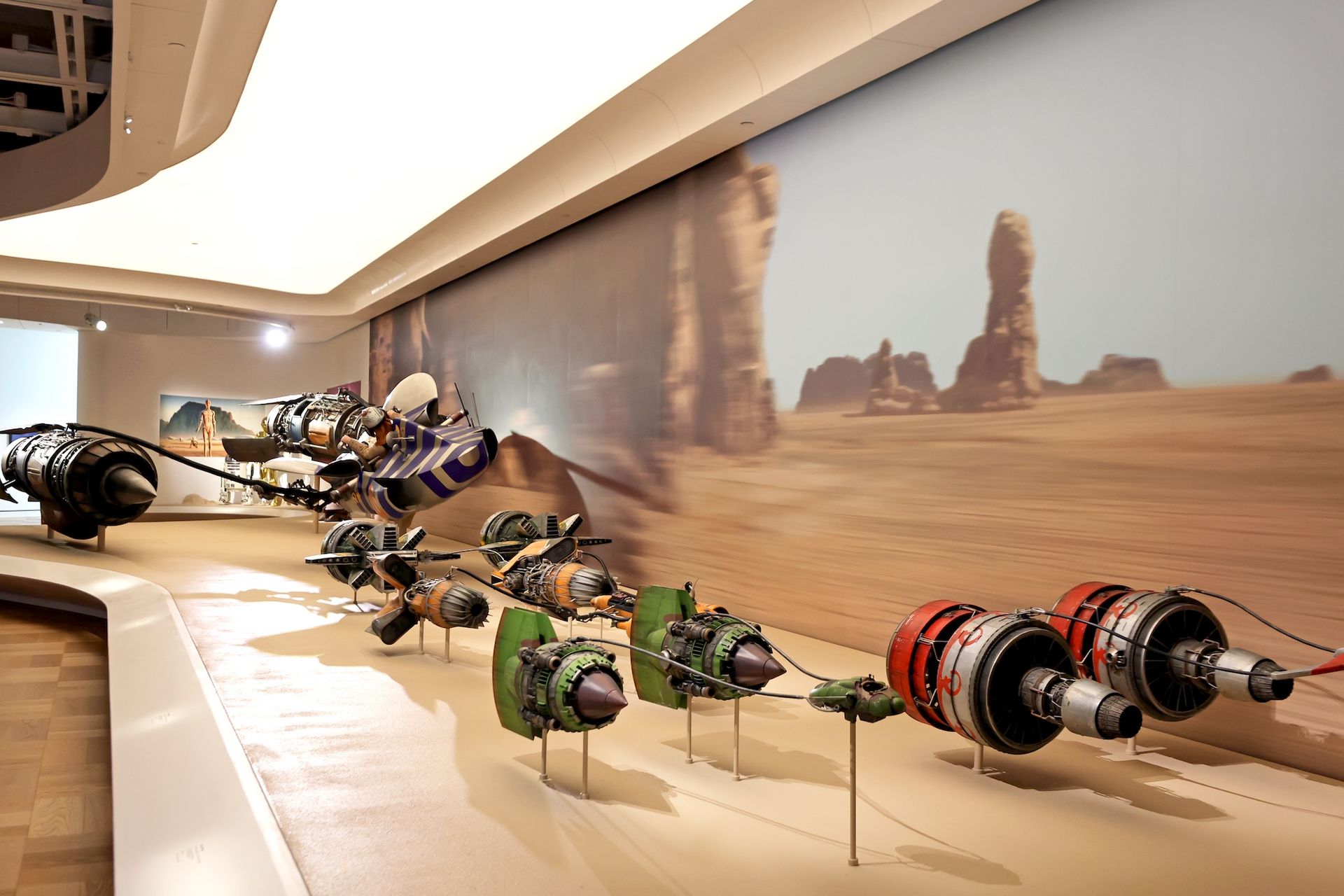
A gallery featuring models of vehicles from Star Wars films at the Lucas Museum of Narrative Art in Los Angeles Photo by Stefanie Keenan/Getty Images for Lucas Museum of Narrative Art
Coming attractions
The museum will feature an extensive film programme. At San Diego Comic-Con in July, the Lucas Museum shared details of its inaugural programme at its two 299-seat theatres. A theatre named after the filmmaker Robert J. Flaherty (1884-1951) will show documentaries, including one specially commissioned for the museum titled Seeing Is Believing: The Story of Narrative Art, in addition to films about artists whose works are shown at the museum—like Diego Rivera and Weegee.
At another theatre, named for the filmmaker Slavko Vorkapich (1894-1976), screenings will be dedicated to “the emotion of motion”, with showings of works like early silent films by Georges Méliès and Émile Cohl, episodes of the Japanese anime series Cowboy Bebop, experimental films by Man Ray and Lucas’s own student films.
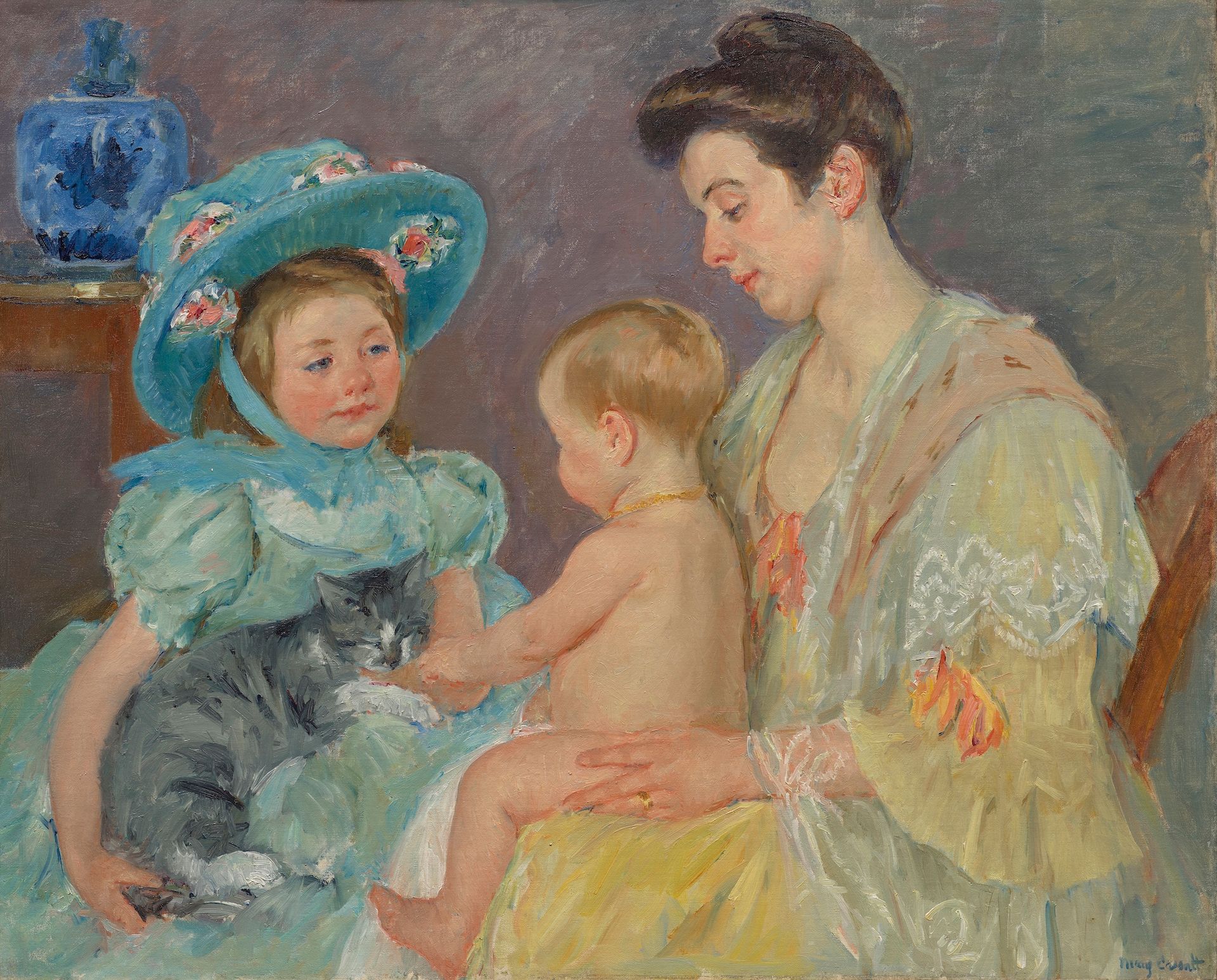
Mary Cassatt, Children Playing with a Cat, 1907-08 Courtesy the Lucas Museum of Narrative Art, Los Angeles
For many Los Angeles residents, this is exciting news. But the museum has been beset by controversies. The building’s construction was significantly delayed by the Covid-19 pandemic, and there were conflicts between architects and contractors. In March 2025, the museum’s director Sandra Jackson-Dumont stepped down after five years, with Lucas himself taking on the bulk of curatorial direction. And in May of last year, the museum laid off 15 full-time and seven part-time employees, most of whom worked in education and museum services. This appeared to contradict the founders’ emphasis on the importance of educational programming.
Some scepticism
The category of “narrative art” has also been met with scepticism. In 2017, the venerated local critic Christopher Knight wrote a scathing piece for the Los Angeles Times, calling the museum a “bad idea” and a “vanity museum”.
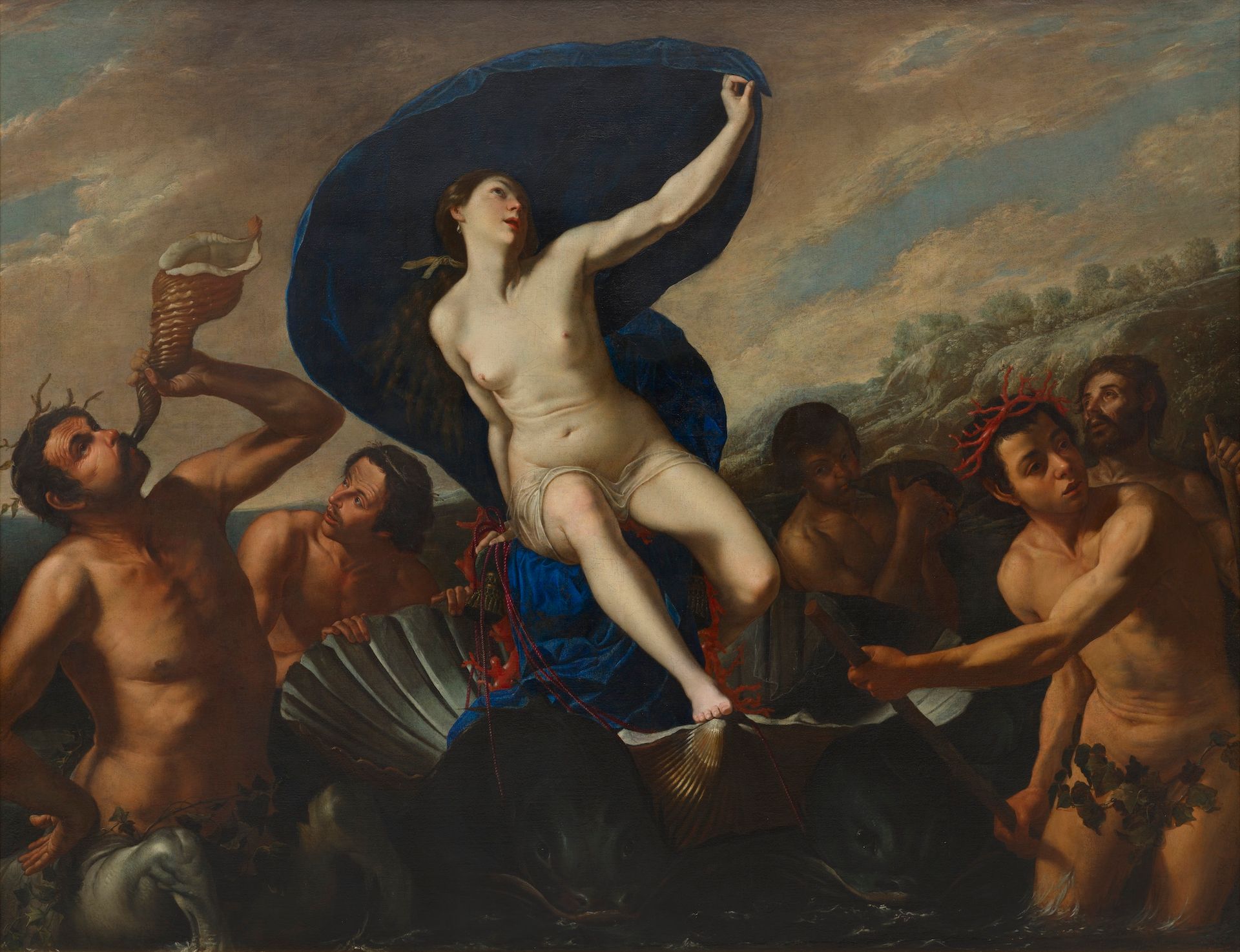
Artemisia Gentileschi and associate, The Triumph of Galatea, mid-17th century Courtesy the Lucas Museum of Narrative Art, Los Angeles
“Narrative art is a made-up category,” Knight wrote. “‘Narrative art is visual art that tells a story,’ [the Lucas Museum’s website] explains, merely repeating the same concept twice with different phrasing. A perfect tautology—that’s nothing to build an art museum around.”
Of course, the staff at the museum disagree. “The Lucas Museum is dedicated to the kind of art that captures and communicates shared stories and helps to inform our understanding of ourselves and the world around us,” Linkof says.
Lucas himself has called the museum “a temple to the people’s art”—a lofty goal for a museum in a city full of cultural behemoths.