

At the National Museum of Modern and Contemporary Art (MMCA) in Gwacheon, the sound of Nam Hwayeon’s video Imjingawa carries softly across the opening galleries of Road Movie: Art between Korea and Japan Since 1945. The work’s title is the Japanese pronunciation of Imjin River, a 1957 North Korean song about longing for home, written by a lyricist who had defected north. It was sung for decades among Zainichi Koreans (ethnic Koreans in Japan who trace their roots to migration or forced labour under colonial rule) before it drifted into Japanese, then Korean, pop culture. No one country in the story owns it.
There has been an unusual amount of co-operation between Korea and Japan this year. Chey Tae-won, the chairman of SK Group, which owns the computer chip maker SK Hynix, spent the spring in Seoul and Tokyo trying to develop business and governmental co-operation between the two countries. On 28 April, at a policy seminar in the Korean National Assembly, Chey told lawmakers that the combined value of the Korean and Japanese economies was $6 trillion, a third the size of China’s—integration, he argued, was the answer to an AI race that Korea cannot win alone. The proposal that drew the most attention was structural: a permanent “big tent” of business, academia and government, designed so that political change or historical friction could not derail co-operation once started.
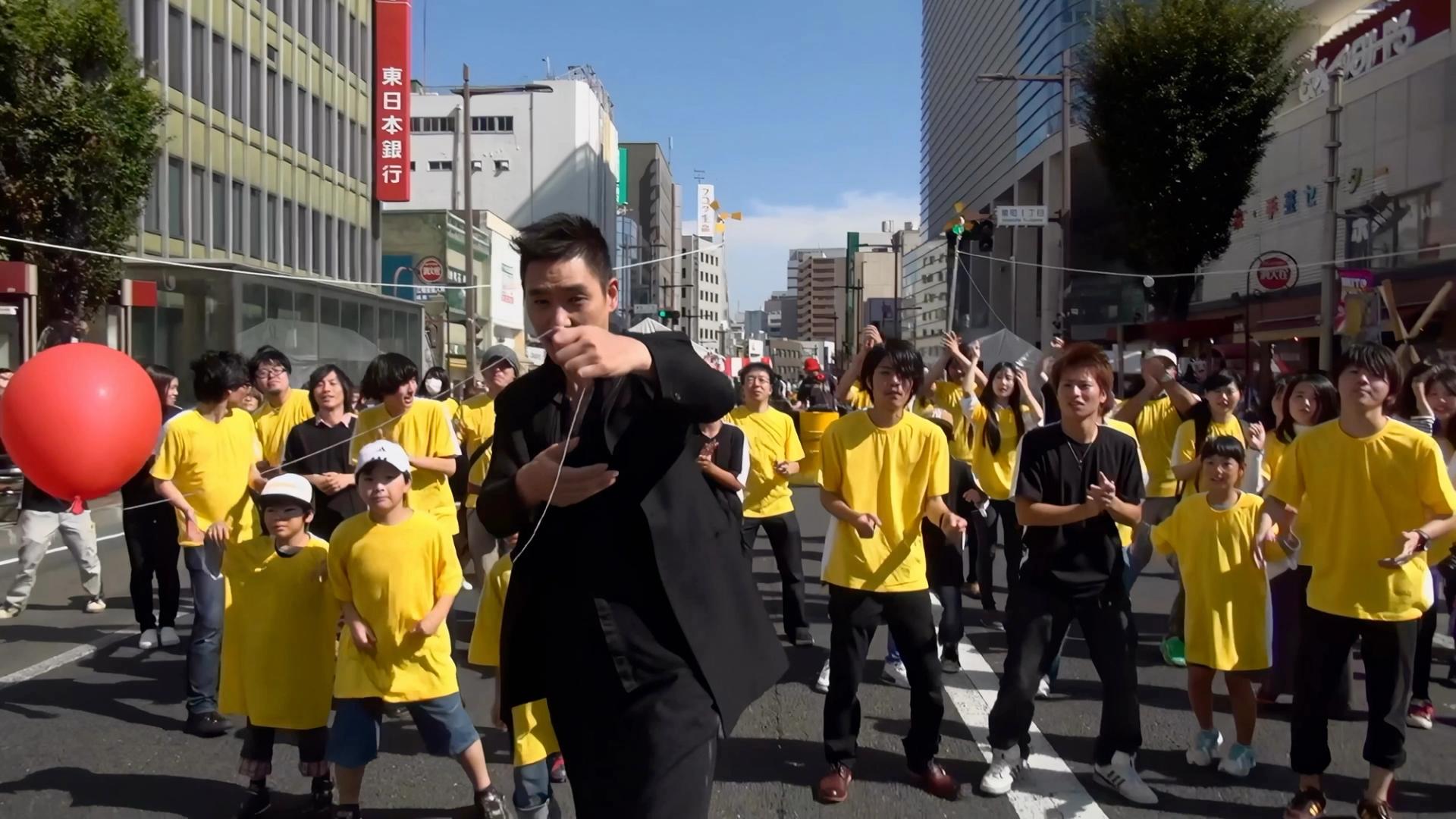
A still from Jung Yeondoo’s Magician’s Walk © the artist
The cultural sector is finding its own way to explore the fraught relationship between the two countries. Ei Arakawa-Nash’s installation in the Japanese pavilion at this year’s Venice Biennale invites visitors to carry one of a number of baby dolls through the exhibition, change its nappy at the far end and be handed a poem written for the “baby’s” birthday. Two of the dolls sit on the roof of the Korean pavilion: one born on 1 March 1919, the day Koreans rose against Japanese colonial rule, the other on 18 May 1980, when Korean soldiers fired on pro-democracy protesters in Gwangju. Once a week a bearer carries a doll from the Japanese pavilion into the Korean one, where Goen Choi’s copper-pipe Meridian runs over the hedge that forms the border between the two pavilion sites. The Japan Foundation calls it the Japan pavilion’s first-ever official collaboration with another pavilion. Binna Choi, the Korean pavilion’s curator, prefers to say the work crosses the boundary rather than dissolves it. “The boundaries are still very much there,” she says.
Personal experiences
The Road Movie exhibition at MMCA explores how artists have negotiated the relationship between the two nations. Co-organised with the Yokohama Museum of Art to mark 60 years since the two countries established relations in 1965, the show begins 20 years earlier, in 1945, when Japanese colonial rule ended. Hibino Miyon, who curated the Yokohama show, has personal experience of some of the issues around the show: three of her four grandparents were first-generation Zainichi Koreans yet she carries her maternal grandmother’s surname and Japanese citizenship, and long felt she had no right to claim a Zainichi identity, which is associated with suffering and marginalisation. Preparing this show she initially felt she was not qualified to tell that story, before deciding that the requirement for marginalisation was in itself problematic.
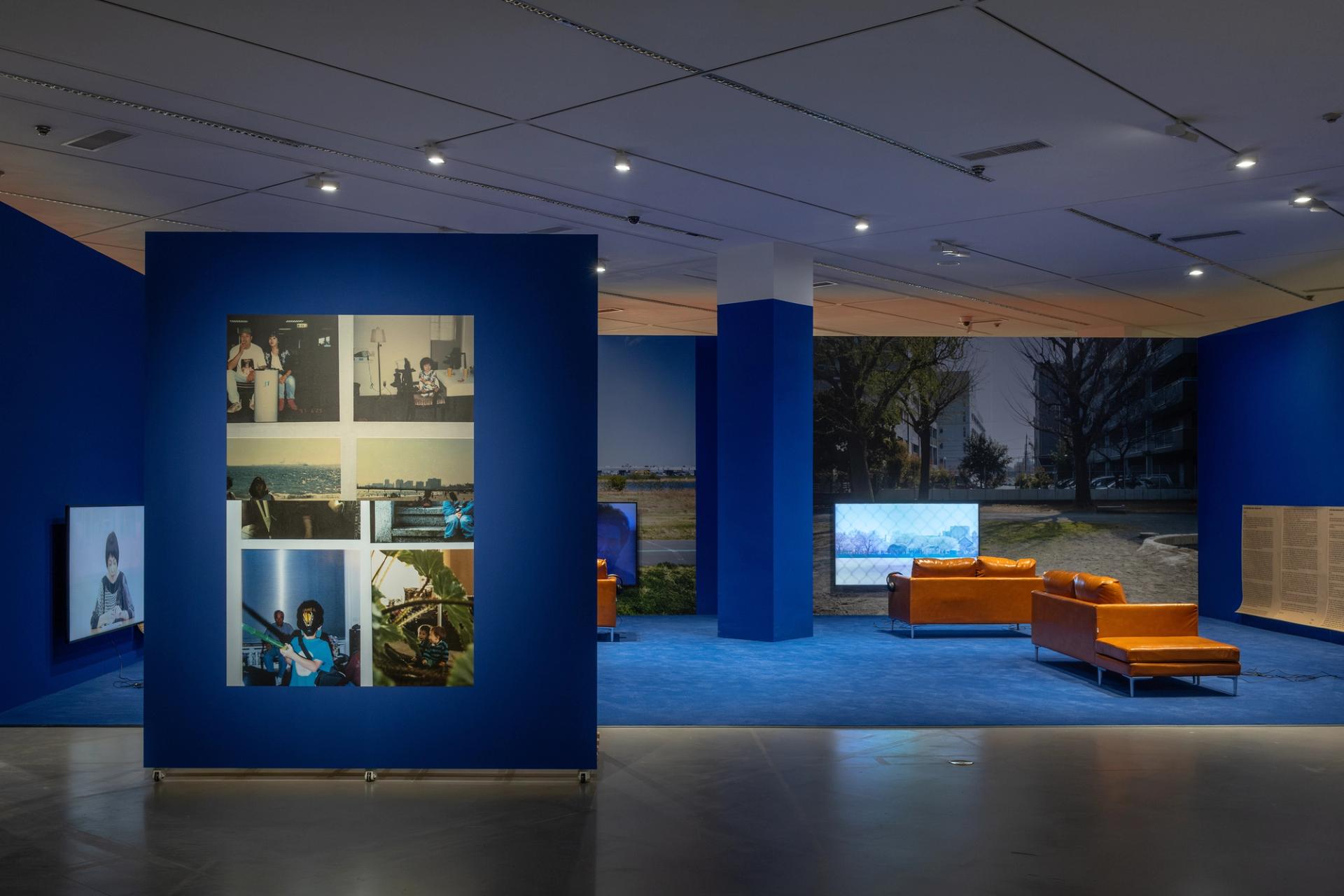
Koki Tanaka’s installation Vulnerable Histories (A Road Movie) Courtesy of the National Museum of Modern and Contemporary Art, Korea
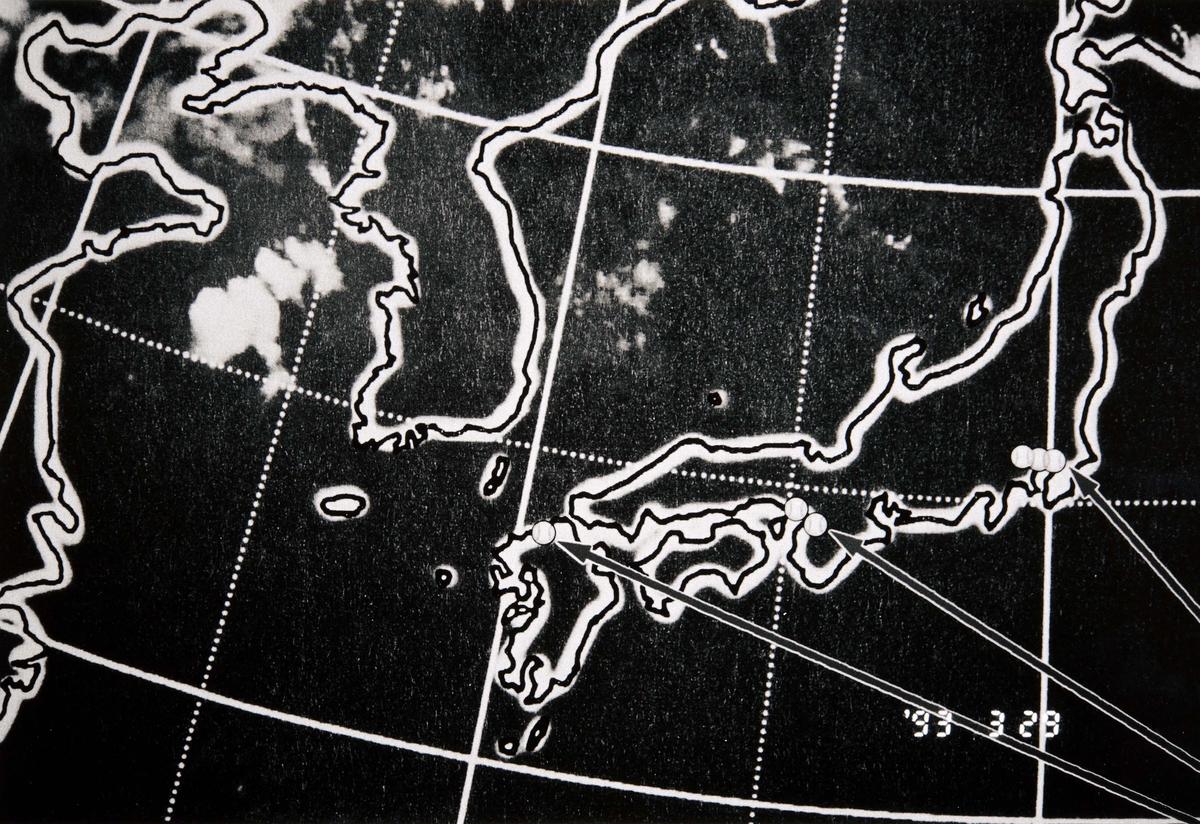
One section of the exhibition, on the generation that emerged in both countries in the 1990s, includes Nakamura and Murakami, a 1992 two-person show staged by Masato Nakamura and a then-unknown Takashi Murakami across Seoul, Tokyo and Osaka. In the West it survives, if at all, as a line on Murakami’s CV. “Nobody knew about it. Not in Korea, not in Japan,” the MMCA’s curator Jeon Yushin says; MMCA’s own library did not hold the show’s catalogue—staff had to photocopy one from another museum. The title was not a coincidence. For the Seoul leg of Nakamura and Murakami the artists surveyed Koreans on which Japanese surnames they most disliked; “Nakamura” and “Murakami” came first and second, both names associated with literature and drama set under Japanese rule. The pair were pointing, the wall text notes, at the distance between Japan as Koreans imagined it and Japan as it is encountered.
Living Together, Road Movie’s last section, frames the whole exhibition. A still from a video work, Jung Yeondoo’s Magician’s Walk (2014), hangs at the entrance, before the first chapter begins; another, Koki Tanaka’s Vulnerable Histories (A Road Movie) (2018), plays at the far end of the route, and gives the show its English title. Tanaka was picked as the artist for the Japanese pavilion at the 2013 Venice Biennale, and announced he would address the 2011 Tohoku earthquake, but was criticised for having been in the US when it struck. Not long after, he began noticing anti-Korean demonstrations on a route he walked often, and arrived at an uncomfortable symmetry: Zainichi Koreans, after a century in Japan, are still considered as being “outside” Japanese community, much as he had just been considered an outsider to the disaster. That redirected him toward the 1923 Kanto earthquake massacre, when thousands of ethnic Koreans were killed by Japanese police and vigilantes, where the MMCA video begins. His work addresses the same discomfort of narrating a disaster he did not live through, which he does by following the day-to-day life of a visually impaired masseur who lived there.
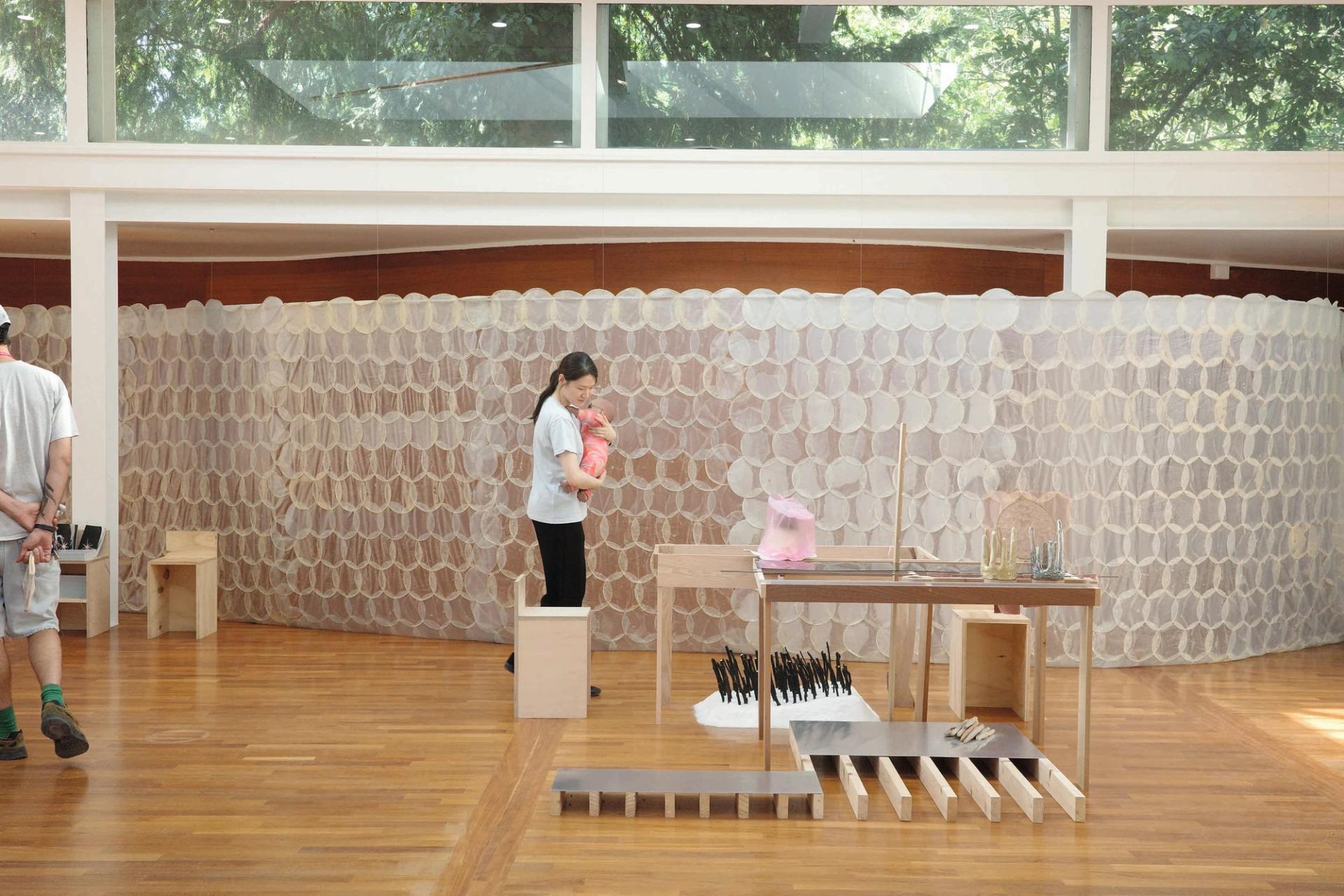
At this year’s Venice Biennale, installations by Japanese and Korean artists were shared across the two countries’ pavilions Photo: Hoyeon Wang
In Yokohama, where the exhibition closed in March, the Japanese title Itsumo tonari ni irukara was translated as “Because we’re always next to each other”. In Gwacheon it became Road Movie, a genre the museum’s own English gloss defines as “unexpected encounters that change the traveller”. One title promises company, the other that something will happen on the way. When asked why she renamed the show, Jeon says: “Relations between Korea and Japan have not always been good. And yet, in every one of those periods, artists kept finding ways to cross over anyway.”
In any case, the shows are not translations of each other: wall texts and catalogue essays were separately authored, each museum drew largely on its own collections, and the final chapter diverges completely. But the most significant difference was the audiences each had. At the Seoul press conference, Kuraya Mika, the Yokohama museum’s director, described younger Japanese visitors who were not aware that Japan had colonised Korea and met the fact with disbelief. Many had come for BTS and K-Pop; some wrote letters to the museum afterwards, less about the art than about having only now learned an important part of history that they were never taught.
• Road Movie: Art between Korea and Japan Since 1945, National Museum of Modern and Contemporary Art Gwacheon, until 27 September