

It is 7am on a chilly morning in Aspen, and Bob Chase is encouraging art dealers to jump from a cliff into a slow-moving stretch of the Roaring Fork River known to locals as The Devil's Punchbowl. The icy water, fed by snowmelt from the surrounding mountains through small waterfalls into a naturally-formed swimming hole, delivers an immediate shock to the system and a burst of energy before a long day of standing at the Aspen Art Fair.
"It's kind of a weird thing for an art fair," Chase, the co-founder of the fair, admits. "But it's my favourite way to start the day."
The morning cold plunge has become one of the fair's defining rituals since its launch in 2024. Alongside the expected art fair programme of talks and tours, exhibitors and collectors are invited on guided hikes and forest-bathing sessions that draw on Aspen's alpine landscape, a deliberate effort to give visitors a full Aspen experience and distinguish the expo from the conventional art-fair circuit.
"Everybody that lives here hikes every day or does something outside every day," Chase says. "Any artist that's been here has been inspired by the landscape. It lends a personality to the fair that I think is just a great reflection of this community, which is important to me."
That sense of place is becoming a key selling point as the fair establishes itself in an increasingly crowded Aspen summer calendar. With the fair running concurrently with the Aspen Art Museum's annual ArtCrush fundraiser, the AIR Festival programme and the town's longest-running fair, Intersect Aspen, the week of activities has made Aspen a destination where collectors can move between museum events, gallery openings and two fairs. The museum, in partnership with Art Basel, also hosted a "Collector Camp", where participants paying $5,000 or $10,000 joined "troops" led by "camp counsellors" including Art Basel's global director of fairs Vincenzo de Bellis.
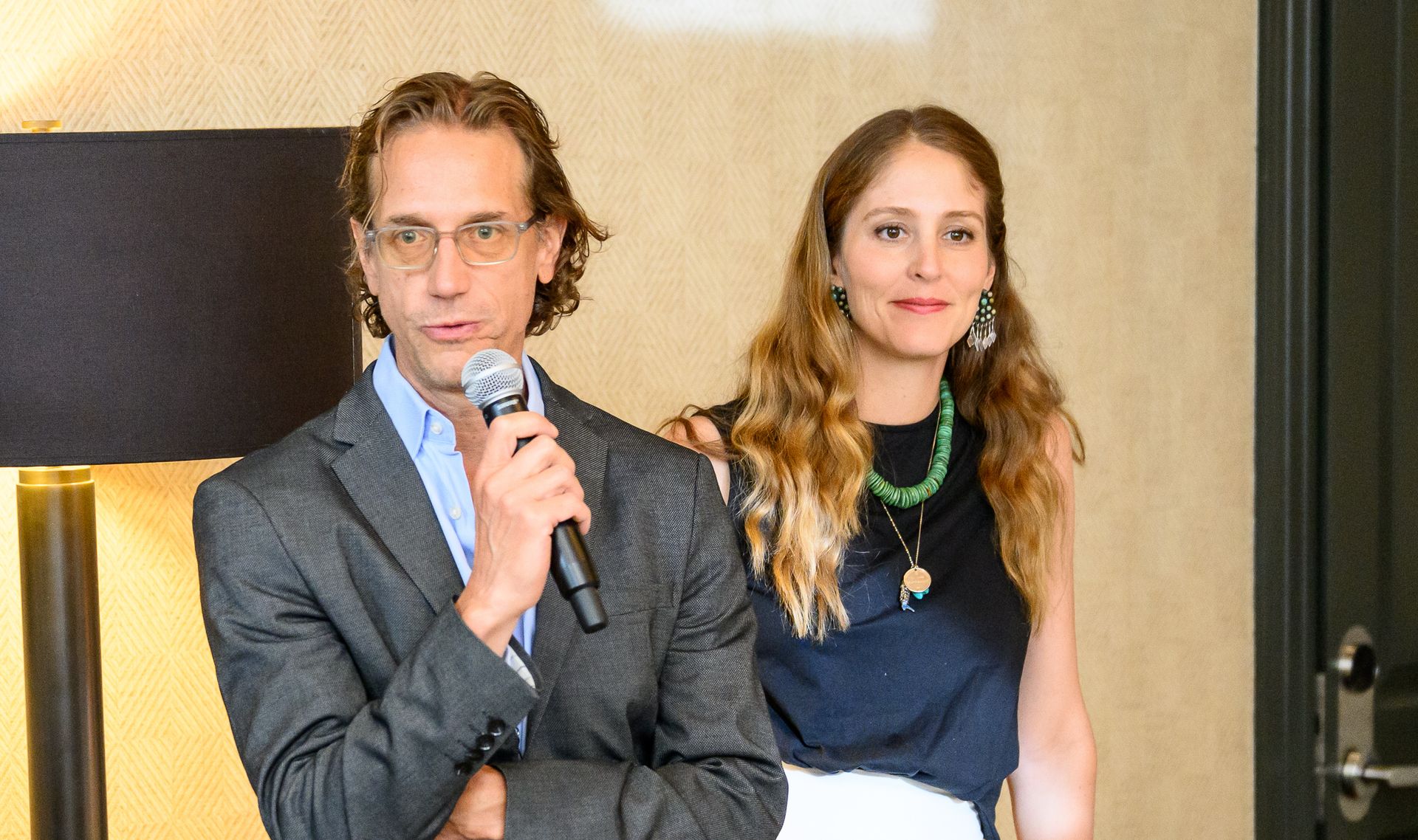
Aspen Art Fair co-founder Bob Chase (centre) and director Kelly Cornell (right) Photo by Zach Hilty/BFA.com
For Chase, however, the fair's origins lie in the burst of gallery activity that transformed Aspen during the Covid-19 pandemic. As wealthy urban collectors relocated to mountain towns, Aspen's already established collector base expanded to include a younger generation of buyers.
"It's pushed this community forward in a new direction—a lot of younger, curious art collectors," Chase says.
Those collectors helped fuel brisk business during the fair's opening days. New York's Palo Gallery reported selling three paintings by Leda Tsoutreli, two by Danny Sobor and one by Allegra Toran for around $40,000 total during Wednesday's opening preview, with most acquisitions made by local collectors who were new to the gallery. Palo Gallery also found a buyer for a Chad Murrary work priced at $12,000 on Thursday.

"It's like a little kind of art-world summer camp up here in the Rockies," says Palo Gallery's founder Paul Henkel, who is participating for the second consecutive year. "Sometimes a regional fair can feel (too) regional, and everyone's bringing art that's kind of catering to the place they're at. This doesn't feel like that here—people are bringing serious work."
"There's some serious secondary market art on the walls here, it's exciting," Henkel adds. "At the same time, an emerging booth like ours is doing really well. It's one of my favourite fairs we do."
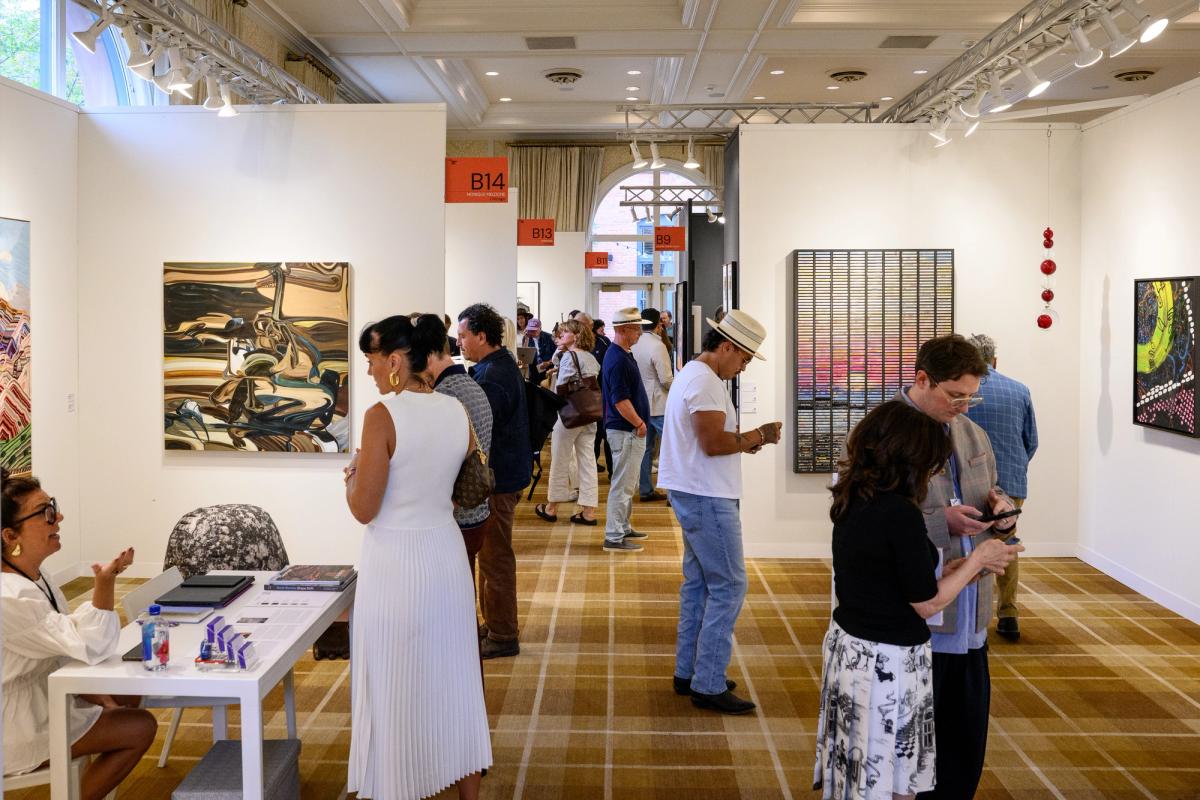
The invite-only fair's exhibitor list has become noticeably more ambitious this year. First-time participants including Monique Meloche, Anat Ebgi, Library Street Collective, Proyectos Monclova and Luis De Jesus Los Angeles have added greater national and international weight, while seven Aspen-based galleries maintain a strong local presence.
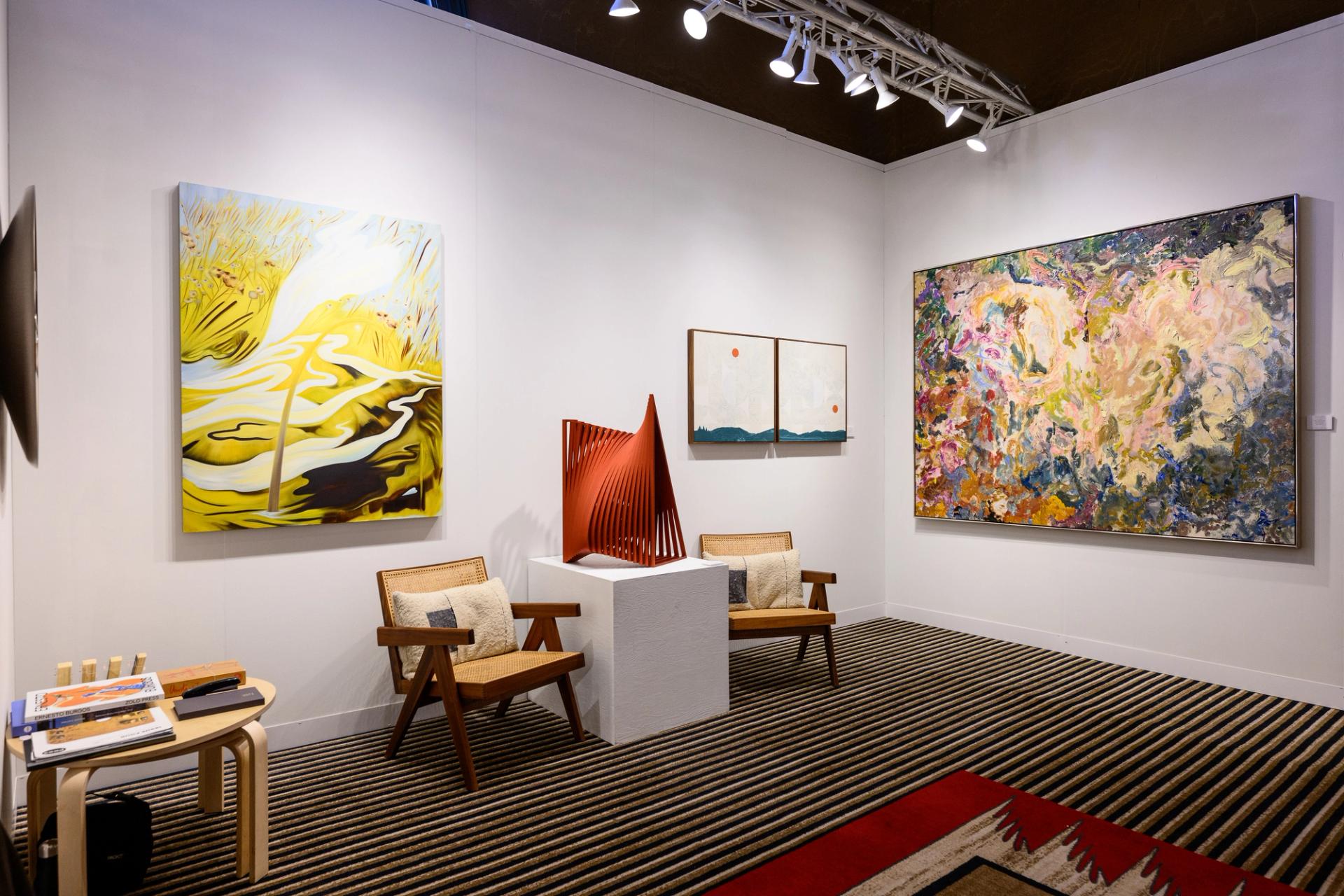
Hexton gallery's stand at the Aspen Art Fair Photo by Zach Hilty/BFA.com
Kelly Cornell, the longtime director of the Dallas Art Fair who succeeded co-founder Becca Hoffman as director of the Aspen Art Fair earlier this year, says exhibitors themselves have raised the bar.
"There was a level of confidence from the dealers, from knowing the market and knowing what to bring and what can be delivered, and then they also brought excellent work," Cornell says. "The quality of the work here is amazing and inspiring, and there's been an excellent response to it."
Early sales reflected that confidence. Monique Meloche sold three works by Luke Agada, including Fugitive Forms IV (Pilgrims) for $27,000, as well as Cheryl Pope's The Wind in My Heart (2026) for $50,000. Chase's Aspen-based gallery, Hexton, reported more than $400,000 in sales during the two first days of the fair, including two paintings by Larry Poons, two by Ernesto Burgos and two by Andy Millner. Boesky Gallery reported more than $350,000 in sales thus far, led by Sanford Biggers's Unsui (Duet) (2026) at $135,000, alongside works by the Haas Brothers, Tianyue Zhong, Gina Beavers and Jennifer Bartlett.
The fair also awarded its Anderson Ranch Arts Center Visiting Artist Prize to Tschabalala Self, whose work is on view in Southern Guild's stand. The award includes a one-week residency at Anderson Ranch Arts Center in nearby Snowmass, whose visiting artists have included Mickalene Thomas, Kennedy Yanko and Joel Mesler.
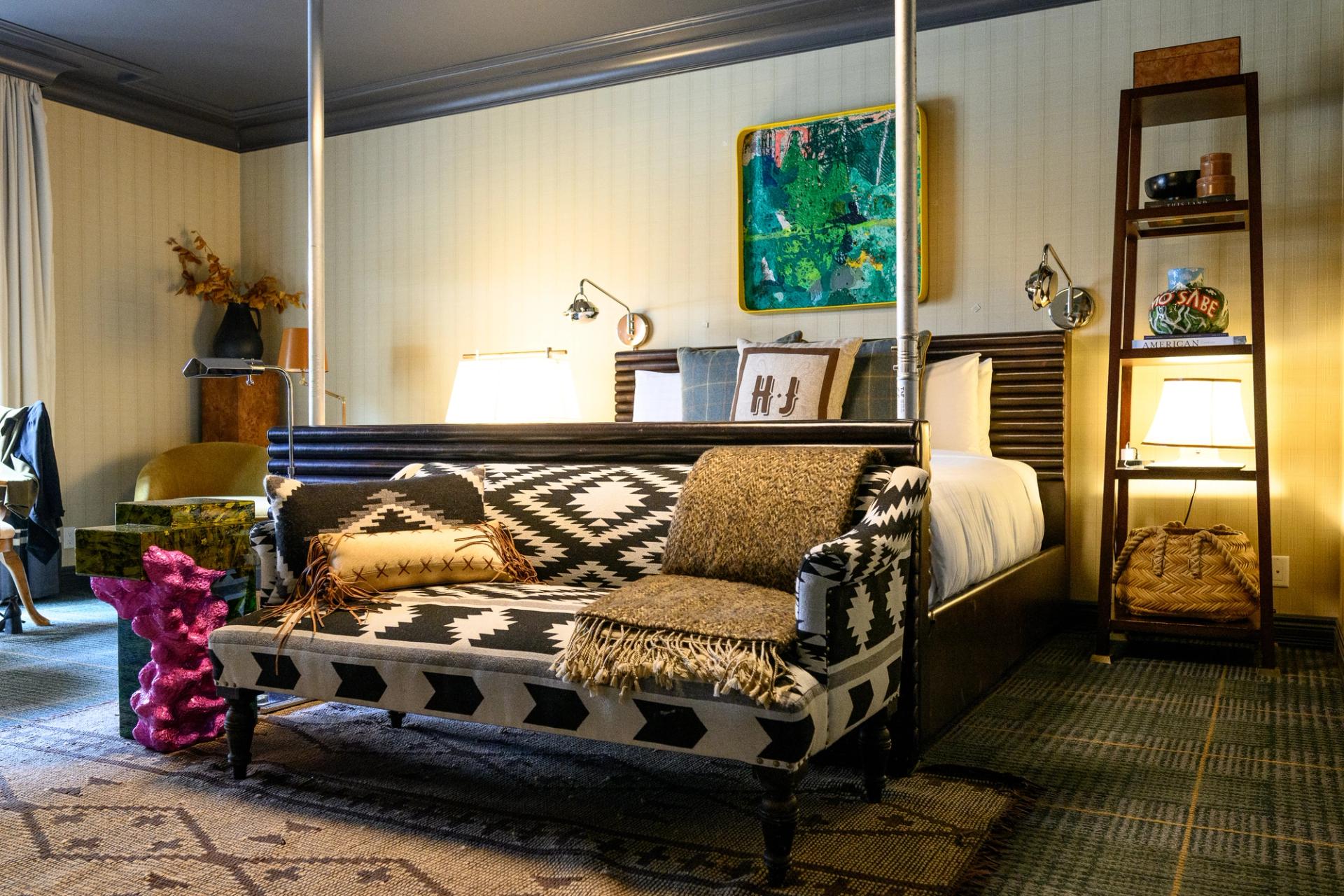
Library Street Collective's stand inside a guest room at the Hotel Jerome. Photo by Zach Hilty/BFA.com
Despite the stronger roster and solid sales, organisers insist the fair has little interest in becoming significantly larger. Hosted throughout the historic Hotel Jerome, the fair brings together 38 exhibitors in custom-built stands and a handful of converted guest rooms. The hotel's Western character shines through, with taxidermied deer heads and a chandelier made of antlers peeking over white booth walls.
"This is an environment where you can be an art collector and a nature lover. It's not necessarily all so transactional and about business, and that's what makes it very intimate and responsive and successful at the end of the day," Cornell says. "It feels full, full body, mind, body, spirit," she adds, referencing the Aspen Idea developed in the 1940s, which champions the combination of physical activity, artistic engagement and intellectual growth, a novel concept at the time.
That ideal remains central to the fair's identity, even as Aspen itself experiences rapid changes. The town has seen dramatic growth since the onset of the Covid-19 pandemic. Skyrocketing housing costs have forced local workers to commute into town from more affordable “down-valley” communities.
For Chase, preserving the fair's community feel is more important than expanding the exhibitor list, a view shared by a growing number of fair organisers and dealers turning toward more boutique dealer-run and destination fair models over sprawling, corporate white-tent events.
"This feels like a good size for the fair. I don't ever want to lose its intimate nature," Chase says. "There's things we could do that could be additive, but I don't think just figuring out a way to bring another 30 galleries into town is the path."
- Aspen Art Fair, until 1 August, Hotel Jerome, Aspen, Colorado