

The governor of Colorado, Jared Polis, signed Senate Bill 133 (SB26-133) into law on Tuesday (2 June), creating a new type of limited liability company (LLC) in the state called an Artist Company. The bill passed the house on 11 May and the senate on 13 May. Jeff Bridges, a Colorado state senator, is one of the bill’s authors and argues that the legal structure formalises the work of artists and recognises artists as a labour group.
“This [bill] is a bold step forward to say artists are not well served by the current options for legal recognition and we want to create something that works better,” Bridges says.
Yancey Strickler, a co-founder of the crowd-funding platform Kickstarter, presented the idea of the Artist Company at a Ted Talk last year. The new business structure, he says, could represent an artist’s studio, like the LLCs used by some artists in the US, but it can also be a more dynamic framework to serve as a holding company that owns a collection, album or creative commercial business, for example, with other creatives or investors. The financial capacities of the bill stipulate that the art can be treated as a capital contribution rather than a generic asset, in which the value of the work can be represented on the Artist Company’s balance sheet for financial leverage such as a loan.
Interfacing with capitalism
“Creative people are struggling,” Strickler says. “Let’s try to make a system that represents [artists], but also one that needs to interface with capitalism, and sees what we do as work.”
There is a gross imbalance of power between an artist and a bigger institutionPatricia Ho, lawyer
The bill defines “artistic work” as a project or activity developed, created, produced, distributed, exhibited or performed in pursuit of an artistic mission, and could cover dancers, musicians, writers and visual artists. Strickler tells The Art Newspaper that the language is intended to be flexible, so it can include media that do not yet exist.
The bill specifies procedures that enable equity sharing similar to an S Corporation, but the taxation treatment and liability protection of an LLC. What is unique about an Artist Company is a mechanism whereby 51% of artistic ownership is required to file articles of organisation with the Secretary of State, and in the event of dissolution of the company, the rights to the artistic work, its royalties and revenue revert to the artist member who assigned, licensed or created the artistic work.
According to Patricia Ho, a lawyer specialised in intellectual property and commercial litigation, the bill’s open-ended definition of artistic expression would mean the statute could not match the protection of copyright or trademark. But she adds that the built-in mechanism untethering investment from ownership of a work does offer protective language that may not otherwise exist.
“Artists don’t really think about their work as a commodity or even their labour as a commodity,” Ho says. “There is a gross imbalance of power between an artist and a bigger institution or someone with a lot of capital.” In such scenarios, Ho says, artists sometimes agree to waive rights to their work, which allows the counterparty to sub-license to a third party and profit with little benefit to the original creator.
“This is one way to even the playing field and maintain control by pre-negotiating the retention of intellectual property rights,” Ho says. “This is a ready-made template geared toward artists. Artists don’t have to come up with that language.”
The Denver-based artist Sarah Darlene offered testimony at the Colorado Senate to inform lawmakers about how an Artist Company framework could help multidisciplinary artists like her. She has taught a guided meditation and abstract painting class at the Denver Art Museum for five years called “Flow State”, which she developed independently. She worries that her prolonged relationship with the museum puts her intellectual property in a grey area that she is eager to formally delineate and license. She also created a digital project during the pandemic that she now wants to adapt into a meditation app.
“I truly need investors, but I don’t really know how to move forward because I don’t know how to get investors and protect my intellectual property,” Darlene says.
Lessons from fundraising and music rights models
Ben Coleman, a British multimedia artist and co-curator of the exhibition Still in Sound at the Clyfford Still Museum in Denver, is experienced at registering his music with Broadcast Music Inc, the largest music performing rights organisation in the US, and Ascap (the American Society of Composers, Authors and Publishers), a nonprofit music licensing platform. He is currently considering options for retaining and growing his project Baby Rave, a family dance phenomenon and research-based early education programme with cultural institutional clients that he has worked on for a decade.
Many museums are asking Coleman to train their staff at Baby Rave for a one-time fee, but he is eager to license the idea instead. Alliance Theatre in Atlanta has been an important return client of the project, and Coleman currently has a sole proprietor registration in Colorado and a partner in Georgia that also performs Baby Rave. But he worries about what might happen if he begins negotiating with other institutions across the US. “I don’t know for sure that they wouldn’t just start doing [Baby Rave] with some other folks,” he says.
Fractional ownership is common in music, says the Denver-based artist and composer Nathan Hall. The Artist Company levers for intellectual property or joint ventures are attractive, but he considers the inconsistency of pay to be the greatest obstacle for his financial health, not the inadequacies of his LLC.
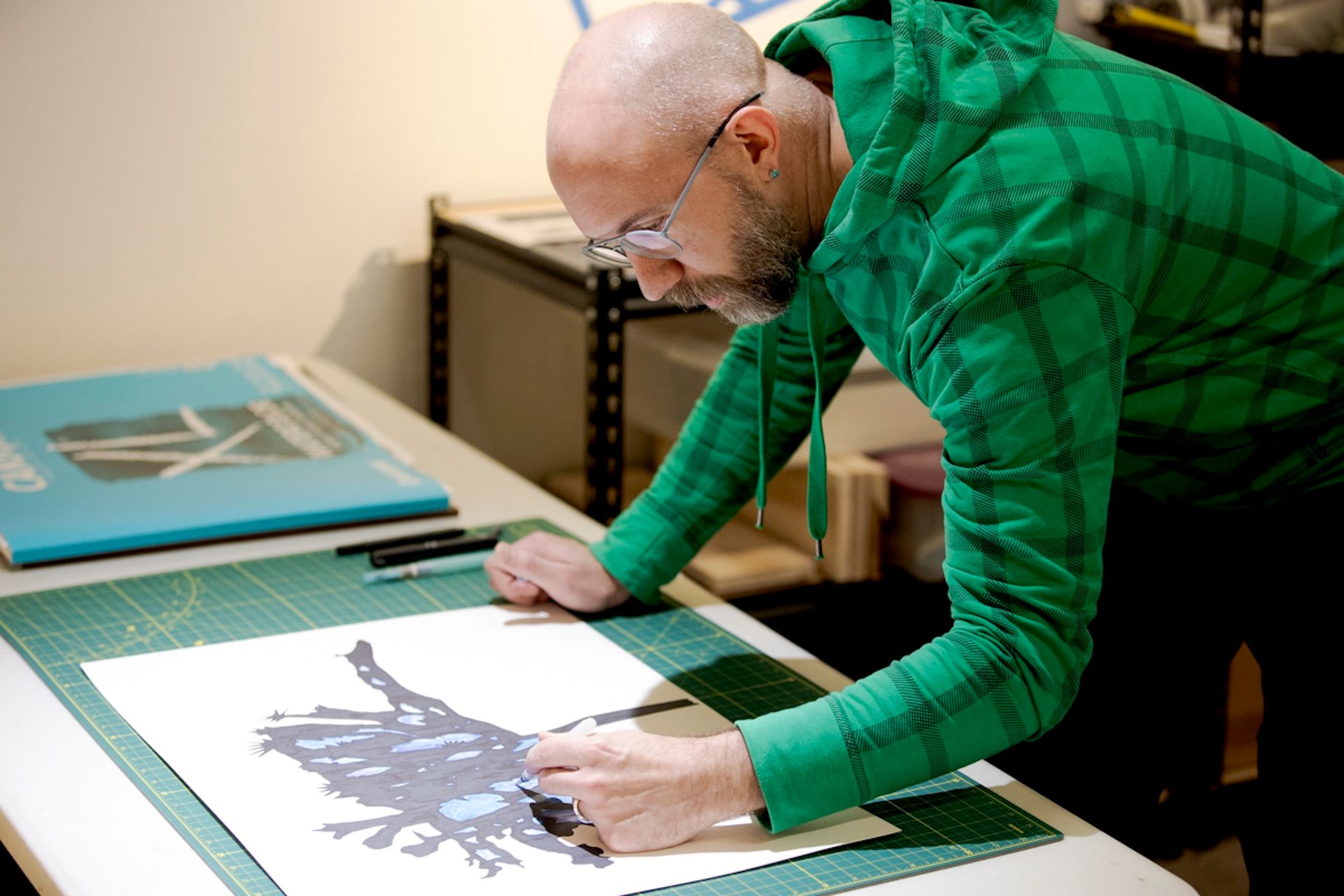
Artist and composer Nathan Hall working in his Denver studio Photo: Mark Woolcott
“A non profit will offer $400 for a composition. Someone else will then offer $6,000 for the same amount of work,” Hall says. “I value my hours plus the intensity of the work, how many revisions are needed and what kind of collaboration is involved. Are there any perks like a professional video of the performance or recording? Do I perform more than once?”
When the value of art is set arbitrarily and not transparent across the field, it raises potential problems with valuing a catalogue as an in-kind capital contribution to a business’s balance sheet. How will artists defend their valuations to the IRS or investors?
Leveraging art to raise capital is not a new idea. In 1997, the pop music legend David Bowie sold Bowie Bonds that were backed by future revenue from his songs. The sales raised $55m, which enabled him to retain control of his work.
The Artist Pension Fund (APT) launched in 2004, creating a new financial product in which 250 visual artists pooled their art and sales for mutual benefit. The cost of storage and insurance outpaced sales. In 2016, APT merged with MutualArt.com offering the art and auction data, but little disclosed financial benefit for the participating artists. Still, some artists pursue bespoke versions of such schemes.
In 2002, the Kemper Museum of Contemporary Art in Kansas City, Missouri, approached the artist Sharon Louden for an exhibition. Louden saw this as a great opportunity to fabricate and exhibit a sculpture made from 805 miles of black monofilament fishing line. It would cost $20,000 to fabricate, which the exhibition budget did not cover.
“I went to all my collectors and offered a prospectus to invest in the future sale of the sculpture,” Louden says. She promised to return the initial investment plus 25% if it sold one year after the exhibition. The return climbed 25% each year until the fifth year, in which Louden would install a private sculpture for investors. This was all “pre-Kickstarter”, Louden notes. Less than two years after successfully raising the necessary funds and producing the sculpture, she sold it to the insurance company Progressive. The six collector-investors received their initial investments plus 50%. Today, Louden is the founder and executive director of the Institute for Sustained Creativity. Despite her successful foray into art-backed fundraising—or maybe because of it—she says she is indifferent about the Artist Company legislation because her LLC has served her practice well.
Nevertheless, artists from all over the country stand to benefit from Senate Bill 133's adoption, as it will allow them to file to register an Artist Company in Colorado that will be recognised by other states. In doing so, it will give them access to a range of new intellectual property protections and financial levers.