

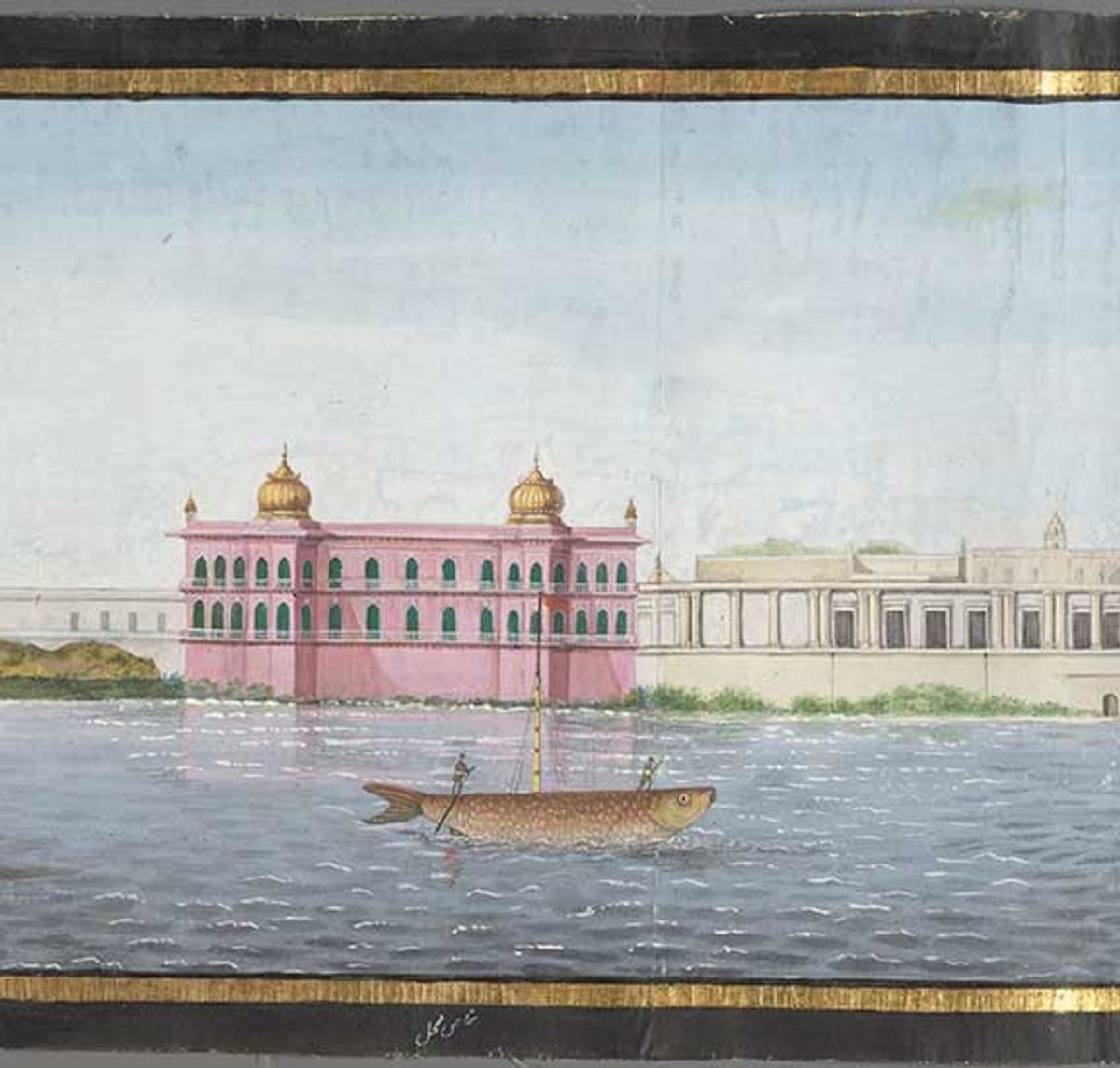
Following two years of conservation, a 37ft-long, early 19th-century scroll is on public view for the first time at the Yale Center for British Art (YCBA) in New Haven, Connecticut. Known as the Lucknow scroll, the object is part of the exhibition Painters, Ports and Profits: Artists and the East India Company, 1750-1850 (until 21 June), bringing questions of empire, commerce and artistic exchange into material focus. Due to the scroll’s size and fragility, half of it will be exhibited at a time and unrolled over the course of the show, giving repeat visitors a chance to see different sections. (Displaying the object in portions also helps reduce light exposure.)
Scrolls range in scale from handheld objects to ones even larger than the Lucknow example, and they have served a variety of purposes. “Within artistic traditions on the Indian subcontinent, narrative scrolls were popular forms of art,” the exhibition curators Laurel O. Peterson and Holly Shaffer tell The Art Newspaper. “These were made for people at all levels of society. They often tell devotional narratives, unfolding as the scroll is unrolled. In early 19th-century Britain, scrolls were used for entertainment at home and might be a souvenir.” Though printed in multiples, scrolls were considered luxury objects.
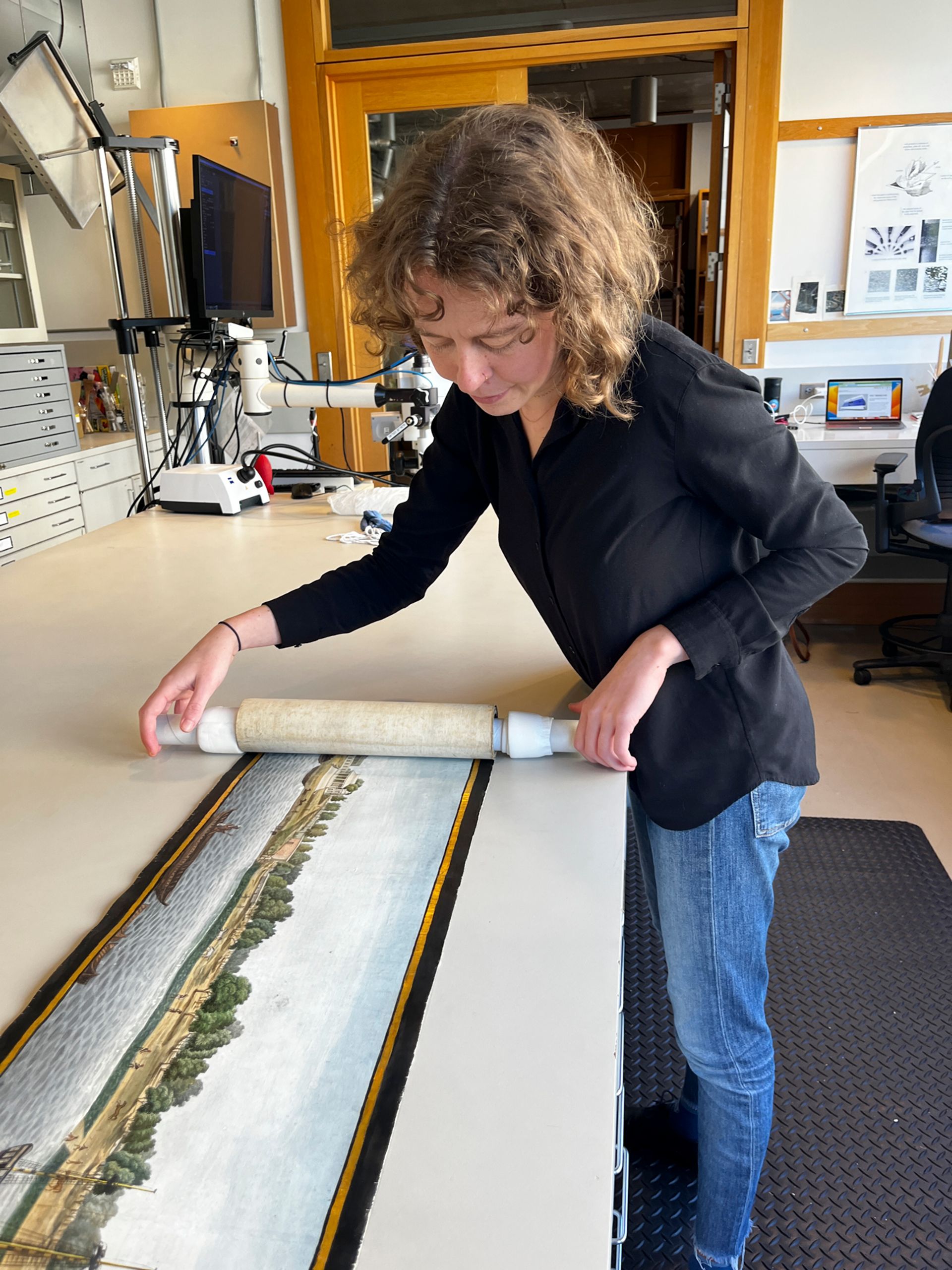
Emma Hartman, the assistant conservator of paper at Yale University Art Gallery, unrolling the Lucknow Scroll. Photo: Anita Dey, image courtesy of the Yale Center for British Art
The Lucknow scroll, or Lucknow from the Gomti, was made between 1821 and 1826 and comprises 33 joined sheets of laid paper, executed in watercolour, gouache and gold. It offers an expansive view of Lucknow in northern India, as seen from across the Gomti River.
“We can think about the Lucknow scroll in terms of storytelling, as it allows the viewer to follow a journey along the banks of the river,” the curators say. “The English-language key written in 1826 describes the work as a ‘Panoramic View of Lucknow’, suggesting a link between the two forms—but panoramas represent the landscape from a fixed viewing point, rather than a continuous one.”
From palaces to warehouses
Created during the reign of Ghazi-ud-Din Haidar Shah—who declared independence from the Mughal emperor in 1819 and embarked on ambitious building campaigns—the scroll captures palaces and mosques, as well as workshops, warehouses and vernacular structures.
“The scroll has a fascinating story both historically and materially, in part because it’s so mysterious,” the curators say. “We don’t know the names of the artists who made it.” The patron is also unknown, they add, but its inscriptions “place little emphasis on the company, signalling that the scroll was likely made for, or in honour of, the ruler—perhaps at the request of an elite woman in his retinue”. It could also have been part of a military or political negotiation.
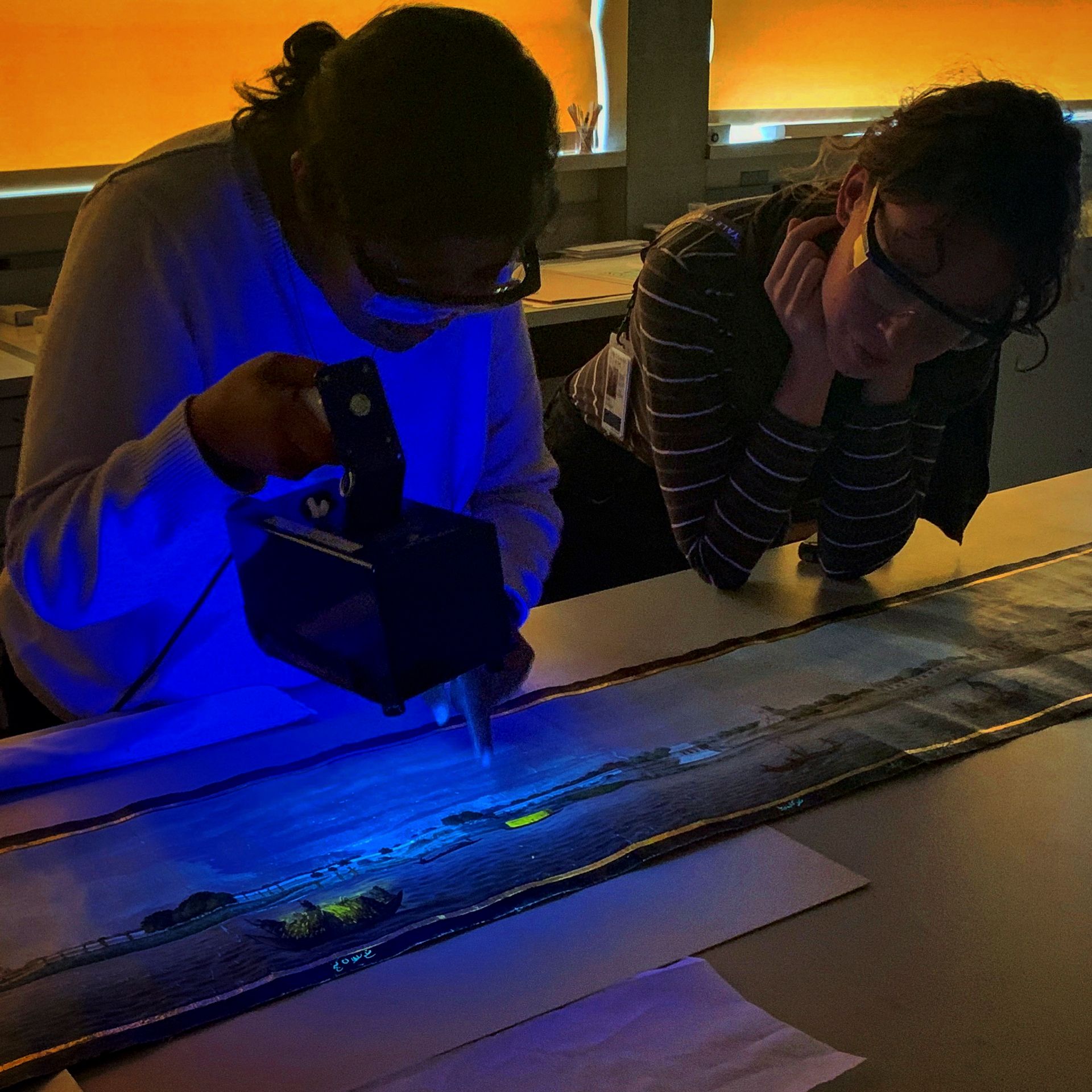
Anita Dey, the assistant paper conservator at the Yale Center For British Art, and Emma Hartman, the assistant conservator of paper at Yale University Art Gallery, examining the Lucknow Scroll under ultraviolet light. Photo: Jessica Makin, image courtesy of the Yale Center for British Art
Over the years, the scroll developed areas of pigment instability and structural weakness. “The primary conservation challenges stemmed from the scroll’s complex layered construction,” says Anita Dey, the assistant paper conservator at the YCBA. “It is composed of multiple sheets of paper joined together with subsequent linings of another paper layer and a cotton-textile backing. While this structure helped protect the scroll from wear associated with handling through its lifetime, it also introduced significant planar distortions that prevented the object from lying flat as originally intended.”
Conservation treatment at the YCBA began with stabilisation to prevent further loss and flattening the object, ensuring it could be safely unrolled and displayed. Among the noteworthy findings revealed during conservation was a watermark for the British mill of James Whatman, a discovery that helped narrow the scroll’s date and understand it within broader trade networks.
- Painters, Ports and Profits: Artists and the East India Company, 1750-1850, Yale Center for British Art, until 21 June