

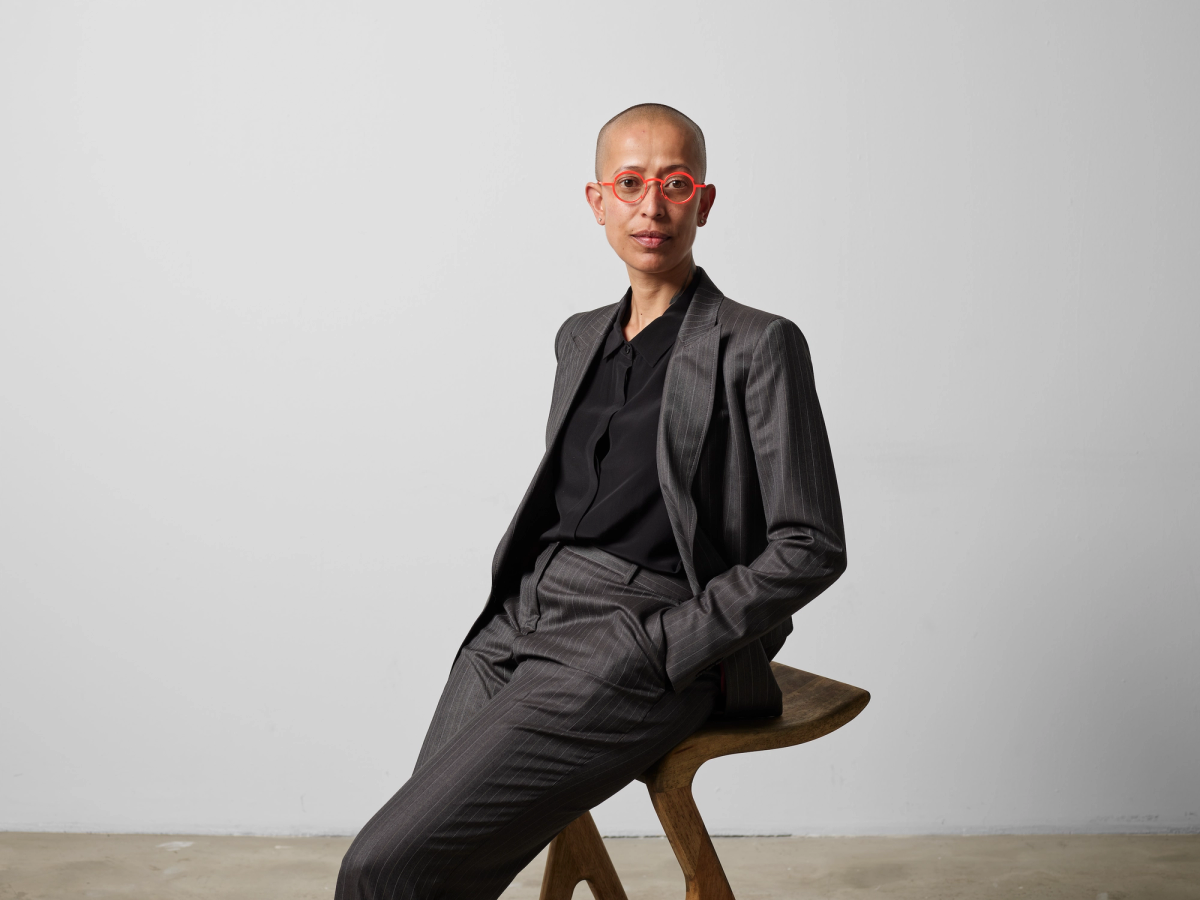
The South African artist Gabrielle Goliath has slammed her country’s decision to leave its pavilion at the upcoming 61st Venice Biennale empty, as she prepares to exhibit the project she had planned for the space in a separate location in the city.
Last year, Goliath was selected to present a new iteration of Elegy—her decade-long project that has centred on femicide and the murder of LGBTQI+ people in South Africa—in the nation’s pavilion at the 2026 Biennale. The country’s sports, arts and culture minister, Gayton McKenzie, however, controversially cancelled the plans in January.
The new version of Elegy addresses the Ovaherero and Nama genocide in Namibia in the early part of the 20th century, as well as the death of Hiba Abu Nada, a Palestinian poet who was killed in an Israeli airstrike in October 2023. McKenzie—the leader of the right-wing Patriotic Alliance party, who has been vocal in his support for Israel in recent years—described the Abu Nada-related suite in a letter to the organising committee in December last year as “highly divisive in nature”. He called for the section to be changed, and when Goliath refused, he pulled the plug.
Goliath announced this week that Elegy will still be staged at the Biennale, from 5 May to 31 July, but as an independent exhibition at Chiesa di Sant’Antonin in Castello, not far from the South African pavilion. The decision, she says, brings mixed emotions.
“There has been something liberating about this independent intervention, although I do, of course, feel the gravity of this cancellation,” Goliath tells The Art Newspaper. “That the space will stand empty is for me a marker of gross disavowal, of the kind of systemic disregard that normalises rape culture and the orchestrated erasure of Black, brown femme and queer lives—in Gaza, Namibia, South Africa.”
The South African Department of Sports, Arts and Culture did not respond to a request for comment.
In February Goliath and the curator Ingrid Masondo filed an urgent application with the High Court in Pretoria to overturn McKenzie’s cancellation. The court dismissed the application—a decision that many in South Africa’s art community see as a serious blow to artistic freedom of expression.
“The ruling was a shock and disappointment—not only to me, but to many who have been following the case and sense its broader implications for the South African arts community and beyond,” says Goliath.
In the meantime, her legal team have appealed the decision and are waiting for the judge, Mamoloko Kubushi, to indicate a date for a hearing on this.
Asked why she and her team did not drop the case, after deciding to show Elegy elsewhere, she says: “The political stakes are urgent. We really cannot allow this cancellation to set a precedent, to normalise ministerial abuses of power and state interference in creative expression.”
She continues: “It’s a constitutional question, of course, but it goes further than that—it cuts deeper. What does it mean when we are told who we may or may not mourn, whose lives we may or may not value, what kind of world we may or may not imagine?”
McKenzie has filed a notice to oppose their application to appeal. Asked what she would say to McKenzie if she had the chance, Goliath said: “Blessed are those who mourn.”
A further iteration at Ibraaz
Elegy will also be exhibited at the Ibraaz arts space in London in October this year, enabled by the support of the Bertha Foundation.
“Carrying it forward now feels both urgent and necessary and aligns with Ibraaz’s mission to be a brave space that platforms art and ideas from the Global Majority,” said Ibraaz founder and director, Lina Lazaar, in a statement.
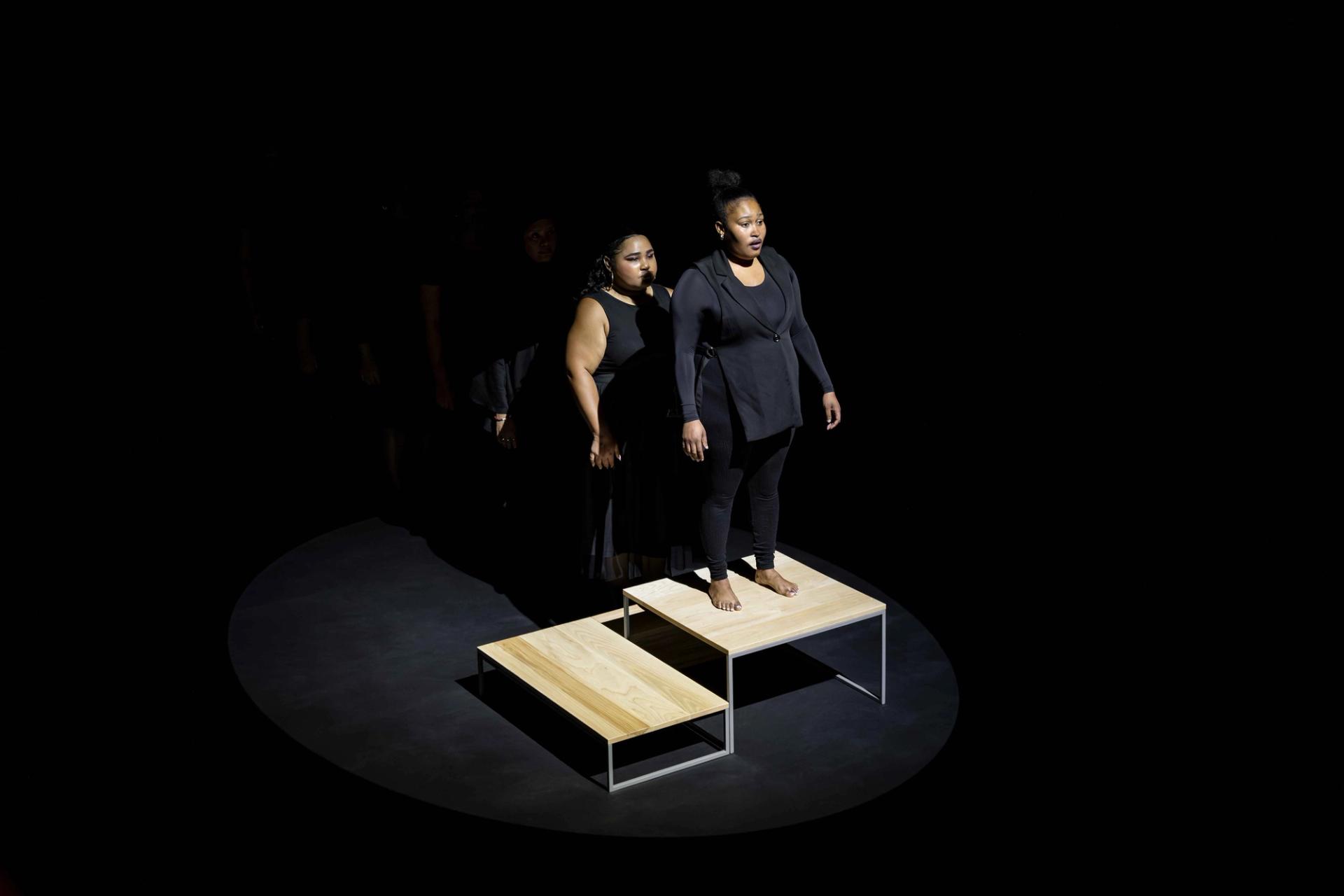
Gabrielle Goliath’s performance piece, Elegy - for a poet (2026) Photo: Zunis
Goliath says she is “deeply grateful to those who have gathered around me and the work in this moment”.
“What has kept me going through this very arduous time is the imperative of this work—this call to mourn—and the shared labour that involves,” she says. “In Elegy, a singer sounds the note and holds it for as long as they are able. When their voice falters, another singer steps up from behind, and picks up the note.
“I have not walked this path alone—others have been there to pick up the note—to offer their breath and presence. It is this gifting—of community, love and shared commitment—that has nourished me.”