

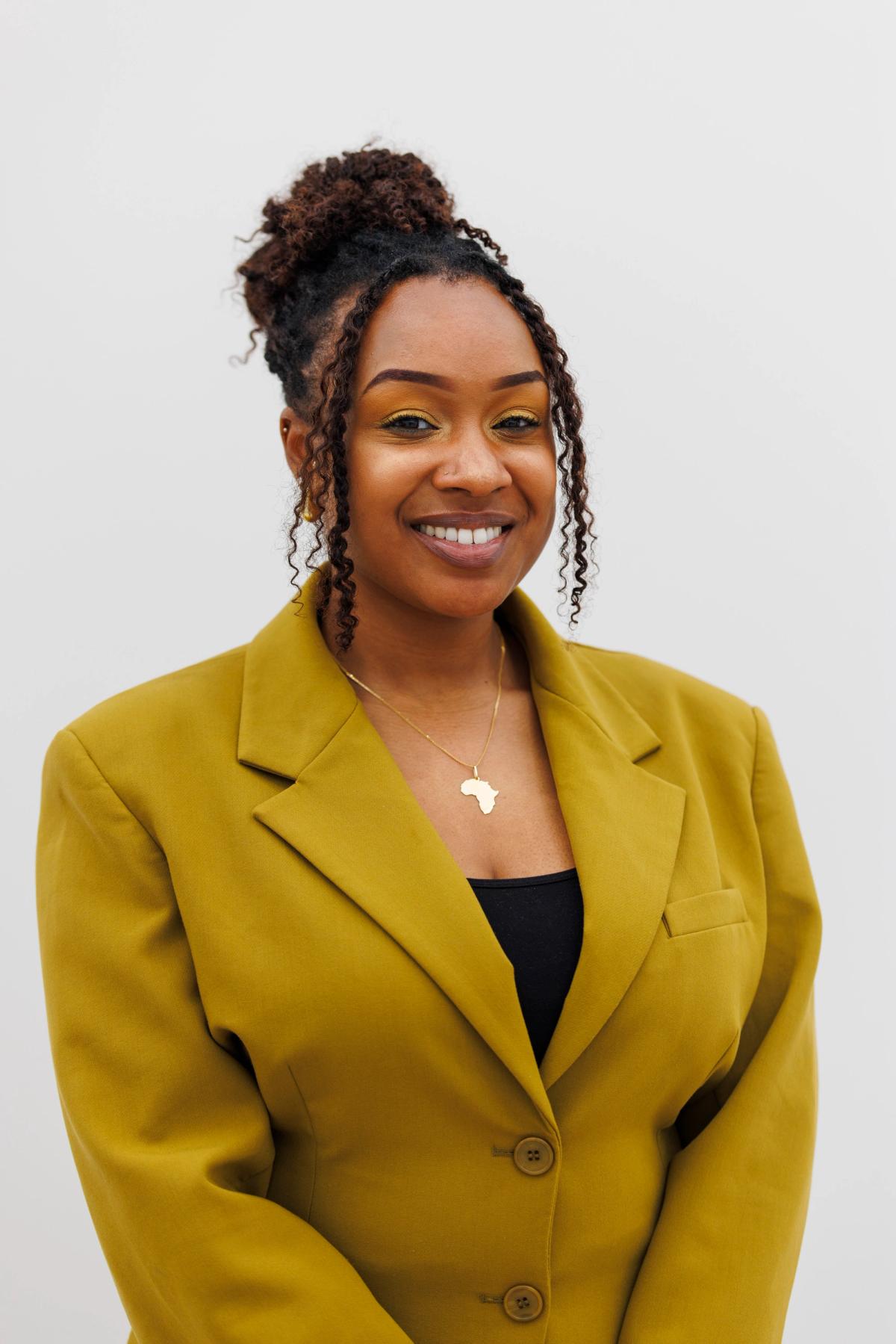
Cornelia Stokes, the inaugural assistant curator of the art of the African Diaspora at the San Francisco Museum of Modern Art (SFMoMA) and Museum of the African Diaspora, started her three-year dual role just last month. Her new job is to bridge the two institutions through joint exhibitions and community programming related to the African Diaspora, as well as helping diversify SFMoMA’s permanent collection. Stokes took a break from her busy schedule to tell us about her favourite works on display at Frieze Los Angeles this year. (Some could even make their way to SFMoMA one day, she says.)
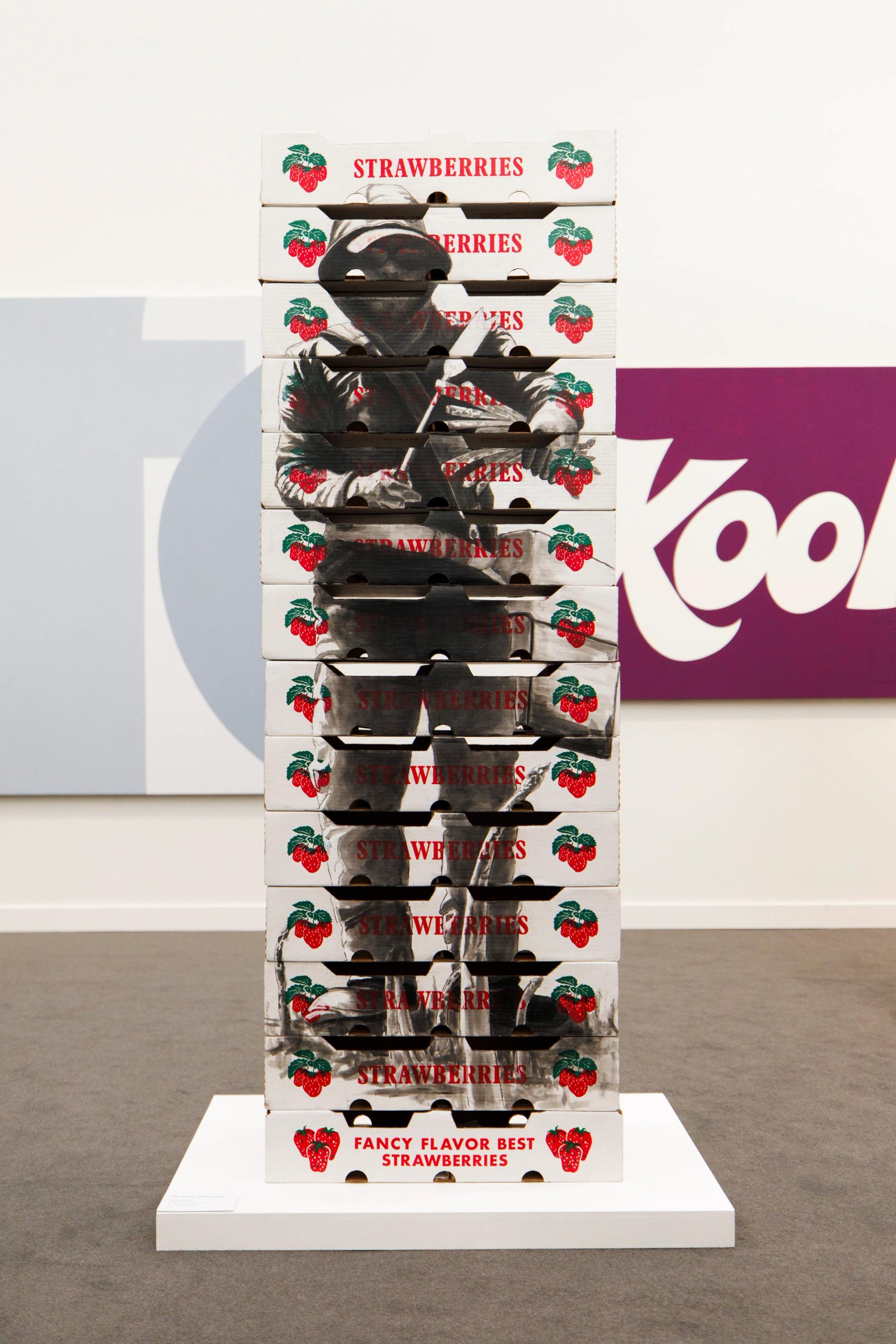
Photo: Carlin Stiehl
Narsiso Martinez, Asparagus Picker (2025), Charlie James Gallery
Narsiso Martinez was born in Oaxaca, Mexico, before he migrated to the US when he was 20 years old. He picked apples, asparagus and cherries in Washington State to put himself through art school. The images in his pieces are often of himself, family or friends; he frequently uses discarded produce boxes collected from grocery stores. “I love the strawberry boxes,” Stokes says. “I appreciate the migrant story and the labour connection. They matter too. Period.” Martinez was awarded the Frieze Impact Prize in 2023.
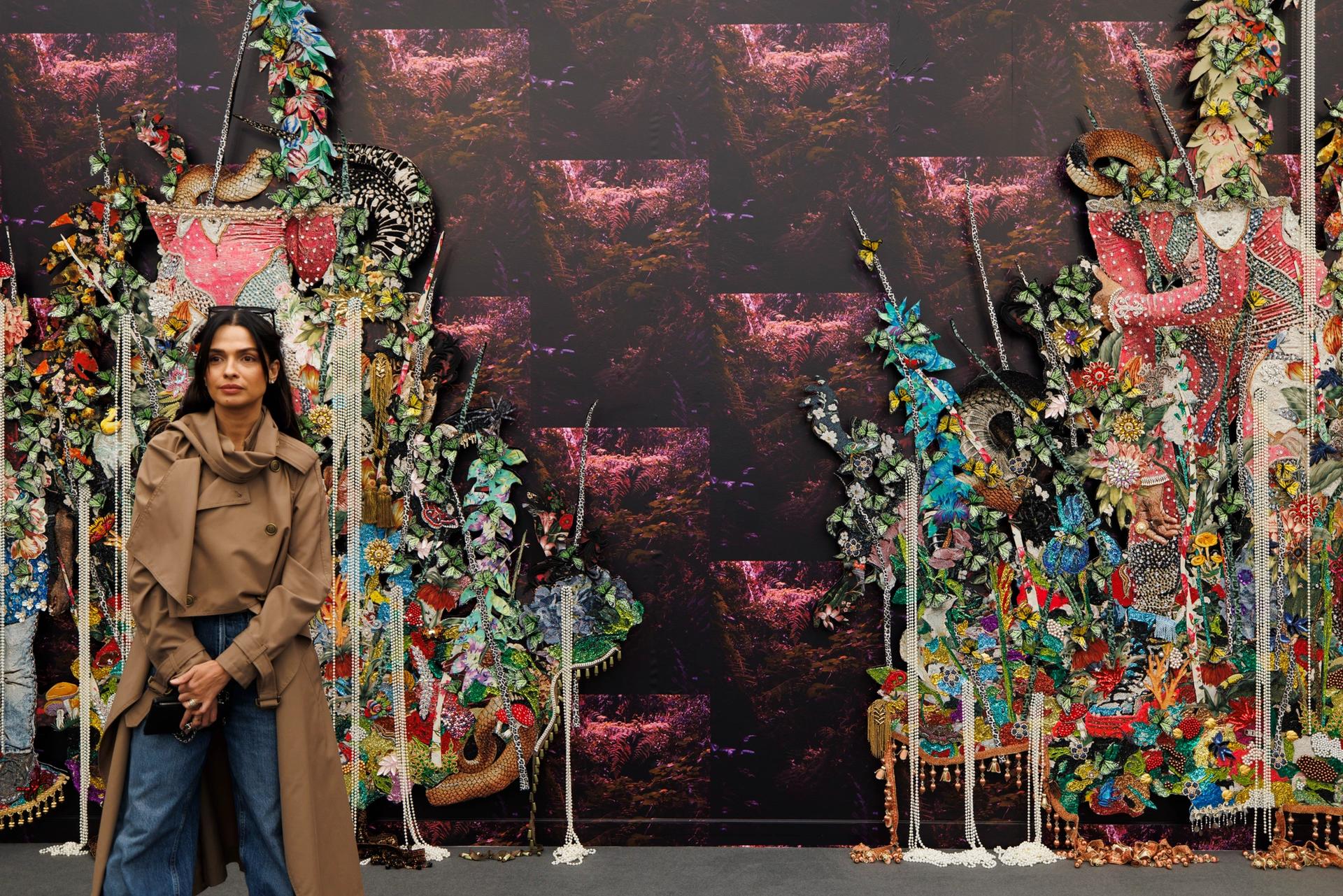
Photo: Carlin Stiehl
Ebony G. Patterson, …in the swallowing…she carries the whole…the hole (2021-22), Monique Meloche
“Ebony G. Patterson is a Jamaican-born artist of the Diaspora,” Stokes says. “I fell in love with her work maybe five or six years ago, and then I saw her presentation at the New York Botanical Garden and was forever a fan after that. She creates these installations that are like experiences, these environments that you have to step into, and it’s almost like stepping into her world. I also like that the glitter, the glitz and the glam draws you in to talk about something serious—violence against Black and Brown bodies. It’s almost like they’ve got to trick you to get you in there.”
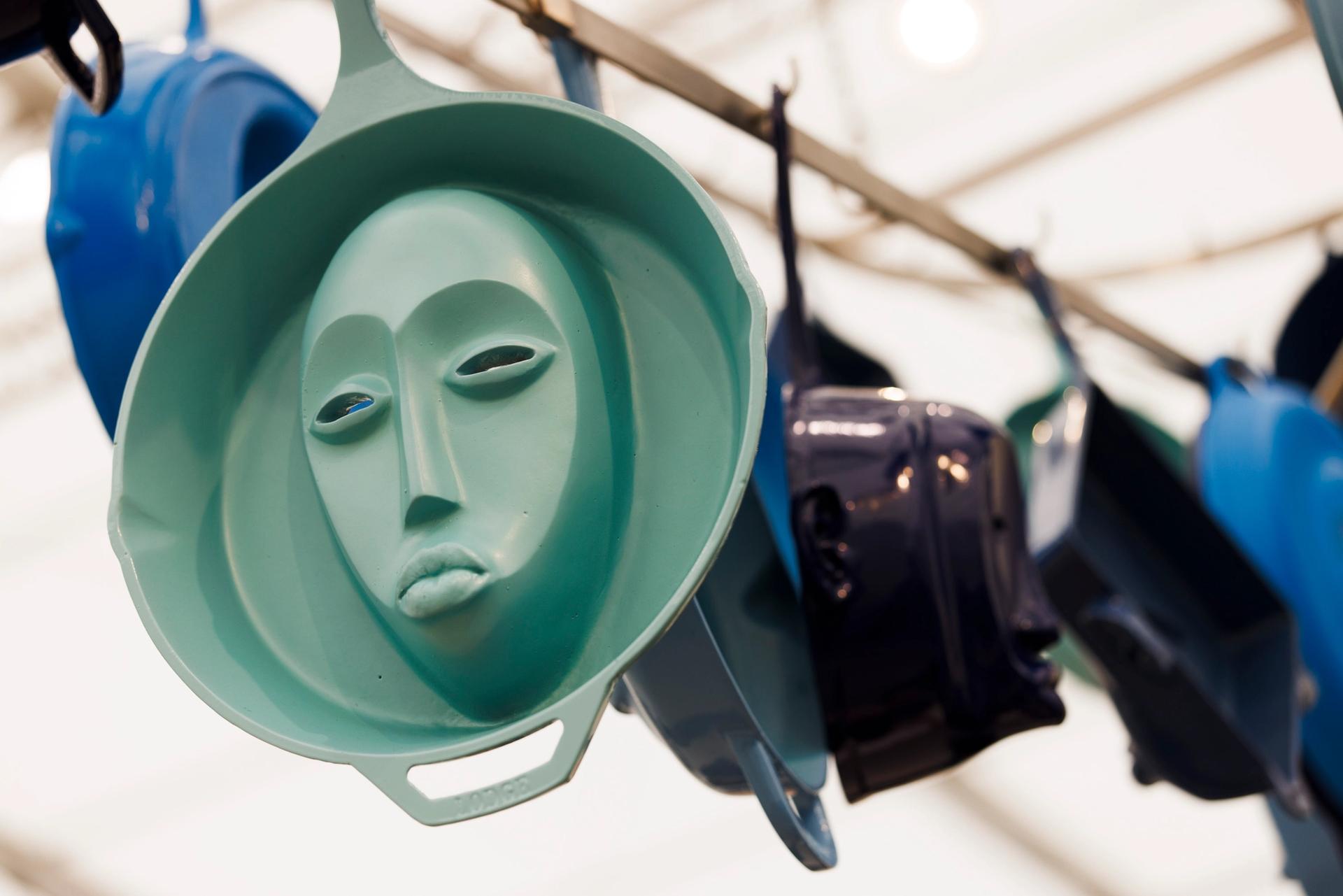
Photo: Carlin Stiehl
Hugh Hayden, The Blughs (2026), Lisson Gallery
Born and raised in Texas, Hugh Hayden is a former architect turned sculptor. Now based in New York, he anthropomorphises everyday objects in an exploration of what it means to be human. In this series of powder-coated aluminium skillets, he used imprints of African masks and sometimes his own face in a commentary on the importance of Southern soul food in American culture. “I like this work because of the way he coats his objects—the intentionality, the execution. It’s flawless,” Stokes says.
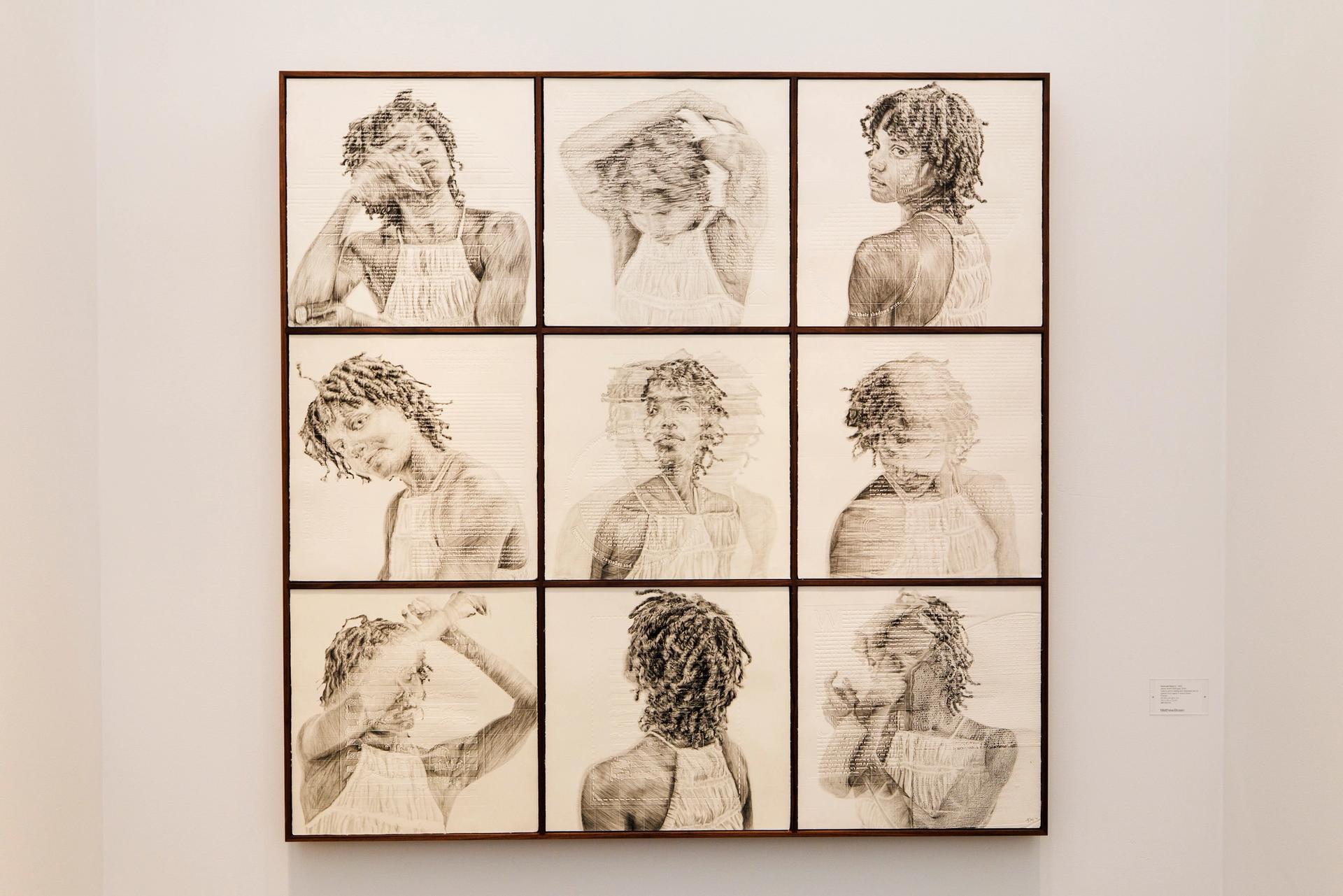
Photo: Carlin Stiehl
Kenturah Davis, planar vessel XXXII(gia) (2026), Matthew Brown
“Kenturah Davis is a Black artist from Altadena. She lost her home and studio in the Eaton fire last year, and she recently had a baby. What I love about this drawing in particular is that it has these impressions—like a text by Zora Neale Hurston and sheet music.”
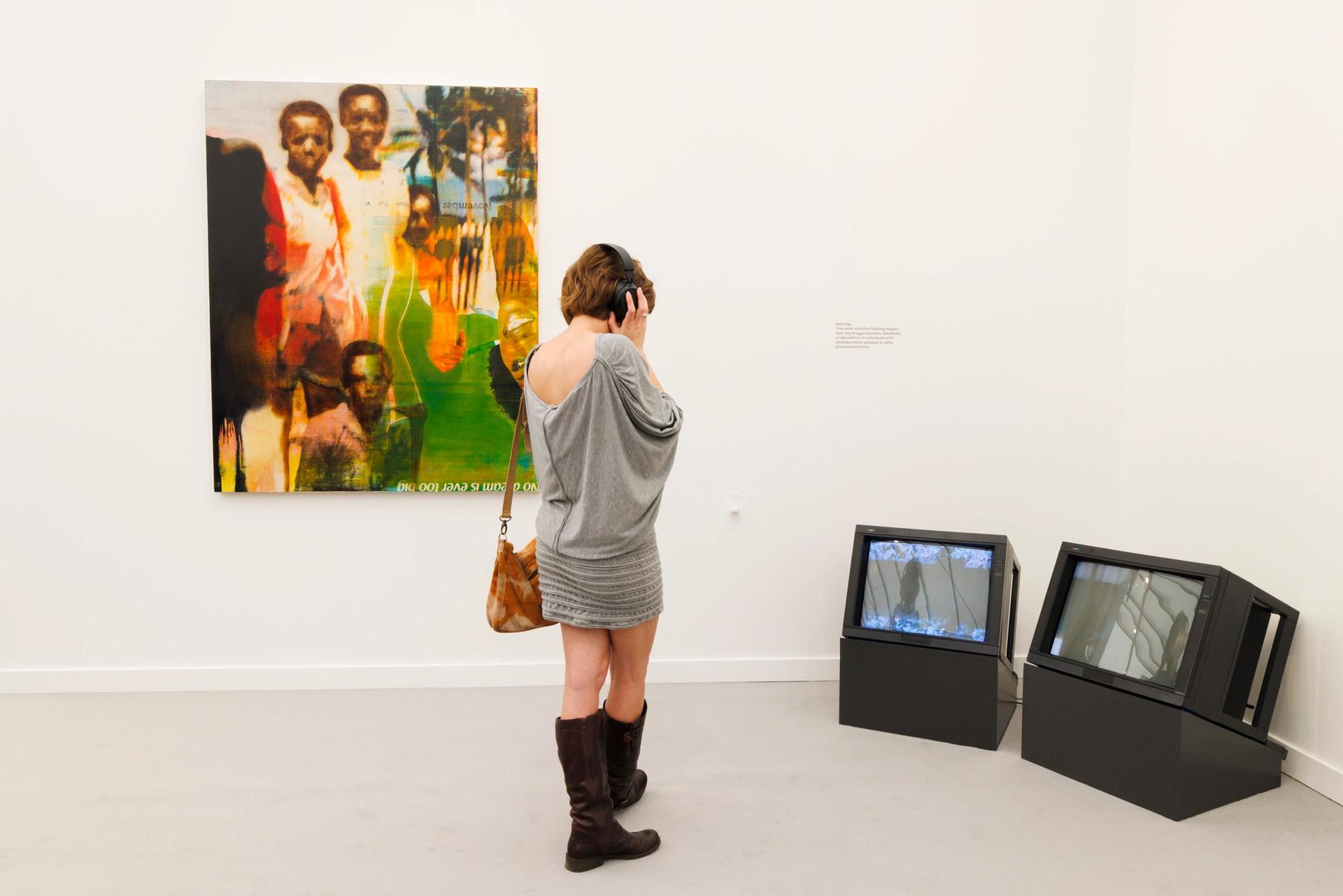
Photo: Carlin Stiehl
Africanus Okokon, Time of defenseless waiting (2026), Ochi
“Africanus is a friend of mine,” Stokes says. “He is of the Diaspora and making work based on the Diaspora, but what I love about his practice is that he mixes his media really, really well—media and techniques. It’s seamless.” The piece on the left uses a combination of silk screen, oil and burnt coconut milk that Okokon says feels like a photograph developing as the figures start to emerge in the art-making process.
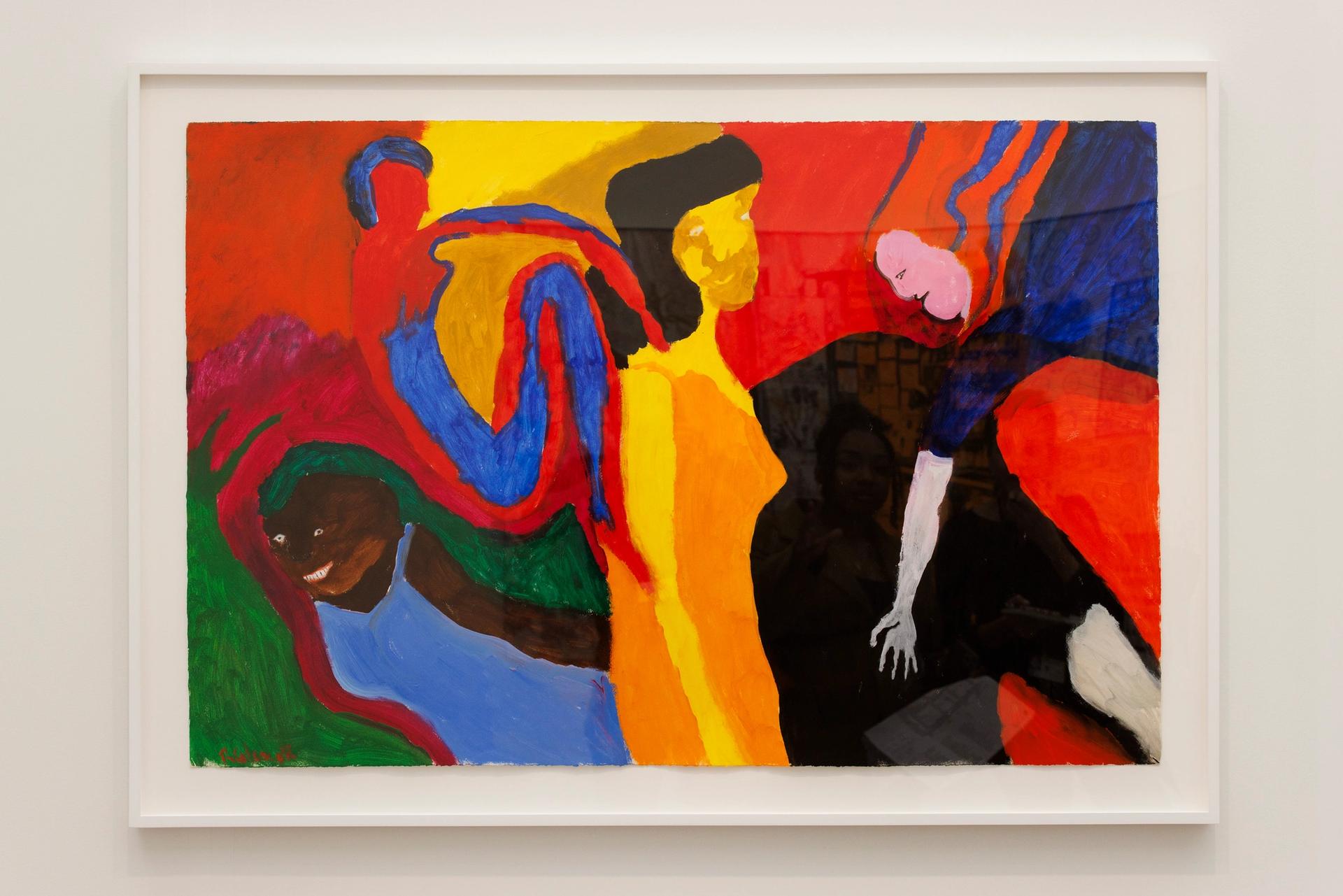
Photo: Carlin Stiehl
Robert H. Colescott, Untitled (1968), Gladstone
“Robert Colescott is a legend in both the Diaspora and in painting,” Stokes says. “His colours are mesmerising. And this work is probably my favorite Colescott I’ve ever seen. I know SFMoMA has a Colescott, but he’s one of those people that you can collect again—in the same way that they have millions of Picassos or Lichtensteins. I’m really interested in growing SFMoMA’s collection of African Diaspora art, so that’s also what I’m looking for at the fair.”
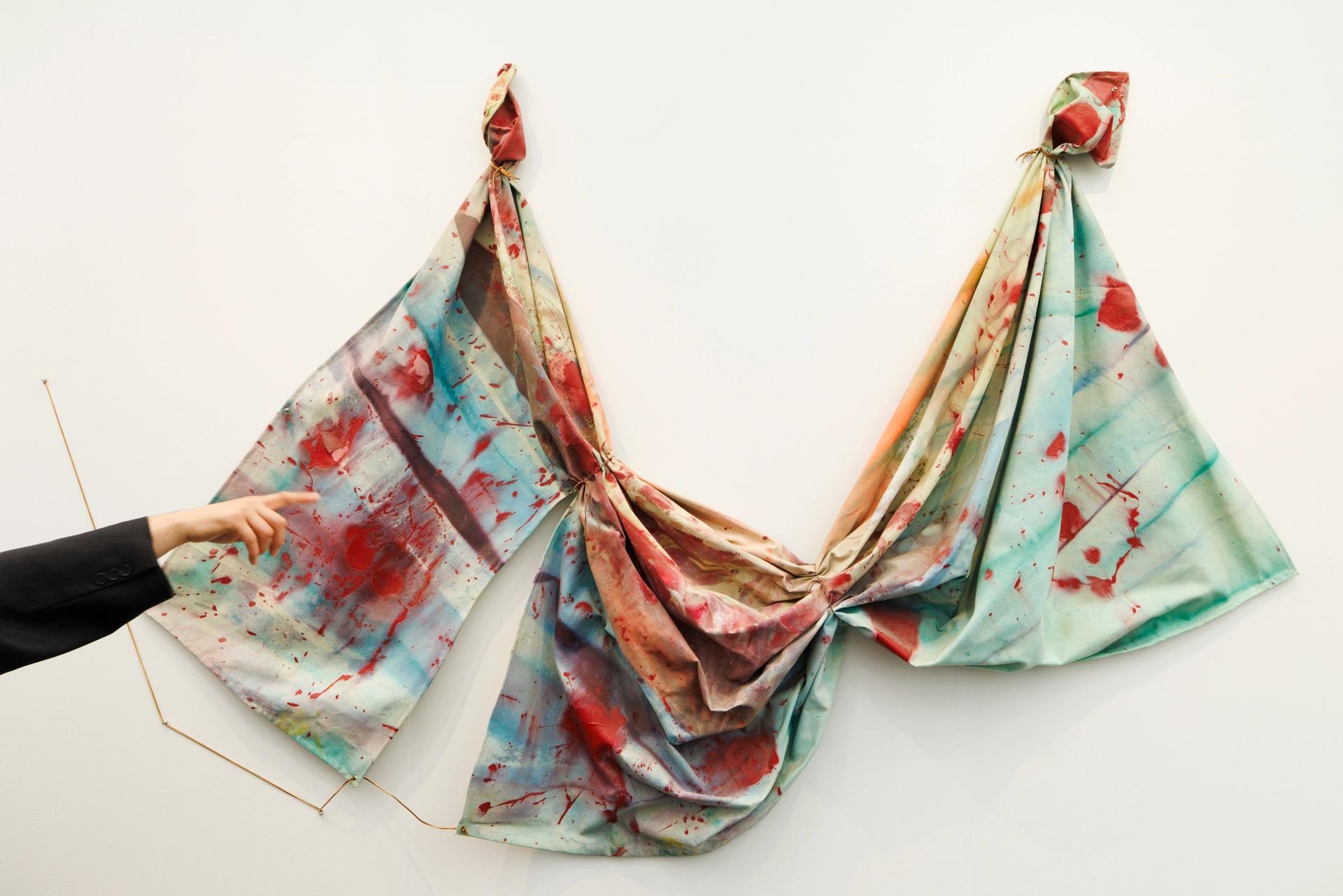
Photo: Carlin Stiehl
Sam Gilliam, Cut (1969), Michael Rosenfeld Gallery
Stokes is a big fan of Michael Rosenfeld Gallery’s entire stand this year. “It’s art history, art of the African Diaspora, African American art—it hits all those notes,” she says. On the stand are works by artists including Romare Bearden, William H. Johnson, Augusta Savage, Alma Thomas, William T. Williams and Sam Gilliam. “Gilliam is one of my top ten favourite artists of all time,” Stokes says, adding that she also has a special affinity for Thomas, who was from Stokes’s hometown of Washington, DC. “You can’t talk about the art of the Diaspora without these artists. And you can’t have places like the Studio Museum in Harlem without them.”