

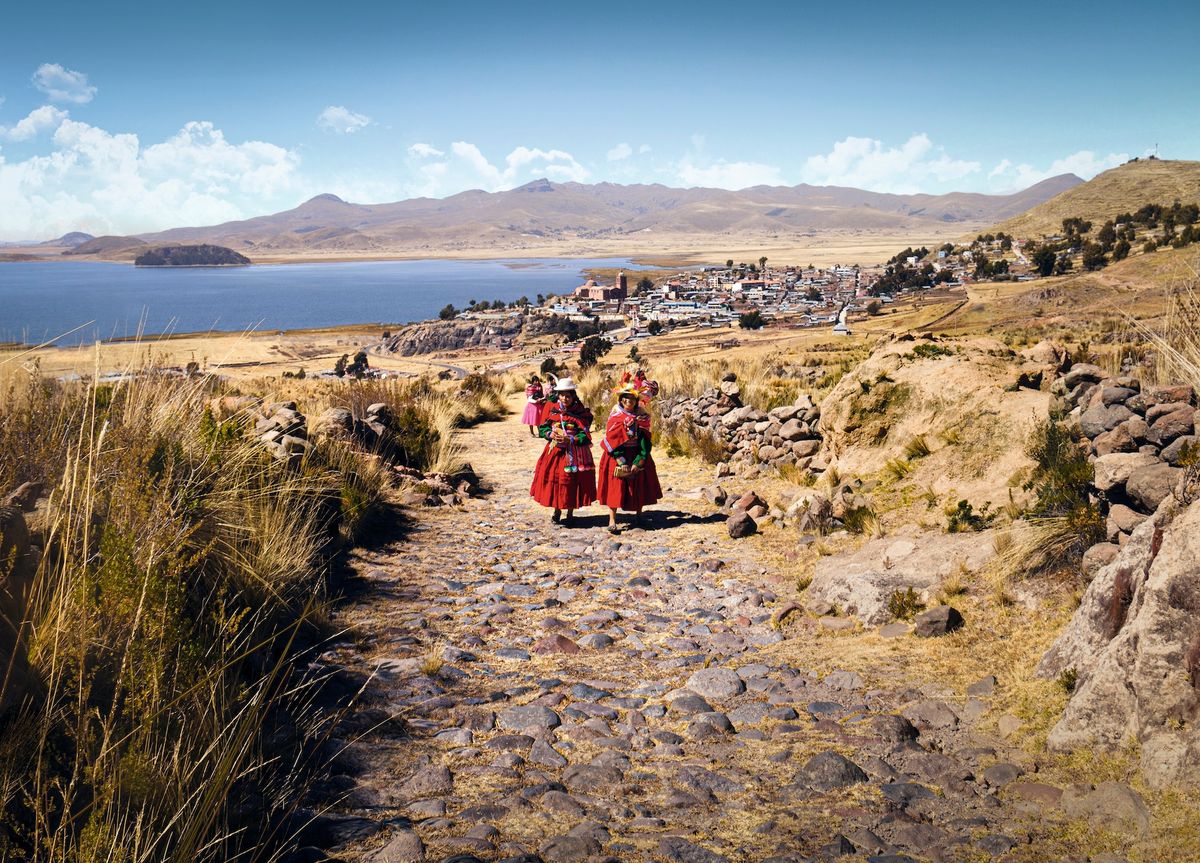
World Monuments Fund (WMF) has announced that it will use more than $7m to fund 21 new projects around the globe in 2026. These include a number of sites from WMF’s 2025 Watch list of threatened heritage—such as the Inca Qhapaq Ñan road system spanning the Andes in South America, the crumbling terracotta sculptures at Portugal’s Alcobaça Monastery and historic Jewish religious buildings in Debdou, Morocco.
“Around the world, communities are confronting profound challenges, from climate-related disasters and environmental change to the long aftermath of conflict and crisis,” Bénédicte de Montlaur, the president and chief executive of WMF, said in a statement. “By working alongside local partners, we are advancing preservation efforts that support recovery, adaptation and long-term stewardship of places that matter deeply to the people connected to them.”
Newly funded sites include an 18th-century mausoleum in India, the Museum of Antigua and Barbuda and a Modernist cinema in Angola. A couple of locations have been recently damaged by earthquakes—namely, heritage sites on Japan’s Noto Peninsula and the historic city of Antakya, Turkey. Others have gotten caught up in US politics.
Bears Ears National Monument in Utah, home to ancient petroglyphs on Sand Island, was significantly downgraded in protection status during US president Donald Trump’s first term over the possible exploitation of its natural resources. (President Joe Biden later overturned the decision.) More recently, Egypt’s 16th-century Takiyyat al-Gulshani religious complex had its preservation funding cut by the US Department of State.
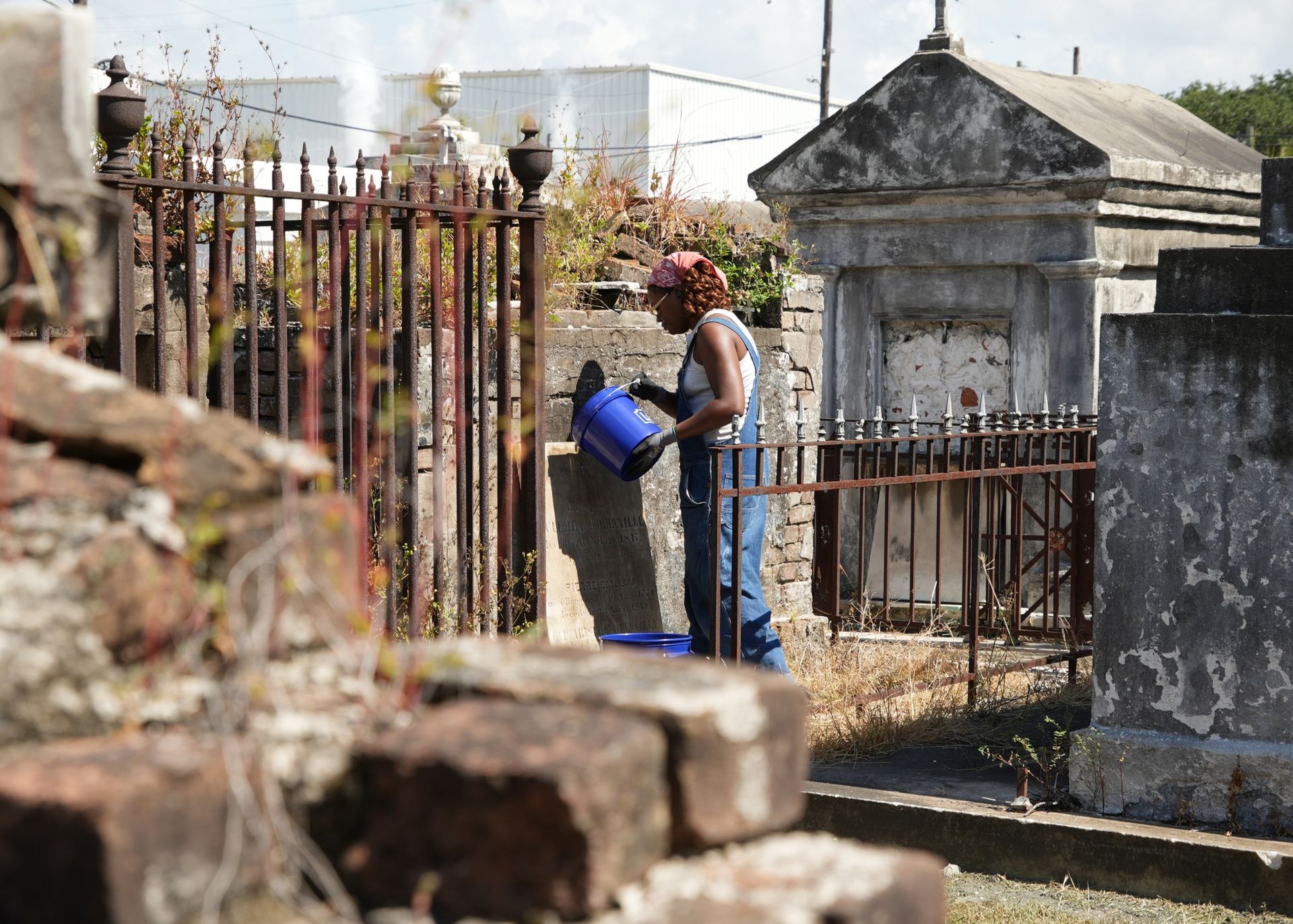
Tulane University students repair and clean tombs and tablets at New Orleans’s Saint Louis Cemetery No. 2, October 2025 Photo: Danny Monteverde/Preservation Resource Center of New Orleans
Projects not only involve physical conservation, but also management, community engagement and training. For example, WMF is helping to document and analyse the historic water systems of Bhuj, India, in an effort to bring these 16th-century structures back to wider public use. And in New Orleans, funding will be used to train local workers in preservation to take care of Saint Louis Cemetery No. 2, where many notable politicians and jazz musicians are buried.
Funding for WMF’s new round of projects comes from AXA Foundation for Human Progress, Accor, the Robert W. Wilson Charitable Trust, the Gerard B. Lambert Foundation and the Freeman Foundation, among other donors.

WMF has also launched a new US-specific initiative for the country’s semiquincentennial. The Irreplaceable America programme will feature ten heritage sites that “represent and celebrate the full breadth of the American experience”. These locations will be chosen through a public call for nominations, open for submissions through 20 March. The selected sites will be announced on 2 July.
“World Monuments Fund is a global organisation rooted in the United States and shaped by a legacy of service that dates back to its founding in 1965 by retired American Army colonel James A. Gray,” De Montlaur said in a statement. “As this nation approaches the 250th anniversary of its independence, it is fitting to focus our attention at home, highlighting heritage sites that illuminate the American story and the values, struggles and aspirations that have shaped it.”