

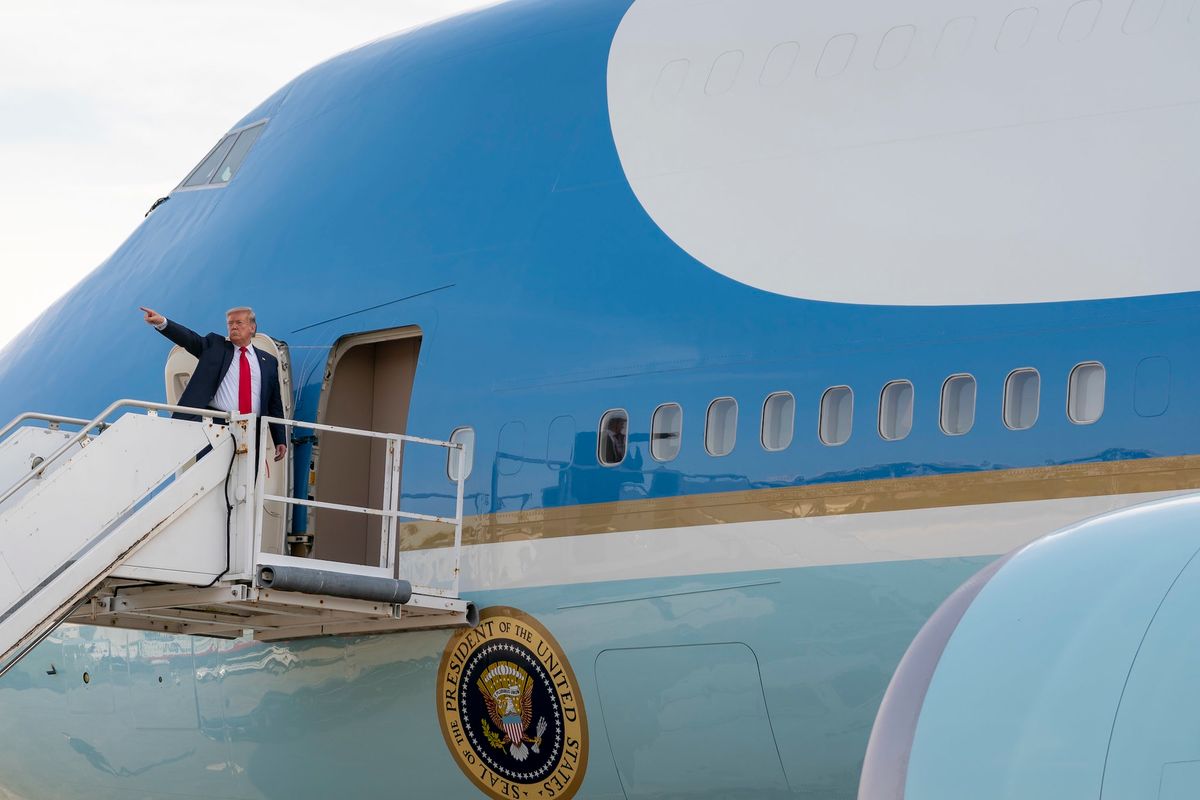
In a memorandum released on 7 January, President Donald Trump announced that he is withdrawing the United States from more than 60 international groups, treaties, alliances and United Nations (UN) organisations, including global organisations devoted to coordination between arts agencies and safeguarding cultural heritage through preservation and restoration.
Trump’s memo alleges that the activities of the International Centre for the Study of the Preservation and Restoration of Cultural Property (ICCROM) and International Federation of Arts Councils and Culture Agencies (IFACCA), among dozens of other agencies, fora and commitments run “contrary to the interests of the United States”. A White House "fact sheet" accompanying the memo claims that leaving the organisations "will end American taxpayer funding and involvement in entities that advance globalist agendas over US priorities, or that address important issues inefficiently or ineffectively such that US taxpayer dollars are best allocated in other ways to support the relevant missions".
The US joined ICCROM during Richard Nixon’s first term as president, in 1971. The non-governmental organisation was established in Rome in 1959 in response to the widespread destruction of cultural heritage during the Second World War. Its current list of member states numbers more than 130 countries, from Afghanistan and Canada to the UK and Yemen. It conducts research, offers courses and runs programmes on emergency safeguarding of heritage in crises, preservation of digital and media collections, sustainability and more. The centre is currently helmed by director-general Aruna Francesca Maria Gujral, the first woman to lead the organisation.
The IFACCA, which is headquartered in Sydney, is made up of more than 90 national, international, regional and municipal arts organisations; the National Endowment for the Arts (NEA) is its national member representing the US, and the Institute of Puerto Rican Culture is listed as an affiliate member. The federation conducts research, holds summits and seminars, provides fellowships and generally seeks to facilitate exchanges and cooperation between arts agencies and cultural workers. Its current executive director is Magdalena Moreno Mujica, a Chilean cultural administrator who previously served as the head of international affairs at Chile’s National Council for Culture and the Arts. (Trump has repeatedly sought to eliminate the NEA, and his Department of Government Efficiency significantly reduced the agency's number of staff.)
Representatives for ICCROM and IFACCA did not respond to The Art Newspaper’s inquiries about the US’s withdrawal.
Julie Trébault, the executive director of Artists at Risk Connection—an organisation that advocates for the rights of artists and cultural workers, and has a partnership with IFACCA—criticised the Trump administration’s decision and reasoning.
“At a moment when artists around the world are facing escalating censorship, digital surveillance, forced displacement and gender-based violence, international cooperation is essential,” Trébault said in a statement. “US disengagement from institutions that uphold freedom of expression, artistic freedom, cultural rights and the rule of law weakens the global protective frameworks on which artists and cultural workers depend. For artists in immediate danger, those in exile, women artists and others facing censorship, surveillance or violence, the erosion of multilateral safeguards has tangible and immediate consequences. The vacuum this withdrawal creates also opens space for authoritarian actors to further repress artists and cultural workers globally.”
The executive president of the European cultural heritage organisation Europa Nostra, Hermann Parzinger, also expressed "deep regret" over the Trump administration's decision in a statement, adding: "This sweeping retreat from multilateral co-operation of a major global player seems to signal a troubling misunderstanding of the essential role that culture and heritage play in fostering peace, mutual respect, resilience, innovation, and shared prosperity across the globe."
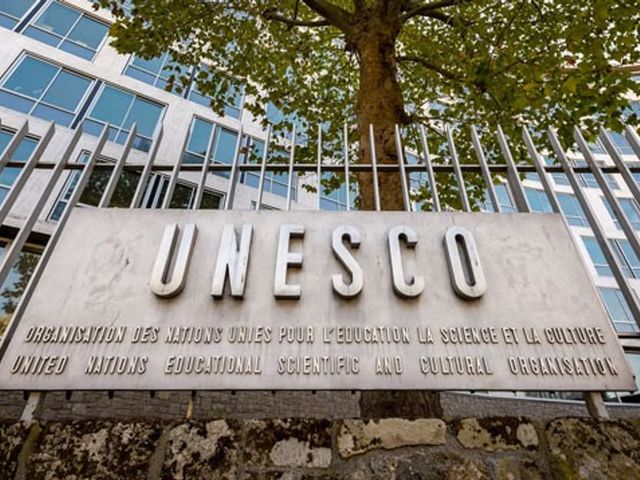
Prior to this week’s memo, Trump had already withdrawn the US from the Paris Climate Agreement, Unesco, the World Health Organisation and many other international alliances aimed at ensuring multilateral dialogue and global cooperation on critical issues.