

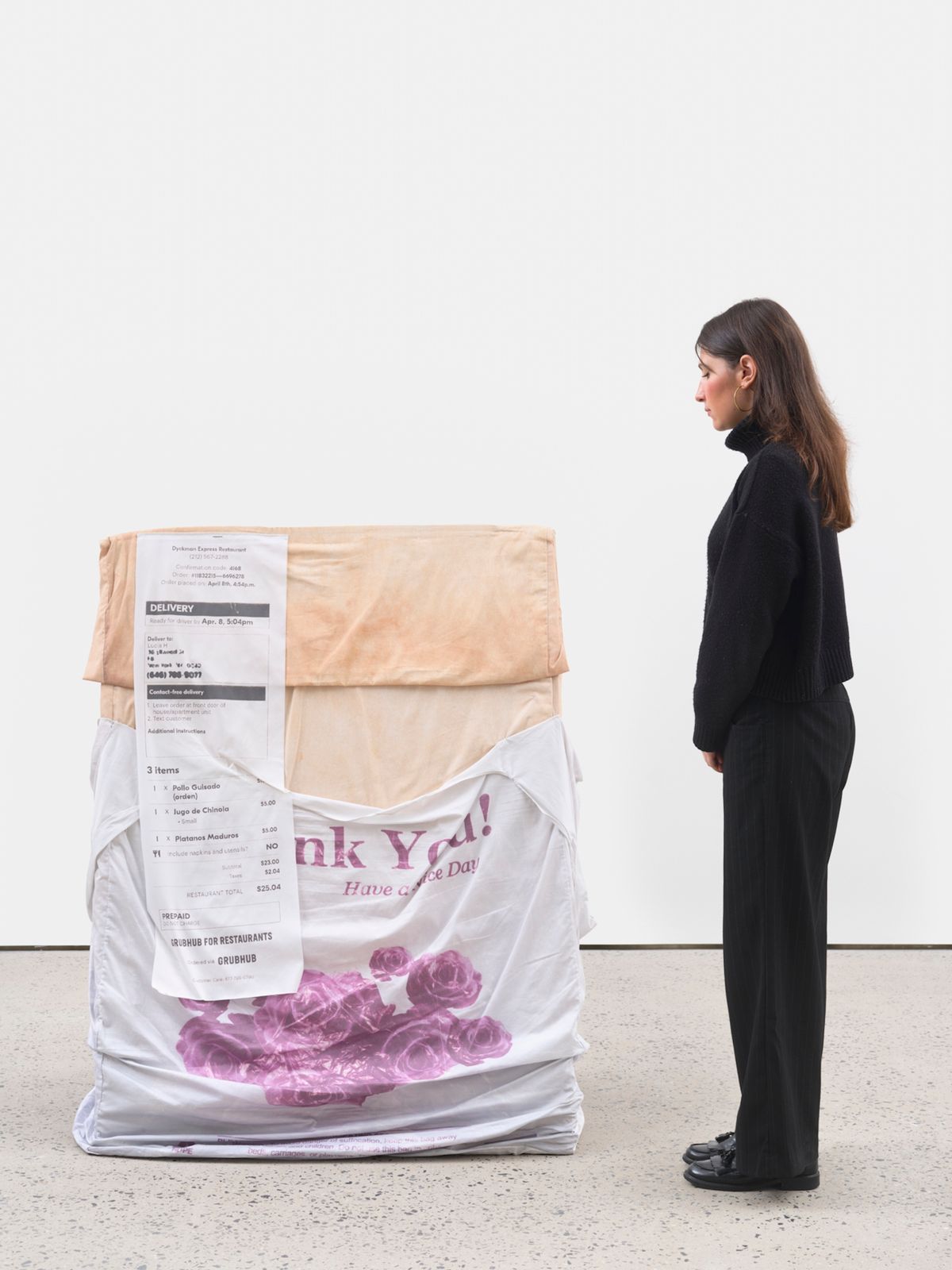
When the Dominican American artist Lucia Hierro began developing a new commission centred on a 7.5ft-tall monobloc chair—an homage to a ubiquitous object in Latin American and Caribbean diasporic life—she envisioned an ambitious installation that would be both playful and politically incisive. What she did not anticipate was the financial precarity that would follow. Fabrication alone would cost between $35,000 and $40,000, far beyond what the commissioning institution was able to support.
“I would never profit from this work—that’s not the point,” Hierro says. “But it shocked me that even with a confirmed institutional commitment, there was simply no path for the project to happen unless I found the funds myself.”
Her dilemma is increasingly the norm rather than an exception. Across the US, artists report being called on to subsidise budgets for museum exhibitions, public commissions and even acquisitions. In some cases, opportunities evaporate entirely when the artist and organisation are unable to raise the money needed for production.
Institutions want the work, but the gap between vision and execution has become the artist’s burdenLucia Hierro, artist
“Institutions want the work, but the gap between vision and execution has become the artist’s burden,” Hierro says. The project was initially funded through support from Graham Wilson, her gallerist at Swivel Gallery. But it only moved forward with support from the Miami-based non-profit Fountainhead Arts, whose new Forum fund is designed specifically to help alumni of its residency programme cover budget shortfalls for institutional exhibitions and acquisitions.
But the Fountainhead initiative alone cannot match the scale of artists’ needs. In its inaugural round, Forum received 96 applications requesting a total of $1.8m in funding, more than 14 times the available grant money ($125,000). The volume and urgency of the requests forced Fountainhead’s leadership to confront a reality they had been hearing about anecdotally for years: artists with confirmed institutional commitments, including at least one selected to show in the Venice Biennale, could not afford to realise the work.
“We all know how incredible these opportunities are for artists to have their work acquired by a museum—they’re game changers,” says Kathryn Mikesell, Fountainhead’s director. “But a lot of these opportunities are underfunded for the artists.”
For now, Forum is the largest residency-run artist support fund in the US. Mikesell argues that its necessity reflects a broader infrastructural breakdown. “Often the first people to suffer when it comes to funding challenges are the artists themselves,” she says. “It’s a real conundrum, because artists generally aren’t fundraisers.”
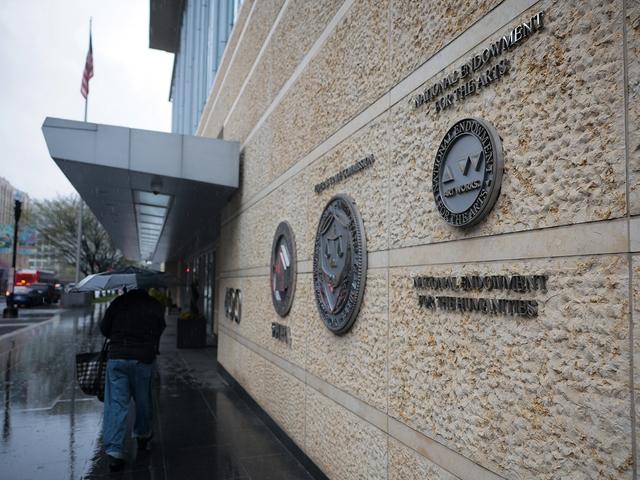
Public support for the arts has been destabilised at every level since the start of Donald Trump’s second term as president. After the rescission of National Endowment for the Arts, National Endowment for the Humanities and Institute of Museum and Library Services grants last year, small to mid-size organisations—particularly those serving communities of colour, rural regions and local arts ecosystems—lost core operating support. Several states, including Florida, have also slashed cultural funding. The cuts’ impacts are cascading upward into the museum sector.
Artists have always subsidised institutions. What has changed is the degree. The floor has dropped outAnne Ishii, programme director, United States Artists
Few organisations have a wider national view of these shifts than United States Artists (USA), a Chicago-based grant-making institution that distributes unrestricted fellowships to artists across disciplines. Its programme director, Anne Ishii, describes the current moment as “one of the most precarious for artists in recent memory”. In her view, the problem is not that artists are expected to subsidise institutional projects, but the growing costs they are asked to shoulder. “They’ve always subsidised institutions,” Ishii says. “What has changed is the degree. The floor has dropped out.”
Funding pressures have wider consequences
The compounding pressures—loss of federal and state arts funding, legislative assaults on diversity, equity and inclusion (DEI) programmes, censorship of LGBTQIA and race-related content, escalating housing costs in cultural hubs—have produced a new landscape in which artists’ material needs are increasingly indistinguishable from their artistic needs.
“We’re seeing requests not just for project support but for immigration lawyers, healthcare, end-of-life preparation and legal protection,” Ishii says. “The instability is emotional, financial and existential.”
For museums, exhibitions are often the largest variable cost in their budgets. When institutions face financial stress, these are the first expenses to shrink.
“If an organisation needs to cut spending immediately, it cuts production budgets,” says Stephen Reily, the founding director of Remuseum, a thinktank that studies museum economics and transparency. “That cost is then redistributed, often invisibly, to artists, galleries or external partners.”
The redistribution is not evenly felt. Artists without gallery representation or represented by smaller galleries have fewer funding sources to offset institutional budget gaps. And artists from historically marginalised communities, who statistically have less generational wealth, bear the brunt of the system’s contraction.
“I’m watching people leave New York because they simply can’t survive,” Hierro says. “We’re seeing returns to the Dominican Republic, Puerto Rico—really, anywhere where an artist can carve out space to keep working.”
For Ishii, the gap between some museums’ public rhetoric and on-the-ground economics is telling. “Historically, museums have defined their mission around stewardship of objects, not stewardship of artists,” she says. “Their accountability structures prioritise preservation, acquisition and scholarship. Supporting the labour of living artists has never been built into the financial architecture.”
Reily concurs, adding that institutional transparency remains a major barrier. According to research by Re Museum, most US museums do not publish meaningful details about how exhibitions are funded and produced. Without visibility, it is difficult for the public and potential funders to understand the scope of need. “If people knew how exhibitions came together, how budgets were assembled, where shortfalls existed, they might be more willing to support,” he says. “Secrecy protects institutions, not artists.”
The consequences extend far beyond individual projects, impacting which artists receive major institutional opportunities. “It excludes certain groups of people who are working to make ends meet from even being able to exhibit and create art,” Mikesell says. “Galleries are suffering as well, so what happens when you do’t have the galleries to fall back on? And what happens if it’s an artist’s first institutional show and they don’t have galleries to support them, where do they go?”
Hierro echoes this concern. Having worked behind the scenes at several institutions, she notes how much curatorial framing is influenced by market logic. “Look at who is in the room at a museum dinner,” she says. “Collectors, trustees, dealers—very few artists. Decisions about which artistic voices rise to the level of canon formation are shaped by people whose exposure is limited, whose interests are sometimes narrow.”
The contraction of institutional resources also affects career sustainability. Mid-career artists, those who have long outgrown emerging-artist grants but might not yet have the support of influential collectors and dealers, are among the most vulnerable.
“There’s no line that says I’ve crossed the line from emerging to mid-career, and now I can sustain my practice,” Mikesell says. “Careers ebb and flow.”
Forum’s applicant pool illustrates the gap. Many requests came from artists preparing for solo museum exhibitions, biennials or acquisitions, milestones that typically signify stability.
“You absolutely cannot assume that an artist that you’re seeing exhibiting has means beyond simply sustaining their life,” Mikesell says. “I had one artist tell me, ‘I felt bad about applying for [Forum], because I have a lot of opportunities. But the fact is, I don’t have the means to do this on my own.’”
Faced with systemic instability, residencies and non-profit funders are becoming de facto support structures for museum programming. Fountainhead Forum provides up to $20,000 per project to support acquisitions, exhibitions, public programmes and content creation. The fund is backed by 11 founding donors, and Mikesell says there are plans to expand the programme dramatically.
Push for broader policy shifts
United States Artists continues to provide large unrestricted grants, one of the few funding streams that can fill gaps beyond project-based support. In parallel, USA is convening a National Arts Policy Alliance to bring funders, service organisations and artist groups into conversation about how to address insurance, benefits, disaster relief and other shared needs that fall between public and private systems.
Reily points to potential policy shifts that could rebalance the landscape. For example, the US tax code currently allows collectors to donate art at full market value, while artists may only deduct the cost of materials.
“If artists received equitable tax benefits, museums could diversify their collections overnight,” Reily says. He adds that there is a need for greater institutional transparency and public engagement with the exhibition development process. Some museums, he notes, are exploring models in which exhibitions are opened to the public long before they formally launch, allowing deeper connection, longer lead times for sponsorships, and broader understanding of what production requires. “These are small technical changes that could have big impacts,” Reily adds.
Despite the strain, some institutional leaders see potential in the collaborative energy emerging across the sector. Franklin Sirmans, the director of the Pérez Art Museum Miami (Pamm) points to multi-organisational partnerships—like Pamm’s recent Ecologies programme with the New Art Dealers Alliance, Cultured magazine and the Knight Foundation, launched during Miami Art Week—as models for broadening conversations about sustainability and artist support.
“These convenings widen the circle,” Sirmans says. “They create space for cross-sector dialogue that may lead to meaningful collaboration.”
For Ishii, sustaining the ecosystem also requires a shift in public perception: “We need a cultural narrative in which artists are understood as workers whose labour has value. If institutions can communicate that, support will follow.”
The coming years will test whether museums and the philanthropic structures surrounding them are capable of adapting quickly enough to meet the moment. For now, the widening funding gap for living artists’ exhibitions is a defining feature of the contemporary art landscape, shaping who can participate and what cultural memory will look like in the coming decades.
“Artists are the bravest people I know, they go to school, they go into debt, they pour their heart and soul into what they're doing,” Mikesall says. “Yet, there is absolutely no road to success. If we want a vibrant cultural future, we must build systems that recognise and support the labour behind the art. Otherwise, we risk losing voices.”
Hierro, for her part, says the support she received through Fountainhead’s Forum programme has allowed her project to move forward and to maintain the integrity of its scale and conceptual ambition. “I didn’t want to shrink the work,” she says. “I needed it to be what it needed to be.”
But she is clear-eyed about what has to happen next. “Artists are the foundation of this entire system,” she says. “Yet we are the most precarious part of it. If institutions want ambitious work, they need to meet us where we are. Not just with enthusiasm, but with resources.”