

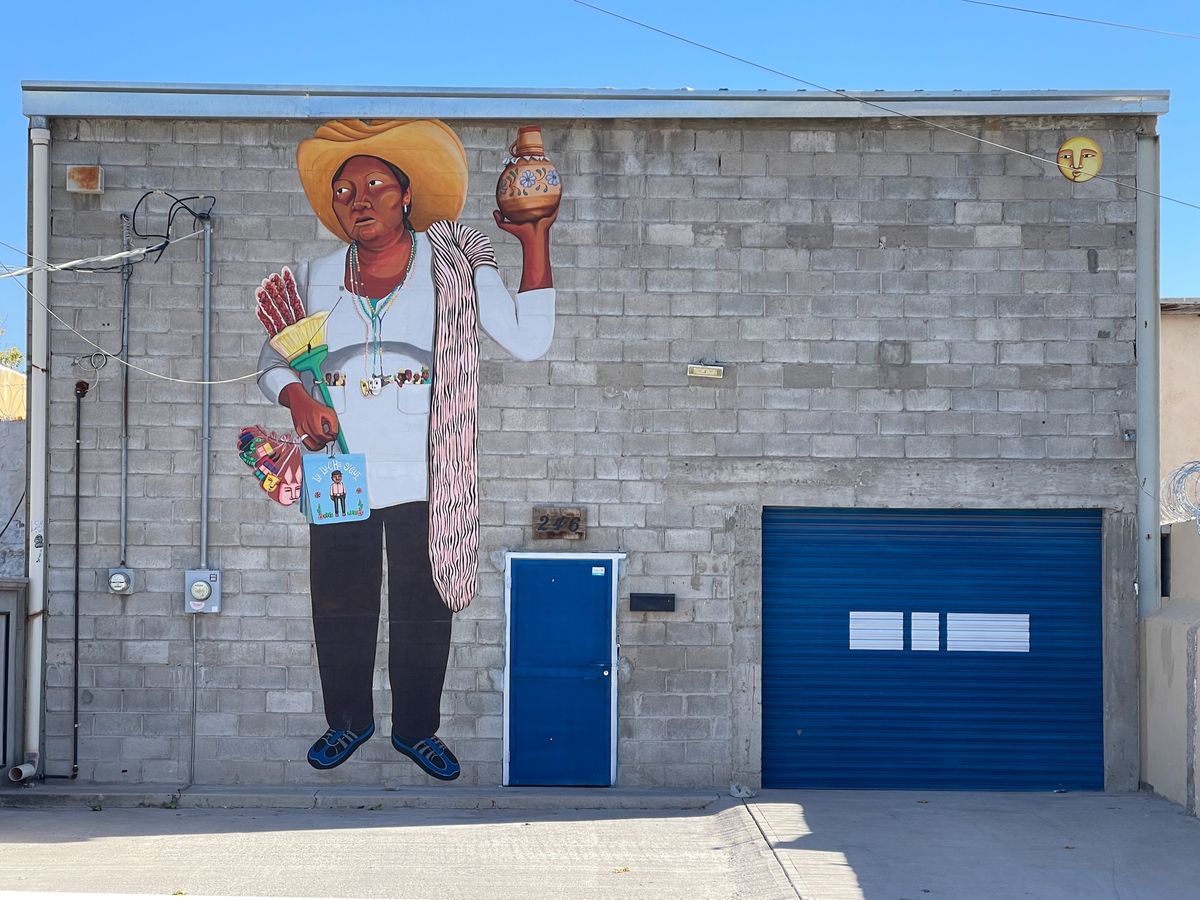
Can the “open wound” of the Mexico-US border be healed? Sutura, a new bi-national art programme in Ciudad Juárez, Chihuahua, and El Paso, Texas (18 November-22 November), looks beyond stereotypes of violence surrounding the Mexico-US border and explores how art might help mend the region’s many wounds, even imperfectly or temporarily. Sutura (Spanish for “suture”) brings together more than 100 artists across 20 venues, including the El Paso Museum of Art (EPMA), the Stanlee and Gerald Rubin Center for the Visual Arts and the Museo de Arte de Ciudad Juárez (MACJ), alongside independent projects and pop-up exhibitions.
Juárez has long been associated with sensational narratives of violence. Persistent migration issues, heightened by stricter border controls and alarming deportation measures, feminicides, the drug war and hyper-surveillance have shaped the local context. These aspects have permeated cultural production. “Endless works have explored this territory as a symbol and symptom of an apocalyptic future,” writes Willivaldo Delgadillo in his book-length essay Fabular Juárez (2020).
Though seemingly worlds apart today, Ciudad Juárez and El Paso were one city until the Rio Grande river was established as the border between Mexico and the US in 1848. Despite tensions between their respective countries, the two cities are still connected by education, jobs and transit.
“On each side of the border, nuanced and contrasting fears and ideologies coexist, but there is also community,” Edgar Picazo Merino, Sutura’s founder and lead organiser, tells The Art Newspaper. “For all of us who live here, the border is a personal, lived experience.” Picazo founded the independent initiative Azul Arena in 2019 to support the Juárez-El Paso art scene; it established a permanent space in Juárez in 2022.
Central to thinking about the border in the context of Sutura and more broadly is Chicana writer Gloria Anzaldúa’s 1987 metaphor of the border as an “open wound”. “The Third World grates against the first and bleeds,” Anzaldúa wrote. “And before a scab forms, it haemorrhages again, the lifeblood of two worlds merging to form a third country—a border culture.” The “open wound” concept has become commonplace in border literature, Picazo says, while Sutura seeks to deconstruct it: “If the border is a wound, how can the arts suture its many wounds, while opening places of reflection and interaction?”
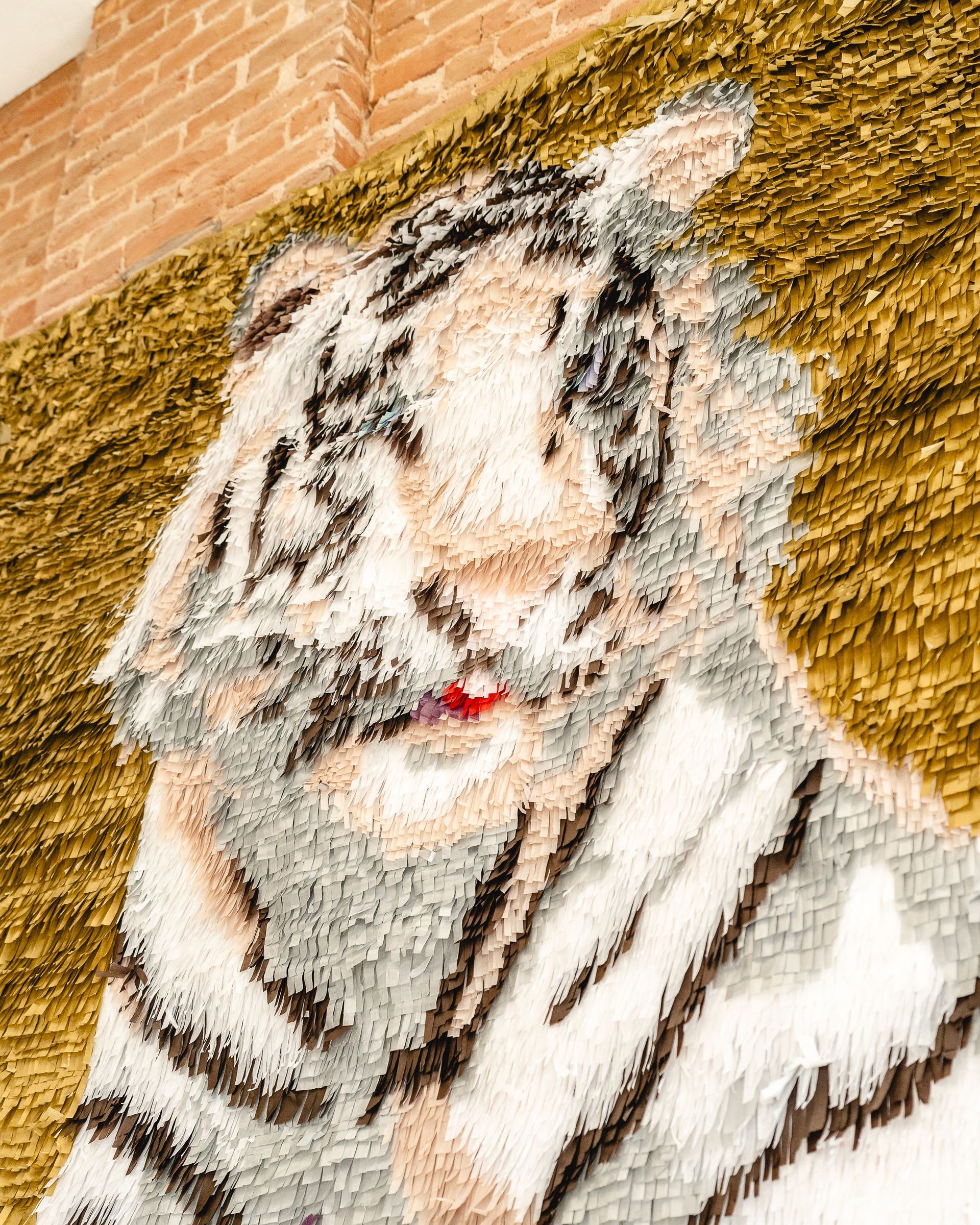
Detail of Justin Favela's Mantecore (White Tiger) (2017), featured in Qué tanto es tantito, a group show on view at San Luis Contemporáneo, Ciudad Juárez Courtesy Haydee Alonso
Sutura builds on binational initiatives like Insite, which emerged in 1992 at the San Diego-Tijuana border and initially featured site-specific installations before changing formats. It also draws on regional ties. The Juárez-El Paso Border Biennial, launched in 2008 by the EPMA and MACJ, is currently in its eighth edition, Imagining the Border (until 2 May 2027). Co-curated by the Juárez-based curators Adriana Miramontes Olivas and Alejandro Morales, it features more than 80 works by artists based within 300 miles of El Paso and Juárez.
“A border that is always there, one that weighs heavily on our communities, rarely lets us imagine it,” Morales says. “This edition opens that space, offering a plural and rigorous portrait of it as living territory.”
The Border Biennial has strived to shift perceptions. “The biennial has national relevance, moving beyond portrayals of the border as perpetually on fire, highlighting its creative richness and cultural legacies,” says Edward Hayes Jr, the director of the EPMA, adding that the project requires overcoming diplomatic and logistical challenges. “We aim for the biennial to be a structural project for both institutions,” says Christian Diego Diego, MACJ’s director. Diego adds that over its past and current editions, the Border Biennial has featured more than 400 works by around 270 artists, “reflecting the border’s ambivalence and multiple stories”. Sutura’s programme includes visits to the biennial, reflecting dialogue with the artists, curators and venues.
Sutura also grew from asking how a Juárez-El Paso art week might unfold. Border initiatives are gaining visibility. The fair Material, through its two-year Projects programme, has supported Azul Arena and the Juárez curatorial duo Un Dique with mentorship and free participation in its Mexico City and Guadalajara fairs. Un Dique joins Sutura by curating theexhibition Border Kaijus on border hypervigilance. Two other border cities have recently created art weeks amid growing efforts to decentralise a national scene largely centred on Mexico City: Tijuana held its second art week in July; Mexicali held its first in April.
“There is a growing scene among border Mexican cities with spaces and initiatives interacting,” says Andres Payan Estrada, the director and chief curator of the Stanlee and Gerald Rubin Center for the Visual Arts and Sutura’s artistic strategy director. Still, he adds, Sutura is not an art week: “It is a non-commercial collaborative initiative with a strong community component.”
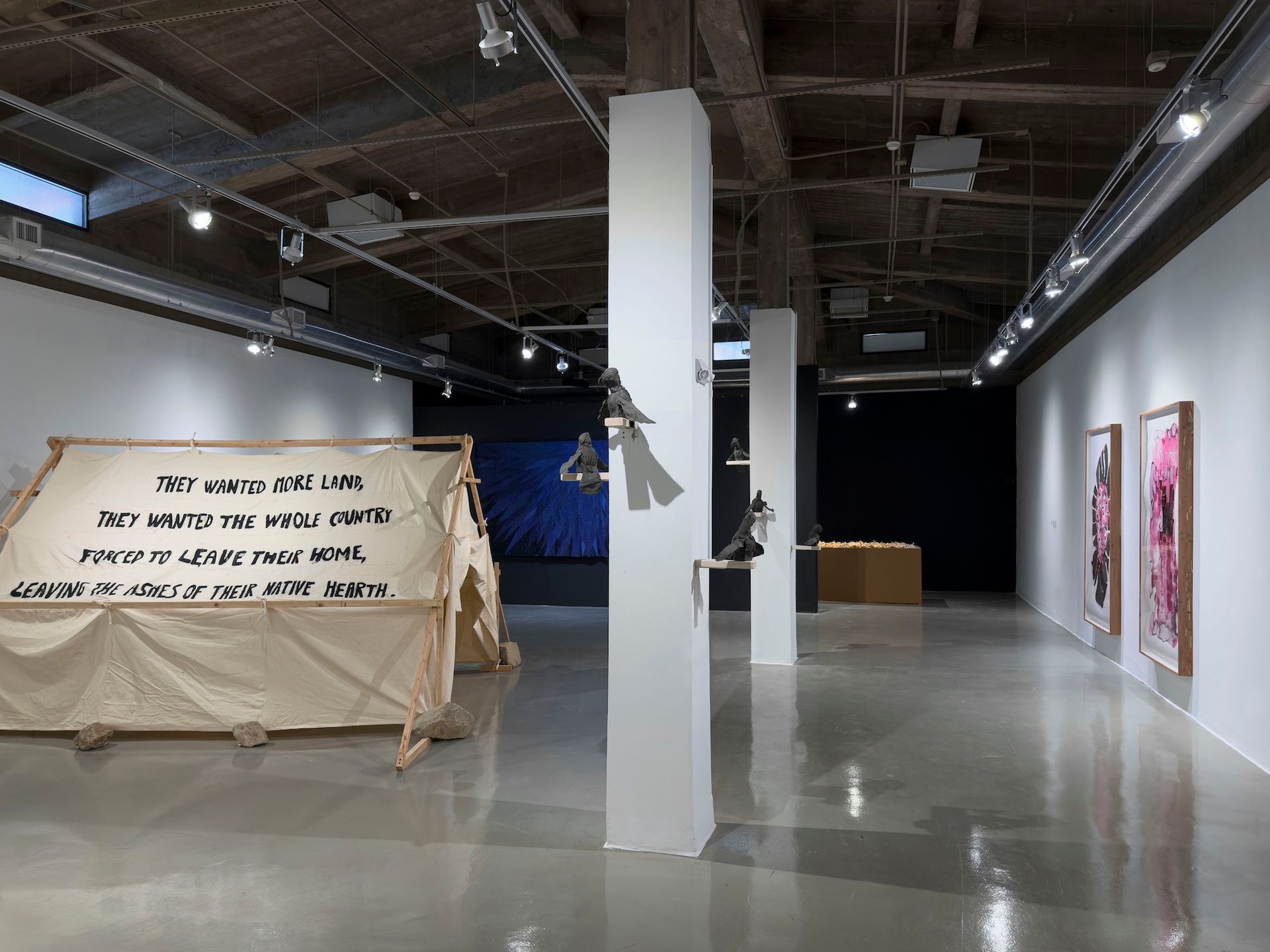
Installation view of the group show Costuras Territoriales at the Stanlee and Gerald Rubin Center for the Visual Arts at the University of Texas, El Paso Courtesy of the Stanlee and Gerald Rubin Center for the Visual Arts at the University of Texas, El Paso
In El Paso, institutional participation is strong. During Sutura, the Rubin Center is showing Costuras Territoriales (until 12 December), curated by Payan and featuring textile-inspired works by five women artists connected to the border, including Teresa Margolles, Tania Candiani and Juárez-based Olga Guerra. “The way in which artists explore the border has sometimes become a cliché,” Guerra says. “I intend to reflect relationality through a more poetic approach, incorporating locally found organic materials and fibres, along with reused materials.”
Independent initiatives are vital in Juárez, where conventional galleries are non-existent. Picazo’s Azul Arena, a pillar of the city’s scene, will present the exhibition En la línea, exploring the line as a metaphor for the border. The Juárez-based artist Haydee Alonso, co-founder of San Luis Contemporáneo, will curate the exhibition ¿Qué tanto es tantito? there and present a performance at Azul Arena. “My work analyses transborder relations through the body and objects, opening spaces within the complexities of living here,” says Alonso, who crosses the border daily to teach at the University of Texas at El Paso. Both projects have received support from the Mellon Foundation, which Alonso and Picazo consider crucial to local initiatives. In El Paso, where independent spaces are relatively scarce, The Falstaff, a community-centred hybrid art space, will host exhibitions and concerts.
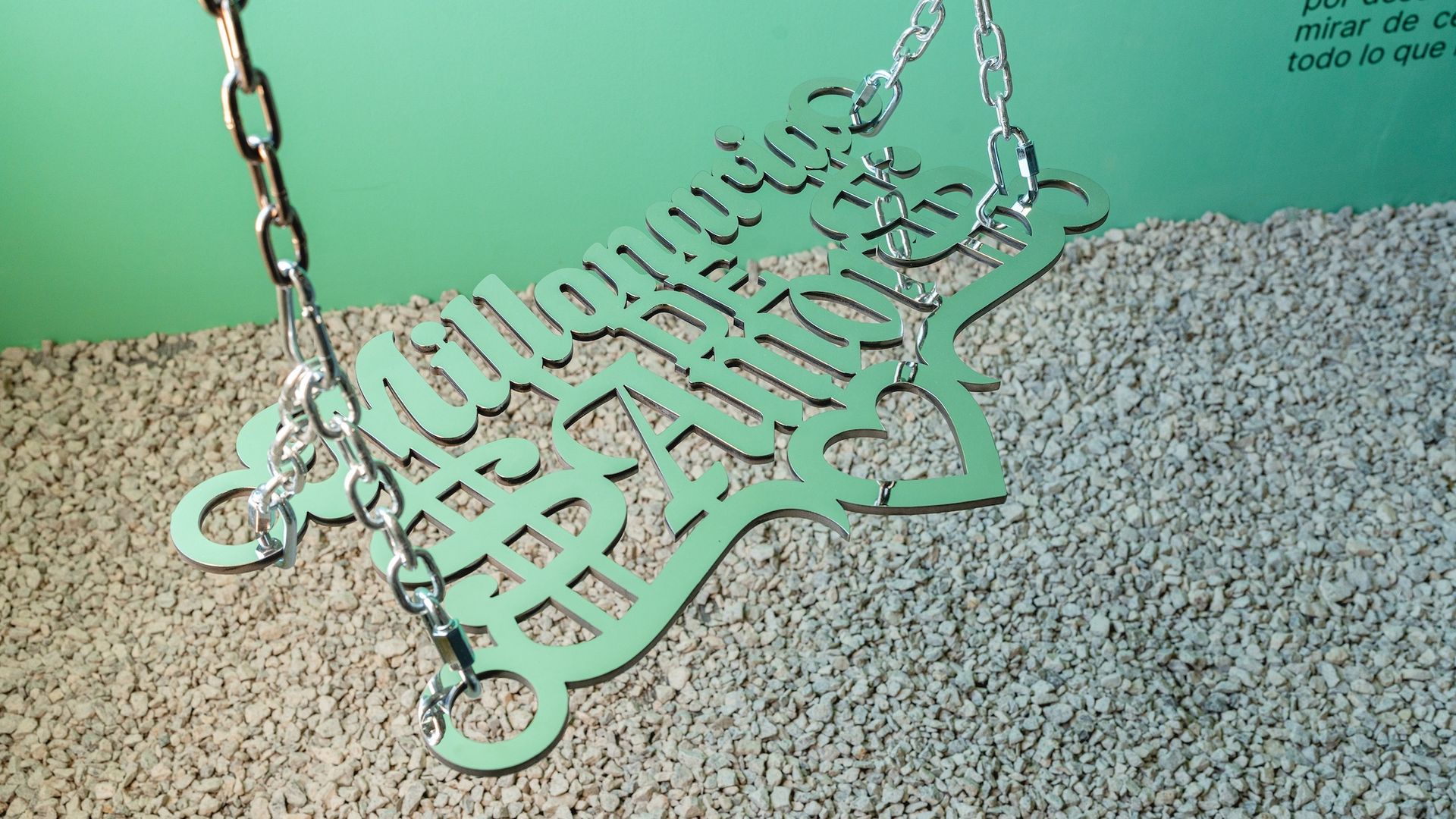
Installation view ofthe group exhibiton Qué tanto es tantito, group show on view at San Luis Contemporáneo, Ciudad Juárez Courtesy Haydee Alonso
Sutura also supports the local scene by showcasing six El Paso and Juárez projects selected through an open call, with each project receiving $3,000 for production costs. The photography exhibition Relatos de la Frontera: Cuerpo y Espacio explores border perspectives through the body and space Another show, Tierra Suelta, presents works inspired by children of migrant families that settled in Juárez for reasons other than the “American dream”, integrating a community activation into the programme. These projects foreground local perspectives in a region often depicted by outsiders, alongside established artists—primarily Mexican and Mexican American—whose work reflects on the border.
Picazo acknowledges the complexities of a bi-national event: not everyone can cross both ways because of visa restrictions and other issues. “The programme has parallel activities so you can experience Sutura even from one side of the border,” he says.
Sutura speaks more of resilience than crisis, more of possibility than scarcity.“Historically, the border is explained one-dimensionally, yet a myriad of dynamics co-exist here,” Picazo says. “Sutura exists as a relational art encounter.”
- Sutura, 18 November-22 November, various locations, Ciudad Juárez, Mexico, El Paso, United States