

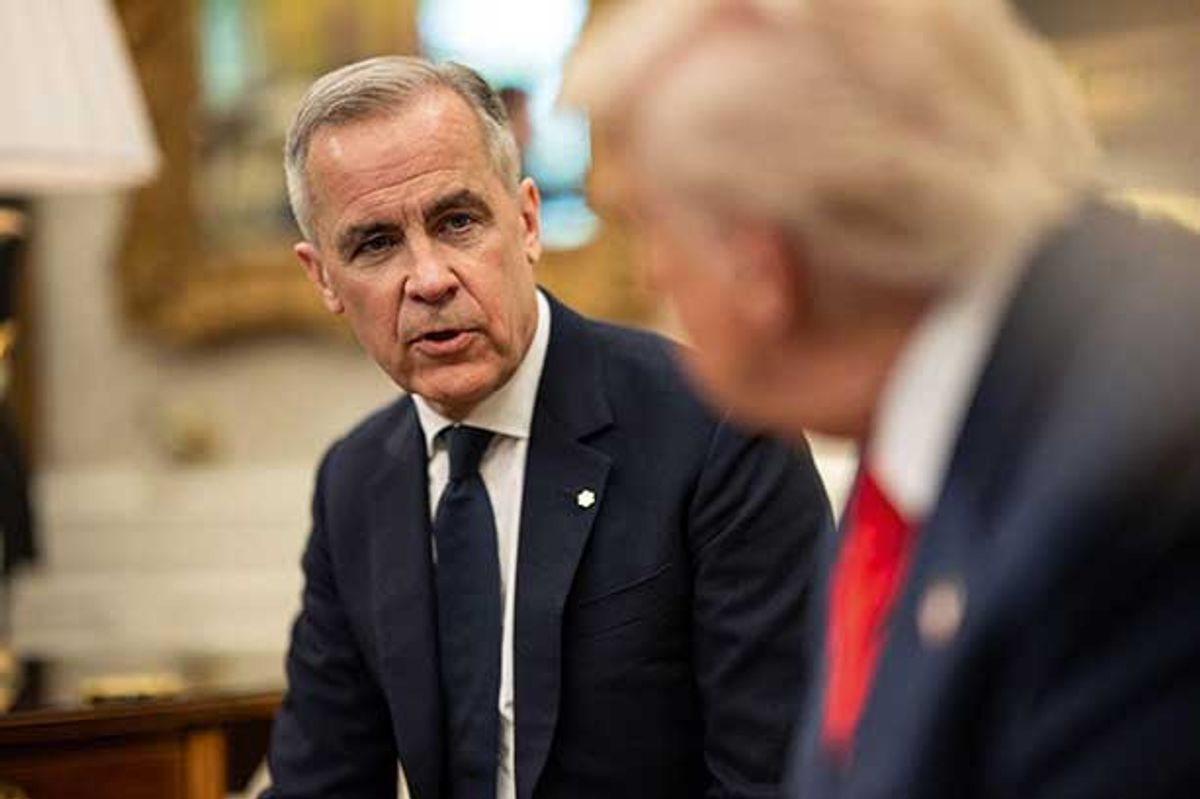
The fallout from the trade war between the Canadian prime minister Mark Carney and US president Donald Trump is having real-time consequences for many Canadian artists and galleries. Since 22 August the US has imposed tariffs of 50% on a wide range of items imported from Canada, including paintings, drawings, sculptures, prints, pastels, collages and more. Other tariff categories that include feathers, bones, tortoise shell, horns, antlers and other animal parts, will especially impact Indigenous artists. In early September Canada imposed counter-tariffs on hundreds of imports from the US, among them 50% on many materials used to make and transport art, plus certain printed materials including photographs; these did not include paintings, drawings or pastels imported from the US, which were already subject to 25% tariffs as of March 2025.
Mackenzie Sinclair, the executive director of the Art Dealers Association of Canada (ADAC) tells The Art Newspaper that the tariffs are “a significant concern for our members, given the close economic relationship between our two countries”. She adds that around two thirds of Canada’s cultural exports are destined for the US—in 2023, Canada exported C$27.1bn ($19bn) in cultural products, of which C$18.1bn ($12.7bn) went to the US.
“The art market as a whole is a fragile ecosystem, and changes to the conditions under which art is traded can have unforeseen and far-reaching consequences across the sector,” Sinclair says.
Sarah Macaulay, the founding director of Macaulay & Co Fine Art, a gallery with spaces in Vancouver and Toronto that represents artists like the First Nations painter Lawrence Paul Yuxweluptun. She tells The Art Newspaper that, until recently, around 10% of Yuxweluptun’s sales were to US buyers. “Now we’re more focused on Australia and Europe,” she says.
Macaulay says she has cancelled plans to participate in a fair during Miami Art Week this December. In the wake of the latest tariffs, she says, “it’s just too risky”.
Andy Sylvester, the owner and director of Vancouver’s Equinox Gallery, estimates that buyers in the US represented around 15% of his sales of his work until recently, but that will “likely be reduced to zero”. He adds: “US tariffs on Canadian made art will affect the gallery and our artists both financially and opportunistically.”
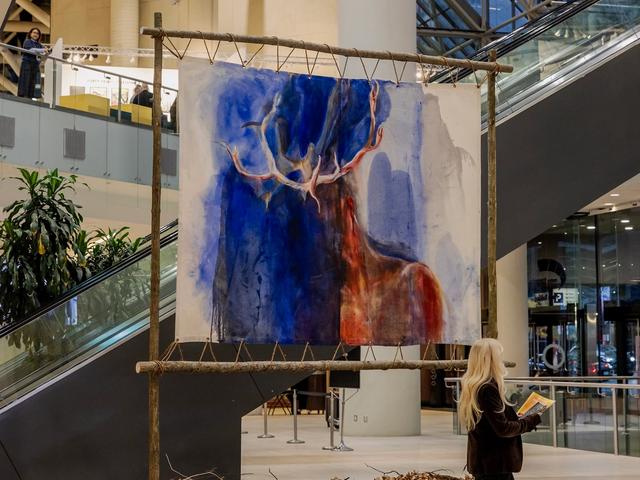
“Canadian art is not simply another category of merchandise,” Sinclair says. “It represents the work, livelihoods, cultural expression and international standing of Canadian artists and galleries. For a US collector faced with a substantially higher purchase price, the additional cost may lead them to postpone a purchase or acquire an artwork from a US-based artist or gallery instead. This creates a direct loss of competitiveness for Canadian artists and galleries.”
At Art Toronto, the country’s largest art fair, which is held every year in late October, US buyers represent a significant portion of annual sales.
“The ‘Buy Canadian’ rhetoric has been very prevalent, and it is heartening to see how communities across the country have been supporting artists now that these tariffs have been imposed,” says Emily-Jean Alexander, the fair’s director. “For this autumn’s Art Toronto we [built] new programmes to help those who want to support our national art market, but who are new to buying artwork to see the friendliness and accessibility that can be found at the fair and build confidence in supporting Canadian galleries and institutions.”