

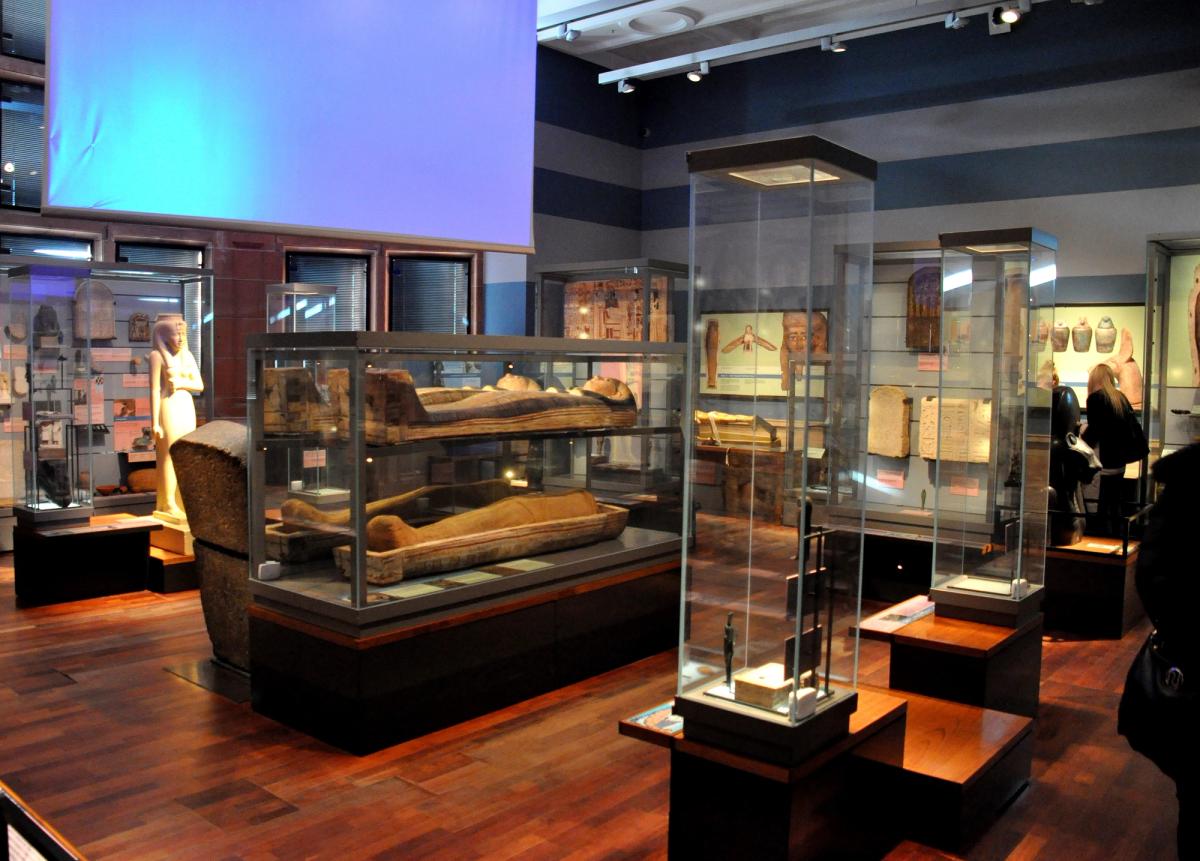
A mummy removed from display last month at Kelvingrove Art Gallery and Museum could be returned to Egypt. According to the Scottish newspaper The Sunday Post, Egyptian authorities have asked for the mummified remains of the priest Nekht to be repatriated.
Glasgow Life, the charitable organisation which operates the museum, confirmed to The Art Newspaper that it had received a request to send remains of Nekht back to Egypt. The organisation has not confirmed the origin of the request.
Last month, officials at the museum removed the coffin and mummified corpse of the ancient Egyptian priest from public view. A spokesperson for Glasgow Life said: “Glasgow Life Museums’ draft Human Remains Policy proposes human remains should only be displayed where there is documented and informed consent from the deceased individual or, in appropriate circumstances, their descendants. In the absence of such consent, we believe removing ancient Egyptian human remains from display is more respectful to the deceased individuals.”
The move comes after the International Council of Museums (Icom) revised its code of ethics in June, recommending the “inherent dignity” of human remains be upheld; Icom does not state however that all remains should be removed from display.
Meanwhile the Hunterian gallery in Glasgow confirmed to Museums Journal that it had covered an open sarcophagus containing the mummified remains of Lady Shep-En-Hor following an internal ethical review, although the sarcophagus itself remains on display.
The removal of the mummified remains at Kelvingrove and other museums feeds into current debate in the UK museums and heritage sector over the care and display of human remains. In response to the museum's policy on the lack of consent by the deceased, Stuart Robertson, the former director of the Charles Rennie Mackintosh Society in Glasgow, wrote on LinkedIn that “applying modern, 21st-century bureaucratic consent standards retrospectively to ancient history is an absurd and impossible standard. It completely undermines the educational mission of public museums”.
Last year, officials at the Manchester Museum asked visitors if the mummified remains of an Egyptian woman should remain on display. The mummy, known as Asru, was subsequently taken off public view.
“Asru now lies in the museum’s stores within her outer coffin, which will remain closed, but this is not intended to be her permanent resting place. We are thinking about how we better care for ancestors, in line with the wishes of the dead and of living communities,” says the museum's website.