

Edinburgh College of Art (ECA) is clashing with Scotland’s cultural sector over its decision to close its textiles, jewellery and silversmithing, and performance costume undergraduate degrees. The move has drawn criticism from staff, alumni, industry bodies and politicians, with questions raised over the college’s commitment to craft.
On 15 September, the University of Edinburgh, which the ECA merged with in 2011, announced it would stop admitting students to the three programmes, taught at its School of Design, from 2027. The closures are part of a broader overhaul through which the university reportedly intends to make £140m of cuts, with 1,800 jobs at risk. These wider plans, which have sparked strike action among staff over the past year and a half, will see more than 90 programmes close, with arts and humanities hardest hit.
A spokesperson for ECA says there will be no staff reductions as a result of the loss of the three craft degrees as the institution intends to fold their teaching faculty into the five other undergraduate courses that will remain in place at the School of Design: animation, fashion, graphic design, illustration and product design. It also plans to offer elective courses in these subjects to students across the university.
Critics argue, however, that the decision to lose the three courses will strip out specialist training and in-depth research in discrete skills-based disciplines that are integral to Scotland’s cultural identity, international reputation and economic future.
“Keeping heritage and cultural traditions alive”
The ECA originated in 1760 as the Trustees' Drawing Academy, formed to train designers for manufacturing, particularly for the textiles industry. Its staff have included the weaver Archie Brennan, who founded its tapestry department and taught there from 1962 to 1977, and also directed Edinburgh’s Dovecot Studios; and the noted jewellery artist Dorothy Hogg, who was the head of the college’s jewellery and silversmithing courses from 1985 to 2007. The range of voices raising concerns about the closures have pointed to the international reputation of the courses and their staff and alumni, their standing in their respective industries and their longstanding history within the institution. The textiles programme, for example, can trace its heritage back to the origins of the institution in 1760.
The ECA’s principal Juan Cruz tells The Art Newspaper that the decision to bring the three making courses to an end was “by no means a disinvestment in craft”, pointing to the university’s development of glass, ceramics and jewellery making facilities for students enrolled in art, design, architecture and landscape architecture degrees before the cuts were decided upon, as well as the launch in 2025 of an MA in craft. “The best way to protect disciplines is to make sure they evolve and remain relevant to students and industries,” he says.
But Irene Kernan, the director of national development agency Craft Scotland, says that the intense training, research and creative development that takes place on dedicated four-year degrees in these specific fields contributes to “keeping heritage and cultural traditions alive”. An ECA staff member interviewed by The Art Newspapr says: “Students couldn’t possibly develop their handling and knowledge of [these] materials or their mastery of technique through a few loosely positioned elective courses.”
Staff who spoke to The Art Newspaper also say these courses connect contemporary practice with Scotland’s craft heritage. Third-year textiles students grow flax on campus, then harvest, hand-process, spin and weave it into linen, a material with a long history in Scotland and potential as a sustainable alternative to polyester. ECA jewellery and silversmithing students work with the Edinburgh Assay Office—which tests and hallmarks works made from previous metals—as well as the city’s luxury jeweller Hamilton & Inches.
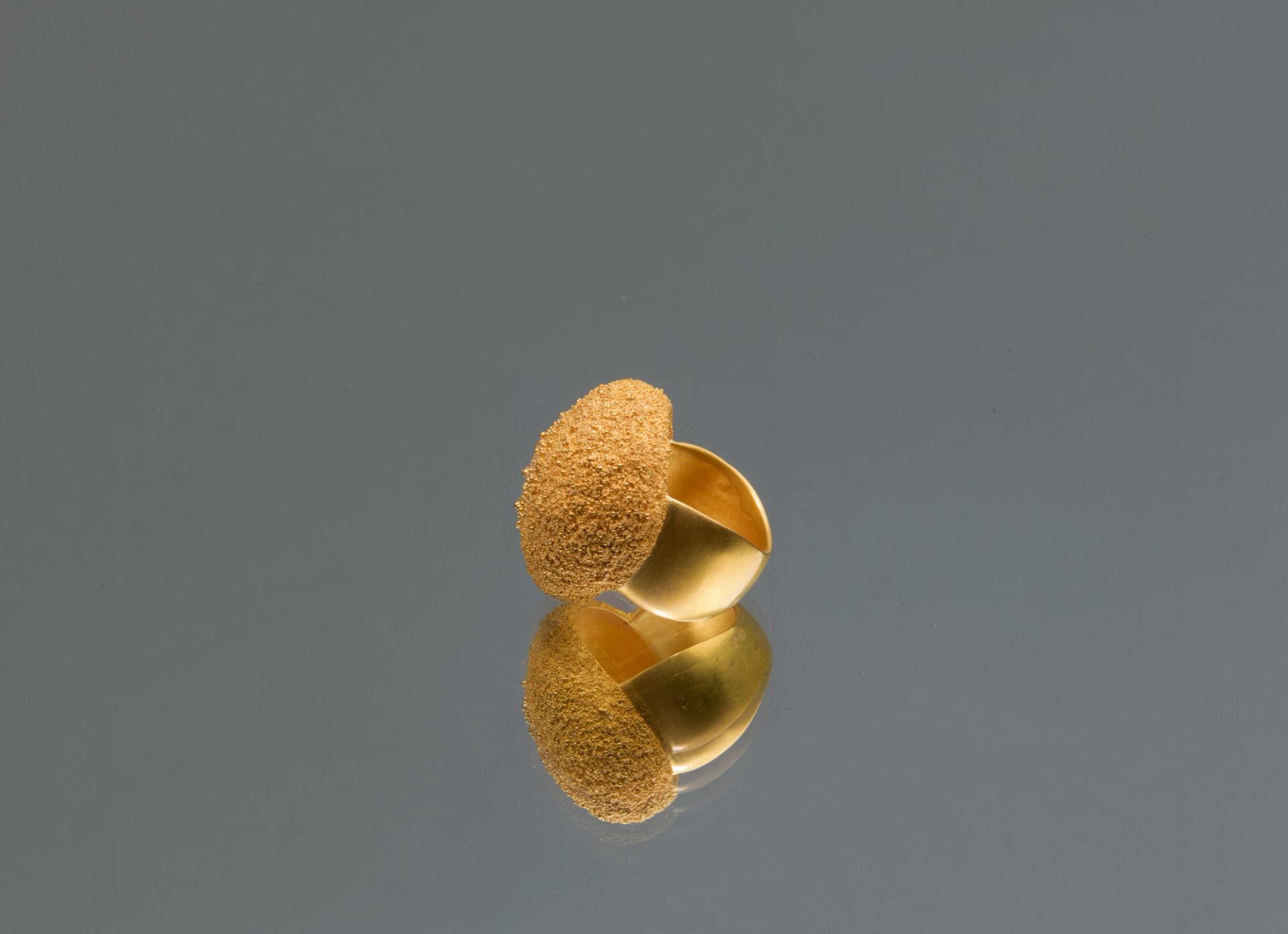
A piece of jewellery by the ECA jewellery & silversmithing graduate Isabel Honey Coles
Courtesy of Isabel Honey Coles
The courses also collaborate with National Museums Scotland (NMS). Elizabeth Goring, the institution’s former curator of modern jewellery, says the work of ECA alumni was fundamental to her work establishing the museum’s contemporary jewellery collection in 1984.
“You’ll find the work of numerous teachers and graduates in the NMS collections, which inform the way Scotland sees itself. ” she says. “There’s so much of Scotland in the work coming out of those courses—its landscape, materials and colours.” She points out that it’s a place where people can learn endangered skills such as metal-spinning. “Losing these degrees will have an enormous impact on Scotland’s recorded cultural heritage for perpetuity,” she says.
Broader financial strain
The spokesperson for the university, which reported a financial surplus of £44m in its annual report for the year up to 31 July 2025, cites insufficient demand, enrolment figures, costs and income as factors in the decision to make cuts across its programmes, though they were unable to provide specific figures for student take-up and matriculation for these three courses, nor the cut-off point or criteria applied to them to make the decision.
ECA staff The Art Newspaper spoke to say these three courses remained very popular—especially in comparison to many of the others closing. The university was not able to verify or confirm that figure or confirm the number of people currently studying on these three programmes.
Staff also expressed concern that the decision would draw talented prospective students from Scotland to universities elsewhere, since alternatives within the country are “limited”. The university confirmed that the overall number of Scottish-funded undergraduate places at ECA remains the same, now spread out across other programmes.
A petition launched by Craft Scotland calling for the decision to be reversed has attracted almost 18,000 signatures, and its open letter has drawn support from the Goldsmiths’ Company, Heritage Crafts, the European Crafts Alliance and Art Jewelry Forum USA and others.
On 29 September Q Manivannan, the Scottish Green Party’s spokesperson for arts and culture, lodged a motion in the Scottish parliament calling the decision “a serious misjudgement”. It has since been signed by 19 MSPs from six parties.
“I don’t think there has been any accurate assessment of how much GDP graduates from these programmes have brought Scotland or how devastating the economic losses will be as a result of them going away—especially at a time when you’re hearing so much about the importance of hand-on work that is AI resistant,” Manivannan said. Textiles, including tartan, Harris Tweed and cashmere, contributed £304m in gross value added (GVA) to the Scottish economy in 2018, according to government figures, which the industry aspires to increase to £540 million by 2030.

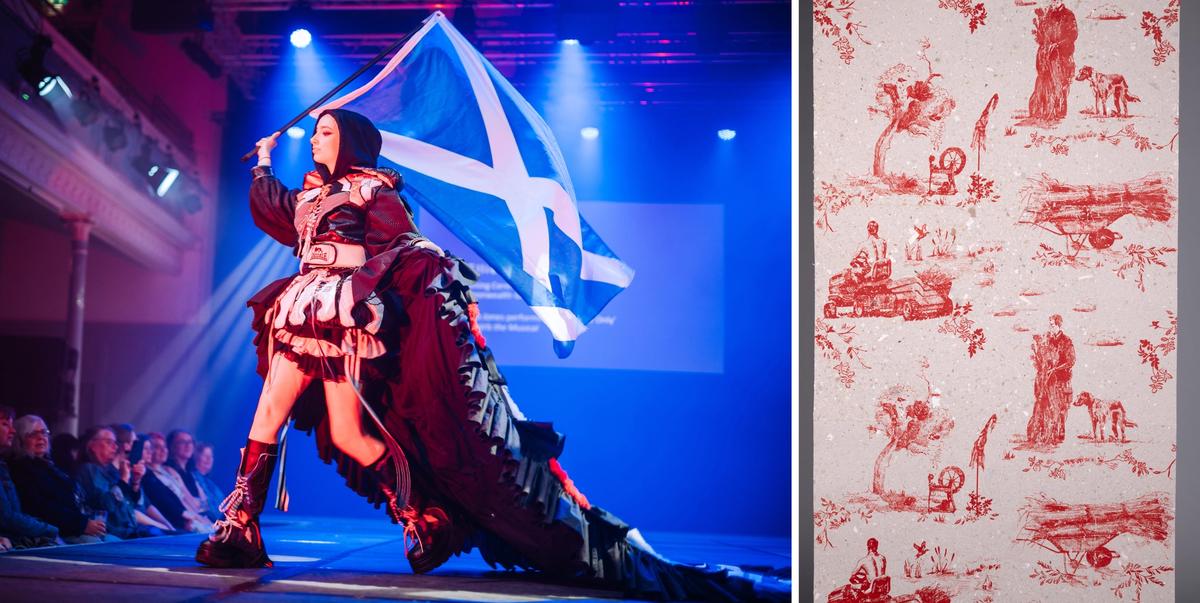
A costume by ECA performance costume graduate Molly Richardson
Photo: Mihaela Bodlovic
The film and TV industry has published its own open letter about the “pioneering” performance costume course, signed by high-profile figures including Hugh Bonneville, Rose Ayling Ellis and Brian Cox. It was organised by the ECA alumna and Emmy-nominated Downton Abbey costume designer Anna Mary Scott Robbins, who described the move as“short-sighted and misinformed”.
Steve Byrne, the chief executive of the NGO Traditional Arts and Culture Scotland—a signatory to Craft Scotland’s letter—is more circumspect. “I absolutely get the outcry, but giving all responsibility and accountability to universities is not necessarily right”. He points to the lack of crafts education at school level, and notes that in 2024 the UK government ratified the Unesco convention on the Safeguarding of the Intangible Cultural Heritage – which seeks to safeguard intergenerational practices, knowledge and skills – without dedicated funding. “There’s more of a public conversation needed outside academia about how we safeguard craft skills,” he adds.