

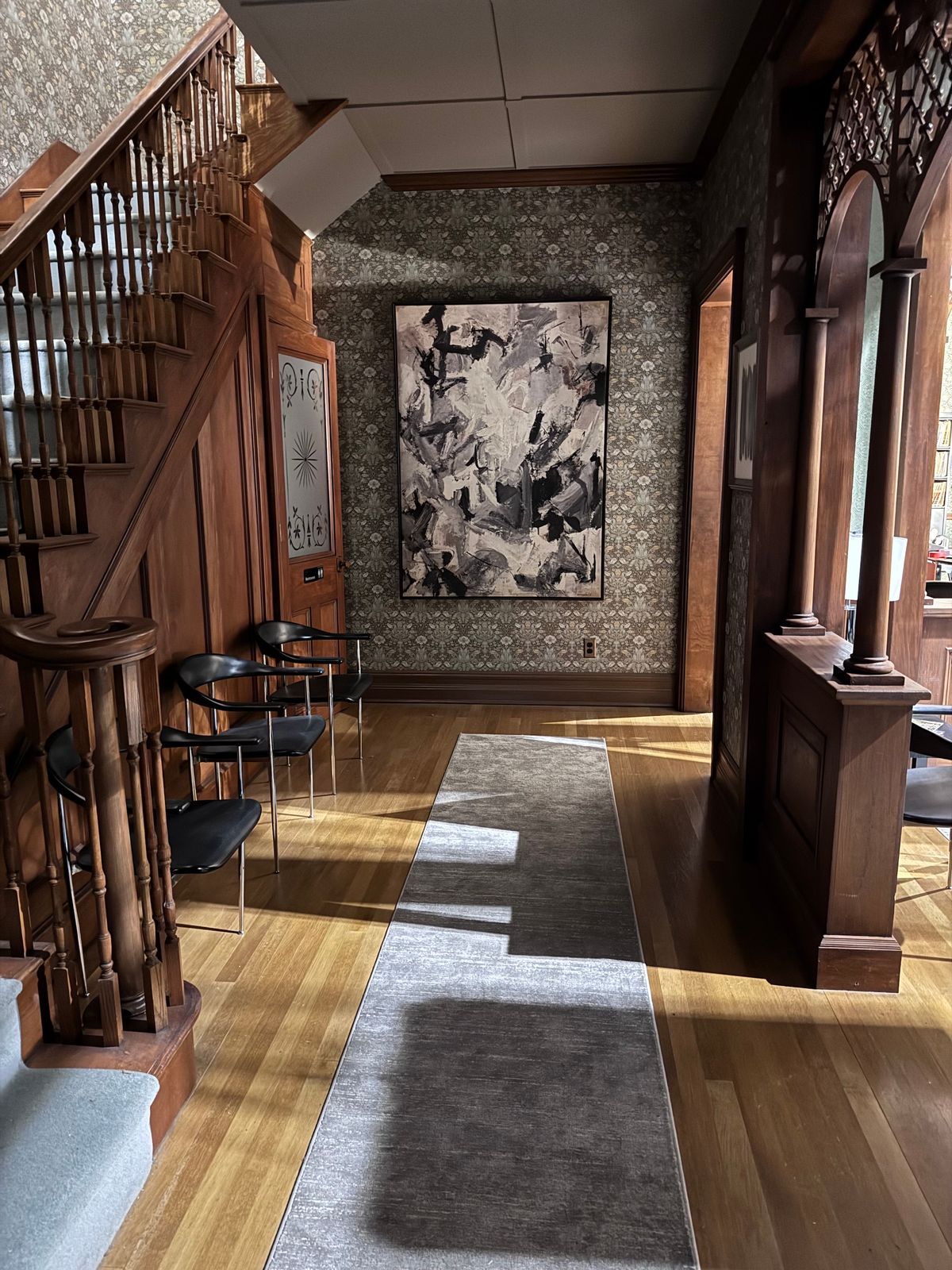
“It’s not always an actor whose scene gets cut,” says Rosina Rubin, steward of the estate of her aunt, the Modernist painter Anna Walinska (1906-97). Sometimes, art cast to feature in films or television shows get cut from the final edit, too. Such was the case with an abstract black-and-white Walinska painting, The Earth Bears Witness (1956), which was due to appear in an HBO miniseries about the Watergate scandal a few years ago, White House Plumbers (2023), only to be edited out of the final version.
But Walinska’s expressive monochrome painting got a second chance and is now playing a key role in the second season of the series Best Medicine on Fox, which began last month. It hangs in the office of the lead character Martin Best (played by Josh Charles)—a hotshot surgeon from Boston who left the city to work in a small New England town. Like the doctor himself, the painting is a fish out of water. The non-figurative composition is an unexpected addition to the old-fashioned surroundings, which are adorned with fusty wood panelling and floral wallpaper.
“For season two of our show, the storyline required a redress of our doctor's office, to a more modern and sophisticated look,” says Diane Lederman, the production designer for Best Medicine, who got the idea to use the Walinska painting after seeing and admiring a print of it that hung in the show’s production offices. “For me, this painting epitomised cosmopolitan urbane style and culture, completely opposing the rural, provincial art pieces that previously decorated the walls of the set. This was the perfect piece."
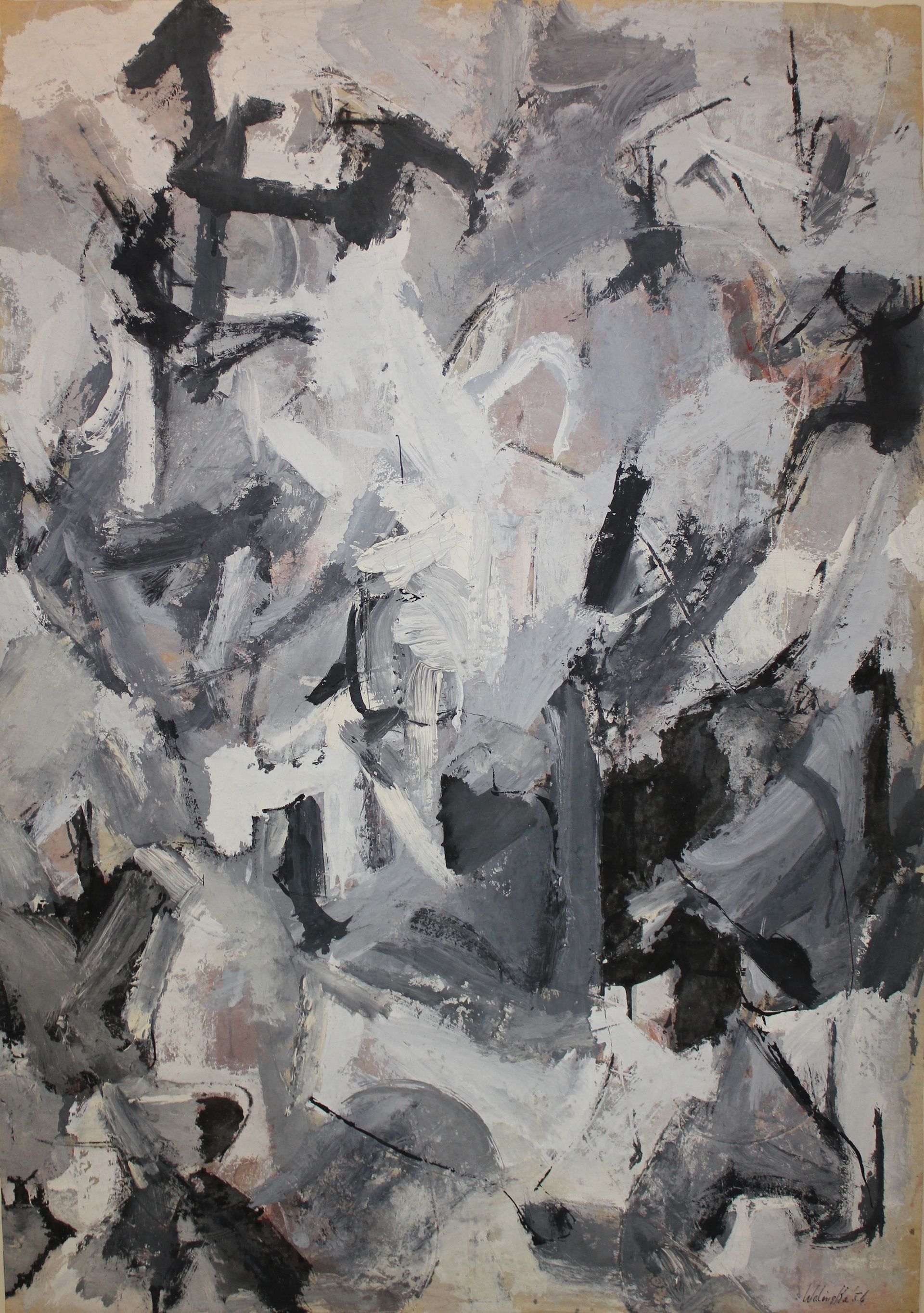
Anna Walinska, The Earth Bears Witness, 1956. Collection of Arkansas Museum of Fine Arts, Little Rock © Atelier Anna Walinska
On its surface, The Earth Bears Witness may exemplify a certain Abstract Expressionist sophistication. For Walinska herself, however, the painting held a deeper meaning. Created roughly a decade after the Holocaust, this was one of a series of works the artist painted in reference to it at a time when people were not readily articulating their feelings surrounding the Holocaust and museums were not yet commemorating it. It was not publicly shown for over 20 years and was first exhibited in 1979 at New York's Cathedral of St John the Divine, along with 92 other Walinska works created in response to the Holocaust.
“She kept doing Holocaust-related work, it never left her mind,” Rubin says of her aunt’s dedication to this subject matter, over the course of her seven-decade career. “It’s just kind of interesting because [the creators of Best Medicine] found this painting, they hung it up. They have no idea what its story is.”

The original meaning of the painting may have been lost in its translation to the small screen, but it is true to Walinska’s life in another, unexpected way. According to Rubin, her aunt habitually paid doctor’s bills with art (usually commissioned portraits, but other works as well). In fact, the eye doctor that Rubin currently sees took over her father’s practice and inherited some Walinskas that were once given in lieu of payment.
In the real world, outside of its cameo appearance in a Maine doctor’s office on Best Medicine, The Earth Bears Witness entered the permanent collection of the Arkansas Museum of Fine Arts in Little Rock in 2024, along with additional Walinska works. This museum accession follows a pattern of renewed interest in the modernist artist, who was successful in her lifetime but whose works were exhibited less frequently after her death. Within the past few years, her work has been presented at the American Art Fair and was also the subject of a 2023 solo commercial show of both early figural drawings and later abstractions at Graham Shay 1857.