

As more and more research indicates art can play an important role in health, healing and improving outcomes in medical spaces, the world’s largest cancer treatment centre is embarking on an ambitious expansion of its art collection, with plans to integrate contemporary works into new and renovated facilities as part of a broader effort to rethink the patient experience.
The University of Texas MD Anderson Cancer Center in Houston, considered one of the top cancer centres in the US, has long maintained a collection made up of classic, inoffensive “hospital art”, such as pleasant pastoral scenes. But in January 2025, it launched a contemporary art initiative focused on acquiring ambitious fine art. Since then, with the help of Jennifer Finkel, MD Anderson’s associate vice president for art experience, the institution has added nearly 300 works to a collection that already included approximately 9,000 objects.
The art initiative is part of a $2.9bn expansion across MD Anderson’s facilities in the Texas Medical Center in Houston, the largest medical complex in the world, alongside other regional and research developments scheduled for completion between 2027 and 2032. The construction projects provide an opportunity to commission site-specific works and build a collection that is integrated into the architecture, rather than simply hung on hospital walls.
“With all of the growth and new buildings, this is an opportunity to create a world-class art collection,” says Finkel, who previously held positions at Cleveland Clinic and Wake Forest University. “We're the number one cancer centre, and we deliver world-class care and research. Now it's time for our environment to really match.”
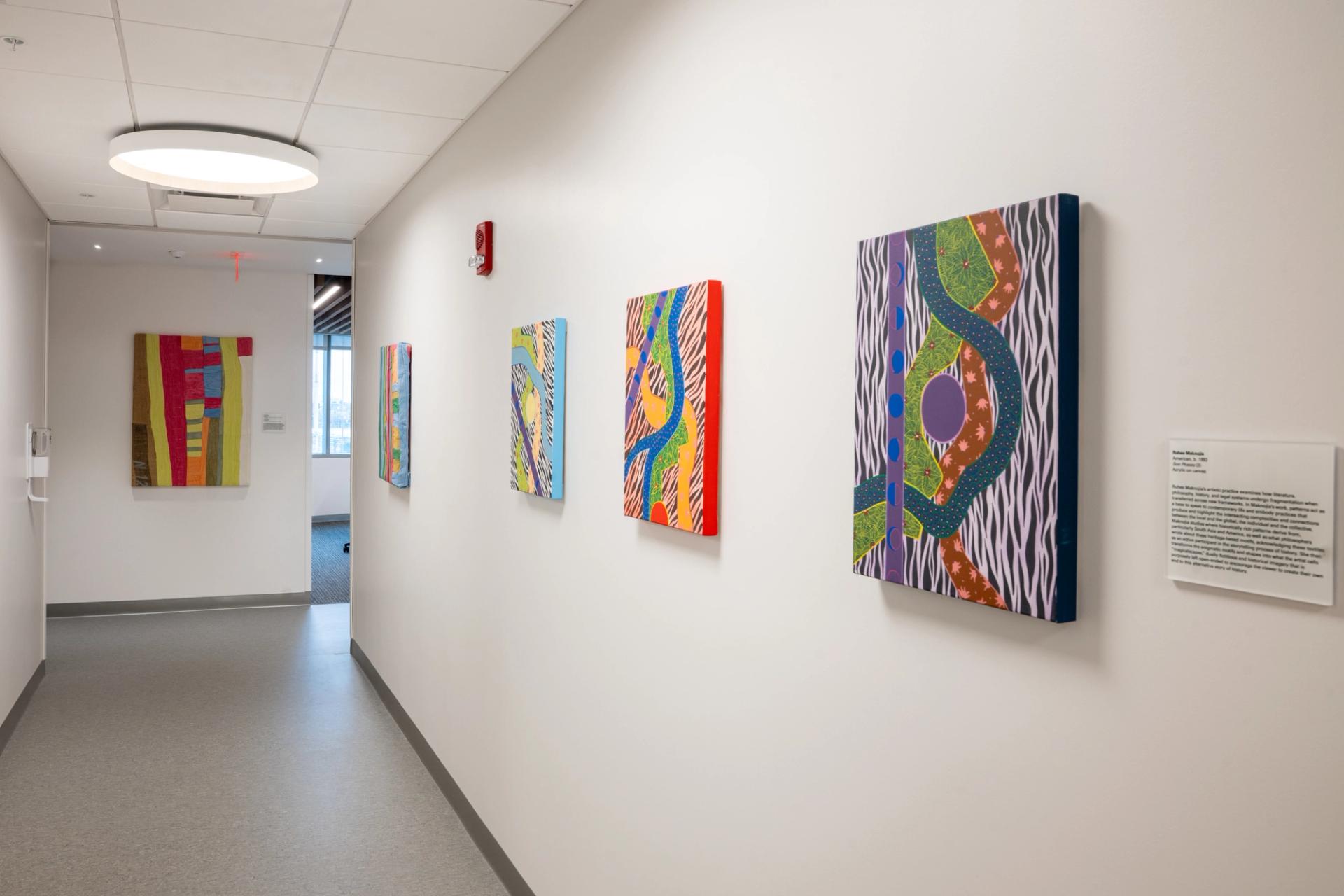
A view of a hallway in the Colorectal Cancer Center Courtesy MD Anderson
The initiative combines traditional acquisitions with site-specific commissions. Funding comes from a percent-for-art model based on construction costs, alongside philanthropic support and qualifying art donations. If 1% of the $2.9bn expansion were allocated to art, as is standard, that would amount to $29m, although the total budget for the art collection initiative has not been publicly disclosed.
The goal is to build the collection alongside the new facilities, “really integrating art into the fabric of the buildings and having this art collection be part of our culture and our in our DNA”, Finkel says.
“It's an opportunity to relook at the patient experience with art being a cornerstone of that, which is exciting,” she says. “As we renovate our older facilities, that's also an opportunity to bring new art and think about art and design cohesively in those older spaces as well.”
Art as a companion to treatment
A hospital presents particular challenges for a curator. Works displayed in waiting rooms, corridors and examination rooms may be encountered during some of the most difficult moments in a person's life, amid the uncertainty, disappointment and hope that accompany cancer treatment. The aim is to select art that can offer patients opportunities for reflection and distraction, while contributing to their emotional wellbeing, Finkel says.
Research into the effects of art and cultural engagement on health has grown in recent years, with studies examining how art in healthcare environments can support wellbeing and help reduce anxiety. For MD Anderson, the challenge is to translate those broader findings into decisions about individual works and the spaces in which they will be displayed.
“Is it uplifting? Is it hopeful? I really like art where you can get lost in something. It can be a little bit challenging, maybe, when you're decoding something. You can spend time with it—the art can reveal itself over time,” Finkel says.
That last consideration is particularly relevant for patients who return to the hospital frequently over weeks or months, and a work that initially seems familiar may offer a new perspective with repeated encounters.
“Thinking about art, when you look at something and you've probably looked at it 50 times, and it might be the 51st, you're like, ‘Oh, I didn't see that’,” Finkel says.
The selection process also takes into account the clinical context, the demographics of patients and the length of time they are likely to spend in a particular space. A corridor through which people pass quickly calls for different considerations from a waiting room where patients might sit for an hour or longer. Colour and imagery can also be sensitive issues: Finkel considers whether certain shades of red or imagery that is “too cellular” might be unsettling for someone undergoing cancer treatment.
“I really obsess about each artwork and how someone can respond,” Finkel says. “But at the end of the day, with good contemporary art, people bring what they're going to bring and see what they're going to see in it, and you can't control that. That's part of the beauty.”
The curatorial approach is informed by the people who will use each facility. When planning the collection for MD Anderson's new Colorectal Cancer Center, Finkel initially assumed that its patients would largely be older adults. She learned that one-third of patients were between the ages of 35 and 45, prompting her to reconsider the kinds of works that might resonate in the space.

Straight Lines 30 (2021) By Mara Held at the MD Anderson Cancer Center Courtesy of the artist and Seven Sisters Gallery, photo by Charles Benton
Finkel is soon to begin work on the collection for a new dedicated prostate cancer clinic. Although its patients will predominantly be men, she is also keeping in mind their caregivers and other people who may accompany them.
The process begins before patients even reach a treatment room. Finkel considers the anxiety that can build during a hospital visit, from entering the parking garage to navigating waiting areas and undergoing examinations or procedures. “How can art be a companion on that journey?” she asks.
Wayfinding is another practical consideration. A particularly colourful print, for example, can help visitors recognise an elevator or exit in the sprawling medical complex, making a work of art a useful visual marker as well.
From local artists to site-specific commissions
Finkel says MD Anderson acquires much of the collection through commercial galleries and art fairs, with an emphasis on practising artists and diverse representation. She is also quick to support artists and dealers based in Houston, where MD Anderson's local expansion offers opportunities to connect the institution's collection with the city's contemporary art scene.
At this year's edition of Untitled Art Houston earlier this month, MD Anderson dedicated $20,000 to a new acquisitions prize. The selection committee chose works by Michelle Blade, represented by Night Gallery in Los Angeles, and Kelly Tapia-Chuning, represented by the Santa Fe gallery Kouri + Corrao. Other artists in the collection include Ping Zheng, represented by Houston's Seven Sisters; the Houston-based David Aylsworth, represented by Inman Gallery; and Mara Held, the daughter of the artist Al Held, who is also represented by Seven Sisters.
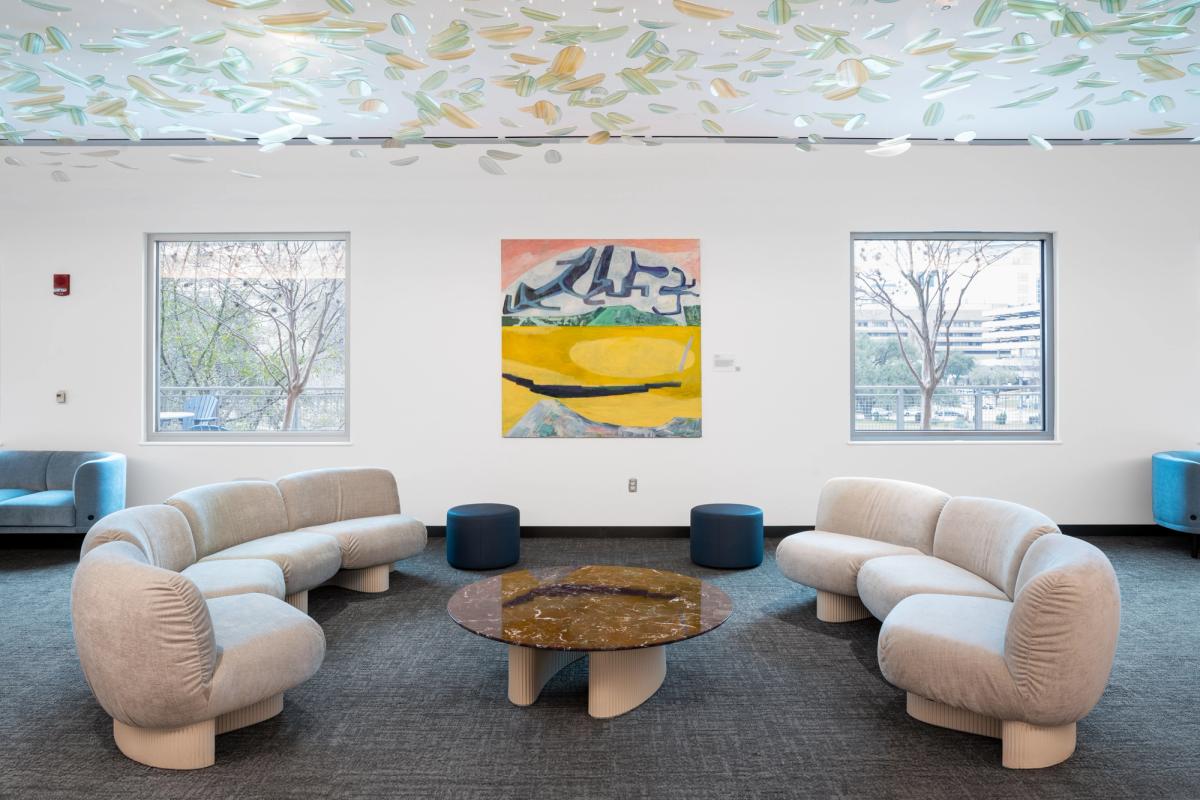
The initiative has also developed site-specific commissions that respond directly to their surroundings. One of the most recognisable works in the Colorectal Cancer Center is Carried by the Breeze, an installation by the local artist Shane Allbritton. Suspended above a waiting room, the sculpture comprises translucent leaves incorporating DNA-inspired patterns. The leaves move gently in the current from the air-conditioning system, reflecting light from a nearby window across the ceiling and walls.
The work was made using a specially selected plastic that is easier to clean and resistant to dust, illustrating how the demands of a clinical environment must shape the materials and construction of a commission. The project also carried personal significance for Allbritton's family: her mother, who was part of the family team that helped realise the artist's designs, was diagnosed with ovarian cancer.
“Anytime we can contribute to the comfort level of patients who are entering a space that may be filled with anxiety and uncertainty, it’s important to have environmental features that are comforting, that are handmade, that are creatively expressing something that gives them inspiration or hope,” Allbritton said in a video produced for the hospital.
“Artists want to be a part of this collection because there is that impact on someone's health,” Finkel says. “When they're going through probably one of the scariest times of their lives, and to be part of that, it's really impactful.”
Beyond the acquisition and display of works, MD Anderson encourages patients and visitors to engage with the collection. Works on display in facilities have wall labels, and the collection has its own focused interactive guide on the Bloomberg Connects app, allowing people to learn more about the art while they wait for treatment. Finkel says the hospital's partners at Bloomberg have relayed that they have been “astounded” by the level of engagement.
The plans extend beyond the visual arts. MD Anderson is developing a performing arts programme drawing on Houston's symphony, ballet and other cultural organisations. Finkel is also interested in establishing an artist-in-residence programme that could encompass visual artists, poets or musicians.
“It's not just about hanging the art,” Finkel says. “We’re thinking about those other levels that people can engage with the art while they're here.”