

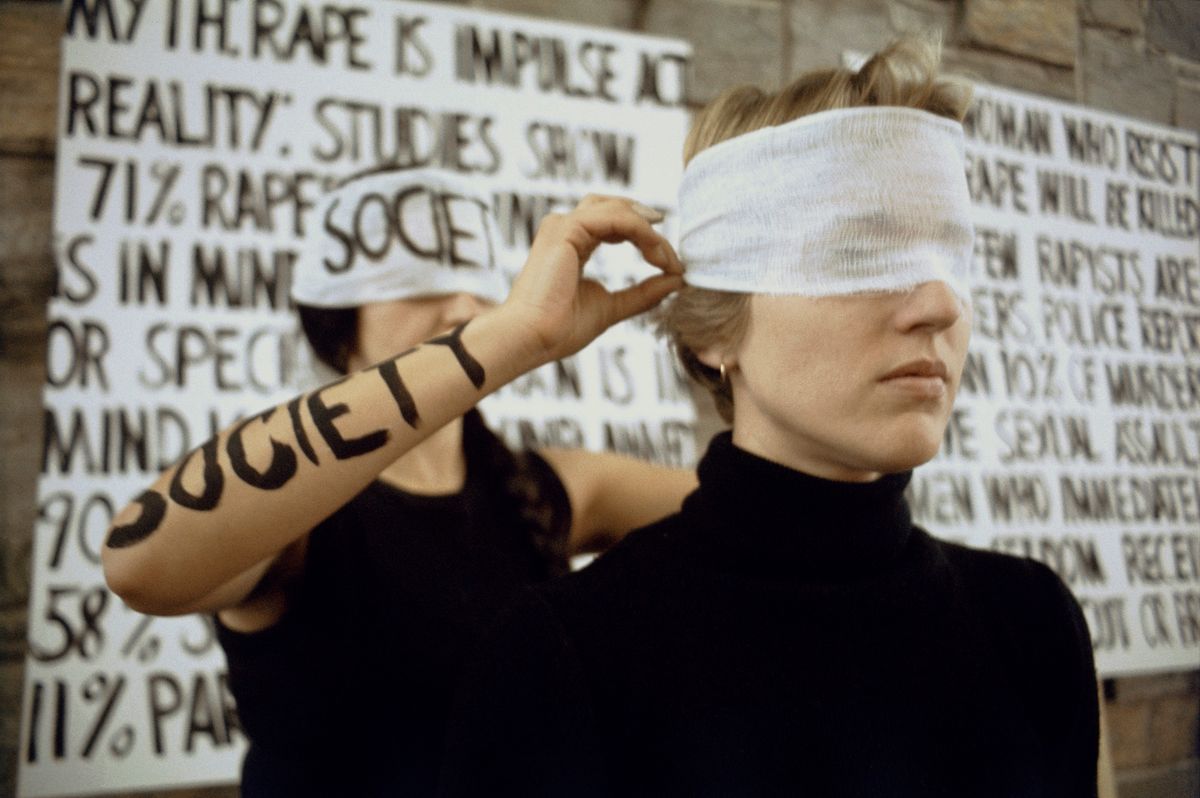
The legendary Woman’s Building, on the edge of downtown Los Angeles, was a nexus where art and activism collided in the 1970s and 80s. It nurtured a generation of artists who pushed the envelope in both method and subject matter. The new documentary Acting Like Women, directed by Cheri Gaulke, celebrates both the building itself and the feminist performance art that came out of it.
The Woman’s Building was founded in 1973 by Judy Chicago, Sheila de Bretteville and Arlene Raven, who set up the Feminist Studio Workshop there. It was used for classes and meetings, exhibitions and performances. It also housed other women’s groups and organisations, including a local branch of the National Organisation for Women.
"The work that came out of the Woman's Building was very unique and very innovative," Gaulke tells The Art Newspaper. "It laid the ground for what artists are doing today, and they don't know that history. I wanted to make this film to share that history."
In 2019, Gaulke retired from teaching video art at a private high school and needed a project. After making several short documentaries, it was time to take on a full-length feature—about the reason she had moved to Los Angeles decades earlier.
Gaulke’s own story starts her documentary. At the age of four, while growing up in St Louis, Missouri, she had a rude awakening. She realised she could never follow in her father’s footsteps to Lutheran priesthood, because she was a girl. Many other dismal realisations about the position of women in society followed.
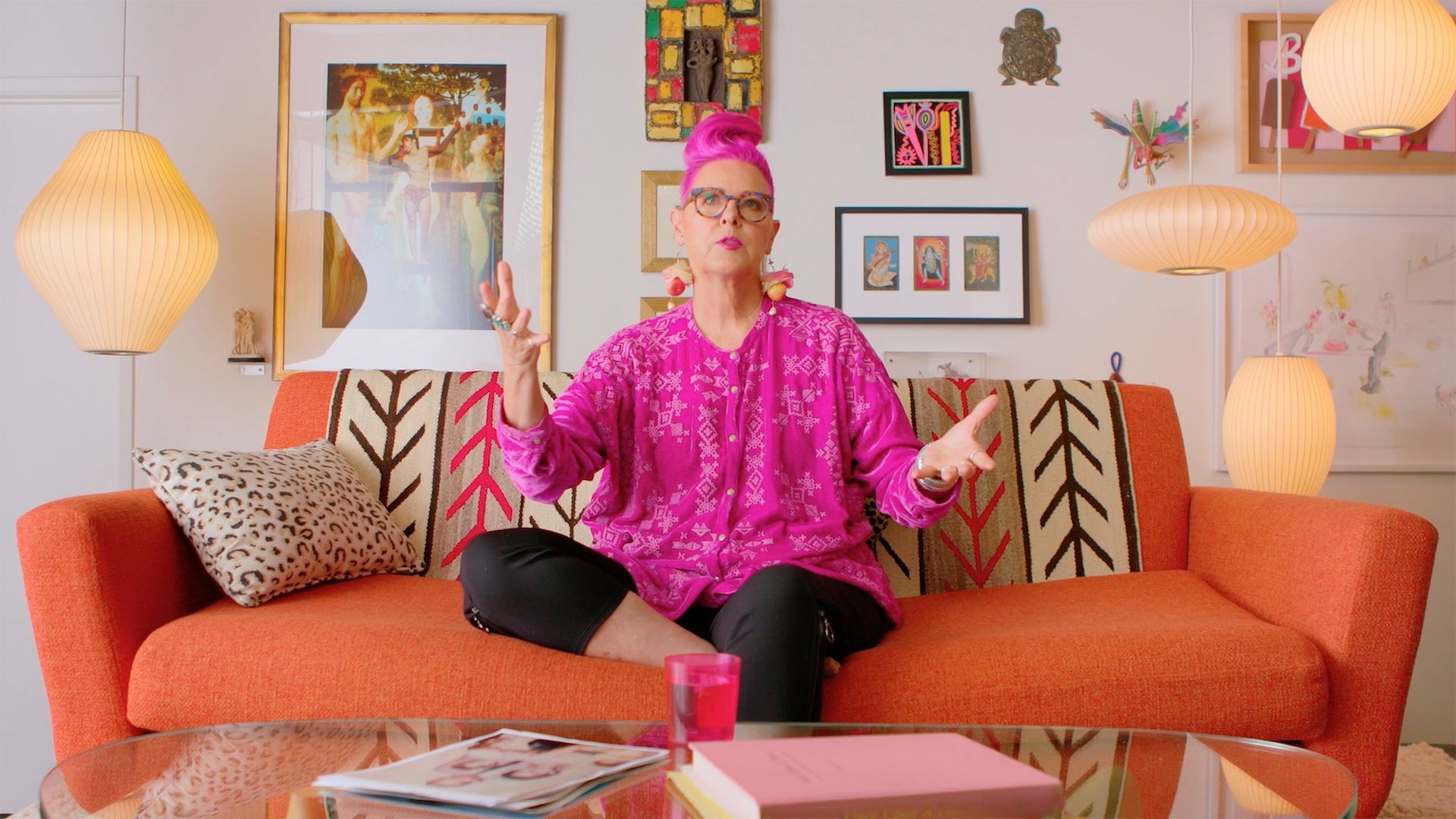
Cheri Gaulke Photo: Kristy Tully, © IAMBE LLC
Fast forward to 1975, when Gaulke graduated from the Minneapolis College of Art and Design. She had learned about performance art during a summer programme in Scotland but says she “didn't have a support structure” in the US.
“Then I heard about the Woman's Building,” Gaulke says. “They had a teacher, Suzanne Lacy, who was teaching performance art, and it was a feminist environment—it was everything I wanted and needed to develop.” As a result, she drove her rusty Volvo halfway across the country to Los Angeles.
Gaulke found out that hers was not a unique experience. “Later, I was sitting in a room with 49 other women who had done exactly that,” she says of relocating. “That was the magnetic pull and unique space that the Woman's Building offered. Women just uprooted their lives and felt this deep need to move to Los Angeles to be part of what was happening there.”
In Acting Like Women, Gaulke focuses on the development of performance art—involving bodies and costumes, dance and movement, props and unusual locations. Painting and sculpture were already dominated by men, whereas performance art was new.
“In performance art,” she says in the documentary, “I could make art through my own body and from my own experience.” It was also political, with underlying self-expression as the greater goal. Performance artists were “making an art that’s not just for art’s sake, but an art that’s about changing the world”, she says.
Early on in her film project, Gaulke enlisted the graphic artist Anne Gauldin (a fellow Woman’s Building alumni) as a collaborator. The film-making process took seven years altogether, with the first years spent on research and fundraising.
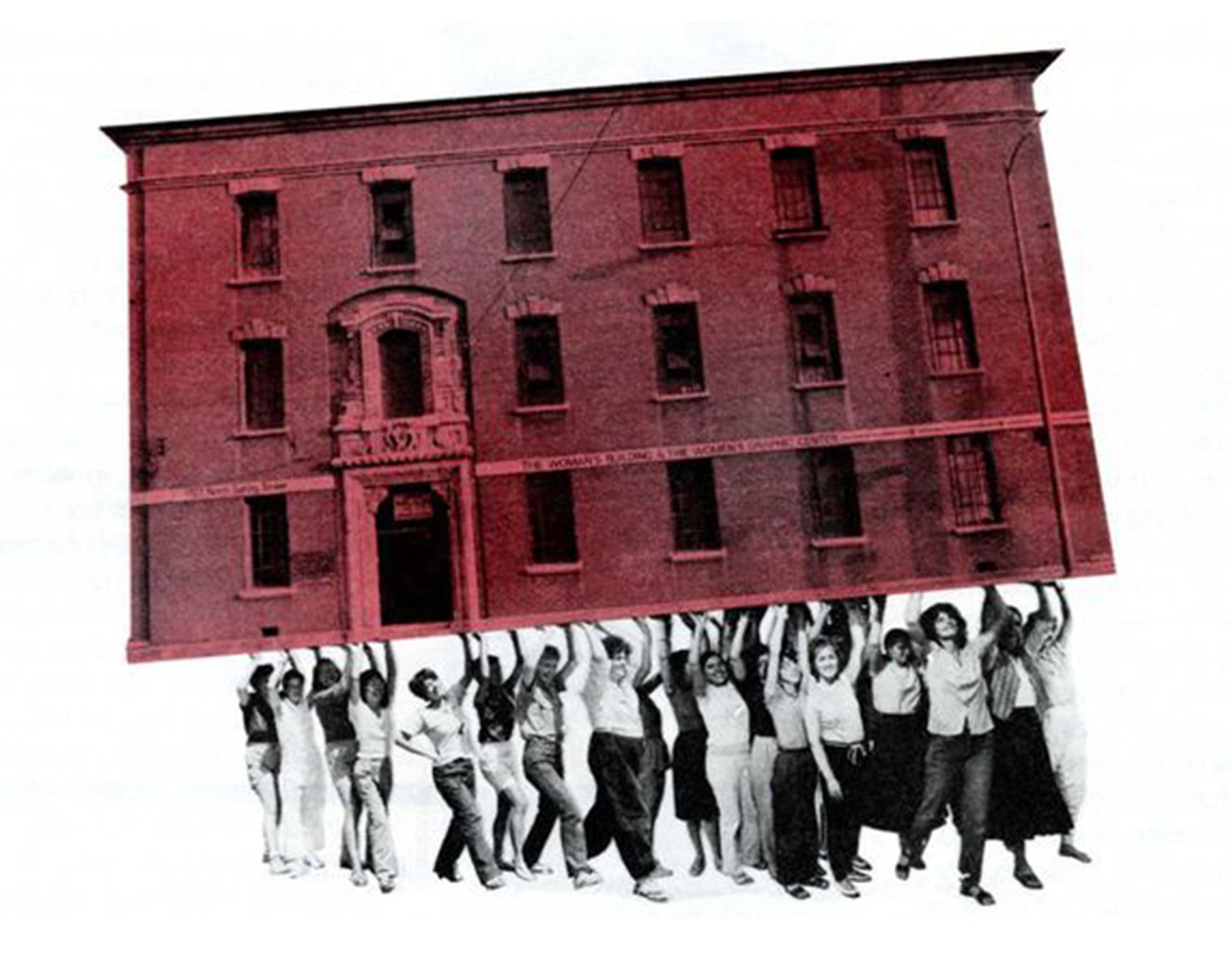
Anne Gauldin’s Women Move Building Across Town (1982-83), created for the Woman's Building newsletter © Anne Gauldin
“We were looking at the archives of the Woman's Building, High Performance magazine," Gaulke says. "A lot of individual artists and groups such as Barbara Smith, Nancy Buchanan, Feminist Art Workers and Sisters of Survival have donated their archives to the Getty Research Institute, so we were looking at all that.”
Ten years ago, the Woman’s Building archives (dating 1973-91) were also transferred to the Getty Research Institute. These proved a treasure trove of source material for Gaulke’s film.
Eventually, Gaulke and Gauldin put together a list of 50 artists and art historians to contact for interviews. All of them said yes. The results are interwoven throughout their film. Participants include Lauren Bon, Nao Bustamante, Judy Chicago, the Guerrilla Girls, May Sun and Linda Vallejo.
However, the film-makers found that there had been a lack of film and video documentation of the original performances. (It was expensive in those days and sparingly employed.) So they had to rely on stills, ephemera, new interviews and, in one case, re-create an event with stop-motion animation.
This latter method they used for a little-known 1983 event when Maren Hassinger and Senga Nengudi protested the lack of Black artists at a feminist art exhibition at the Long Beach Museum of Art. Covered with white sheets, they stood outside the entrance as “spooks who sat by the door”. There was no visual record of the demonstration so, with the permission of the two artists, the film-makers had it illustrated.
Watch the trailer for Acting Like Women:
- Acting Like Women has upcoming screenings in California, New Mexico, Minnesota, Oregon, Missouri, New York, Portugal and Italy