

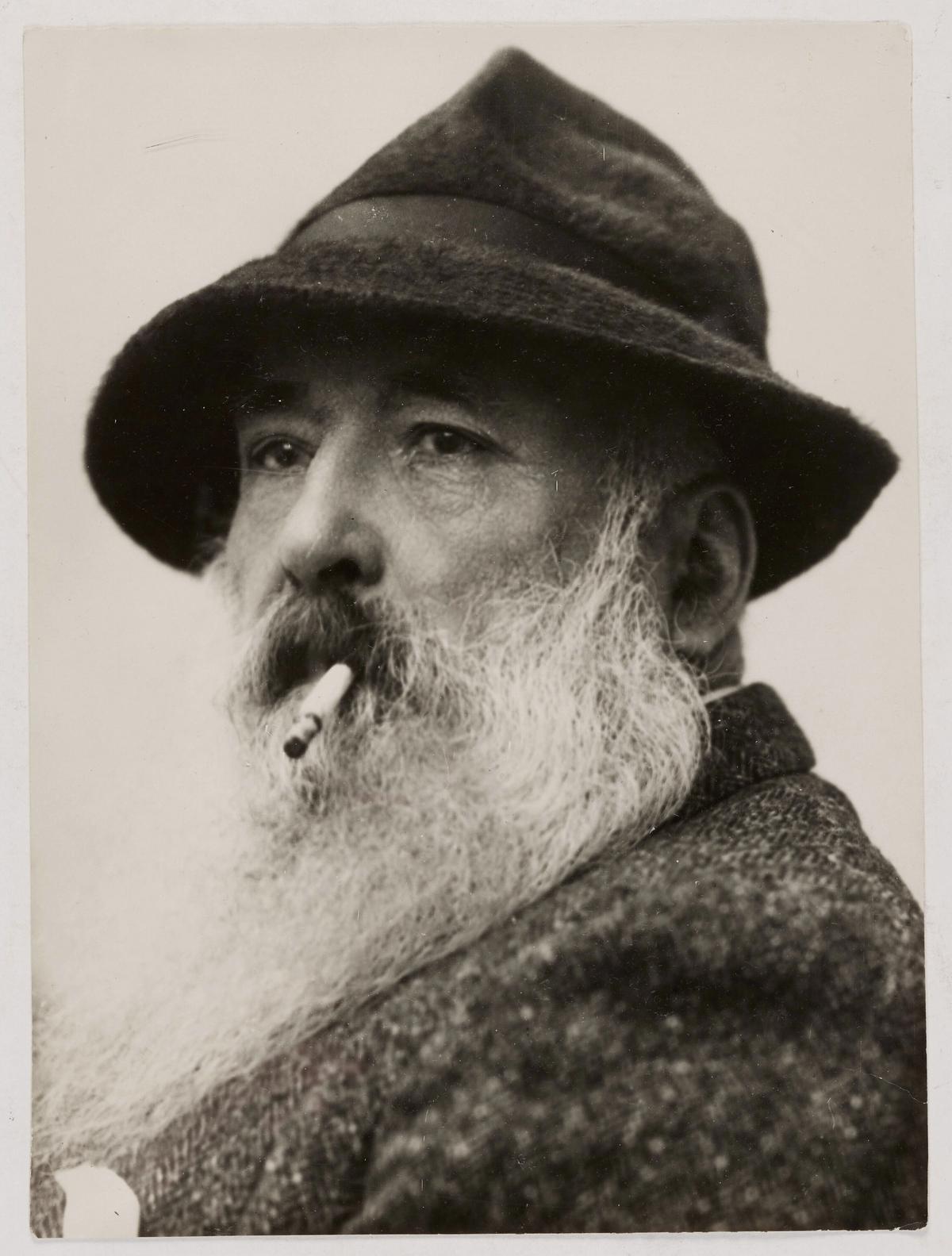
A new compendium of letters written by Claude Monet (1840-1926) presents a different side to the Impressionist innovator, who reflects candidly on his relationships with artists such as Édouard Manet, his feelings about family members, and why he was unhappy at first about the French government’s proposal for housing his famous Water Lilies series. “It’s his voice, he’s telling the story and we wanted to let his voice ring through and true,” says one of the book’s five contributors, Teresa Krasny, describing the approach of the editorial team.
Drawn from Monet’s extensive correspondence from the age of 18 through to his death at the age of 86, the book includes around 420 letters to 93 recipients (he wrote the greatest number to his principal dealer Paul Durand-Ruel and to his second wife Alice Hoschedé). More than 3,200 transcribed letters in Daniel Wildenstein’s catalogue raisonné (1974-91) and 393 unrecorded letters formed the basis of the editors’ selection process.
“The letters feel very much feel like a resource that was known by scholars, art historians and auction house specialists but it was just not in the wider public domain,” says Krasny, who outlines how Monet’s biography is divided into “six meaningful date ranges, each one corresponding to a section of the book”. These include Years of Struggle (1873-81) and War and Water Lilies (1915-26).
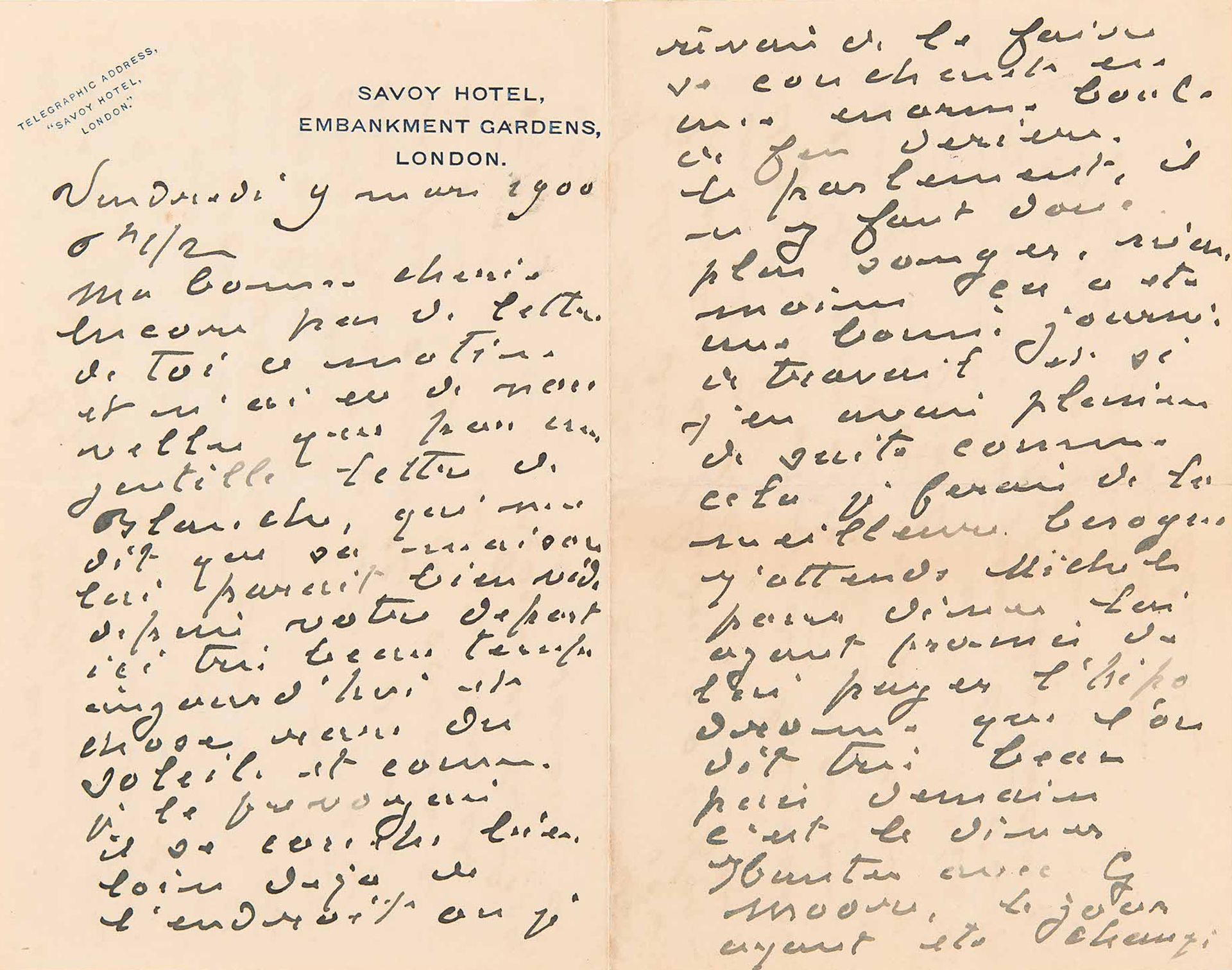
A letter written by Monet to his second wife, Alice, in 1900, when he was in London Photo: © Nikki Brickett, RR Auction
Some early letters belie a man unsettled by aspects of his domestic life. When Hoschedé proposes a separation, Monet writes, on 22 February 1886: “Oh, I am so distraught, so desperately sad. I have the heart for nothing. The painter in me is dead, only a tormented mind remains…”
In another missive, this time to the French art critic Théodore Duret (9 December 1880), Monet says: “I am such a lazybones when it comes to writing… I saw Manet, who was quite well, very busy on a painting which will be a sensation at the Salon [the official exhibition of the Académie des Beaux-Arts]: Rochefort’s escape in a rowing boat on the high seas.” Henri Rochefort was a journalist who was arrested and deported in 1873 to New Caledonia in the Pacific.
Letters to fellow artists, such as Auguste Rodin and Camille Pissarro, underpin the collection. Crucially, a key section describes Monet’s campaign to raise 20,000 francs for the French state to acquire Manet’s notorious 1863 painting Olympia from his widow, Suzanne.
“The debates prompted by Manet’s paintings and the hostilities they had to endure have now eased. Even if war was still being waged against such a singular individual, we would be no less convinced of the importance of Manet’s oeuvre and its ultimate triumph,” writes Monet to Armand Fallières, the minister for public instruction, on 7 February 1880 after the money was raised (the work was hung in the Musée du Louvre in 1907).
I formally refuse to accept the gallery that was offered to me at the Jeu de PaumeMonet to the French prime minster, on the plans to display his Water Lillies
One of the most significant sections of the book focuses on a dispute between Monet and the French government at the end of the First World War. On 12 November 1918, a day after the Armistice, Monet wrote to his close friend, the French prime minister Georges Clemenceau, proposing to give two works from his Grandes Décorations—comprising the Water Lilies series—to the nation “to honour the victory and peace”.
The Water Lilies were initially destined for the Hôtel Biron in Paris, which was to become the Musée Rodin in 1919; the Jeu de Paume was briefly considered before the Musée de l’Orangerie across the way in the Jardin des Tuileries was finally agreed upon, writes the contributor Sylvie Patry in the book.
Getting his own way
On 31 October 1921, Monet writes to Clemenceau: “It must be understood, first of all, that I formally refuse to accept the gallery that was offered to me at the Jeu de Paume. However, I will accept the Orangerie, only if the Administration of Fine Arts commits to doing the building works I deem indispensable.”
Krasny says: “When the government did not provide the design of the gallery space for the Grandes Décorations to meet the artist’s specification that they be shown on a curved wall, in classic Monet style he knew how to get what he wanted, and he did.
“There is a sense of drama and excitement towards the end of his life. He is taking on the biggest project he’s ever done; it’s very public and it will define his legacy. But then he had a crisis of confidence, wondering: ‘Can I actually do this?’”
The matter was resolved, however, and the plan was formalised in April 1922; Monet worked on the paintings until his death in 1926 and the final cycle gifted to France consists of eight vast compositions split across 22 panels. The paintings were displayed according to his design at the Orangerie in 1927, where they remain today.
“We see throughout the letters these emotional meltdowns; he works out his frustrations and then gets back to work. In the last year or so of his life he expresses his happiness to be in the throes of painting when he says: ‘I ask for nothing more than to live to be a hundred years old.’ I think that’s such a beautiful line,” Krasny says.
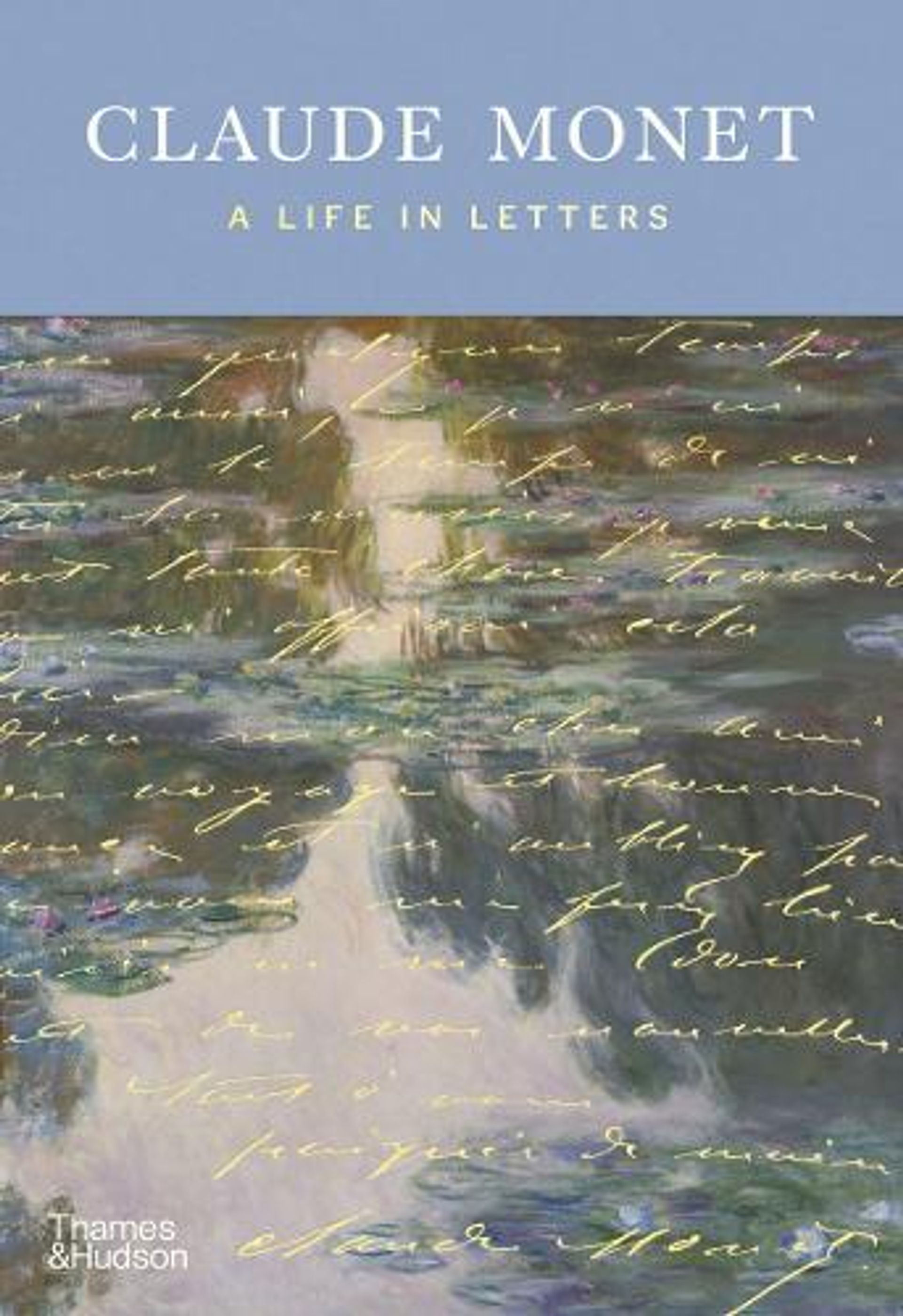
• Contributors include Teresa Krasny, Sylvie Patry et al., Claude Monet: A Life in Letters, Thames & Hudson, 552pp, £30 (hb)