


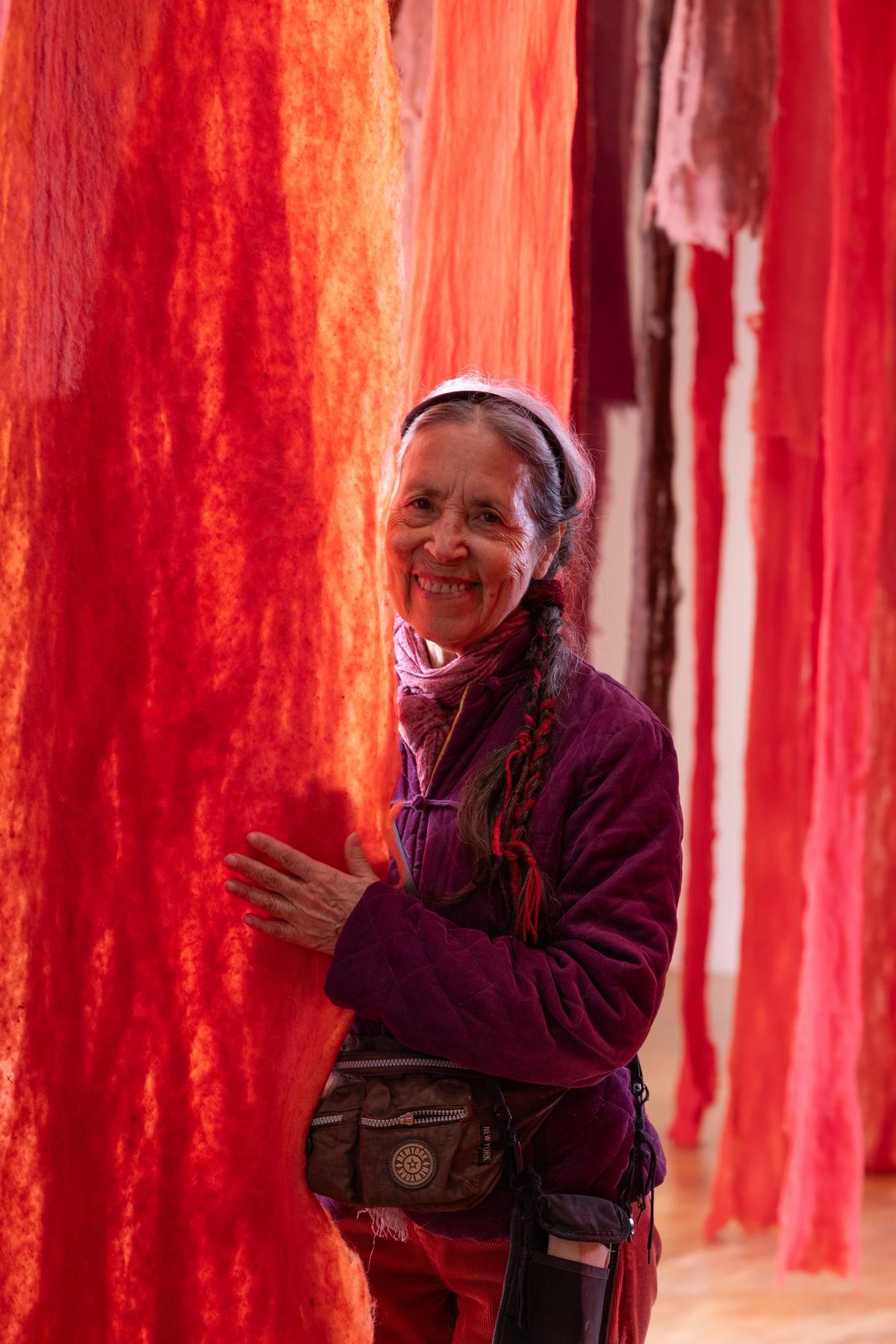
Born in 1948 in Santiago, Chile, Vicuña is both a poet and a visual artist and intertwines these two artforms to produce work across a range of media. Among much else, she has a singular narrative painting style, makes huge suspended installations using found materials and textiles, stages performances and makes ephemeral sculptures.
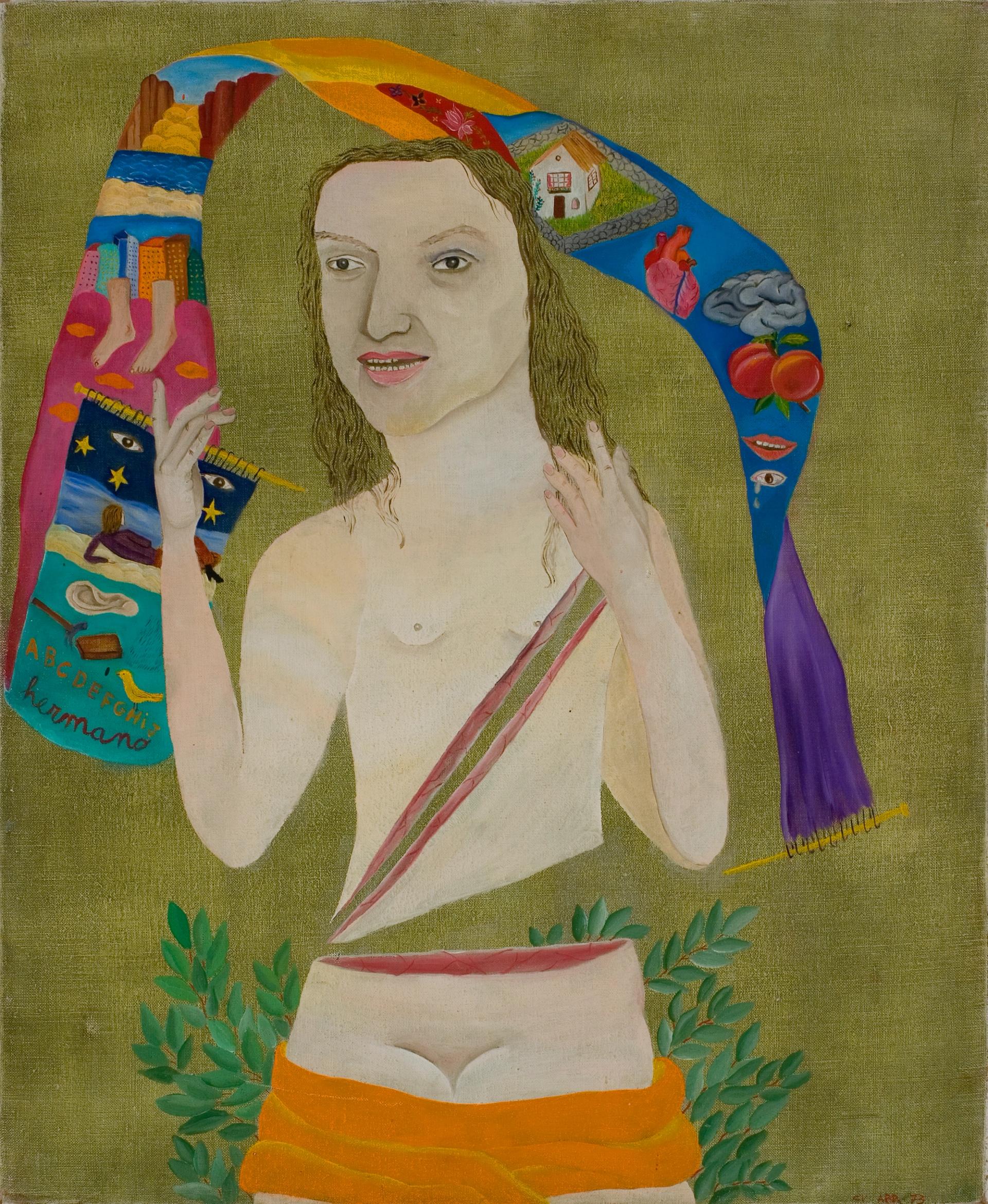
Cecilia Vicuña's Violeta Parra (1973)
© Cecilia Vicuna; Photo Tate
From the start, she has been deeply embedded in politics and social concerns, including human rights abuses in Chile, conflicts in different parts of the world, Indigenous culture and colonialism, and the climate catastrophe.
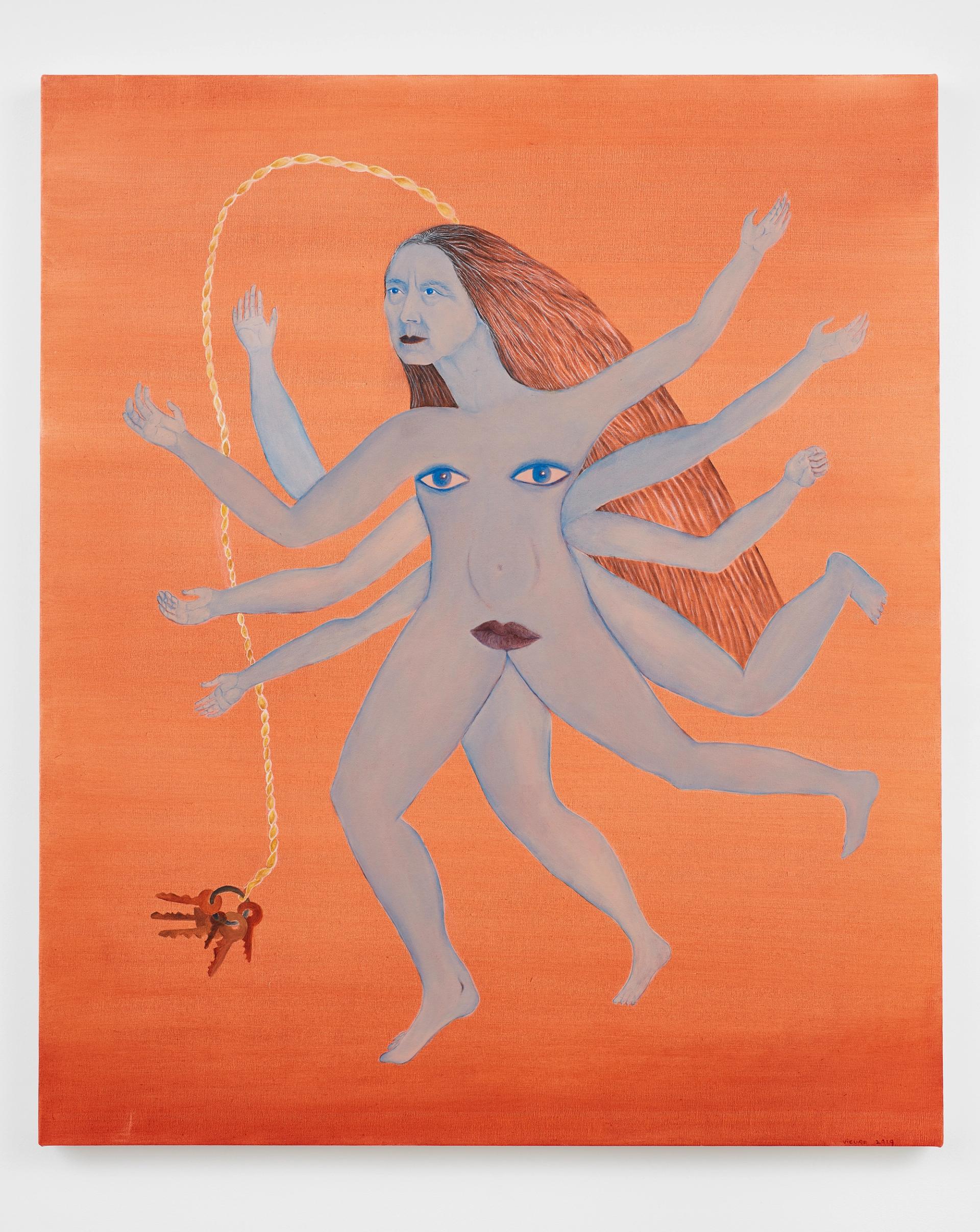
Cecilia Vicuña's Llaverito (Blue Lady) / Ladilla, Crab (2019, after the lost original 1979 work)
© 2025 Cecilia Vicuña; Courtesy of the artist and Lehmann Maupin, New York, Seoul and London; Photo Mathew Herrman
Her work is underpinned by a profound engagement with different forms of Indigenous language allied to a response to prominent developments in Modern and contemporary art, from Surrealism to Postminimalism and Conceptualism.
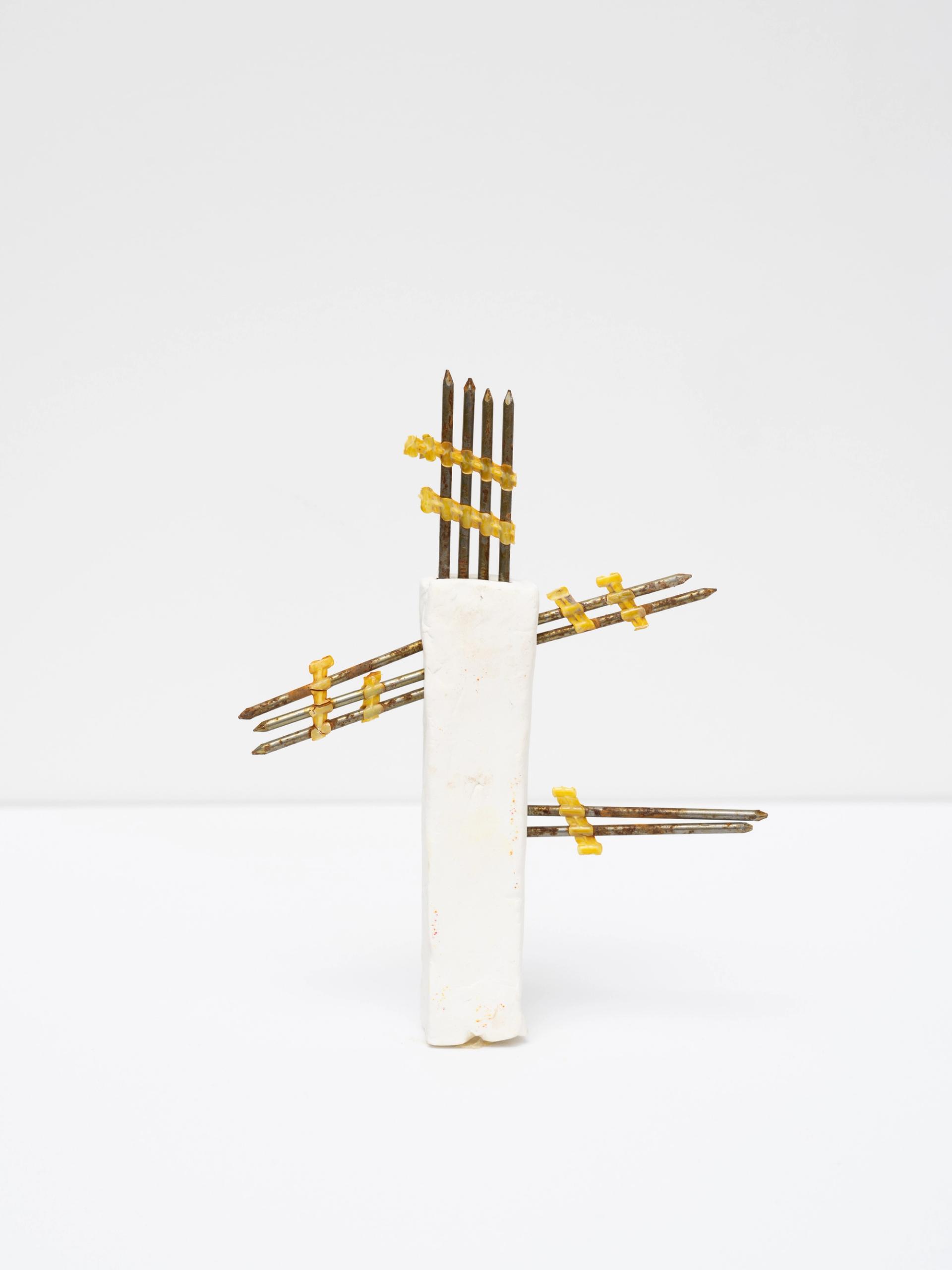
Cecilia Vicuña's Ser eléctrico (precarios) (2018)
© 2026 Cecilia Vicuña/Artist Rights Society (ARS), New York; Courtesy the artist and Lehmann Maupin, New York, Seoul, and London; Photo Studio Kukla
She discusses the symbiosis of word and image in her work, the wordplay that underpins some of her key concepts and strands of work, and how art-making is a full-body experience.
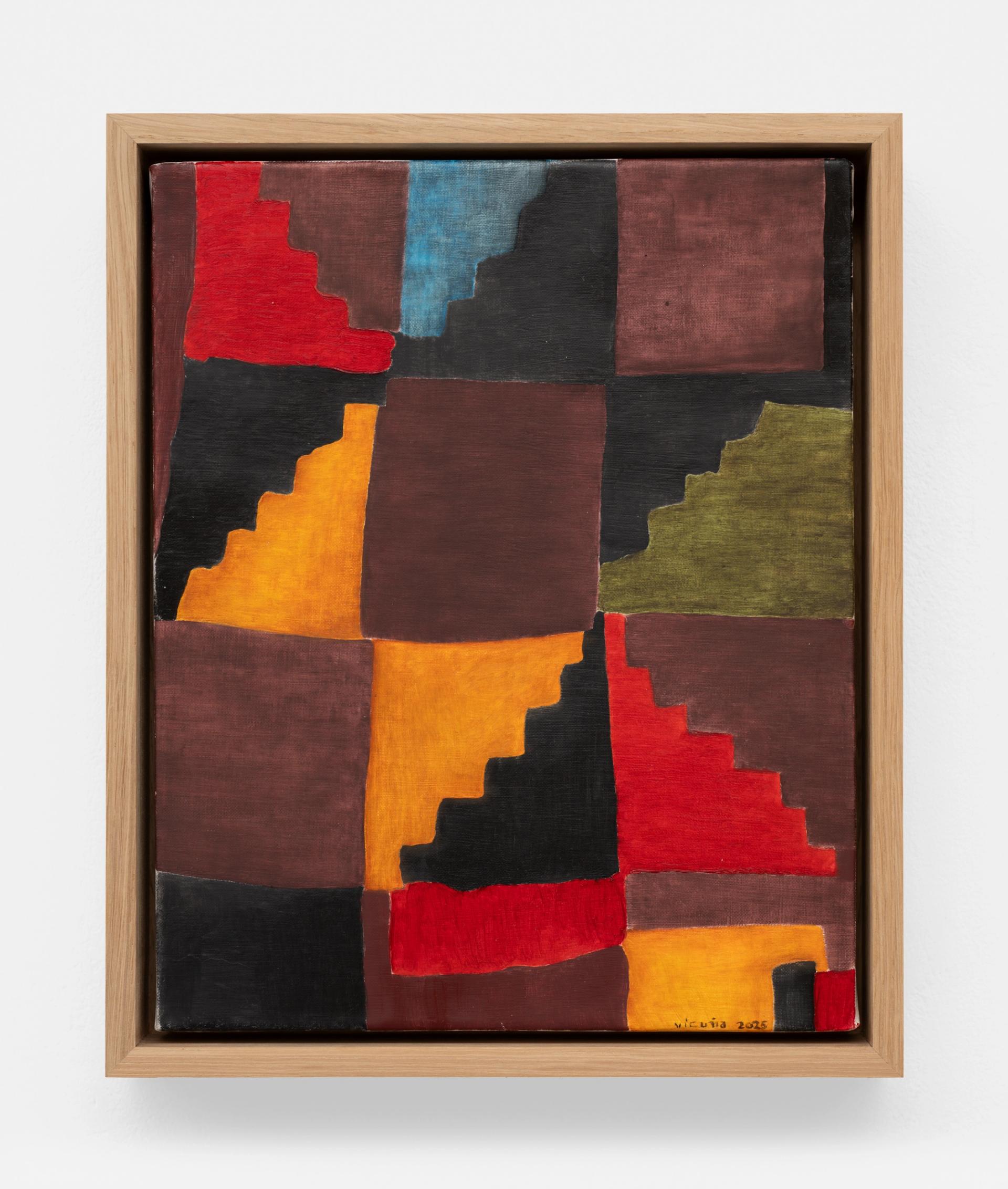
Cecilia Vicuña's Nasca Paracas (2025)
© 2026 Cecilia Vicuña/Artist Rights Society(ARS), New York; Courtesy the artist and Xavier Hufkens, Brussels; Photo Thomas Merle
She reflects on her early fascination with pre-Renaissance painting, the influence of her aunt, the artist Rosa Vicuña, on her experience of pre-Columbian art and languages, her admiration of Doris Salcedo, and the visceral shock of seeing medieval sheela na gig sculptures in Ireland. Plus, she gives insight into studio life and daily rituals and answers our ultimate question: what is art for?
- Cecilia Vicuña: Living Threads, Whitechapel Gallery, 7 October-14 February 2027
- Cecilia Vicuña: Quipu of Encounters: The Dream of Water, Museum of Contemporary Art, Los Angeles, 15 November–6 June 2027
This podcast is sponsored by Bloomberg Connects, the arts and culture platform. Bloomberg Connects offers access to a vast range of international cultural organisations through a single click, with new guides being added regularly. They include a host of UK museums and galleries that have held solo exhibitions of Cecilia Vicuña’s work, including the Whitechapel Gallery, where she has a major exhibition in the autumn of 2026, and Tate in London, the Guggenheim in New York and the Wattis in San Francisco. The guide to The Wattis includes audio and text exploring the exhibition Caguiat Delacruz: The Tramp, which features a newly commissioned film, installation, painting and prints by the collaborative duo Justin Caguiat and Rafael Delacruz. The new film responds to the great Charlie Chaplin movie, also called The Tramp. You can hear Daisy Nam, the director of the Wattis Institute, elaborate on the themes of the exhibition, and Courtney Sennish, a print-master, discuss how she collaborated with Caguiat Delacruz and a team of student artists to produce the print component of the exhibition.