

The historic conundrum of documentary cinema, the question that plagued filmmakers, audiences and theorists for the medium’s first century—from the staged ethnographies of Robert Flaherty, to the observational Direct Cinema from which Frederick Wiseman emerged, and the forensic examinations of Errol Morris—was one of authenticity: how can we be sure that what we are seeing is a true reflection of reality, given the subject’s consciousness of the camera?
This is now a solved problem. Digital cameras, in the form of smartphones and surveillance, are so ubiquitous that camera-conscious behaviour is authentic; documentary subjects born this century, especially, are their truest selves only when aware of an observer.
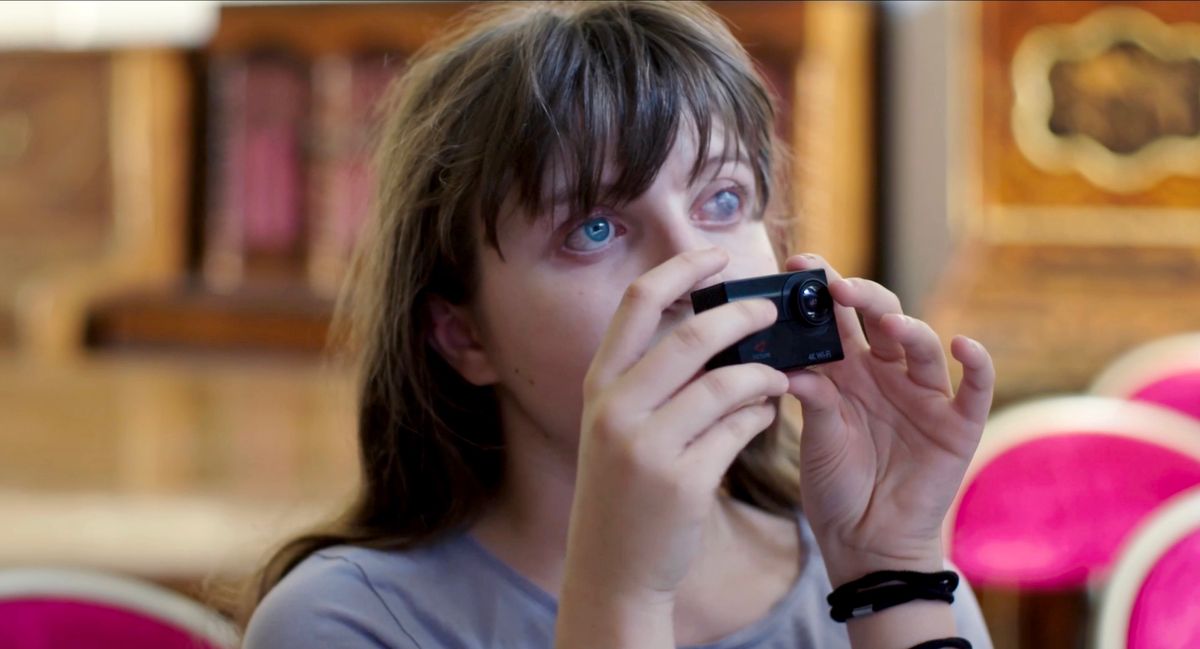
In the new film For the Moon (Car la Lune, 2026), the multidisciplinary artist Éric Baudelaire finds at Paris’s National Institute for Blind Youth a rare group of modern students who are not used to filming themselves and each other, and whose developing camera-consciousness is a source of freshness and novelty. The film is a glimpse at the margins of a visual culture.
Baudelaire distributed Sony handicams to five of the students, some fully blind and some severely visually impaired. (The footage was assembled with editor Claire Atherton, a longtime collaborator of Chantal Akerman.) In an early scene, Kadiatou, a philosophically inclined girl, shows a classmate how to use the camera; we see through the lens as the girls’ hands feel their way around the lens cap. A beautiful film, Kadiatou opines, “has to be properly shot and all that”, but also “appearing natural, and filming according to our intuition. I think intuition is more beautiful than something that’s scripted or staged or precise.” It will be beautiful because it came from them.
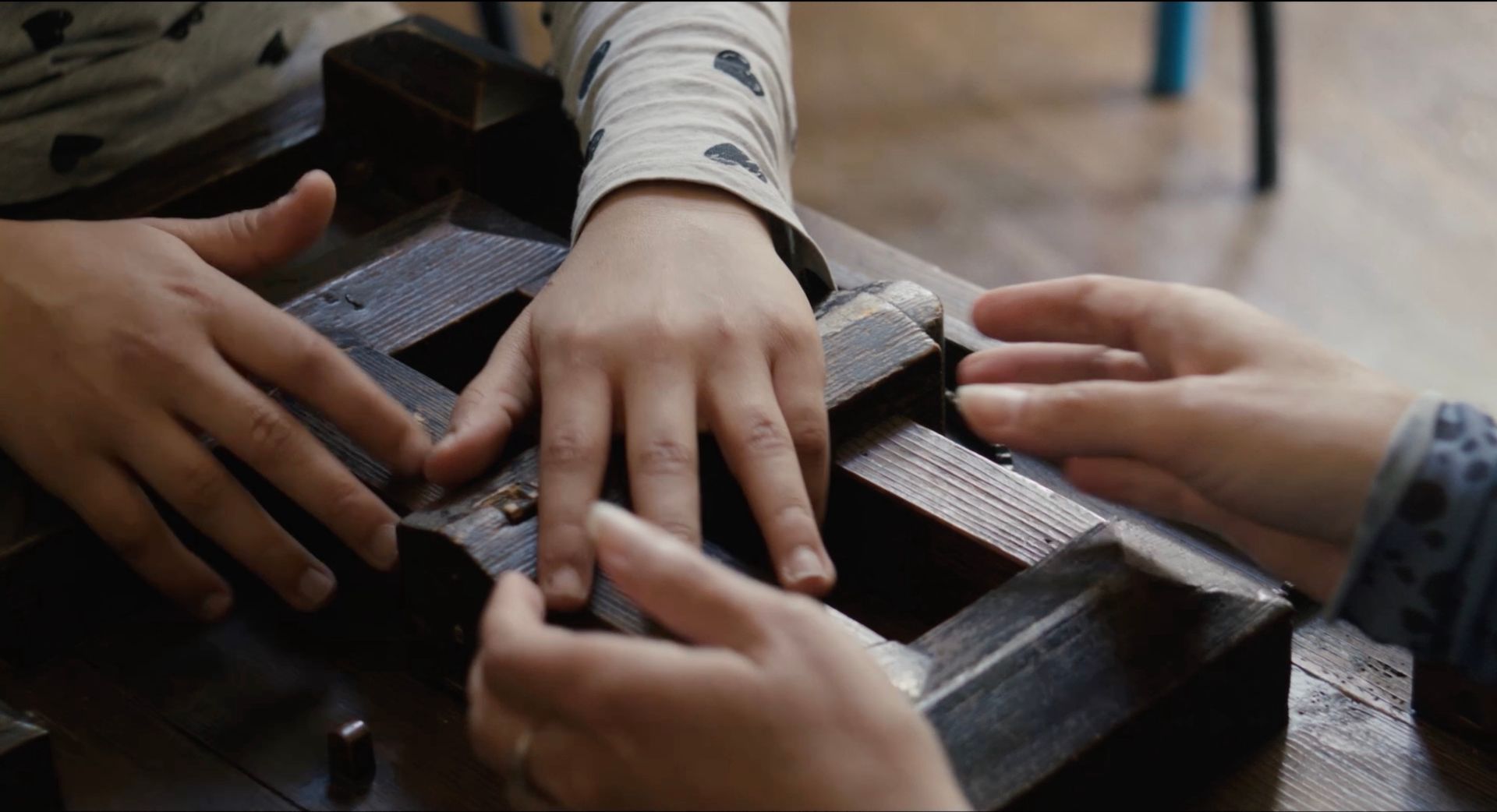
A scene from Éric Baudelaire's For the Moon (Car la lune, 2026) Courtesy New York Film Festival
At first, the film’s subject-cinematographers are “a bit self-conscious”, as Mèï says, setting up her camera facing her. The compositions are awkward, and the girls don’t always know how close or far away from an object to hold the camera; at times the picture is entirely abstract, creating a flicker film-like effect. The odd framings, blown-out backgrounds and lens flares frequently recall the ragged, conditional quality of the cheap, precious digital images that the low-budget Korean auteur Hong Sang-soo has produced since he began to have vision problems.
There is an excitement and intimacy to the way Baudelaire’s subjects tell the camera their stories. Their faces on the edge of the frame, or cut off above or below the nose, or at an off-kilter angle, they hush their voices and tell the stories of their blindness. Iris, who lost her right eye at age 9 and knows that the loss of her left is imminent, addresses tapes to “Éric” and films the videos she has saved on her phone, such as one of her favourite carnival ride. When she filmed the video, she could see better than she can now, but she can still remember what the ride looks like. You think of her world freezing in place. Her favourite ride is really a ride for little kids, she says, but it’s the only one that’s safe for her to go on—after her remaining eye is removed, she will be able to go on them all, she says with anticipation; but on the other hand, she will never see the fireworks at Disneyland.
Iris is also a musician—she makes autotuned raps about bad relationships and summer vacations—as are many of the other girls. Jade plays her original compositions, and Crystal can play Beethoven, Brassens, and blind French pop star Gilbert Montagné from memory. When Mèï films her performing, Crystal messes up her first song, curses at herself, then practically shivers with pleasure as she demands Mèï delete the video; she is visibly excited at the merging of her private and public selves, at the sounds she makes and the image she projects.
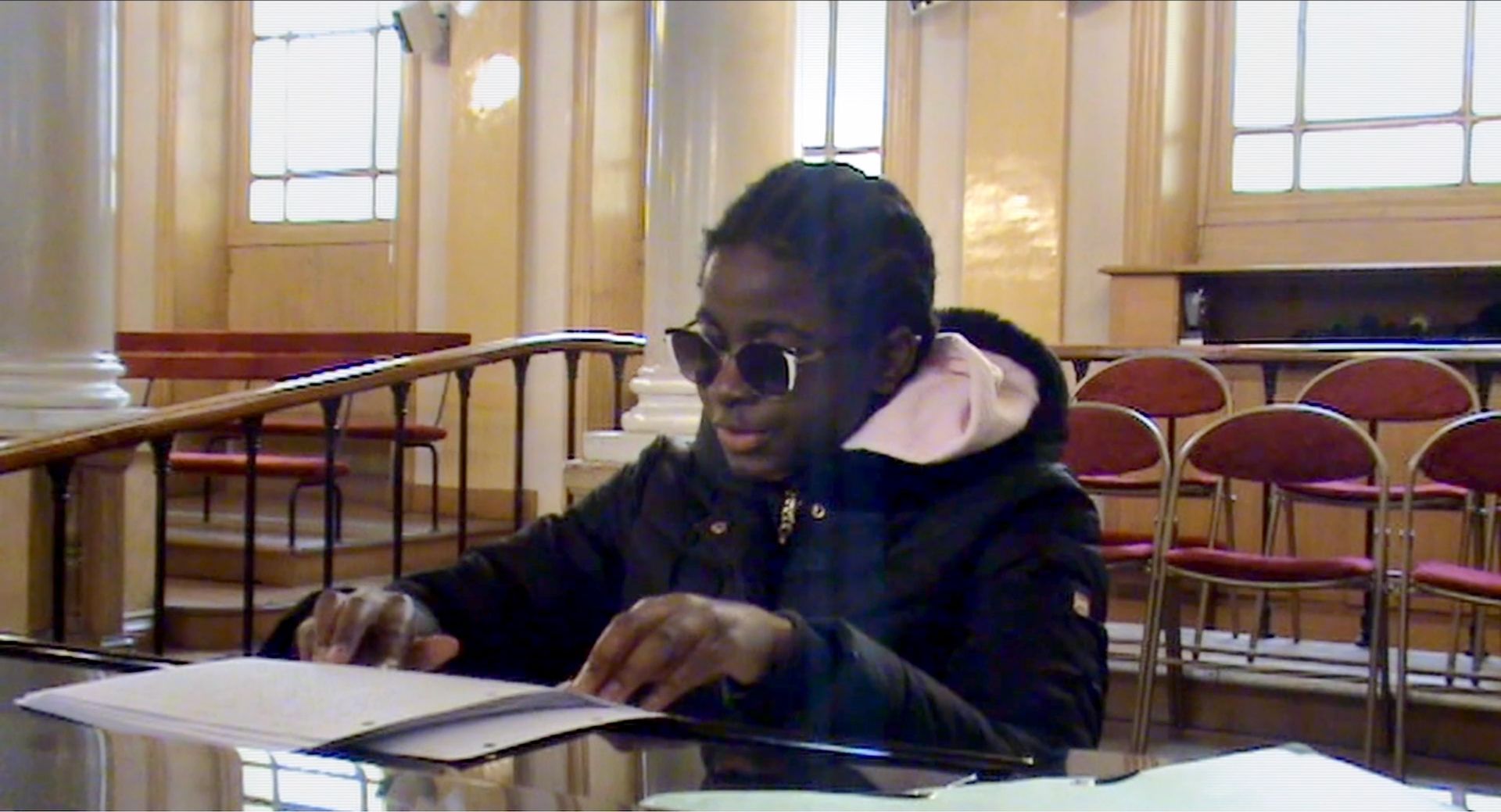
A scene from Éric Baudelaire's For the Moon (Car la lune, 2026) Courtesy New York Film Festival
Their creativity is heartfelt and expressive, and makes for extraordinarily touching cinema, as any diaristic project drawing forth the private dreams of teenage girls is likely to be. But For the Moon is also casually radical in the way it reorients point-of-view. By giving his subjects cameras, Baudelaire invites us to see the world through their eyes; this principle, usually an axiom, is here a paradox.
After Iris’s second enucleation, she records a few voice memos, which Baudelaire and Atherton play against all-black backgrounds, before she starts filming again. Her first video post-surgery begins in total darkness, before she commands Alexa to open the shutters. Daylight floods in, the world comes into focus; our entry into the scene is cued to the sound of her voice, attuning us to the images captured by her camera, the familiar objects in a teenager’s room, the confused clutter of girlish and adolescent objects. So far, so straightforward, until Iris points the camera out her bedroom window—taking in the landscape, you might say—and then matter-of-factly reminds us that she cannot see anything anymore, that this perspective, offered up to us as an extension of her subjectivity, is something far more ambiguous. Faith being “the evidence of things not seen” takes on an entirely new meaning.
- For the Moon, 6 October and 7 October, New York Film Festival