


Cycling across South London at 6am on a September morning, humans are scarce and nature abundant. Under a gradually lightening sky I encountered foraging foxes, multifarious waterfowl bobbing on park ponds and a few ominously scuttling rats, all set to an increasingly loud backdrop of birdsong. My destination was an unobtrusive parapet wall overlooking a dock where, between two rows of Victorian warehouses, the subterranean river Neckinger feeds into the Thames a few blocks East of Tower Bridge. In the 18th century, pirates were executed here and on old maps it appears as Devol’s Neckenger, referring to the contemporary nickname for the noose as the devil’s neckcloth or neckerchief.
In the dawn light, the artist Mary Lemley was using less sinister ropes to lower a seven-metre calico banner down the side of the wall and into in the dark waters of the dock as it filled up with the early morning tide. Then as the tide turned and the waters receded with surprising speed, the cotton bolt was left flapping against the dockside saturated with mud, debris and seepage from a seam of red ochre pigment stitched into its centre: “infused with both rivers” as Lemley describes it.
This particular cloth also bore the marks of an earlier dipping on the same site back in 1992 when, as part of a bigger project titled These Fragments We have Shored Against Our Runs, Lemley had installed 14 giant calico cloths to be doused by tidal waters at the points where the 14 forgotten London rivers flow into the Thames, along a 12 mile stretch, from the Beverley Brook in Putney to the Ravensbourne in Deptford Creek. Now, 35 years later, the individual Neckinger iteration has been reactivated in honour of the exhibition Listening to the earth (until 13 December), at the nearby Drawing Room in Bermondsey, close to where the Neckinger originally flowed.
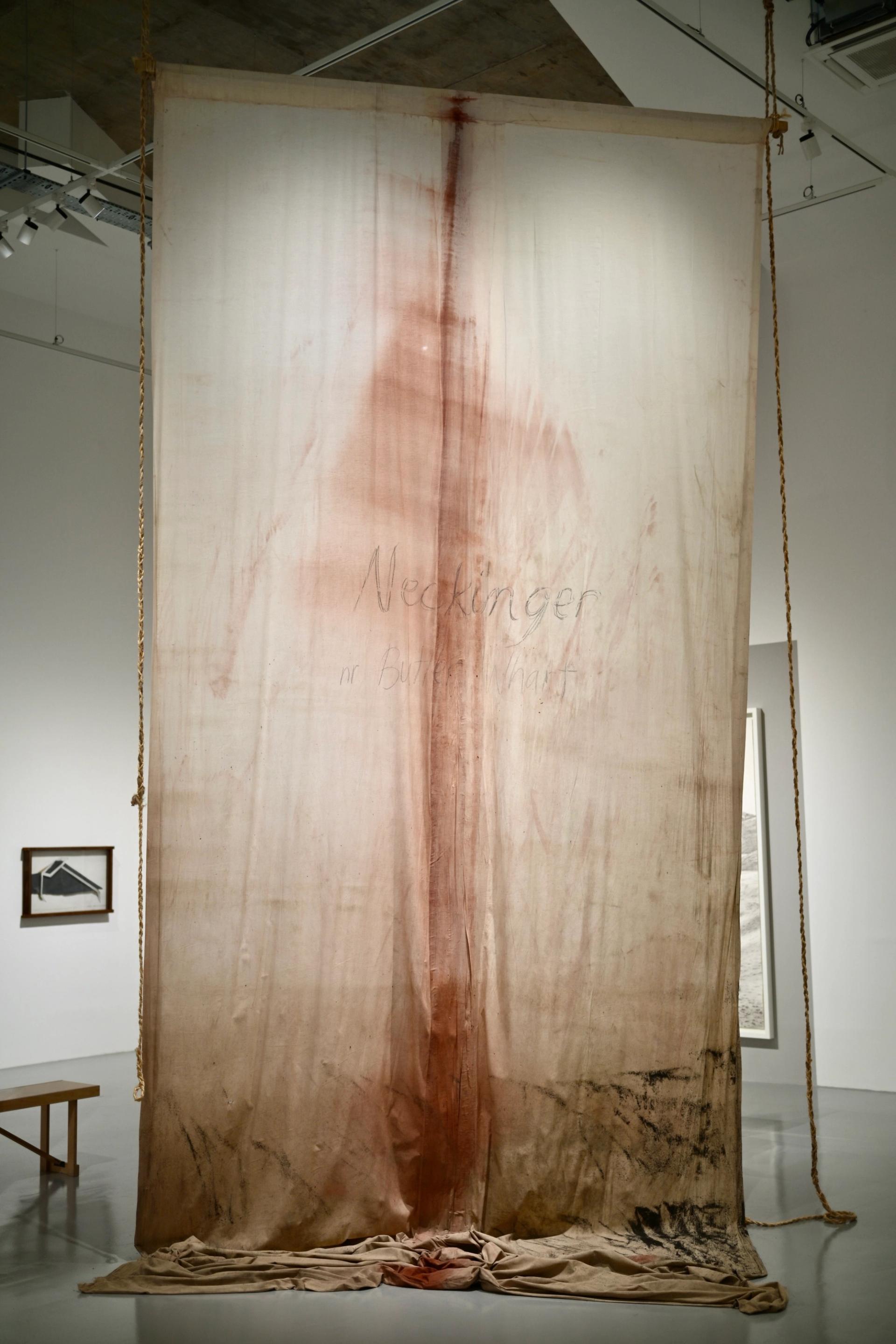
Installation view of Mary Lemley's These Fragments We have Shored Against Our Ruins: Neckinger (1992–2026) at London's Drawing Room Photo: Drawing Room, 2026
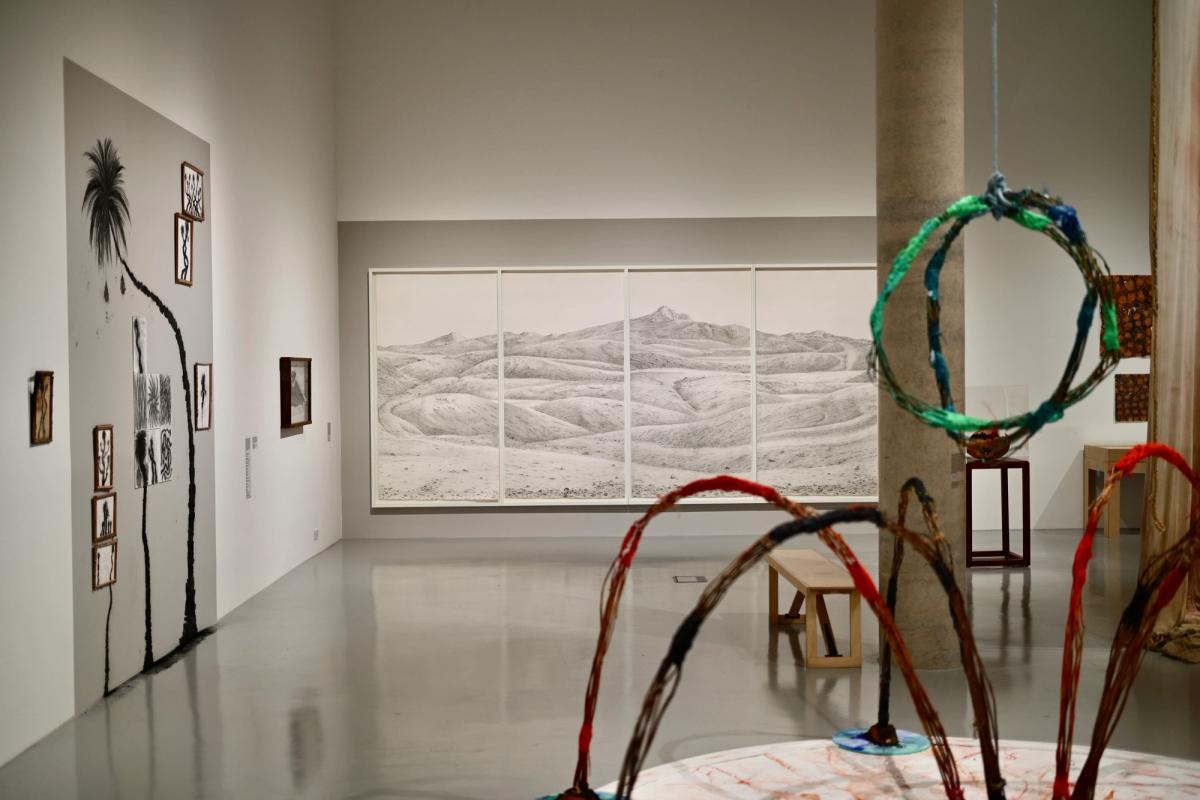
Described by its curator Hammad Nasar as show of ten international artists devoted to “working with the earth as subject but also directly as material,” Listening to the earth spans generations, geographies and terrains. Like so many Drawing Room projects it radically expands the notion of drawing, and here deploys the earth in myriad artworks ranging from mark making to construction, assemblage, performance and recording. There are many entry points and aspects to this show but overall, rather like the prong of a three pin plug socket, it literally earths us into the substance of our beleaguered but magnificent planet.
Now dried out and suspended at the centre of the Drawing Room’s lofty main gallery, Lemley’s river-marked Neckinger banner keeps company with the exhibition’s many and various reminders of the acute need to pay close attention to the specifics of our surroundings, whether they be Cornwall’s abandoned mines and sacred lands, a Pakistani cement plant, Ghana’s mineral rich coast, or a slate mountain in North Wales. Throughout Listening to the earth conversations and correspondences proliferate and flow between the artists immersing themselves in these seemingly disparate but fundamentally interconnected sites of ritual, production, habitation and extraction.
The lost underground rivers of London evoked and activated in Lemley’s dangling, undulating bolt of black and red stained cloth resonate with David Nash’s series of drawings based on the waterborne journey of a half ton wooden boulder that he carved from a storm damaged oak tree and then charted over years as it floated from stream, to pond, to river and eventually out to sea.

Installation view of works from David Nash's Wooden Boulder project (1978-2015) at London's Drawing Room Photo: Drawing Room, 2026
The power of trees and water also charges the giant dancing palms in Mohammad Alfaraj’s charcoal drawings made from burnt palm fronds taken from Al-Ahsa, the world’s largest oasis, which is home to 2.5 million date palms as well as the largest oil field on the planet, the Ghawar Field.
In turn, this complex geopolitical terrain chimes with Tanoa Sasraku’s banker’s boxes containing keyring charms in the form of miniature perspex souvenir barrels, each containing a drop of crude oil from Azerbaijan. Her series of ‘Terratype’ constructions, resembling garment patterns made from newspapers rubbed with pigments foraged from the mines of both Cornwall and Ghana, tap into the artist’s mixed heritage with their torn-back strata-like layers evoking both memory and geology.
Then there are David Alesworth’s aerial photographs taken during a residency in a cement plant in Khushab, Pakistan. In one he has made giant ephemeral drawings of leaves of the Ginko tree, a ‘living fossil’ from the prehistoric era and originally native to China but now a ubiquitous urban ‘concrete jungle’ survivor and valuable oxygenator of our choked cities worldwide. The distinctive fan-shaped Ginko leaves are drawn into the pulverised limestone and fossil fuel coal dust both used to manufacture cement, the most widespread and polluting building material of our modern era, which accounts for an estimated 8% of global CO2 emissions.
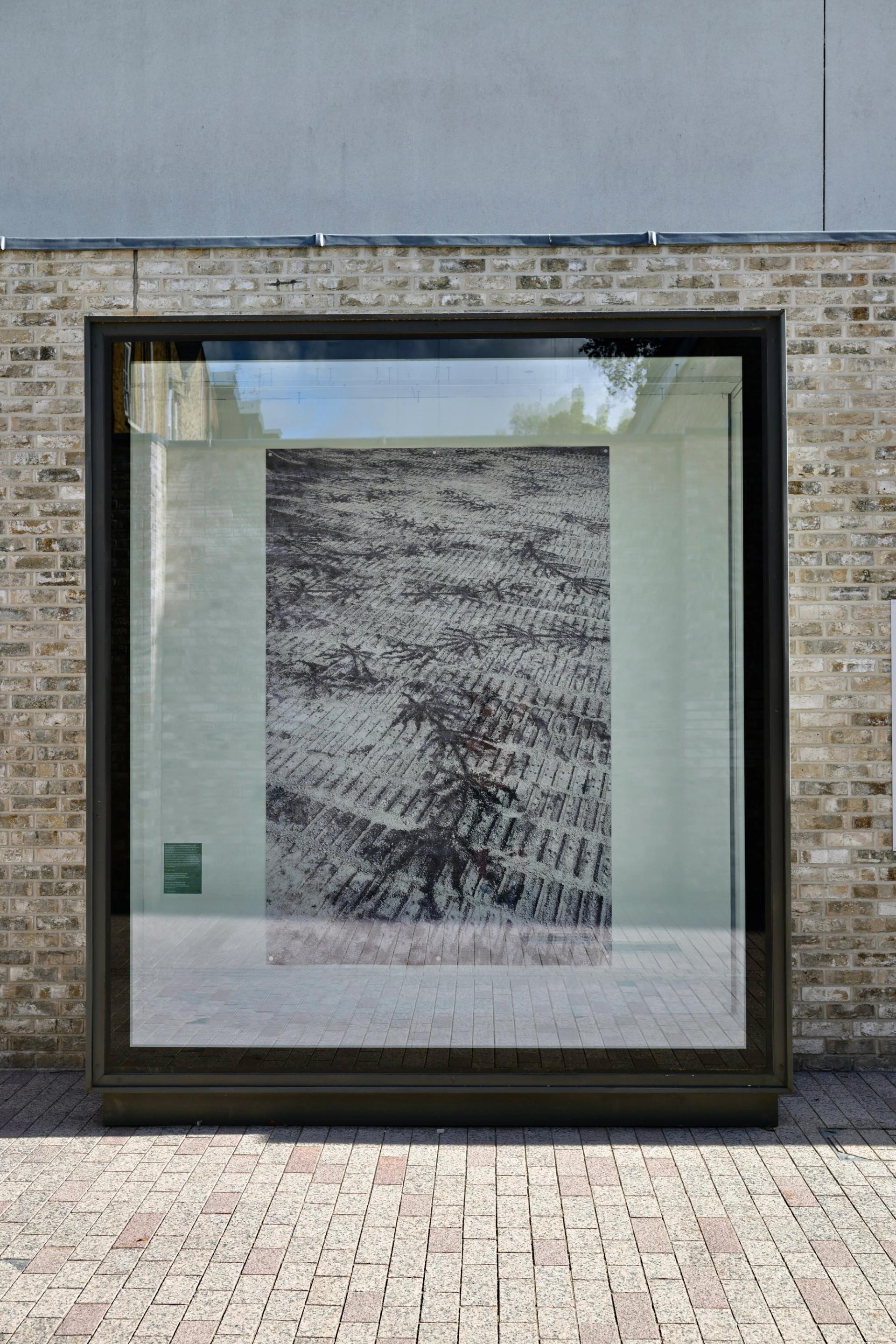
Installation view of David Alesworth's Drawing in Time (Equisetum Spp.) (2018) at London's Drawing Room Photo: Drawing Room, 2026
Geology of place does not always need to be expressed in an earthily physical form. Lemley’s other work in this exhibition, My Life in Hackney Part Two: Injury, Death and Epiphany, consists of three wall mounted text drawings and a soundscape, housed in a separate chapel-like side room. Though these moving poetic texts are printed in different shades of Thames mud—gray, brown and algae green—they draw on interior memories and personal histories processed through Lemley’s daily meditation practice. The sound is of everyday city life—a thunderstorm, traffic, passing conversation, birdsong and sirens—all recorded by the artist from the windows of her Hackney council flat.
Just as the lunar rhythms of the tides act with the local natural and synthetic detritus of the rivers to shape the appearance of her banner, so do forces both macro, micro and intimately site-specific combine to create Lemley’s very particular Life in Hackney. Using watery terminology she views memories as behaving “like geological deposits—temporarily becoming visible before being submerged again” and as “a process of tidal sedimentation: the past continually surfaces, leaves its mark and retreats”. Reading these texts whilst absorbing the atmospheric sounds of urban existence, we are immersed in Lemley’s life but also in our own experiences.
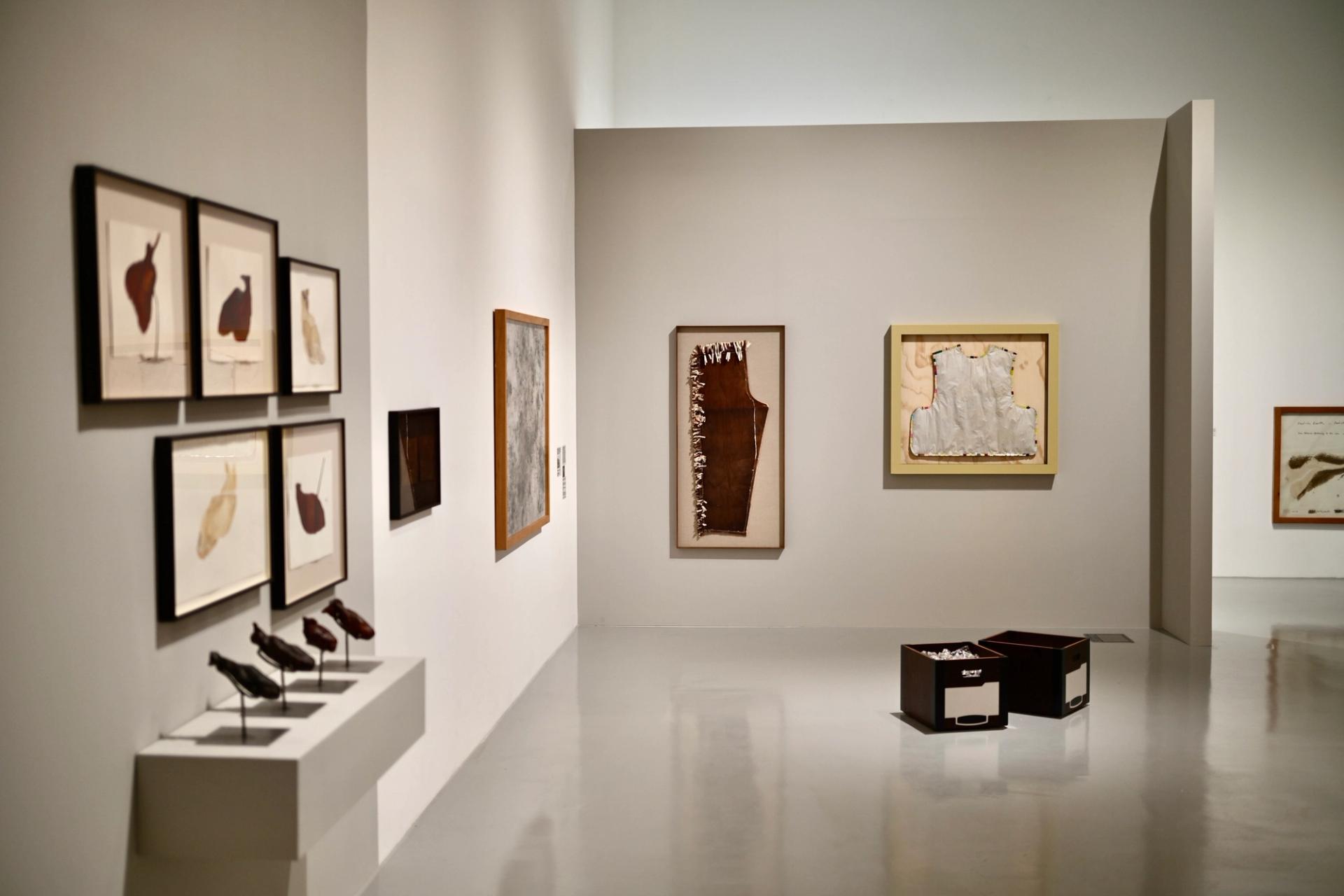
Installation view of Listening to the earth at London's Drawing Room Photo: Drawing Room, 2026
At the end of yet another year of catastrophic climate extremes and with a monster El Nino looming on the horizon, we don’t need another finger-wagging environmental exhibition to remind us that we are living in desperate times. Listening to the earth offers a more nuanced and nurturing view of our planet, offering multiple entry points whether political, historical, psychological or simply aesthetic.
The exhibition reminds us that as well as being a site of human-caused devastation that bears all too abundant evidence of past extractions and abuses, the earth is also a source of nourishment, healing and connection. Lemley and all the artists in Listening to the earth confirm that, wherever we are, nothing is fixed or static and everything is fluid and capable of transformation. The earth and the life it supports is part of our interior as well as our exterior world. Whether down by a river at dawn or in an oasis that sits atop an oil field, we need to stop, look, listen and take notice of what is there.
• Listening to the earth, Drawing Room, London, until 13 December; it will travel to Sheffield Museums and Mostyn Wales