

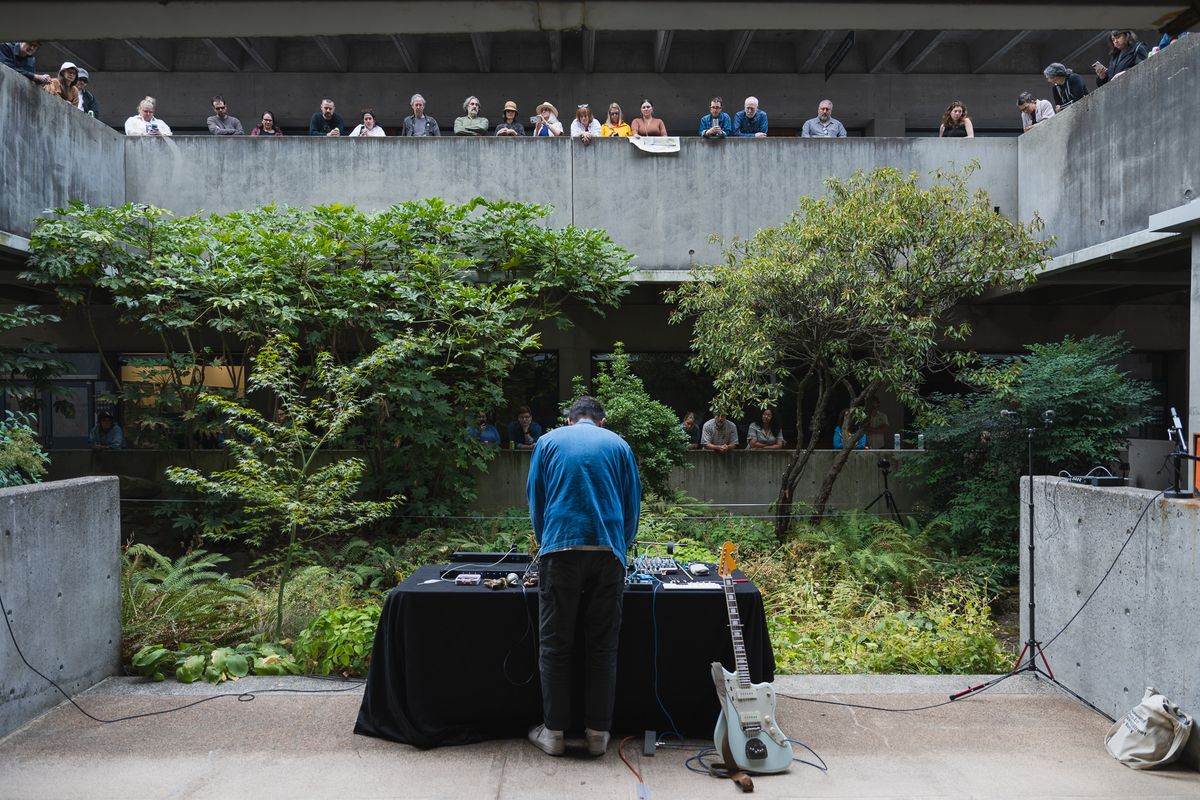
Converge 45, the citywide triennial in Portland, Oregon, has returned this autumn in an expansive exhibition spread across 16 venues. From major museums to university galleries and alternative art spaces, locations across Portland collectively paint a vibrant picture of the city’s arts ecosystem.
Portland is impossibly lush. Overgrown with foliage in numerous shades of verdant green, it boasts no shortage of outdoor activities and is rich in wonderfully sustainable food culture. The city has also been a stronghold for protest movements, most notably in support of Black Lives Matter and abolishing US Immigration and Customs Enforcement.
Like many cities on North America's West Coast, it has a complicated relationship with homelessness and has been threatened by numerous wildfires. Yet it feels like a place on the cusp of revelation, where the passion and potential of progressive values might just have the capacity to create a better world for everyone.
These paradoxes, between the ills of the present and an imagined future utopia, are reflected in the work of the late writer Ursula K. Le Guin, who lived in Portland for nearly 50 years.
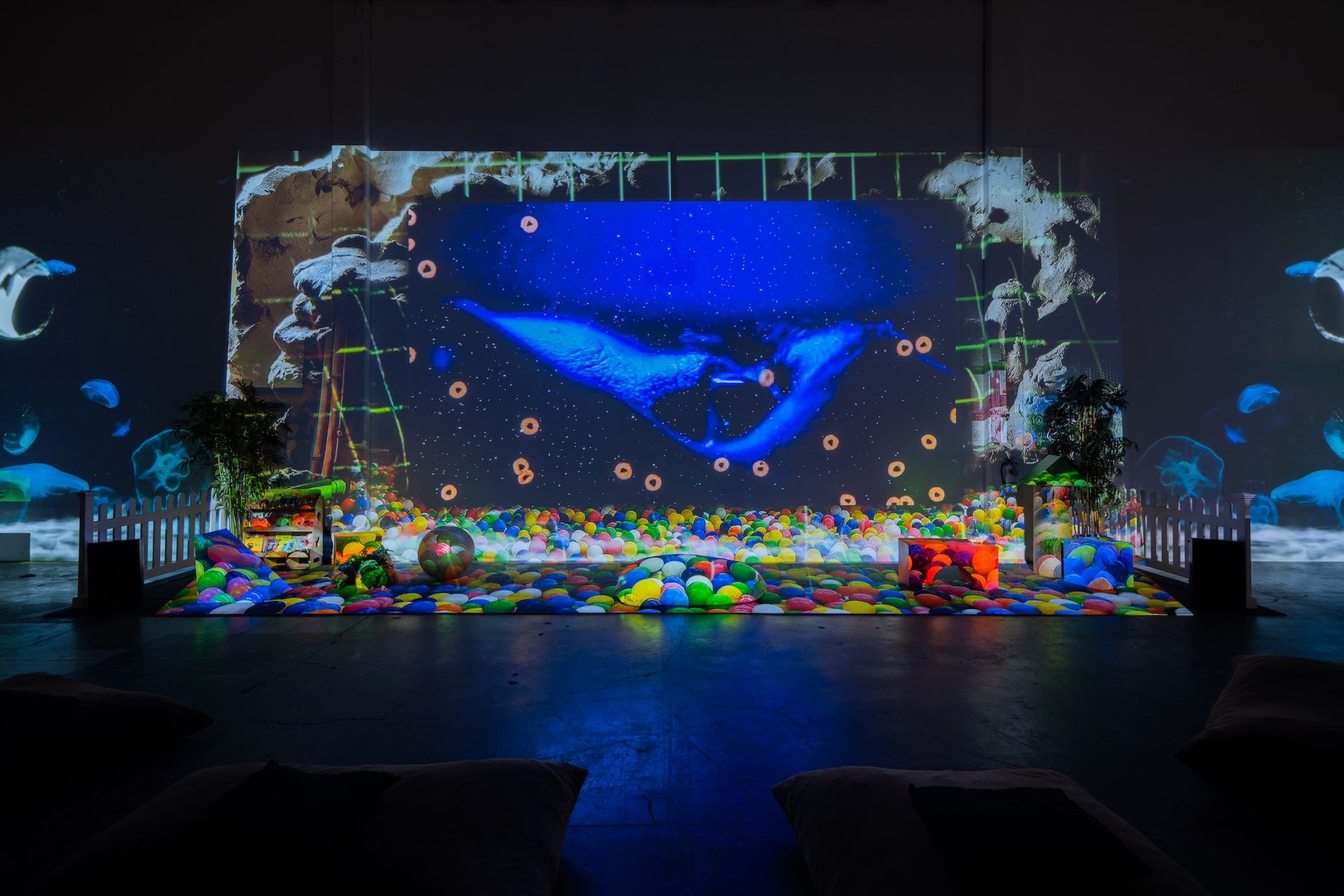
Trisha Baga’s MORE at the Portland Institute of Contemporary Art Photo: Mario Gallucci, courtesy Converge 45
Le Guin’s work is invoked at Converge 45 by the triennial’s curator this year, Lumi Tan. The New York-based Tan uses the acclaimed science-fiction writer’s oeuvre as a broad conceit through which to gather 28 artists, many of them from Portland and the surrounding area.
One might expect Le Guin’s sci-fi imaginary to play a large role via, perhaps, projects that mine the sociopolitical history of the city, propose strategies for surviving a post-apocalyptic future or imagine fantastical alternatives to the present course of humanity’s fate. Trisha Baga’s installation, MORE (until 24 October), at the Portland Institute of Contemporary Art, is both the triennial's largest single-artist presentation and one of the only to engage such questions.
In taking the innate childlike desire for more as a lens, Baga’s four-channel stereoscopic video features an enthralling (yet nearly indecipherable) combination of home videos of a child in a darkened room with a roving flashlight; found footage of the Titanic’s underwater wreckage; information about experiments in disembodied consciousness undertaken by National Aeronautics and Space Administration engineers; scenes from sci-fi films like Alien; and voices posing questions such as “What is music for?”, “What is smelling like?” and “Who wrote this?”
A row of nearby tables mimics the layout of an Apple Store, but instead of displaying shiny new devices, they feature contorted ceramic sculptures, vaguely resembling deteriorating keyboards and laptops, as if an Apple Store had sunk to the ocean floor along with the Titanic. The installation prompts viewers to consider what their lives and contemporary technologies might look like from the other side of history—how and by whom they will be studied and explained.
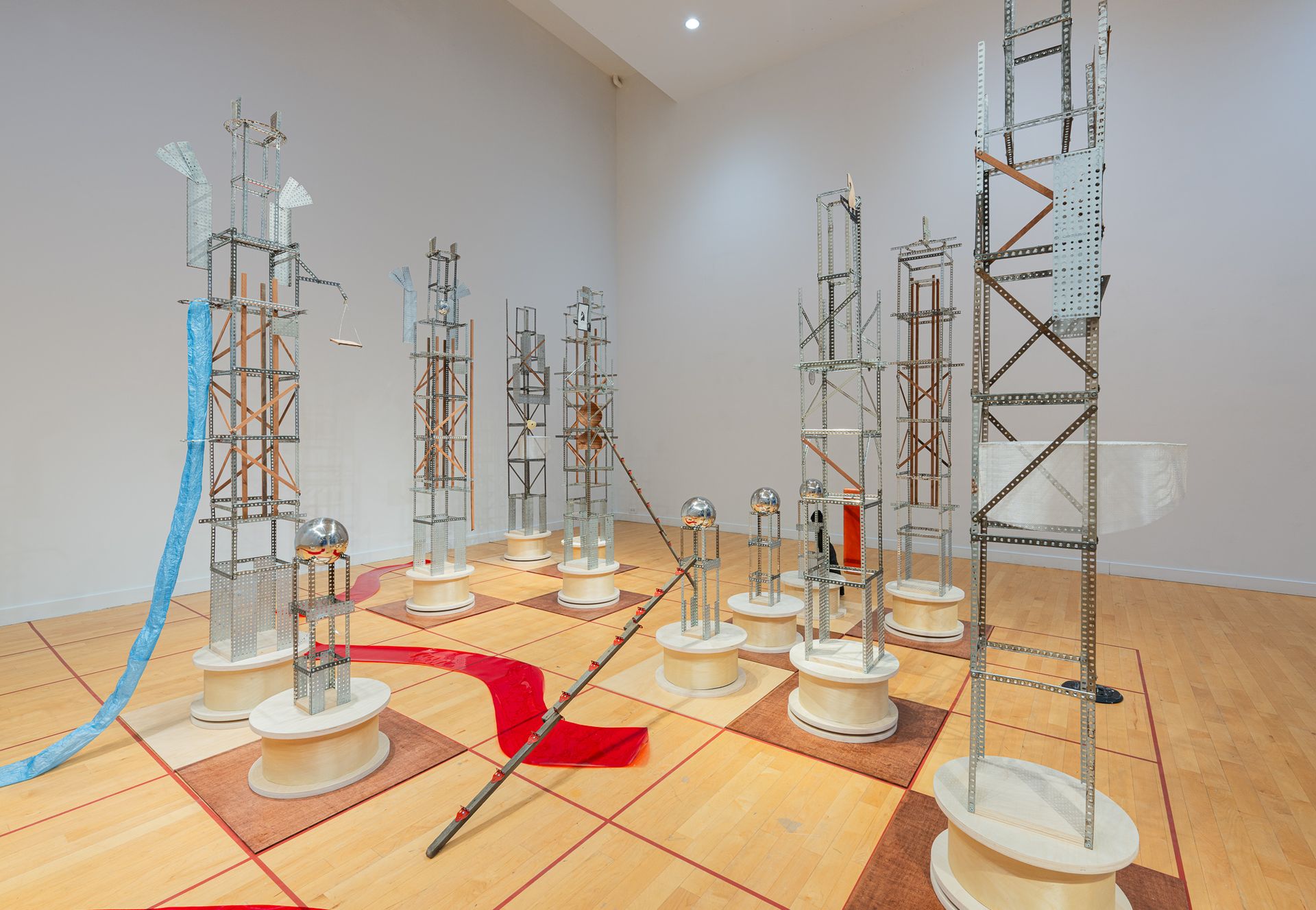
Ido Radon’s Men make their own history… at the Center for Contemporary Art, Pacific Northwest College of Art Photo: Mario Gallucci, courtesy Converge 45
Tan’s assertion that the featured artists are united by “the concept of impermanence, which drives their creation of new forms of communication and storytelling” may be more closely reflected in Marcus Fischer’s sonic meditation on his family history through the lens of dislocation and the geocultural experiences that have shaped it (until 5 December); Patricia Vázquez Gómez’s investigation into how language evolves over centuries and by whom it is carried forward (until 5 December); and Rob Rhee’s exploration of inherited technologies pertaining to growth, propagation and natural farming (until 14 November).
Among the triennial’s artists, however, storytelling is less often celebrated for its potential to “imagine other ways of living”, as Tan writes, than questioned for its ability to deceive. Artists exploring this topic include Ido Radon, Rose Salane and keyon gaskin, each of whom throw the reliability of the narrator into doubt.
At the Pacific Northwest College of Art, Radon created a human-sized chess board with large metal sculptures constructed with Erector Sets (until 3 October). These stand in the same places as the chess pieces during a milestone game in the 1990s in which IBM’s Deep Blue computer defeated the world champion Garry Kasparov. A loose allusion between technology, deception and art is drawn out in an accompanying exhibition statement.
As Radon writes: “The con or the practice of social engineering is not unlike redirection in the art of illusion or magic.” Here, she cites another chess-playing automaton called the Mechanical Turk from 1770, which defeated players like Napoleon Bonaparte and Benjamin Franklin. But following the inventor’s death, it was revealed that this automaton was merely a wooden figure with a man hidden inside controlling its movements.
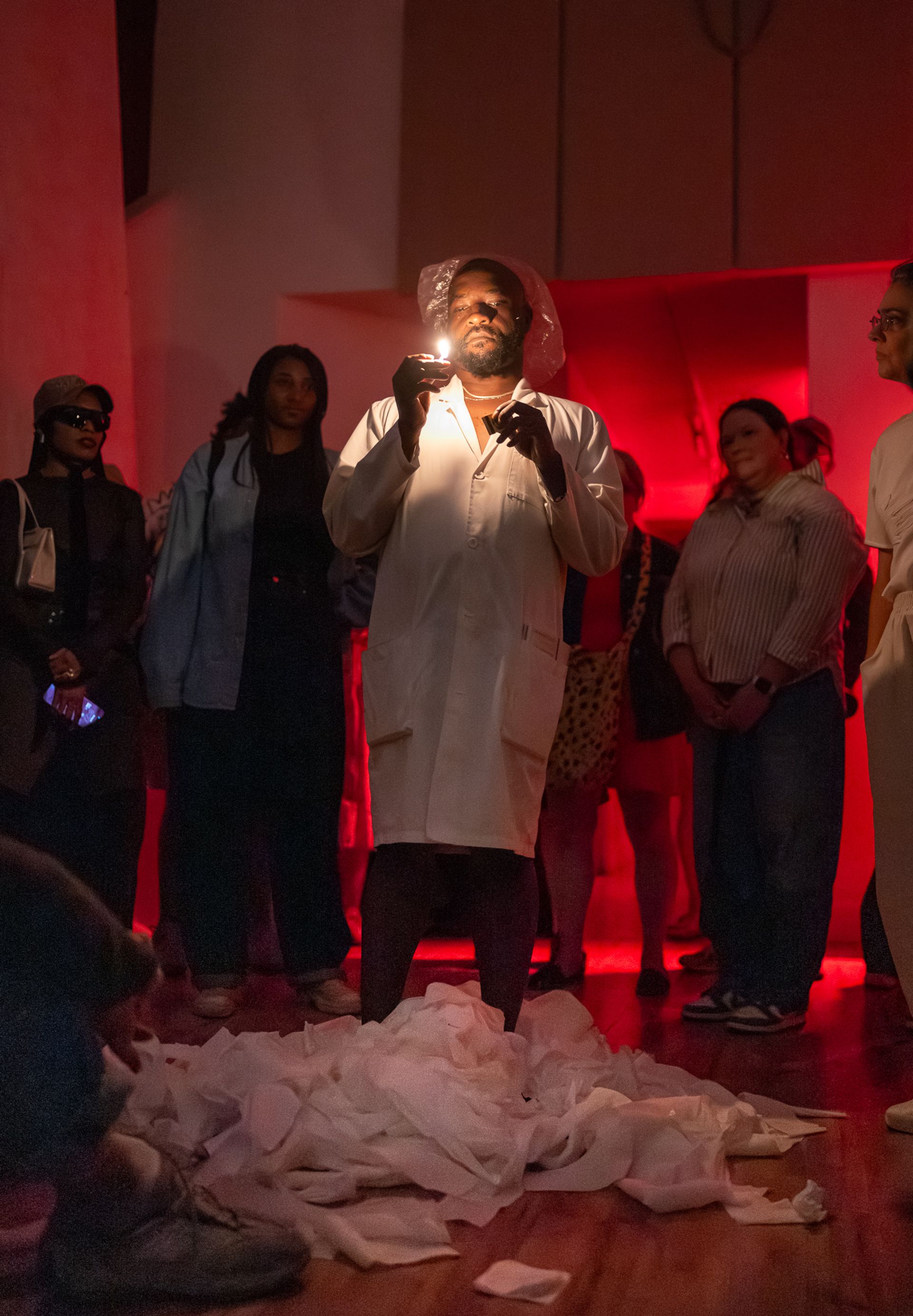
keyon gaskin performs at Barn Radio Photo: Mario Gallucci, courtesy Converge 45
The celebrated Portland-based artist keyon gaskin, known for their incisive institutional critique, also addresses deception—not in the abstract like Radon, but as a very real experience. In a performance at Barn Radio, gaskin threw toilet paper into a crowded storefront exhibition space while singing about their dissatisfaction with the triennial’s leadership for a cancelled project and lack of payment after two years of conversations.
“You can’t spell converge without ‘con’,” gaskin observed, proceeding to lower the roll gate halfway, gather the dispersed tissue in the centre of the room and ask the crowd for matches. The audience vibrated with palpable anxiety as gaskin lit a match and watched it burn. Much like the Mechanical Turk, gaskin plays on viewers’ expectations and culpability, forcing them to question what is true and who can be believed.
Installation view of Rose Salane’s Afterlife in Public at Cooley Gallery, Reed College Photo: Mario Gallucci, courtesy Converge 45
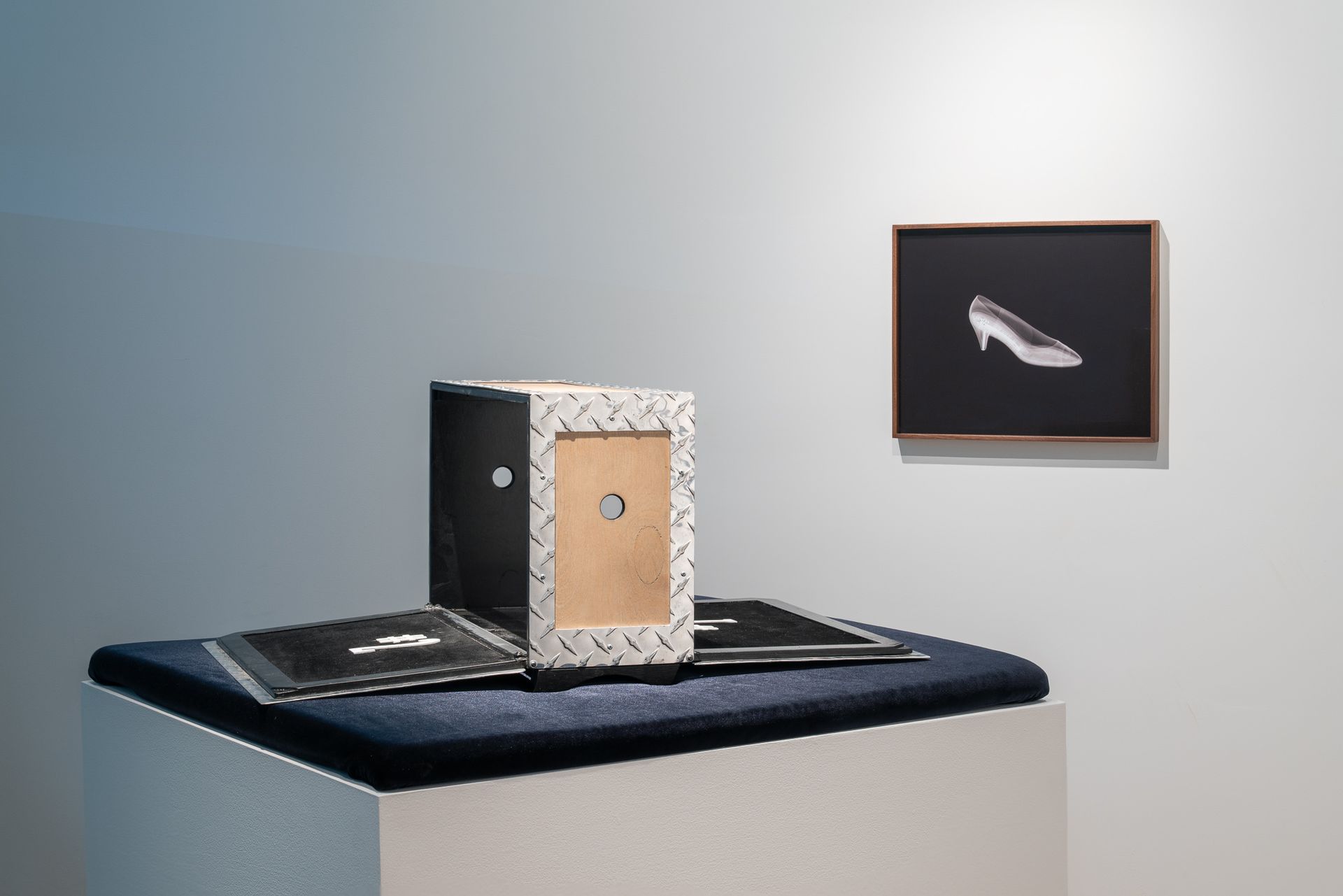
Meanwhile at Reed College, Rose Salane’s project—one of the few to engage with the city of Portland directly—similarly, though perhaps unintentionally, toys with believability via the tactics of reality television and professional magic (until 10 December). Having purchased a pair of Princess Diana’s shoes at auction, she displayed them in a local mall for residents to see, touch and even smell, while a film crew documented people’s exalted reactions.
The intimacy offered in that setting is contrasted by Salane’s collaboration with a local magician, who featured the shoes in a disappearing act. Her resulting video—presented alongside a display of related props and artefacts from which the shoes are conspicuously absent—makes it nearly impossible to believe that their origin story is entirely truthful.
In the end, although Converge 45 includes stellar and captivating presentations, what precisely was meant to converge on the 45th parallel remains unclear.
- Converge 45, various closing dates, multiple venues in Portland, Oregon