


Thousands of years ago, giant beavers roamed North America. Distant relatives of the creatures we know today, the bear-sized animals became extinct at the end of the last Ice Age, their reign ending with the changing climate. Now, larger-than-life beavers are returning to Canada in the form of a permanent public sculpture by the Cree artist Kent Monkman. Gracing Toronto’s revitalised Port Lands waterfront as part of the new Lassonde Art Trail, The Colony (2026) is Monkman’s first public sculpture. Made of bronze and steel, the work resembles a condominium full of vivacious beavers, each engaging in a distinctive activity.
Known for his provocative figurative paintings and drawings that probe Western art historical and colonial narratives, Monkman had previously resisted entering the world of public art. “There were unknowns in terms of how I could communicate my vision in drawing and make it work in a different medium,” he tells The Art Newspaper. “There is something quite different about creating a work for the outdoors. Public art can be a complex thing to navigate; it’s more exposed and the audience isn’t necessarily discovering the work intentionally by stepping over the threshold into a museum.”
The Lassonde team approached Monkman and soon instilled in him the confidence to take a leap of faith and embark on the commission. At the time, the art trail was under construction as part of a C$1.4bn ($1bn) revitalisation of the Port Lands area of Toronto that saw the creation of a new island in Biidaasige Park and the rerouting of the mouth of the Don River. To bring art to the area, the philanthropist Pierre Lassonde donated C$25m ($18m), resulting in the two-and-a-half-mile sculpture trail. While most of the inaugural group of 17 pieces is temporary, Monkman and Portuguese sculptor Joana Vasconcelos were commissioned to create permanent works for the trail.
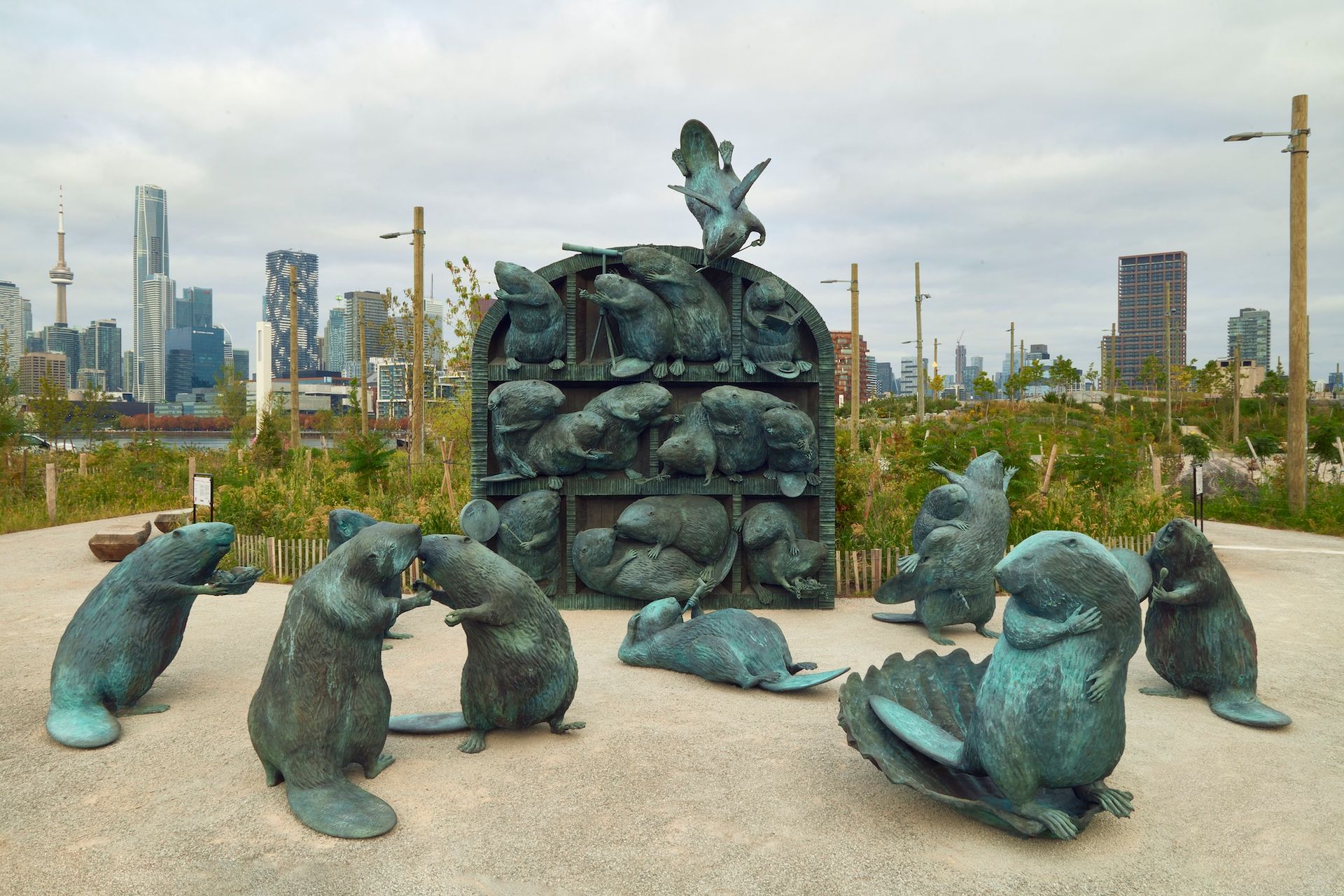
Kent Monkman, The Colony (2026), commissioned by Lassonde Art Trail Photo: Michael Seleski
When deciding what to create for the space, Monkman reflected on the mission of the revitalisation project. “The goal was to remediate Biidaasige Park and the Don River, redirecting the river to its natural flow,” he says. “That’s essentially what beavers do. They redirect water, create ecosystems for their habitats and impact the ecosystems of other animals.”
Working with the local foundry MST Bronze, Monkman created an arched structure around 12ft tall that resembles a modern condominium, not unlike the Toronto cityscape seen soaring behind the work. Inside and around the condo are beavers, each four feet tall. In designing the piece, Monkman drew inspiration from an 18th-century engraving by Veremondo Rossi depicting beavers taking shelter in a similar apartment-like structure while being pursued by Indigenous hunters, an image he’s referenced in the past.
“It was made around the time when Louis XV was busy commissioning hunting scenes of foreign lands,” Monkman says. “Beavers were a form of currency in the fur trade throughout North America. There was great competition between French and British colonists, and Indigenous people were also players in this trade, which devastated beaver populations. I like to think of beavers as standing in for the history of why this became a British colony instead of French, as well as how nature has been shaped by human activity.”
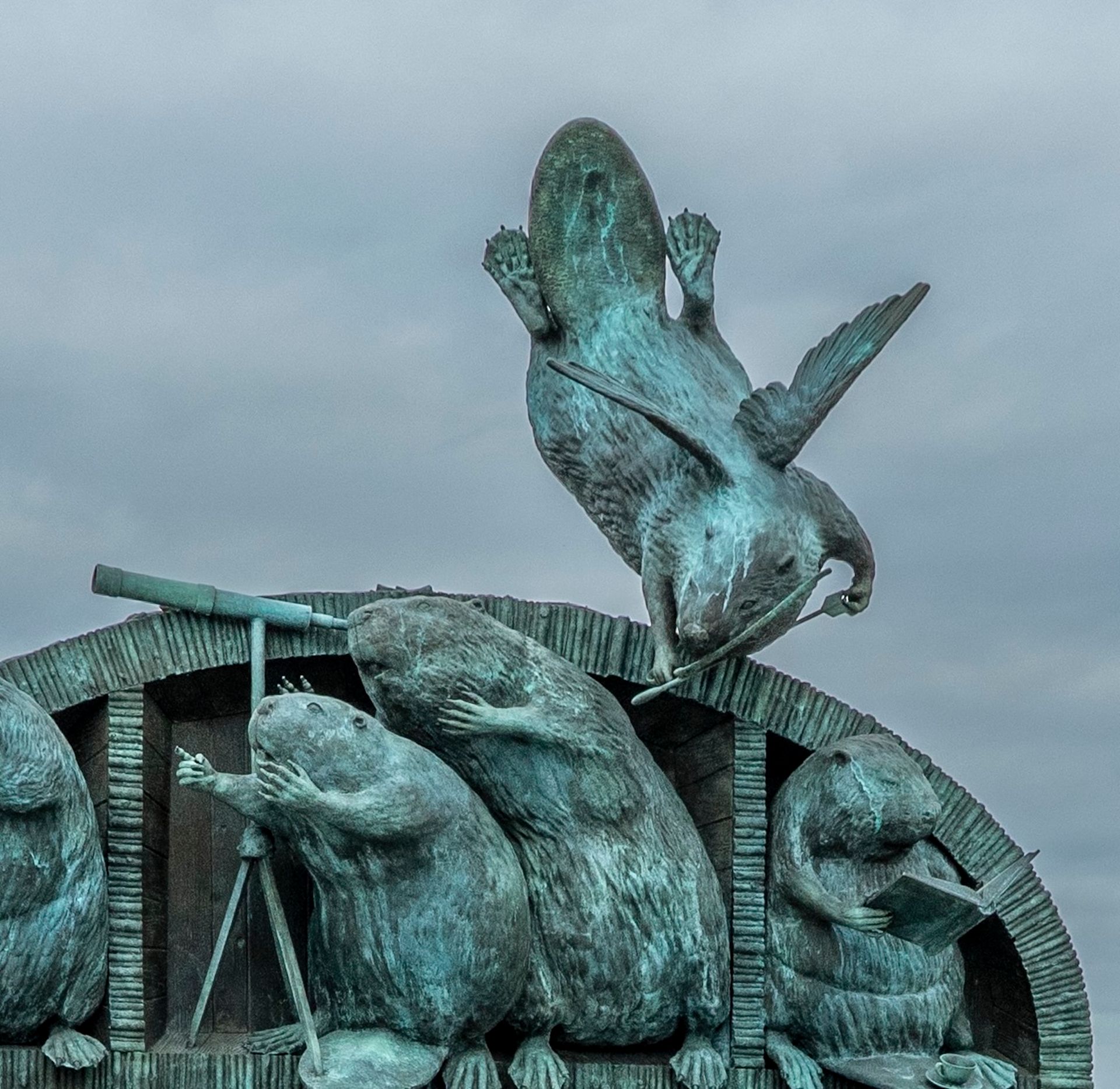
Detail of Kent Monkman's The Colony (2026), commissioned by Lassonde Art Trail Photo: Vid Ingelevics and Ryan Walker
A brush with… Kent Monkman — podcast
Monkman hopes viewers of his commission, encountering it in a setting created by contemporary environmental remediation efforts, will reflect on kinship between species. “I invite people to consider Indigenous storytelling and how animals are part of a shared ecosystem,” he says. “Indigenous knowledge and Indigenous presence are deeply embedded in this land.”
Each of Monkman’s beavers engages in a different playful activity, like dancing, reading a book or playing the drums. One looks through a telescope as if stargazing, a nod to Indigenous star stories. The anthropomorphised creatures have exaggerated expressions, adding an element of humour that is integral to Monkman’s practice.
“The history of this continent is not an easy one; there are dark chapters,” Monkman says. “Humour makes us Cree, makes us human, and can help open people’s spirits to receive challenging messages and have difficult conversations.”