

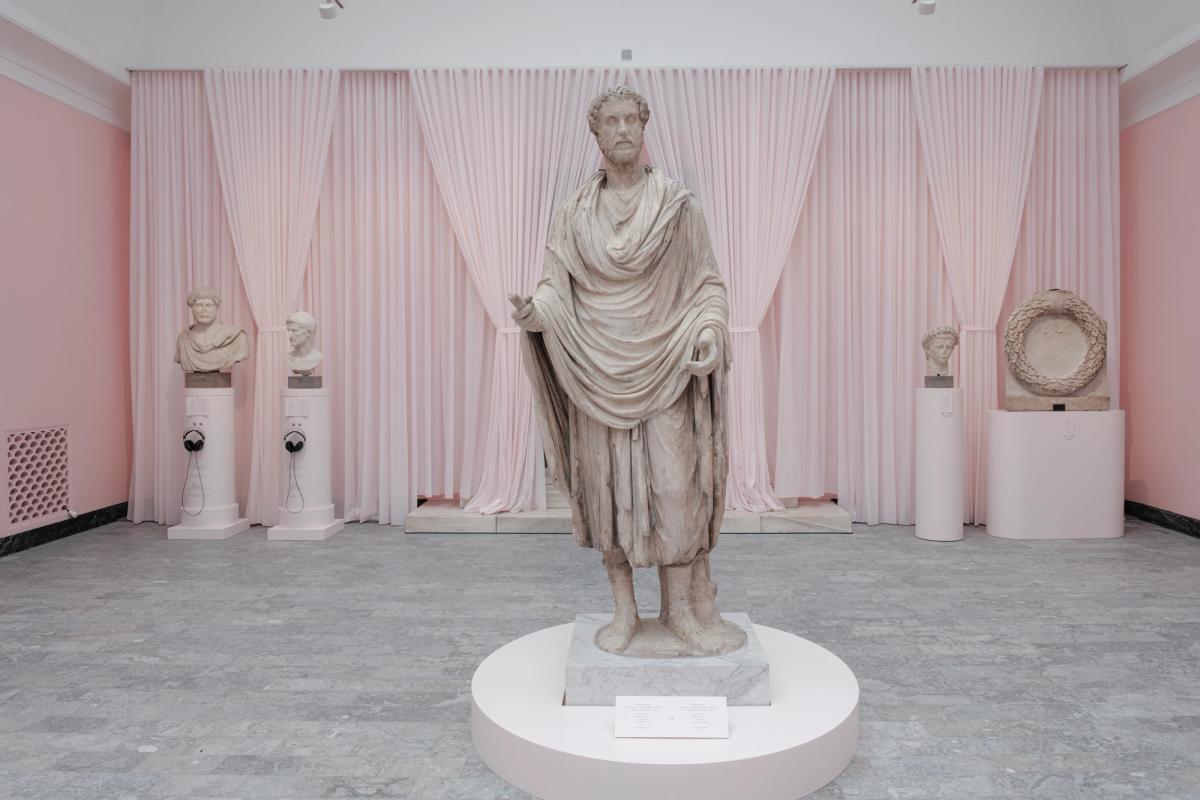
The Ny Carlsberg Glyptotek in Copenhagen opened back in 1897, but it still reflects the grandiose tastes of its founder, the brewer and collector Carl Jacobsen. His Belle-Époque passion for classical antiquity could have meant gathering together anything from pottery shards to bits of Roman glass, but Jacobsen went in for the “big and flashy”, says the Glyptotek curator Cecilie Brøns, invoking the museum’s signature portrait statues. This October, the Glyptotek will take full advantage of Jacobsen’s legacy with the largest show about antiquity in its history, dedicated to the adornment of the human body.
The Power of Fashion in the Roman Empire, featuring 171 objects, will be a new way to look at these towering in-house works, like the elegantly draped statue of the Emperor Tiberius and of the freed slave Fundilius Doctus decked out in an elaborate toga (both from the mid-first century AD). It will also include some sensational loans. The British Museum is sending three rare examples of Roman tunics, none of which have left the museum before. And Turkey’s Burdur Museum, 125km inland from Antalya, is sending the two massive leg fragments and the head from a once colossal sculpture of Emperor Septimius Severus for a display about footwear.
Polychromy in ancient sculpture has been a key area of research at the Glyptotek, and colour in Roman clothing will be at the heart of the exhibition.
The now off-white mantle drapery on the Tiberius statue was once a pinkish purple, one of a range of related colours known in Latin as “purpura,” associated with a type of dye made from Mediterranean snails and much valued in the ancient world. (The show includes an approximation of the mantle’s original shade in a logo-worthy digital image.) Meanwhile, research indicates that Fundilius’s toga was once painted red or orange, reflecting the subject’s status as a former slave.
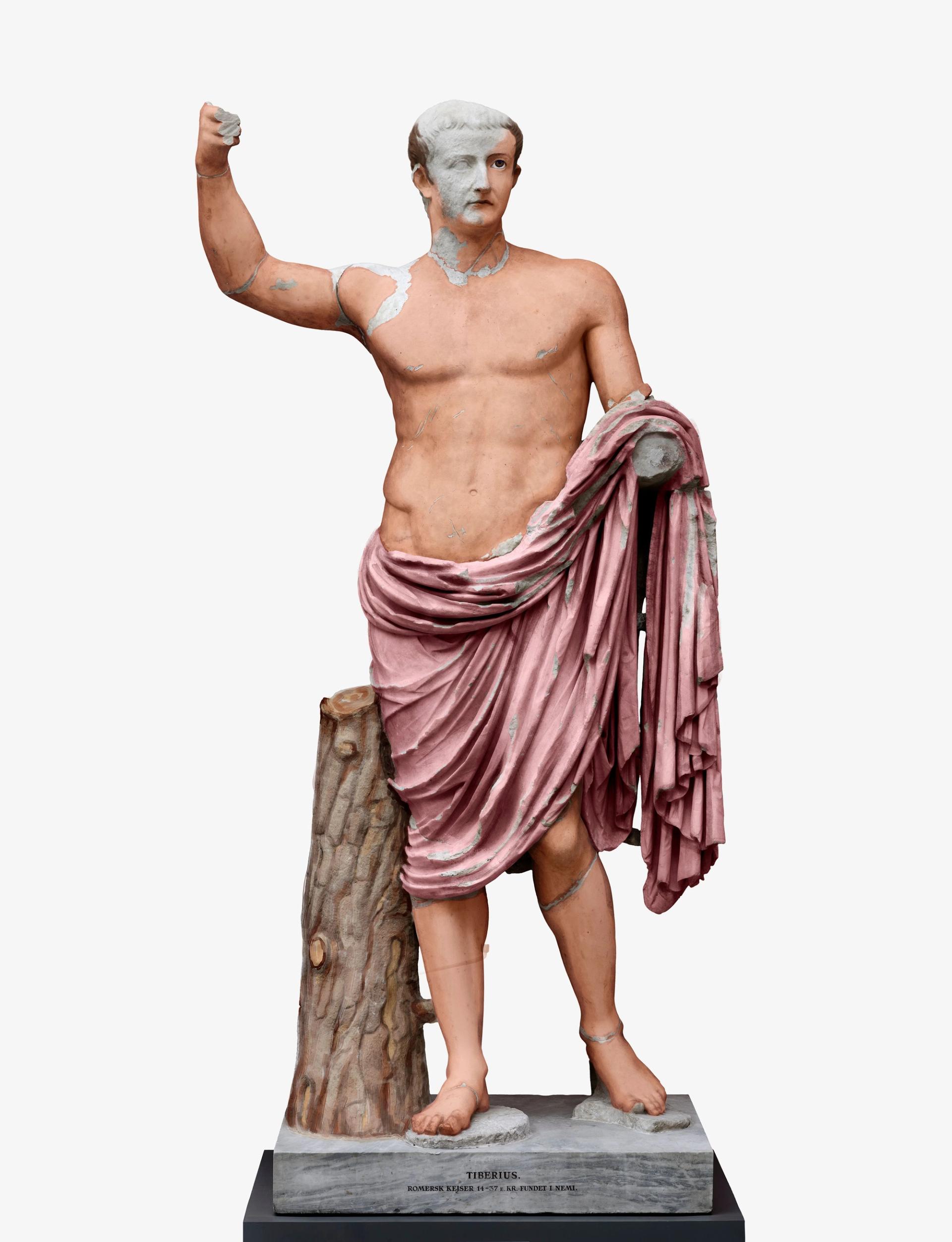
A digital image reveals how Emperor Tiberius’s mantle drapery would have looked © Glyptoteket
Red herring
Clothes, no matter the shade, can be something of a red herring when it comes to Ancient Rome, suggests Brøns. The British Museum’s tunics, along with a Byzantine fragment from the Glyptotek’s own holdings, may indicate what the ancients actually wore. But statues demonstrate something else—how clothing was depicted to indicate status.
Brøns cites the statue of the Emperor Trajan as a military commander. The figure is shown wearing a pleated tunic, a leather doublet, an elaborate breastplate and a paludamentum (a large ceremonial cloak used by Roman military officers). It is doubtful whether the real Trajan ever wore them in battle or even that a real commander might have dressed that way. What matters, Brøns says, is that Trajan was presented that way to his subjects. People wore clothes in Ancient Rome, but fashion, as such, was an instrument of statecraft.
• The Power of Fashion in the Roman Empire, Ny Carlsberg Glyptotek, Copenhagen, 1 October-29 March 2027