

There is a surreal streak in the public art that sprang up in parks and outdoor spaces across New York City this summer, including small objects rendered monumentally, otherworldly abstractions and animals reclaiming popular green spaces. On Governors Island, Alan Michelson’s large installation commissioned by More Art (with the Billion Oyster Project and Governors Island Arts), The Oyster (2026), nods to Indigenous shell middens and the bivalve’s rebounding population in New York Harbor. In City Hall Park, Genesis Belanger’s Public Art Fund exhibition Heads or Tails includes a flock of sculptural birds bathing in a fountain.
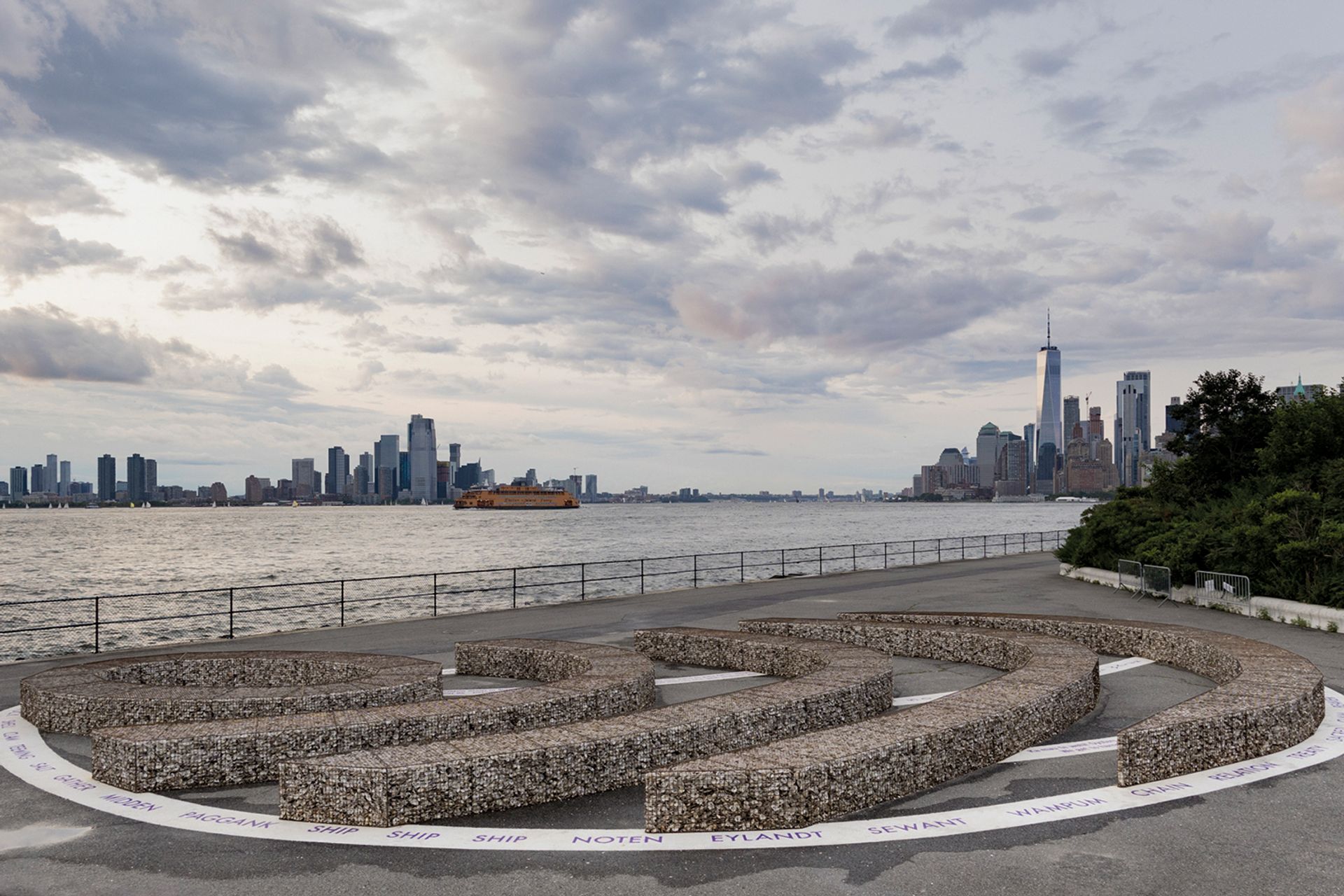
Pearl in the shell: Alan Michelson’s The Oyster (2026) on the western promenade of Governors Island invites visitors to reflect on the histories of extraction, trade, stewardship and displacement in New York Harbor
Photo by Alan Michelson
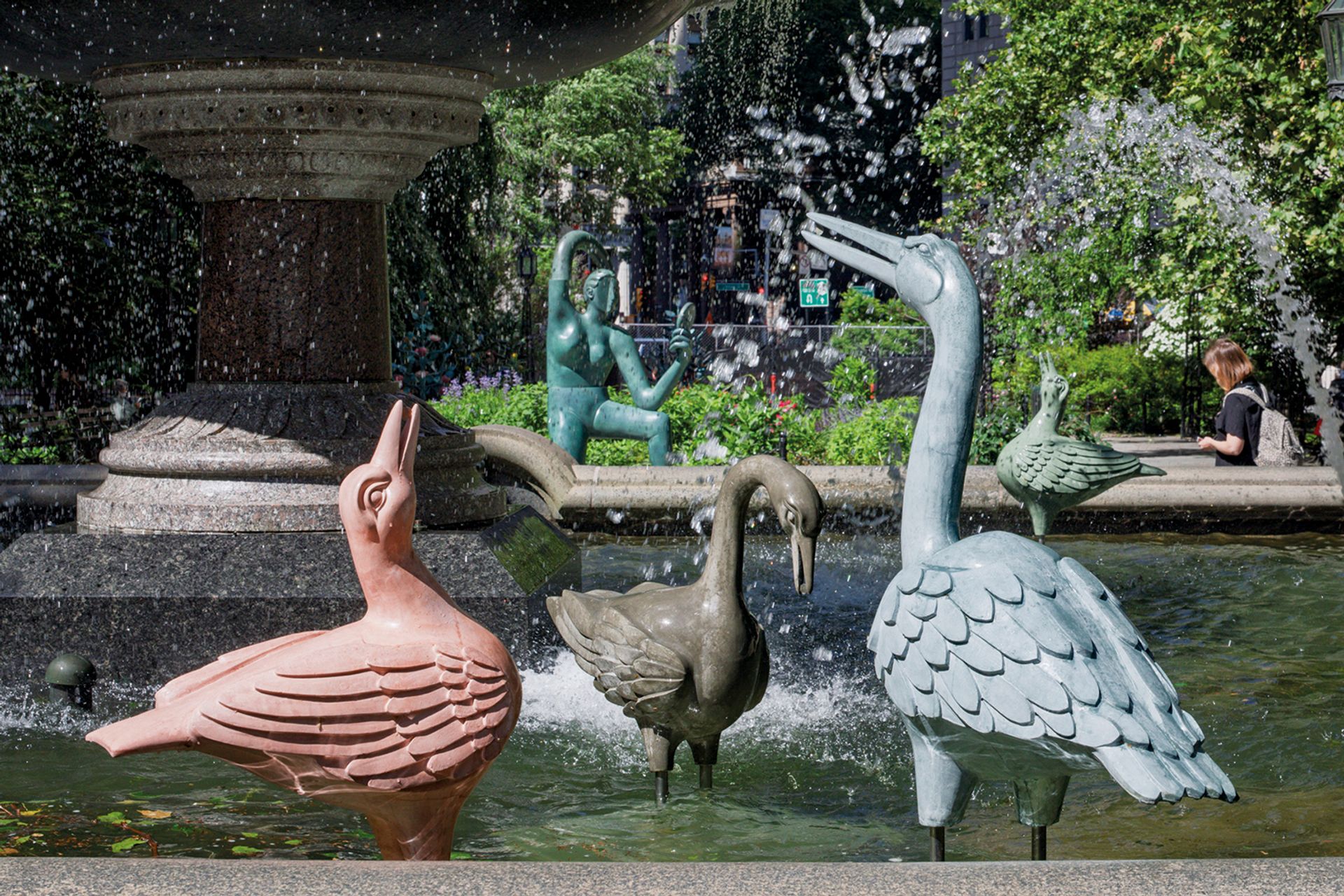
Birds of a feather: along with a flock of sculptural birds bathing in a fountain, Genesis Belanger’s Public Art Fund exhibition Heads or Tails in City Hall Park includes three potted fruit trees and two bronze figures
Courtesy of the artist, Pace Gallery and Perrotin
On the High Line, Ximena Garrido-Lecca has erected a 9ft-tall bronze fountain in the shape of a cob of corn, its neon-yellow water referencing toxic chemicals often used in the farming of the grain. Elsewhere on the High Line are three figures from Derek Fordjour’s ARCHETYPES series depicting Black figures whose livelihoods are to one extent or another dependent on their bodies—a boxer, a burlesque dancer and a waiter. Another trio of sculptures on the High Line, by Patricia Ayres, evokes strange bodies wrapped and bound in cloth, elastic and other materials, looming ominously on the elevated walkway.
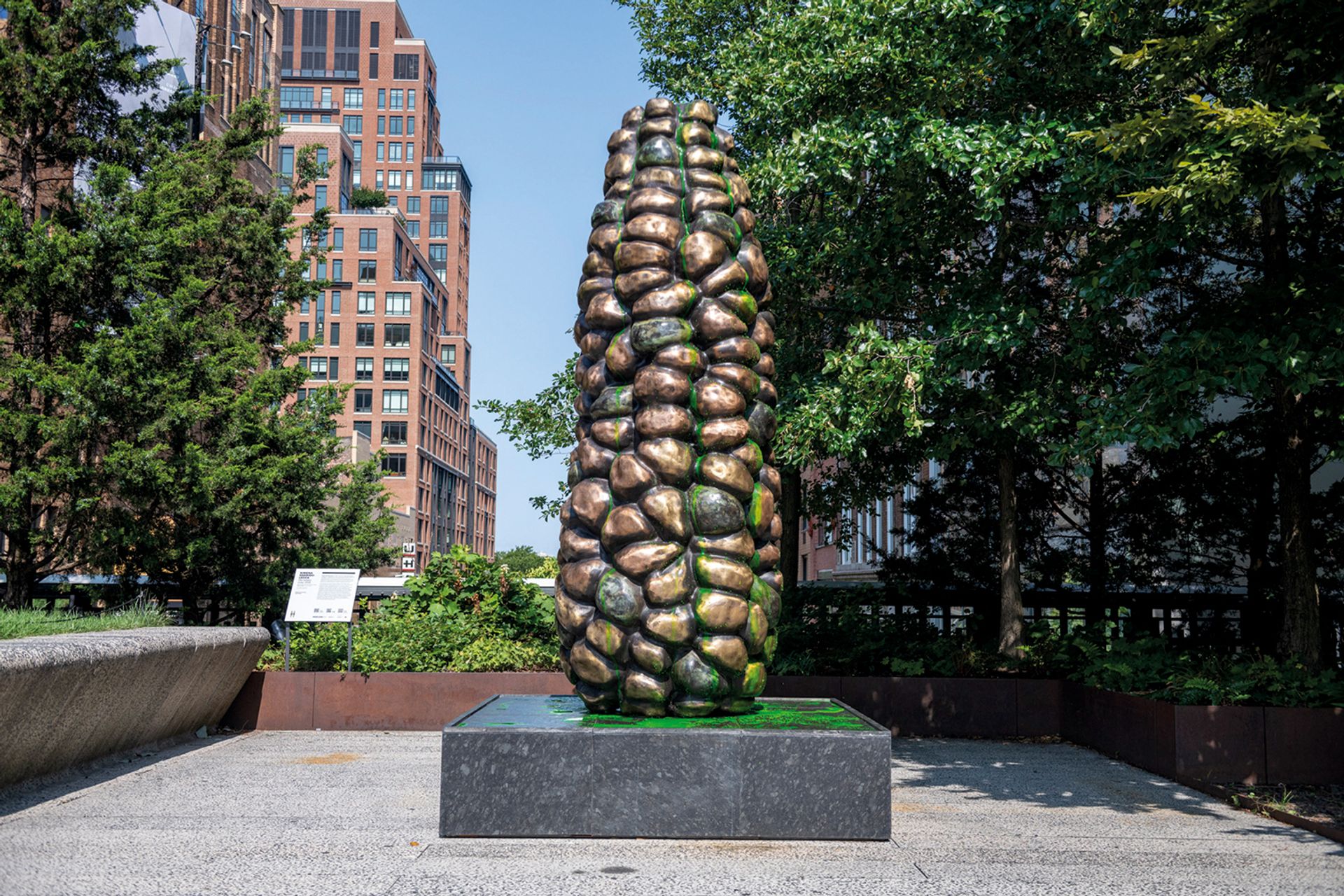
Toxic harvest: in the 9ft-tall fountain The Golden Crop (2026) on the High Line, Ximena Garrido-Lecca dyed the water neon yellow, referencing glyphosate, a pesticide that corn is often genetically modified to withstand
Photo by Timothy Schenck, courtesy of the High Line
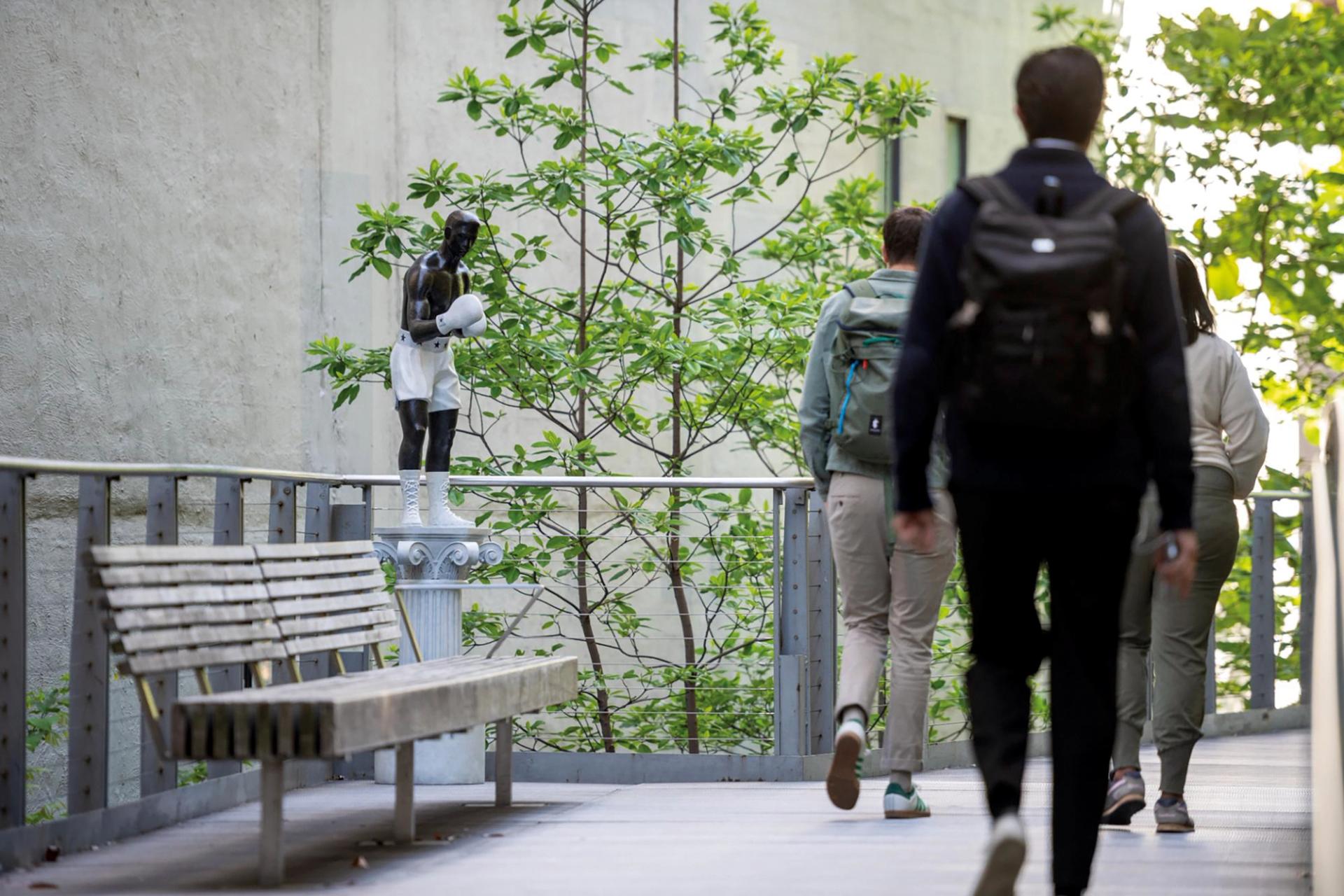
Art of work: Derek Fordjour’s ARCHETYPE III: Resilience (2026) is one of three bronze statues on the High Line, which depict a boxer, a waiter and a dancer, revealing how the entertainment and service economies connect
Photo by Timothy Schenck
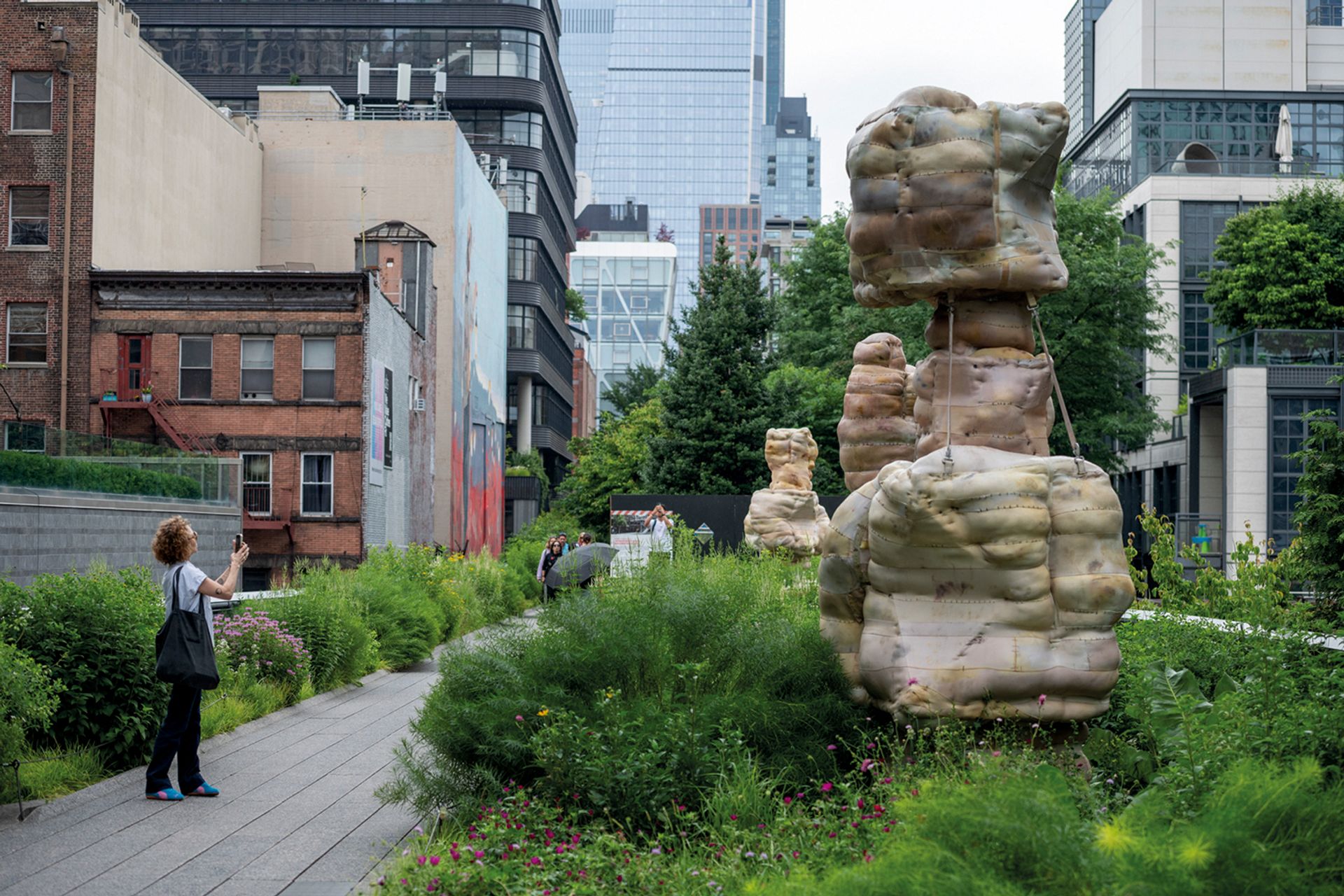
Clever sequence: A trio of sculptures on the High Line by Patricia Ayres, 2-18-5-14-4-1-14-3-12-15-14-6-5-18-20, 7-5-18-20-18-21-4-5-8-5-9-6-20-1 and 2-15-14-1-16-9-14-1 (all 2026) decode to the names of Catholic saints
Photo by Timothy Schenck, courtesy of the High Line
In Madison Square Park, the ceramicist Roberto Lugo has erected a giant orange fire hydrant as well as a 20ft-tall urn that pays tribute to Puerto Rican history and heritage, with portraits of Supreme Court Justice Sonia Sotomayor, reggaeton sensation Bad Bunny, baseball legend Roberto Clemente, Lugo’s parents and others.
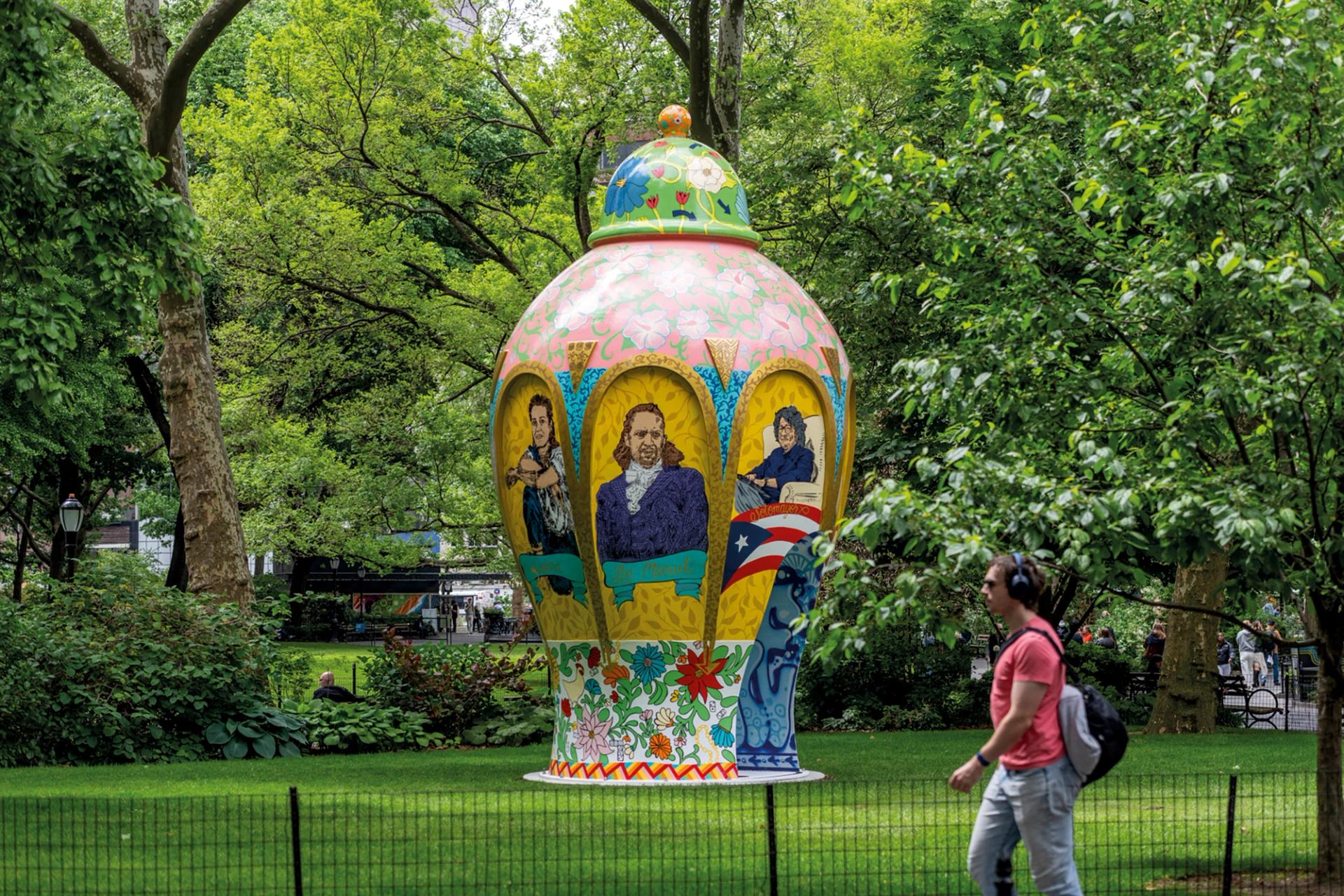
Bright surprise: a 20ft-tall urn is one of the pieces in Roberto Lugo’s Alfarero del Barrio (Village Potter) installation at Madison Square Park, which celebrates Puerto Rican culture and features portraits of the artist’s parents
Courtesy of the artist and R & Company, commissioned by Madison Square Park Conservancy, photo by Timothy Schenck
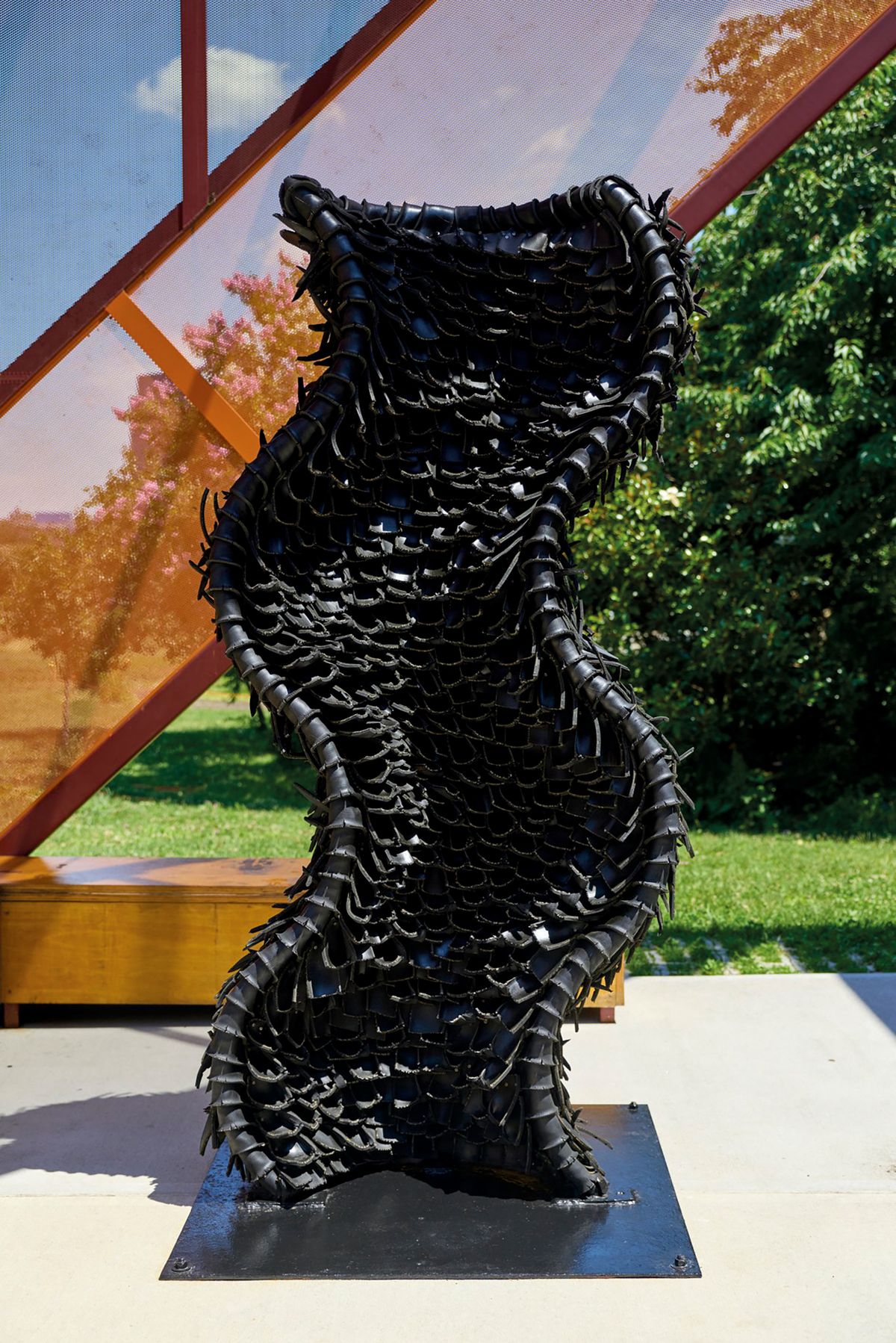
In MoMA PS1’s courtyard, the artist and poet Precious Okoyomon has planted Among the Flowers I Learned to Love: A Garden of Decreation, which in addition to weeds, flowers, pollinators and other plant life, includes a giant teddy bear sculpture that visitors can climb through. And a couple neighgbourhoods over on the Queens waterfront, Chakaia Booker has installed a trio of her otherworldly sculptures fashioned from recycled tyres in Socrates Sculpture Park, which marks its 40th anniversary this year.
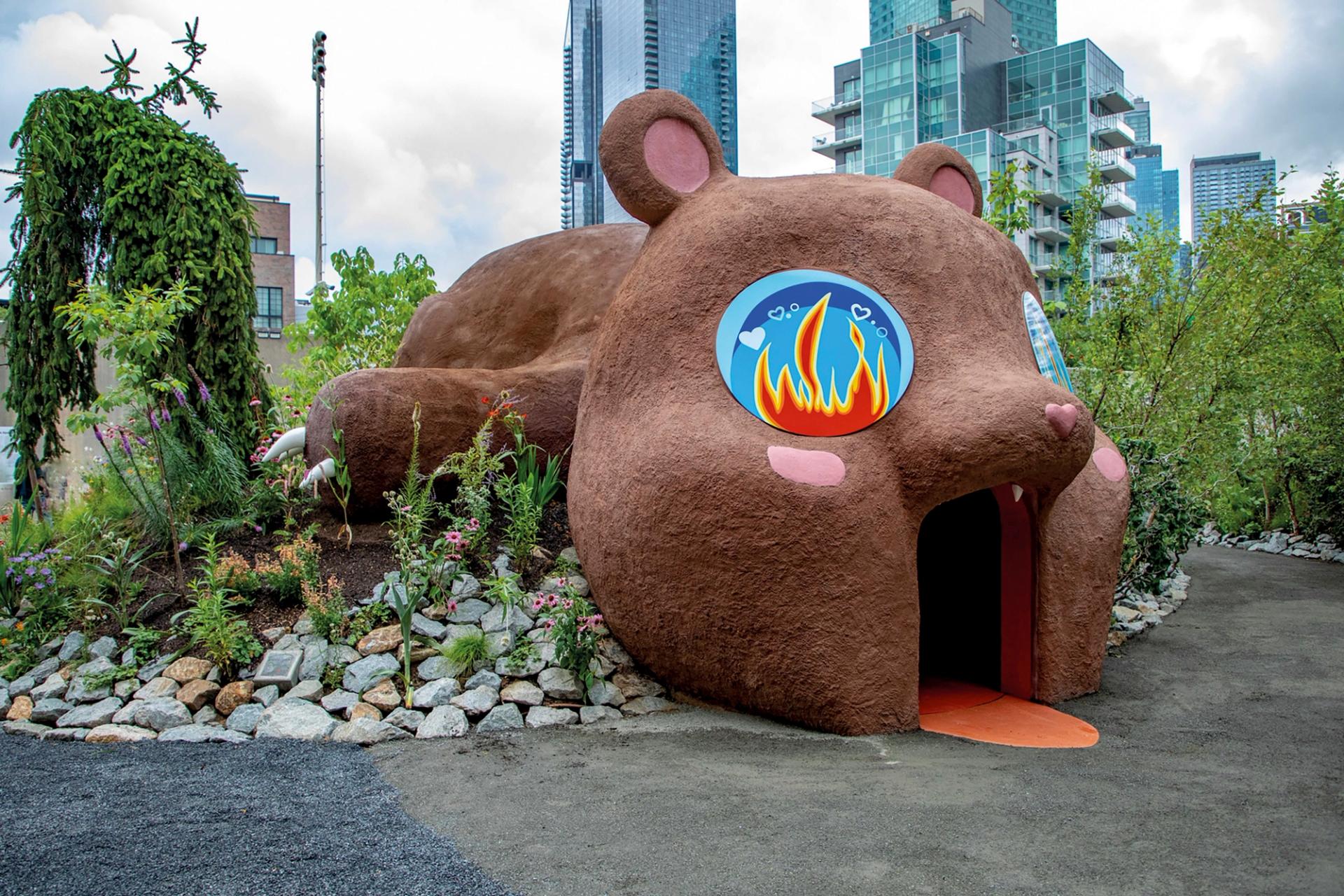
Open-mouthed wonder: A giant teddy bear that people can climb through sits among the plant life of Precious Okoyomon’s Among the Flowers I Learned to Love: A Garden of Decreation (2026) in MoMA PS1’s courtyard. The 25ft-long bear, which visitors enter at the rear before sliding out through its mouth, is filled with glowing lights and Okoyomon’s poetry, while the garden is an ever-changing landscape of grasses, flowers, pollinators and wild growth
Photo by John Kim