

Amid a crowded month on the international art-fair circuit, the 22nd edition of Artbo (until 27 September) has opened in Colombia’s sprawling capital in the Andes with a continued strong focus on Latin American galleries and artists.
This year’s edition of the Bogotá fair features 50 galleries, an increase from just 33 three years ago and slightly up from 46 in 2025, though considerably down on pre-pandemic figures, which hovered around 70 exhibitors. Although around two-thirds are Colombian, roughly a dozen countries are represented, and every gallery has ties to the region.
“I don’t plan for us to be this kind of international [fair] that we have many galleries from all the continents”, says Artbo director Jaime A. Martínez, who took the reins in 2025 from María Paz Gaviria, who led it for over a decade. “For me what’s important is that Artbo is a fair where you come to see Latin American art, and especially South American and Central American”. He has made a point of including galleries from neighbouring countries such as Venezuela, Panama and Ecuador.
Wednesday’s preview (23 September) had a lively vibe and turnout of 3,500, with Thursday being slower-paced. Although it attracts visitors from around the world, Martínez notes that the fair, organised by the Bogotá Chamber of Commerce, is a mainstay in Colombia’s art scene. “Artbo was always the place to see art; there are people that they don’t go to museums every year, but they come to Artbo."
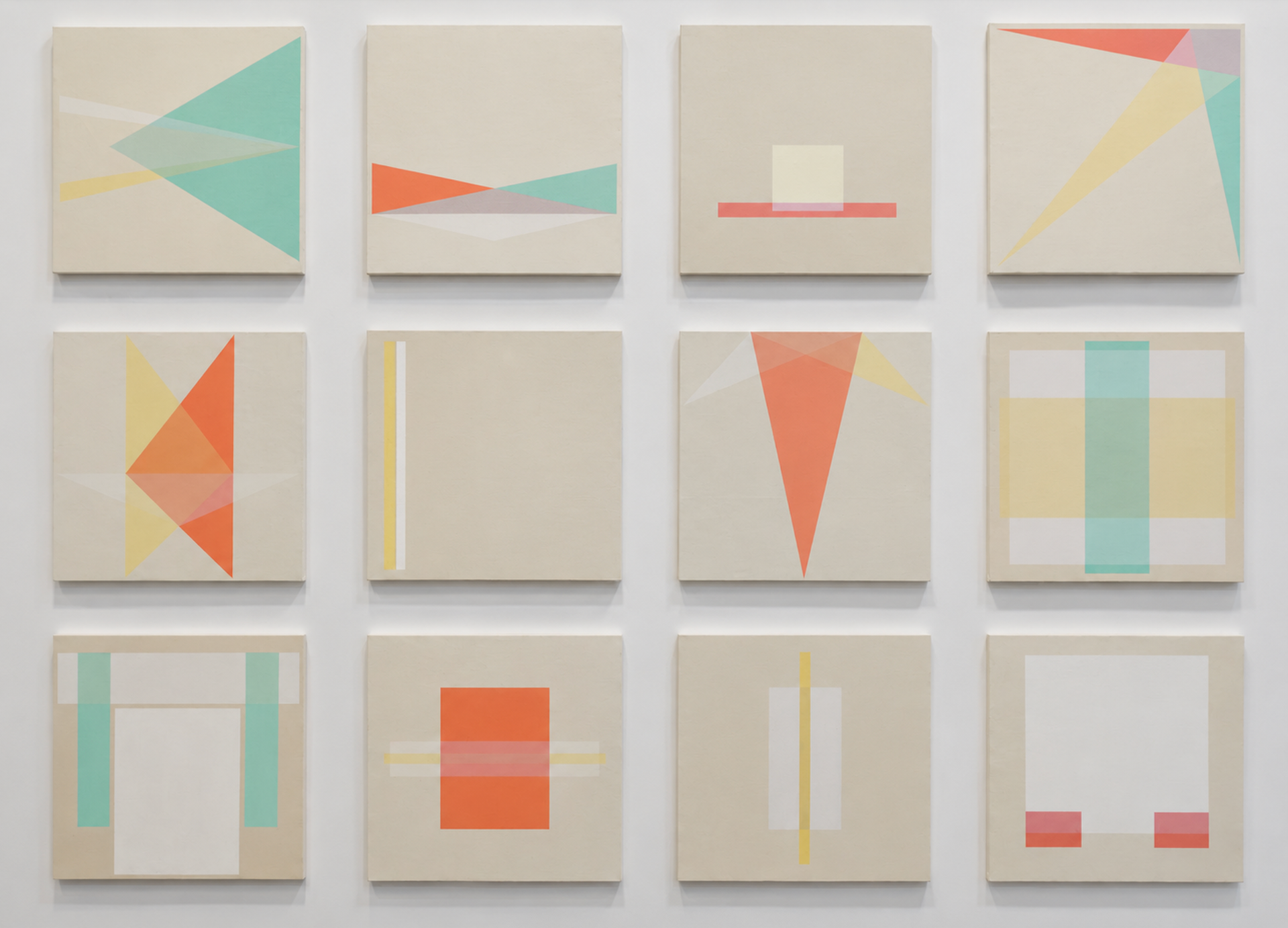
12 small abstract geometric paintings by Gustavo Niño were acquired by Miami collector Jorge M. Pérez’s Related Group
Artbo is “very important for the city”, concurs Beatríz López, artistic director and co-founder of the New York- and Bogotá-based Instituto de Visión, a longtime participant. “The fair has been very successful bringing in people, bringing attention, bringing in energy”.
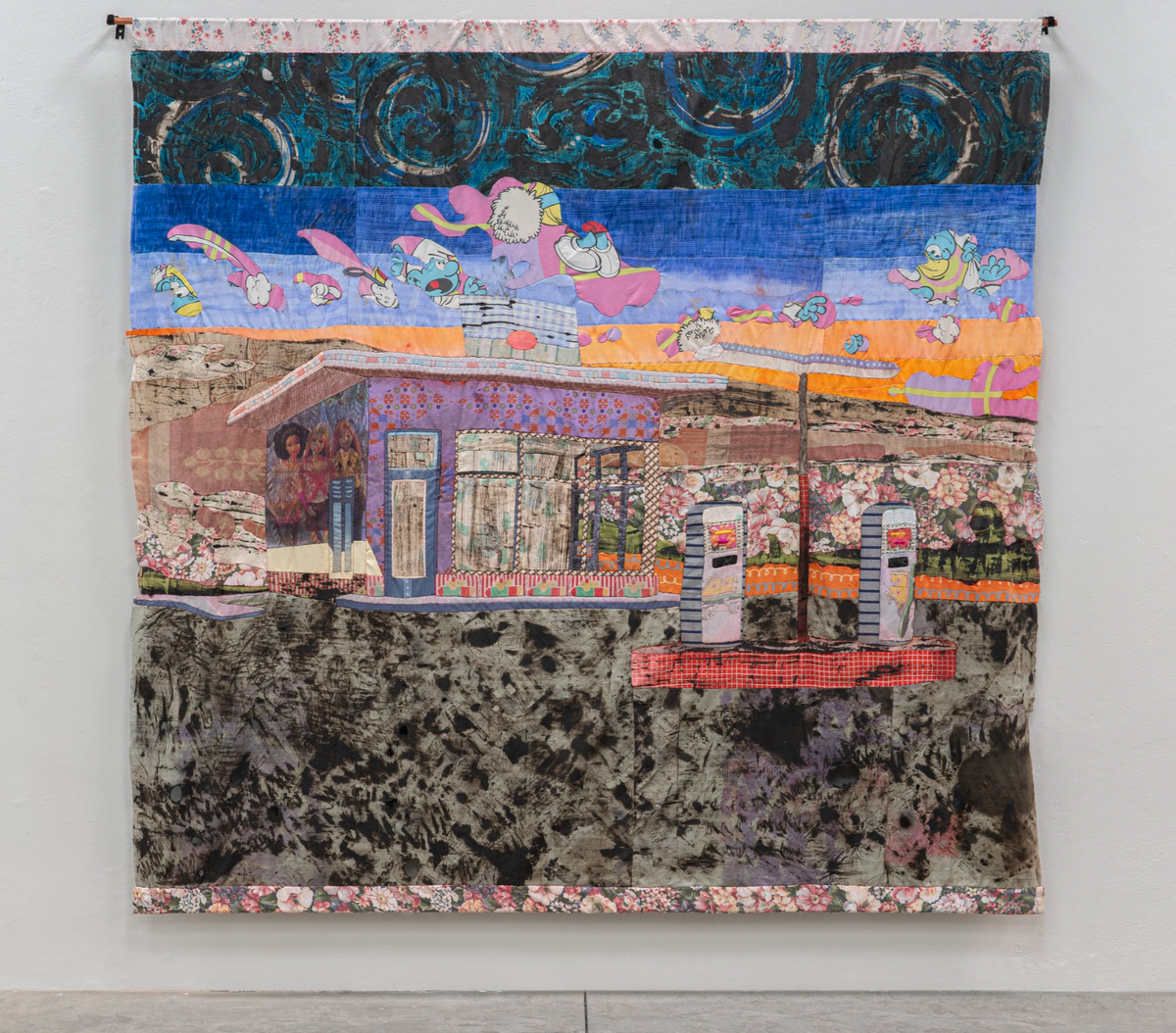
López views Artbo as an opportunity to platform Colombian artists specifically: “It’s very important for me when I participate in this fair that the opportunity and the space is given to local artists”. Her stand is showing geometric paintings created with mambé (an unrefined coca-leaf powder) by Aimema Úai, a Huitoto Indigenous artist, along with oil paintings and patchwork quilts by Gloria Sebastián Fierro, with prices ranging from $5,000 to $50,000. Some of Fierro’s textile pieces sold for up to $20,000 on the preview day.
The decade-old but recently renamed Fernández Mosseri gallery (formerly Galería [SN]) is also highlighting Colombian and Colombia-linked artists. Co-owner Ana Mosseri says her gallery’s longtime focus on painting is seeing renewed interest. “In Colombia, people stopped painting for many years. It’s just coming back”, she says. “But the older generations never stopped painting. In our gallery the older artists are references for the younger artists”.
On the preview day, Miami collector Jorge M. Pérez’s Related Group acquired a display of 12 small abstract geometric paintings by Gustavo Niño from the gallery for $20,000, while Bogotá’s private Gun Club, which has a noteworthy art collection, acquired a figurative painting by Juan Carlos Delgado. Fernández Mosseri is also showcasing Miguel Böhmer’s Sea Sense series of kaleidoscopic lenticular prints of shells—about 10 of which have sold, for $2,000 apiece—along with his large bronze shell sculpture, listed for $60,000.
For the second time, Artbo includes a section called Galerías Doce, a slate of emerging galleries with just 12 square meters of exhibition space each. Among them, Mexico City’s Banda Municipal is highlighting glass works by Ana Sofía Esteva priced at about $2,000 to $3,000, while Panama City-based Arteconsult carries biographical staged photos by Rachelle Mozman.
As in previous iterations, Artbo has a curated section called Artecámera, featuring about 20 Colombian artists under age 40 who lack gallery representation; the 2026 show is heavy on materials and technology, with several artists addressing ecological themes. In an indication of Artbo’s Latin American emphasis, wall texts in Artecámera and other special curated sections—including a solo presentation honouring 88-year-old geometric abstractionist Fanny Sanín—are only in Spanish.
Political reverberations
Artbo’s 2026 edition takes place just ahead of the ten-year anniversary of Colombia’s landmark peace accord with the Revolutionary Armed Forces of Colombia (Farc) rebel group after five decades of armed conflict, yet the majority of the artwork this year doesn’t come across as overtly political.
Buenos Aires-based Rolf Art is one of a few galleries showing more politically oriented work. Founder Florencia Giordana Braun, who has exhibited at Artbo for about 15 years, observes that Colombian artists have been readier than many elsewhere in the region to grapple with their nation’s troubled history. “It’s a society that has been through so many political and military processes”, she says. “I found artists, collectors, institutions, they have a long tradition of looking to … speak aloud through art about the conflicts that they have been suffering”.
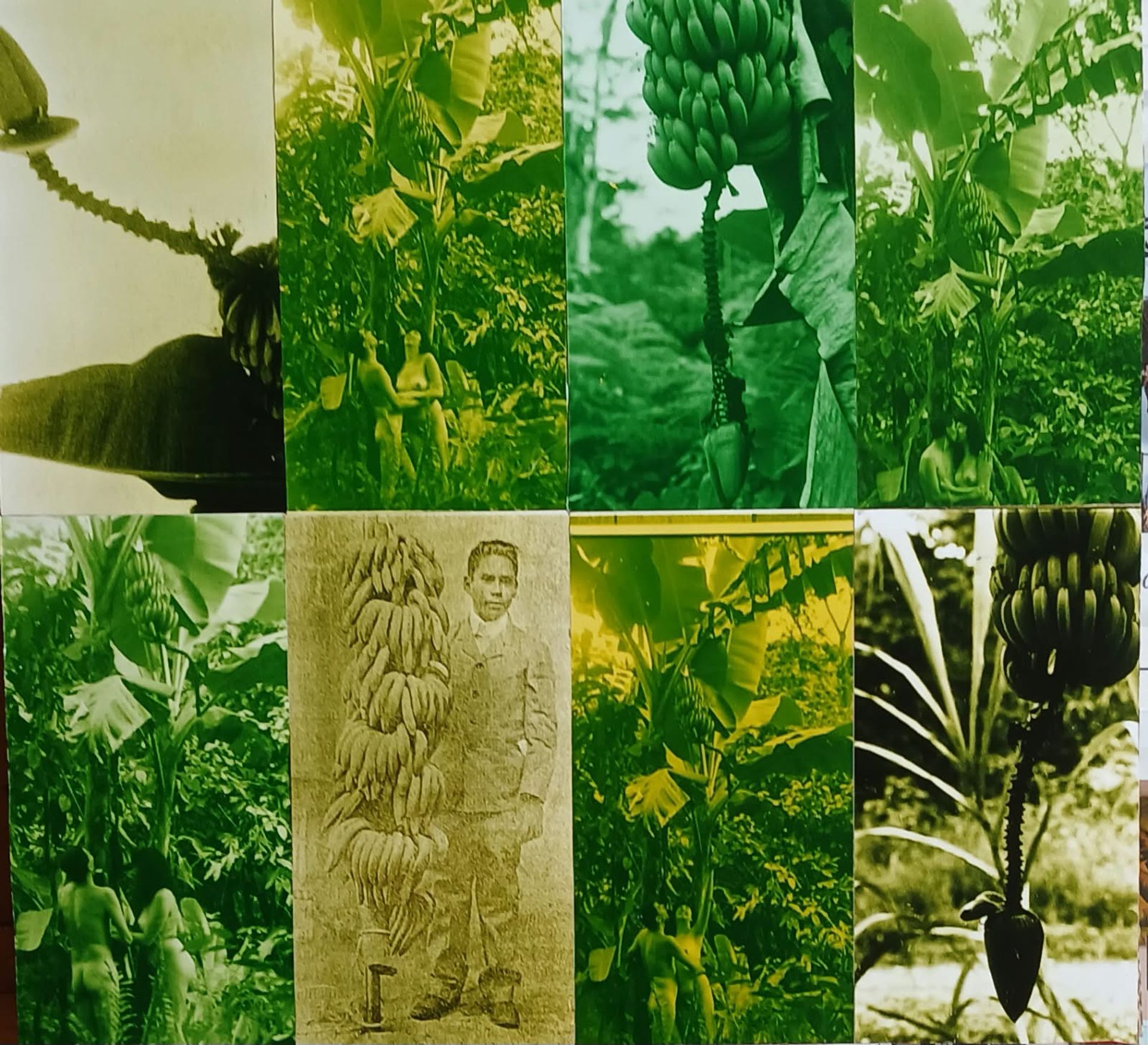
José Alejandro Restrepo’s Musa Paradisíaca (Paradisiac Muse) 1996
Courtesy of the artist and Rolf Art
Her stand, which also spotlights technology-based art, is presenting Clemencia Echeverri’s Versión Libre video installation incorporating testimonies of former combatants; different configurations have sold for $10,000 to $40,000. Works in fellow Colombian José Alejandro Restrepo’s reinterpretation of his 1996 series Musa Paradisíaca (Paradisiac Muse), exploring themes of gender and colonial conquest, went for up to $15,000.
Mor Charpentier’s display reflects a more political bent as well, such as a charcoal on linen by Nohemí Pérez that responds to destruction of the Amazon. “We work with artists with a certain social, political engagement, people who are connected with the present but also the past”, says Colombian-born Alex Mor, co-founder of the Paris- and Bogotá-based gallery.
It has also brought a wider selection of artists to the fair, reflecting its more international roster—something that Mor sees as an advantage in an otherwise regionally focused event. “We bring new artists that never have been showcased here. People are curious and they trust us, and we’re able to place in good collections”, he says.
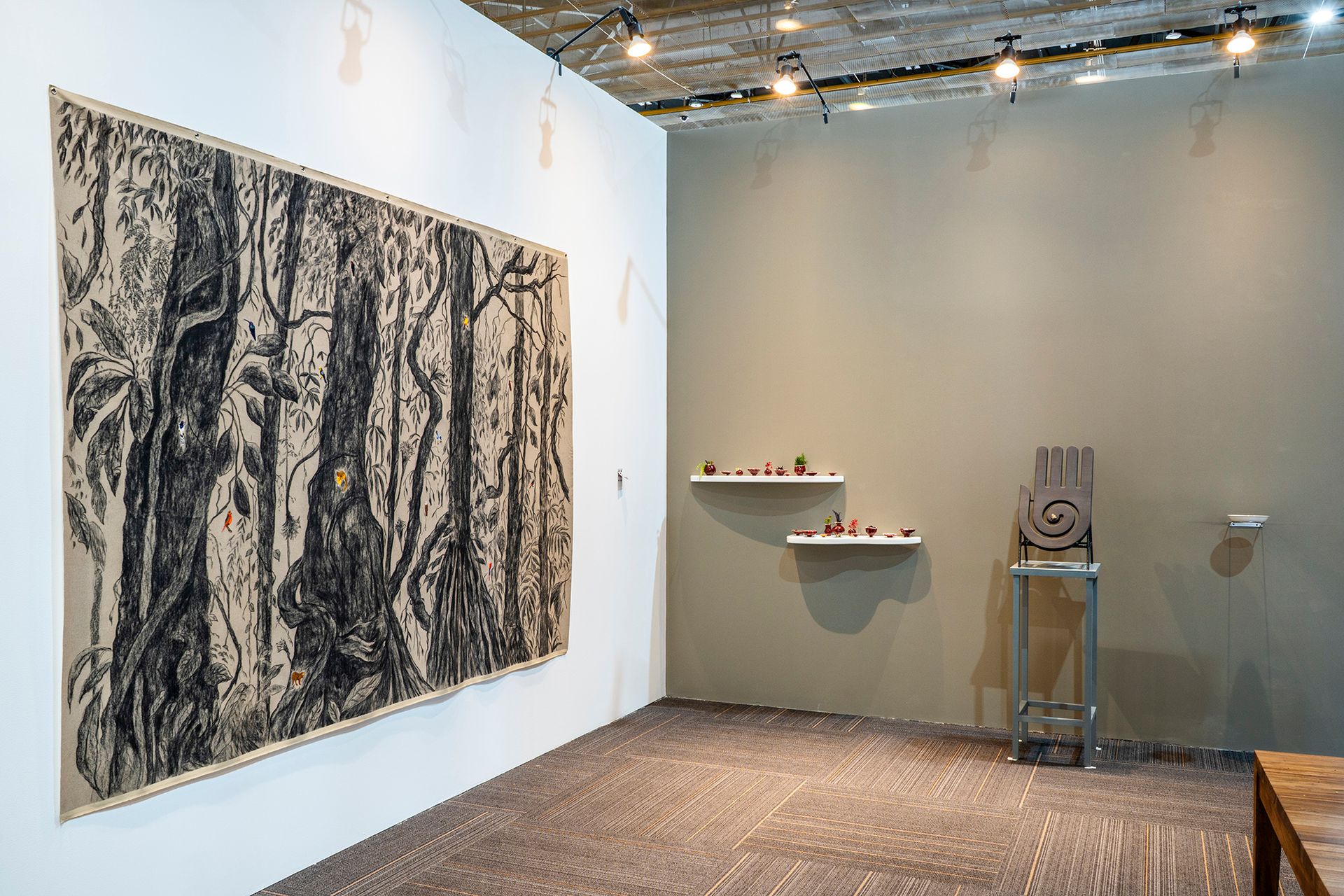
Mor Charpentier's stand at Artbo 2026
Courtesy of Mor Charpentier
With prices ranging from $8,000 and $60,000 at Artbo, Mor Charpentier has sold work by Colombians Pérez and Daniel Correa Mejía, along with French artist Sylvie Selig. Other artists on view include Cuban-born Carlos Garaicoa, Syrian Anas Albraehe and Argentine Liliana Porter.
Some gallerists expressed optimism that the new right-wing government of President Abelardo de la Espriella, who took office last month, will attract more business, thus boosting the country’s art scene. Yet earlier this week, artists and others protested outside the Ministry of Culture in response to a proposed 30% reduction of Colombia’s 2027 cultural budget, along with the recent suspension of national arts awards.
Whatever the political winds, however, it seems Artbo’s identity as a hub for the region’s art is unambiguous. As Martínez says, “This has to be the fair that you go to discover what Latin America has to offer”.
Artbo, until 27 September, Agora Bogotá Convention Center, Bogotá