

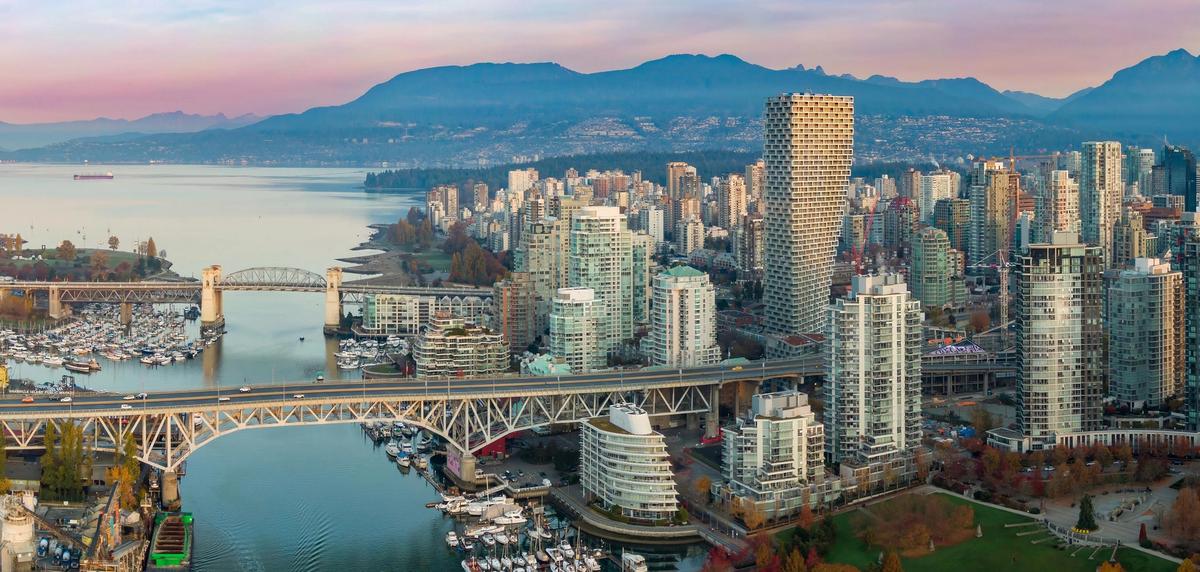
Supporters of a motion that was passed by Vancouver’s city council in July, greenlighting the creation of a cultural land trust (CLT), see it as a way to keep artists and art nonprofits in one of Canada’s most expensive cities—and an extension of a model other places have embraced to support their creative communities.
According to Brian McBay, the executive director of the local artist residency and cultural programming nonprofit 221a, more than 400,000 sq. ft of artists’ studios and other workspaces have been lost across Vancouver over the past decade. Since 2018, 221a has led research, feasibility analysis and sector consultation to find ways of keeping artists in the city and the wider province; it has found that over 80% of artists and cultural organisations in British Columbia face economic displacement.
The creation of a Vancouver CLT has been championed by McBay and others as a way to alleviate some of the pressures on the city’s creative class. After a motion to create the trust was introduced by city councillor Sean Orr, it was passed unanimously on 15 July.
Multi-step process
The CLT model involves a multi-step process, whereby funds and buildings received from government and philanthropic sources are financed, acquired or developed for cultural uses. Cultural nonprofit partners are engaged through long-term leases or equity ownership, removing properties from the speculative market. In turn, land trust assets are leveraged for additional growth, and the land trust becomes a core advocate for regulatory improvements and cultural sector learning.
“Rather than supporting one building at a time, [the CLT] creates a permanent capital platform that enables small- and medium-sized arts organisations to access ownership opportunities that would otherwise remain out of reach,” McBay said in a statement.
The framework adopted in Vancouver paves the way for partnerships with the municipal government and the creation of a portfolio of eligible city-owned buildings by March 2027. The motion was also amended to mandate that properties under consideration for the trust will primarily rely on long-term leases—a big issue in a city where many cultural spaces have short-term leases—to help ensure properties’ continued public ownership.
The CLT model has been adopted in many cities where real-estate prices routinely threaten the longevity of cultural spaces and artists’ livelihoods. These include London, where the Creative Land Trust was founded in 2020. Helsinki has had a version of a CLT, the organisation Kaapeli, since 1991; it now manages almost 100,000 sq. m of space across three properties that it leases for creative uses. The Bay Area, meanwhile, has two programmes in this vein: the Community Arts Stabilization Trust and the Artist Space Trust.
Rather than supporting one building at a time, the CLT creates a permanent capital platformBrian McBay, executive director, 221a
Adapted to Vancouver’s unique context, McBay says, a CLT could allow artists and arts organisations to focus on delivering cultural programming while the trust undertakes asset acquisition, long-term stewardship, capital planning and portfolio management. He sees it as a way of “de-commodifying ownership” by supporting artists and nonprofits to “acquire real estate, preventing displacement and securing affordability, but also using the power that comes with land ownership to reshape municipal redevelopment towards a less transactional city”.
First property secured
McBay’s efforts have already borne fruit thanks to the donation of a home on Vancouver’s West Side from the estate of the late scholar Evelyn Pinkerton, marking the CLT’s first asset. The 1920s-era wood-frame house requires C$250,000 ($178,000) worth of repairs and stabilisation work for safe occupancy and the long-term use envisioned by the trust and 221a—namely as community housing and residency spaces for artists.
McBay says the house will function as “proof of concept for funders and, crucially, as a financial asset that can be borrowed against to support other property-related acquisitions by the CLT”. He and his colleagues have set a goal of securing 30 buildings for long-term cultural programming and artists’ housing by 2050, and are seeking to raise C$15m ($10.7m) in seed funding.
Councillor Orr, whose days as a touring musician first alerted him to Vancouver’s vanishing cultural spaces, says it is still early days for the city’s CLT. Next, municipal staff will prepare a report, including a review of properties and funding requirements, to be presented to the council in the first quarter of 2027.